


During her 2015 trip to Taiwan, Sophia J. Chang (張詠慧) got fewer answers than she’d hoped for, but more revelations than she could have imagined.
“That was the year I last saw my grandmother. She was in hospice care in Tainan, and it was painful to see her in bed, barely able to open her eyes,” says Los Angeles-born Chang. “The grandma I’d known, a fantastic cook and incredibly kind, was already gone.”
After their visit, Chang and her grandfather went back to his apartment. There she asked him how he’d met her grandmother. “He hesitated, then started talking a bit. But when another person walked in, he stopped and didn’t continue the conversation,” she recalls. Moments like these underscored the fragile window she had left to capture the stories of a generation she was about to lose.
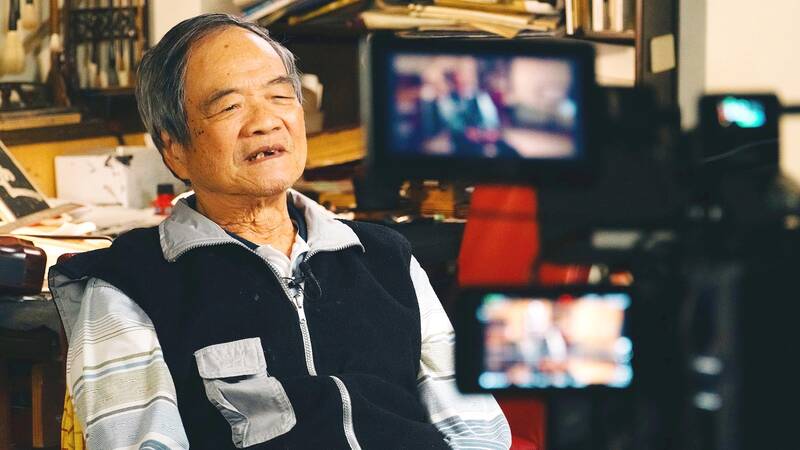
Photo courtesy of Sophia J. Chang
It was also during this two-week stay in Taiwan — the very trip that inspired her upcoming documentary A Little Bit Sweet (甜辣一瓢嚐) — that Chang’s maternal aunt and uncle took her to a Tainan chili sauce factory to visit her granduncles.
“This was news to me,” says Chang, who hadn’t known her grandma had any siblings, let alone that they made the popular B.B. Hot Sauce (B.B.美美辣醬). Additional fragments of information about various relatives reached her via her aunt, “but my grandma passed in 2016, and then my grandfather in 2019, without ever finishing the tale of how they’d met,” Chang says.
CHALLENGING BEGINNINGS
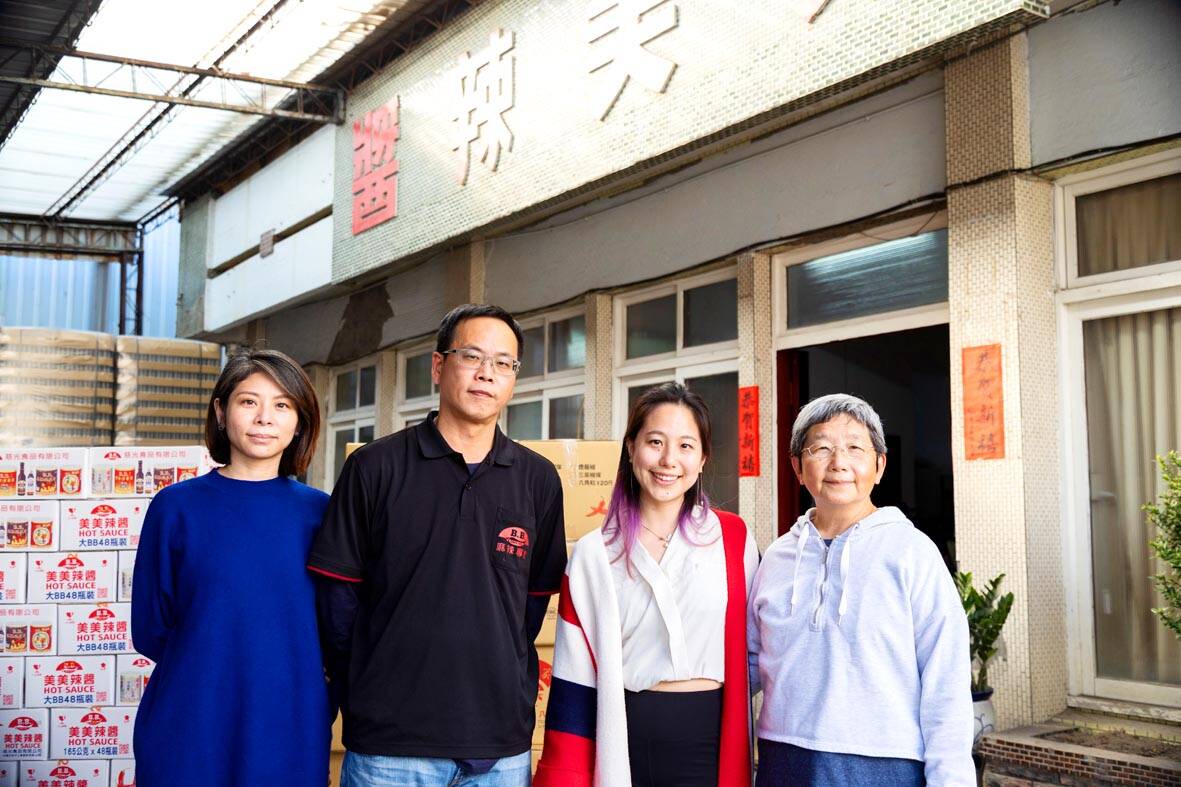
Photos courtesy of Sophia J. Chang
Missing out on learning her grandma’s recipes was one reason why Chang — who’s been working in entertainment and media since 2012 — was in 2018-19 inspired to produce and direct a three-part video series capturing foodways as they’re passed from one generation to the next. The series’ videographer, Alan Chung, encouraged her to flesh out an idea for a documentary on her family’s hot sauce.
“I’ve done everything from creating social media content to producing narrative shorts to food styling on commercials and TV shows. I’ve worked on a variety of projects for others, so I really wanted to make a film I could call my own, and to challenge myself with a feature-length work,” she says.
The idea quickly gained momentum, even though Chang’s mother was unimpressed.
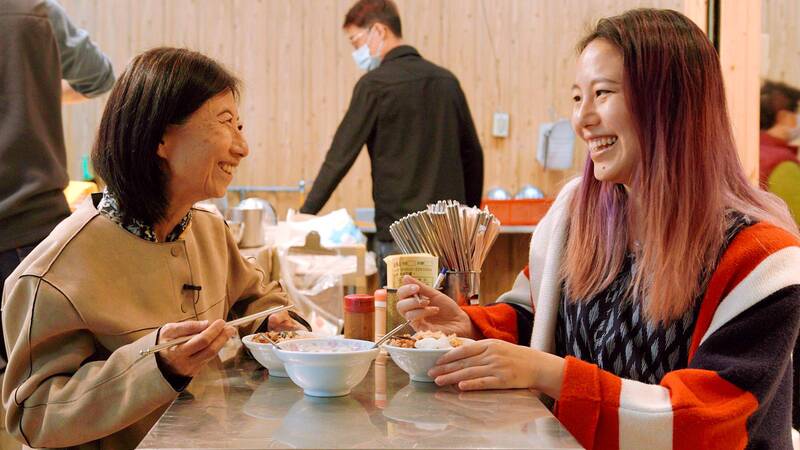
Photo courtesy of Sophia J. Chang
“Her initial response was incredulous. She didn’t think it was a story worthy of a documentary, but I persisted in asking her to connect me with the granduncles, and she acquiesced,” Chang says.
By contrast, Chang’s sauce-making relatives didn’t need much convincing to join the project.
“My granduncle Wang Zhe-cheng (王哲承) was extremely enthusiastic,” she says.
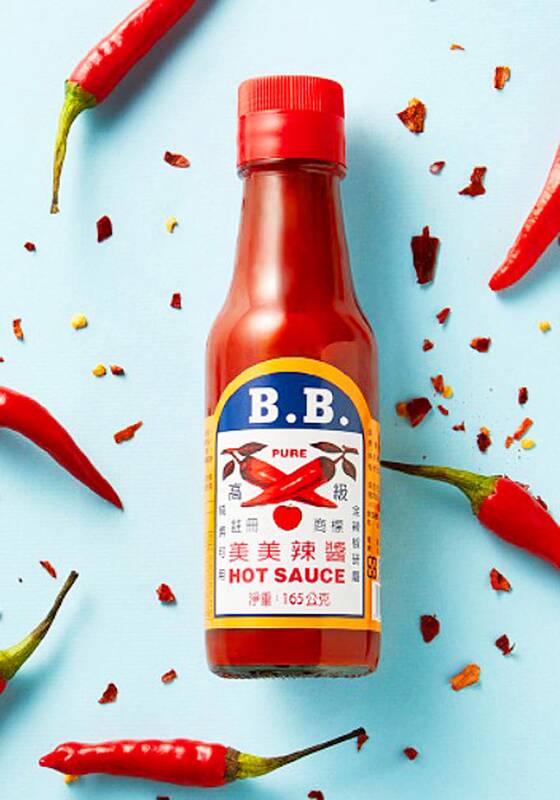
Photo from Mercy Food Co’s Web site
As the second-generation owner of Mercy Food Co (慈光食品有限公司), Wang is a central figure in A Little Bit Sweet. The film’s title nods to the reputation Tainan cuisine has for being slightly sweet — a flavor profile embodied by the company’s signature hot sauce. But before a single frame had been shot, the project almost foundered for lack of money.
None of Chang’s grant applications were successful, and self-financing the entire project was out of the question.
“However, I had several friends who believed in me and the story and who were willing to donate their time and skills,” she says.
At the start of 2020, a crowdfunding effort brought in a bit over US$13,000. TaiwaneseAmerican.org, a California-registered nonprofit, kicked in another US$1,000.
Then COVID-19 happened.
“Quarantine would have tripled our costs, so I postponed the trip,” Chang says.
Worried that elderly interview subjects would pass away before she could meet them in person, she conducted conversations with relatives via LINE and video calls.
“Given their age and health issues, this was a real concern,” she says.
In late summer 2022, as pandemic restrictions began to lift, Chang reassembled her team, and they decided to gather their footage the following spring.
“Fortunately, most of the people who’d agreed to go in 2020 were still available and willing to help,” she says.
Neither Alan Chung nor the two other filmmaking professionals who accompanied Chang to Taiwan were paid for their time or gear. Even at below-standard rates, Chang points out, the crew’s contribution was worth over US$64,000. She was accompanied by her partner and her mother, as well as the aunt and uncle who’d played a pivotal role in the 2015 trip.
The schedule was tight: a week of on-the-ground pre-production then nine days of principal photography. And things didn’t go quite to plan.
Midway through filming, Chang’s mom decided she no longer wanted to take part. Arranging to meet one of Chang’s granduncles was complicated by his deafness, his wife’s poor health and an active tuberculosis diagnosis that forced the team to coordinate with local health officials.
Chang’s crew also recorded an interview with Ivy Chen (陳淑娥), a Taipei-based cookery writer and teacher. Chen tells the Taipei Times she was eager to join the project because “B.B. Hot Sauce has long been an iconic sauce in Taiwanese steak restaurants. It was created in my hometown and it’s been a nostalgic favorite since I graduated from college, 30-plus years ago. I love to share the story of the sauce when introducing the south’s flavorful cuisine.”
POSITIVE ENDINGS
Chang says that, despite the setbacks, production ended on a good note. After filming, however, she found herself emotionally exhausted. “I didn’t have the mental capacity to even look at any of the footage for a year,” she says.
It wasn’t until she met Shaminder Dulai, an Emmy-nominated director, editor, writer and producer, that the documentary project regained momentum. “He came on board as lead editor in mid-2025, and he’s been instrumental in shaping our story to where it is now,” Chang says.
When finished, A Little Bit Sweet is expected to be about 70 minutes in length, around 40 percent of which will focus on the hot sauce business. “But it’s not just the history of how it came to be a recognizable brand. That’s secondary to the throughline of seeking family connection and stories,” Chang says.
Coming from the world of narrative shorts, TV shows and commercials, Chang is used to quick turnarounds. Explaining why three years have passed since principal photography wrapped, she says: “We’re all juggling paid jobs, and it’s a challenge to prioritize a non-paying project.”
At the beginning of April, Chang launched a second round of crowdfunding via Seed & Spark, a specialist platform for independent filmmakers. As the Taipei Times went to press, the funding drive was closing in on its US$20,000 goal. This money will help with post-production costs and film festival applications. “While it’s just a fraction of our total estimated costs, it’s a great start for us to make more significant progress,” says Chang.
If money and time had been no object, Chang adds, she’d have spent more time in Taiwan “to cultivate stronger relationships with my relatives, hear more stories, and capture more verite.” Also, she stresses, she could have paid her team standard rates.
“I’m quite proud of what we were able to accomplish, given our relative inexperience and all the challenges we’ve faced. I hope to have the film finished before the end of this summer, so that we can start applying to film festivals,” Chang says.
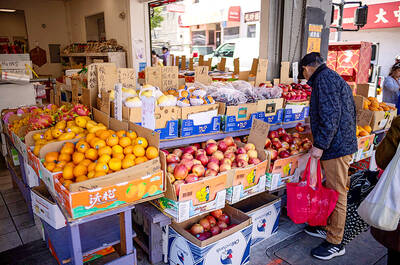
Ajay Verma, a consultant gastroenterologist at Kettering general hospital in Northamptonshire, says our gut is a “complex machine.” “It is constantly providing us with the nutrition we need, initially to grow and develop, and then for us to survive, thrive and repair from injury and illness.” How can we keep it functioning well? Put simply: “Make sure what you put into it is balanced, and that you clear out its waste products adequately,” Verma says. “In a general gastroenterology clinic, the most common conditions we see are irritable bowel syndrome (IBS), gastroesophageal reflux disease, inflammatory bowel disease and constipation,” says Nisha
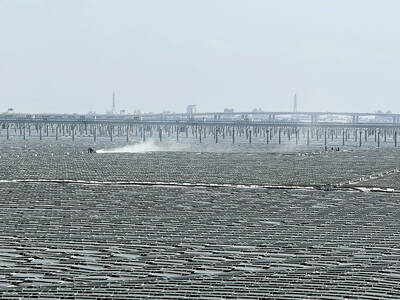
The arithmetic is straightforward and uncomfortable. By the end of 2025, Taiwan had committed itself to a 50-30-20 electricity mix — half natural gas, 30 per cent coal, 20 per cent renewables. The Ministry of Economic Affairs’s (MOEA) own monthly energy reports tell a different story. Natural gas reached 47.8 per cent of generation last year. Coal stood at 35.4 per cent, comfortably above its target ceiling. Renewables came in at 13.1 per cent, well short of the 20 per cent Taipei had pledged a decade earlier. Installed renewable capacity reached roughly half of the 12 gigawatts (GW) the government
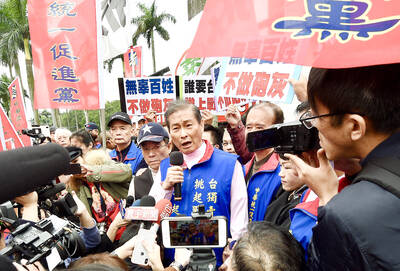
There are shadowy cabals plotting to sell out Taiwan to be annexed by China, by invasion if necessary. Fortunately, they are buffoons. In 2019, former Bamboo Union gangster and founder of the China Unification Promotion Party (CUPP), Chang An-le (張安樂, colorfully known as “White Wolf”), led a protest at the Legislative Yuan against comments made by then-premier Su Tseng-chang (蘇貞昌) that in the event of an attack by China, he would never surrender, but would protect the nation by fighting to the end, even if he only had a broom. Chang had party members bring a wooden casket that they
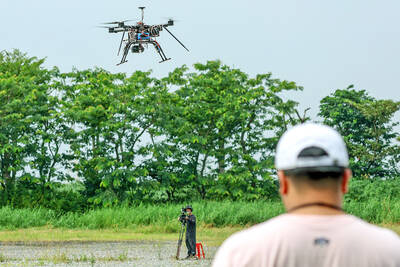
Taiwan’s drone exports are taking off, fuelled by the war in Ukraine, as Taiwanese companies seek a stake in the fast-growing global market for unmanned aerial vehicles (UAV). Low-cost drones used for reconnaissance and strikes are in high demand as governments around the world boost defense spending in the face of intensifying conflicts. A relative new player in the increasingly competitive industry, Taiwan’s pitch is to be an “Asian hub” for the production of UAVs and components free of Chinese materials, or “non-red.” That means its UAVs can be up to three times more expensive than their Chinese competitors, like the world’s biggest


 RSS
RSS