


In Venice, authorities tried to enforce social distancing by closing all the bars, and banning the sale of wine by merchant boats plying the canals. In Gloucester, the powers that be attempted to lock down the city by banning anyone traveling to and from Bristol, 40 miles south. But fights broke out among thirsty Italians, and Gloucester’s quarantine was broken — whether it was by people simply going on a trip to check their eyesight has, alas, gone unrecorded. In London, there was a dramatic rise in the sale of personal protective equipment, in the form of gloves.
The story of the Black Death, as historian Thomas Asbridge shows in this magisterial survey, contains many such echoes of the COVID-19 pandemic, but it also shows just how relatively lucky we were a few years ago. The plague was far more lethal, and in the areas it spread between 1346 and 1353 it killed half the population. About 100 million died: it was, Asbridge remarks, “the most lethal natural disaster in human history.” If a pathogen with a similar case fatality rate were to erupt worldwide today, billions might die.
And the plague itself, Asbridge argues, was more global than has usually been thought: it was “not solely, or even primarily, a European phenomenon, but rather a catastrophe that touched almost all of the medieval world.”
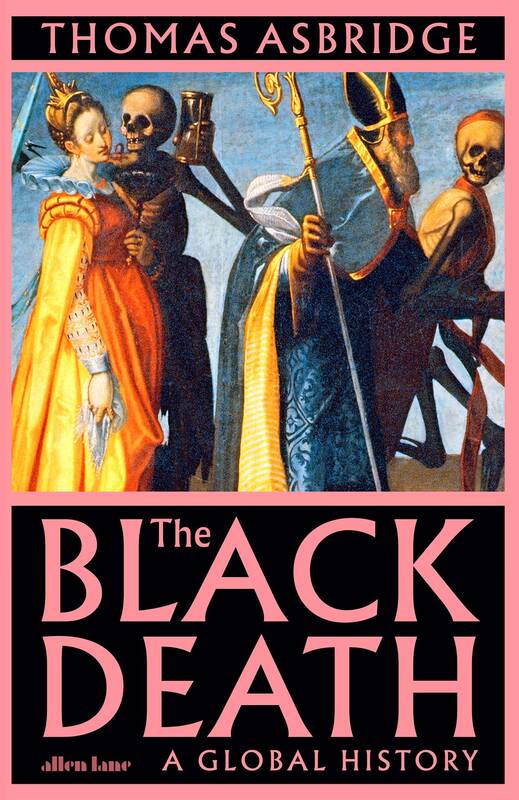
He takes the reader on a vivid tour: from Sicily to Egypt, where observers noted “bodies scattered under palm trees and in front of shops,” to people “coughing up blood” in Marseille, to Syria, and through Spain, Sweden and all the way to Russia. Evidence of sudden population collapses in Ghana, Nigeria and Burkina Faso suggests that the Black Death spread far into the African continent. It certainly ravaged Tunis, where the scholar Ibn Khaldun survived and went on to argue that “lethal plagues played an essential role in the rise and fall of civilizations,” long before Jared Diamond wrote Guns, Germs, and Steel.
Asbridge evokes terror and pity by focusing in on what he calls “micro-histories” of particular individuals caught up in the horror. They come from social strata both high and low. Princess Joan of England, daughter of Edward III, caught the Black Death in Bordeaux and died at the age of only 14. Ysabeta Ugolini in Bologna, of an artisan family, “seemingly lost her husband, along with her father, mother, brother and brother-in-law in barely one month.”
The author’s rich use of contemporary chronicles emphasizes people’s bafflement as well as horror. As there was no germ theory of disease, some supposed that you could become infected simply by seeing a victim.
Asbridge has mined bureaucratic records to argue that some places were far more badly affected than it was previously thought: Florence, for example, seemed to have got off relatively lightly, but Asbridge finds that there was a sudden rise in the drawing-up of wills, “suggesting a steep increase in patient numbers and, potentially, rates of mortality.” In Bologna, there were five times as many wills recorded in 1348 compared to the average for previous years.
Evidently it was dangerous, in such times, to be a notary — and yet, as Asbridge celebrates, most of them carried on working. Society at large did not collapse: while some people abandoned family members who became sick, most did not, and essential public functions continued. Even when churchyards were overwhelmed and there was no longer time for funeral services, people seem to have been placed with care into the mass graves that became necessary, such as the one in London’s Smithfield.
There was, however, one very bleak social contagion associated with the plague, which was blaming it on Jews: wanton massacres of hundreds of innocent Jewish men, women and children occurred in Toulon, Strasbourg and elsewhere in Provence, Basel, and across the Iberian peninsula. Often the murderers would destroy the victims’ financial records, expunging their own debts. Hundreds of Jews were also convicted, by “due legal process,” of poisoning wells and were burned to death. Asbridge estimates that “tens of thousands” were killed during the Black Death, encouraging Jews’ subsequent migration to eastern Europe.
Like the virus of antisemitism, the Black Death did not disappear after 1353; it became endemic. Plague erupted again in London in 1665, and elsewhere well into the 19th century. There is a long tail of consequences. Labor shortages after the 14th-century pandemic contributed to the end of serfdom. Recurrent plague outbreaks probably helped weaken Constantinople sufficiently to hasten the end of the Byzantine Empire, and might, Asbridge suggests, even have inspired the Protestant revolution, “by training the minds of the faithful on the imminency of death and the urgent need for effective spiritual redemption.”
Nor is it now permanently quiescent: Madagascar had outbreaks in 2014 and 2017 which killed nearly 300 people. As for the long-term social consequences of Covid, it is too early to tell — and meanwhile we wait for the next pandemic.
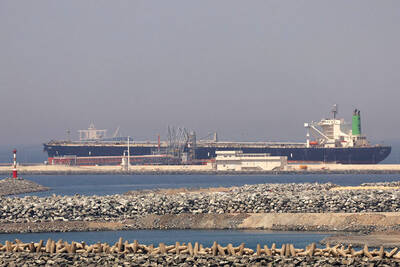
The breakwater stretches out to sea from the sprawling Kaohsiung port in southern Taiwan. Normally, it’s crowded with massive tankers ferrying liquefied natural gas from Qatar to be stored in the bulbous white tanks that dot the shoreline. These are not normal times, though, and not a single shipment from Qatar has docked at the Yongan terminal since early March after the Strait of Hormuz was shuttered. The suspension has provided a realistic preview of a potential Chinese blockade, a move that would throttle an economy anchored by the world’s most advanced and power-hungry semiconductor industry. It is a stark reminder of
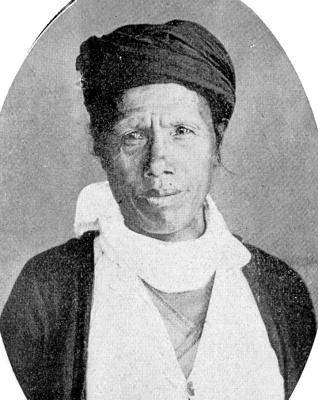
May 11 to May 17 Traversing the southern slopes of the Yushan Range in 1931, Japanese naturalist Tadao Kano knew he was approaching the last swath of Taiwan still beyond colonial control. The “vast, unknown territory,” protected by the “fierce” Bunun headman Dahu Ali, was “filled with an utterly endless jungle that choked the mountains and valleys,” Kano wrote. He noted how the group had “refused to submit to the measures of our authorities and entrenched themselves deep in these mountains … living a free existence spent chasing deer in the morning and seeking serow in the evening,” even describing them as
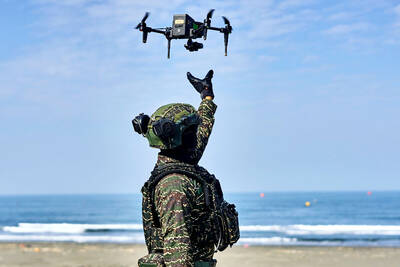
The last couple of weeks spectators in Taiwan and abroad have been treated to a remarkable display of infighting in the Chinese Nationalist Party (KMT) over the supplementary defense budget. The party has split into two camps, one supporting an NT$800 billion special defense budget and one supporting an NT$380 billion budget with additional funding contingent on receiving letters of acceptance (LOA) from the US. Recent media reports have said that the Taiwan People’s Party (TPP) is leaning toward the latter position. President William Lai (賴清德) has proposed NT$1.25 trillion for purchases of US arms and for development of domestic weapons

As a different column was being written, the big news dropped that Chinese Nationalist Party (KMT) caucus whip Fu Kun-chi (傅?萁) announced that negotiations within his caucus, with legislative speaker Han Kuo-yu (韓國瑜) of the KMT, party Chair Cheng Li-wun (鄭麗文), Taichung Mayor Lu Shiow-yen (盧秀燕) and Taiwan People’s Party (TPP) Chair Huang Kuo-chang (黃國昌) had produced a compromise special military budget proposal. On Thursday morning, prior to meeting with Cheng over a lunch of beef noodles, Lu reiterated her support for a budget of NT$800 or NT$900 billion — but refused to comment after the meeting. Right after Fu’s


 RSS
RSS