


The town of Jhihben (知本) in Taitung County is most well-known for its hot springs, but if you’re looking for an interesting nearby daytime excursion to complement an evening soak at your hotel, don’t miss the Jhihben National Forest Recreation Area (知本國家森林遊樂區).
From the resort area, simply take Bus 8129 down to the last stop at the end of the main road and then walk across the bridge and turn left for the ticket gate. This bus can also be taken right from the Taitung Bus Station or from the Zhiben TR station, and runs approximately once an hour all day long.
Alternatively, you can drive right to the park and park your car for NT$100. Scooter parking is free. Admission to the park starts at 7:30am and the fee is NT$100 (NT$80 on weekdays, discounts for children and seniors). Once you’ve paid up (cash, credit, iPass, EasyCard, and mobile payments accepted), continue walking up the paved road to enter the park.
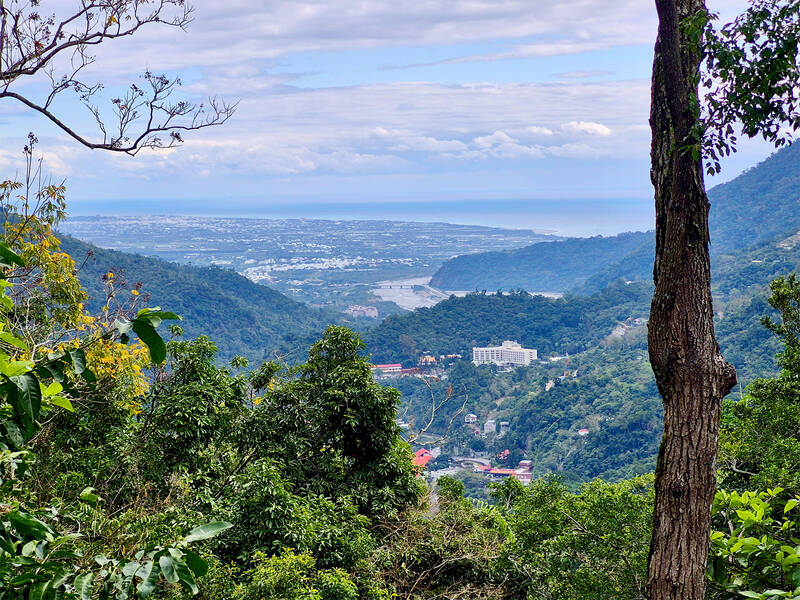
Photo: Tyler Cottenie
INDOOR SPACES
The park’s indoor education facilities are the first thing visitors encounter. The Nature Education Center is a multi-purpose space where you can create a DIY wooden souvenir for a small fee. Just outside the building is the welcome pond, with a soothing waterfall and a metal statue of a sambar deer, just one of many metal statues of local animals scattered throughout the main level of the park.
Next is the visitor center, a sprawling building with a unique architectural style, combining rectangular and round elements in different wings. Locally harvested wood adorns the interior, while scavenged driftwood has been used to decorate the exterior. The overall goal was to make walking into the building much like walking into a forest, with a faint smell of wood, sunlight filtering in on all sides and non-linear walkways.
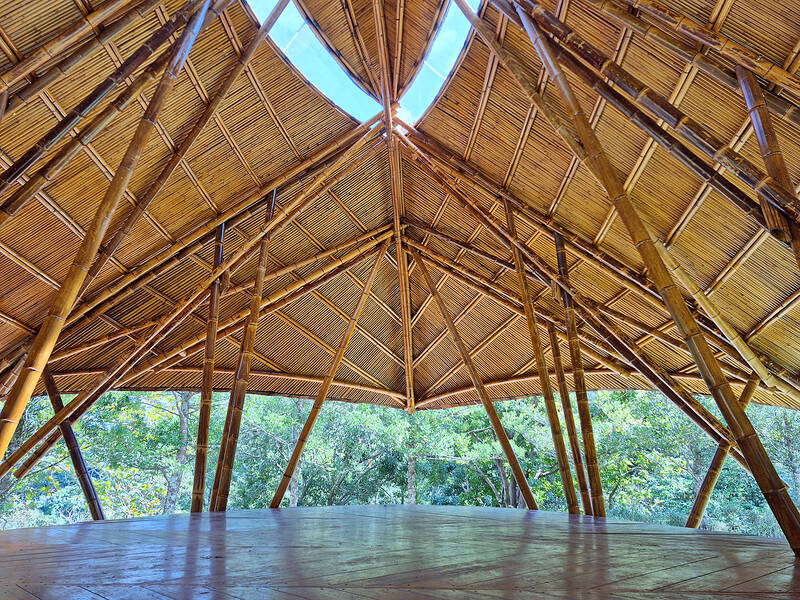
Photo: Tyler Cottenie
The most conspicuous trees in this region’s tropical lowland forests are the banyans, with their sprawling root systems. The visitor center’s exterior decor mimics their aerial roots, while the main exhibit hall inside is designed to feel like you are walking through the heart of a sprawling banyan. To get to the exhibit hall, guests must first walk up a gently sloping ramp that traces two full loops around a circular atrium, almost as if walking up the trunk of a tree.
The exhibits on the second floor teach about the local forest ecosystem, accompanied by a few simple wooden games for children. Much of the information is in English, though the written instructions for the games are somewhat inadequate, even in the original Chinese. Thirty minutes is plenty to get through this space, as there is much more to see outdoors. Washrooms, lockers for large luggage, a restaurant (open Wednesday to Sunday), and an information counter can also be found in the visitor center.
OUTDOOR SPACES
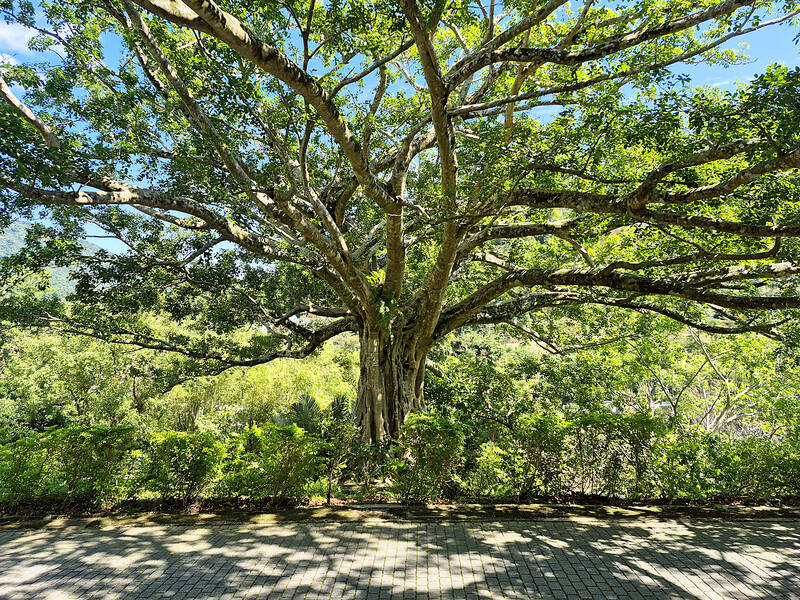
Photo: Tyler Cottenie
The outdoor space to the south has been turned into a well-manicured herb garden. Unfortunately, the plants are not labeled clearly and must be identified through a central catalogue in the middle of the garden, which quickly becomes frustrating.
To the north is the main space in the park where families with small children or elderly relatives will want to spend most of their time. The “Scenic Trail” is less than half a kilometer long, flat and paved. Art installations appear here and there, and there are interesting side trips to take off the main path.
Keep your eyes peeled for the cold spring pool and foot massage rock path. Soak in the shade here listening to the sound of the nearby small waterfall or take a photo on the quaint bridge that straddles it.
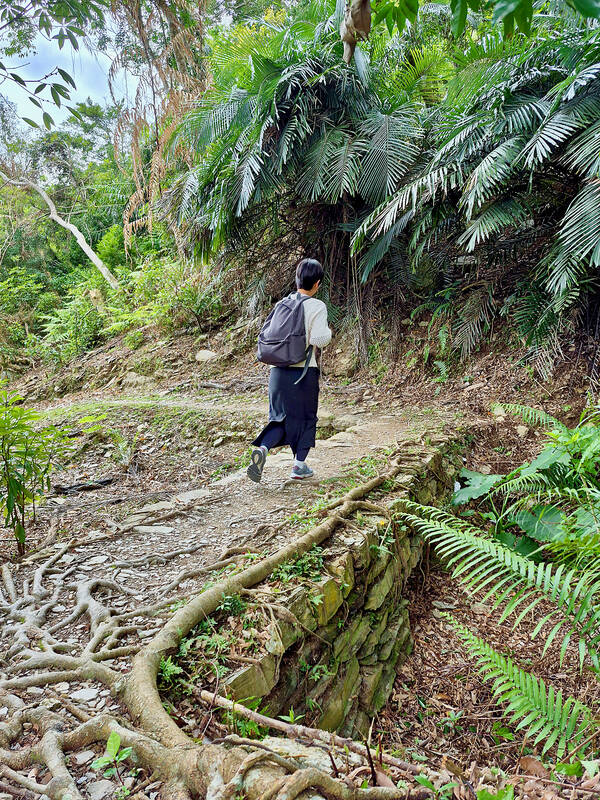
Photo: Tyler Cottenie
The elevated boardwalk lower down is the perfect place to let children burn off some energy, or for adults to rest against the railing in one of the shady nooks. At the end of the boardwalk is a very narrow suspension bridge where the bridge deck itself is just a long thick rope. Trying to walk across this swaying bridge without tipping over into the rope railings is a challenge.
Finally, don’t miss the tiled foot bath and pavilion that is continuously replenished with flowing Jhihben hot spring water.
HIKING TRAILS
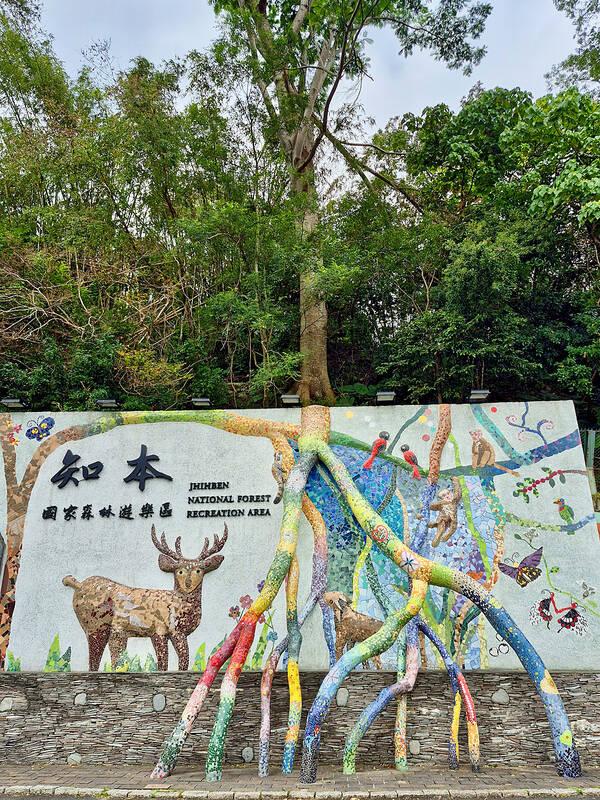
Photo: Tyler Cottenie
For those not constrained by the very young or the elderly, a hike along the park’s system of trails is highly recommended. The outermost Banyan Shaded Trail is damaged and closed long-term, but the remaining three paths are all worth exploring, if you have the time and energy.
If you’re planning to hike to the park’s high point, the best course of action is to take the central “Brave Climber’s Trail”. It is less than a kilometer long but ascends 250 meters and includes 1,782 steps, so expect this to take 45 minutes to an hour. Take your time on the way up and enjoy the majestic sprawling banyans next to the trail. Along the way, keep your ears open for rough grunting from the canopy indicating the presence of a Formosan macaque, and keep your eyes on the forest floor for the swift movements of a passing barking deer.
At the top of the trail is another pavilion where you can enjoy a view of the hot spring resorts down in the valley below and the Pacific Ocean off in the distance. From here, visitors used to be able to continue onto the Banyan Shaded Trail, but it is closed for now. There is, however, a secret trail off to the left from the gate.
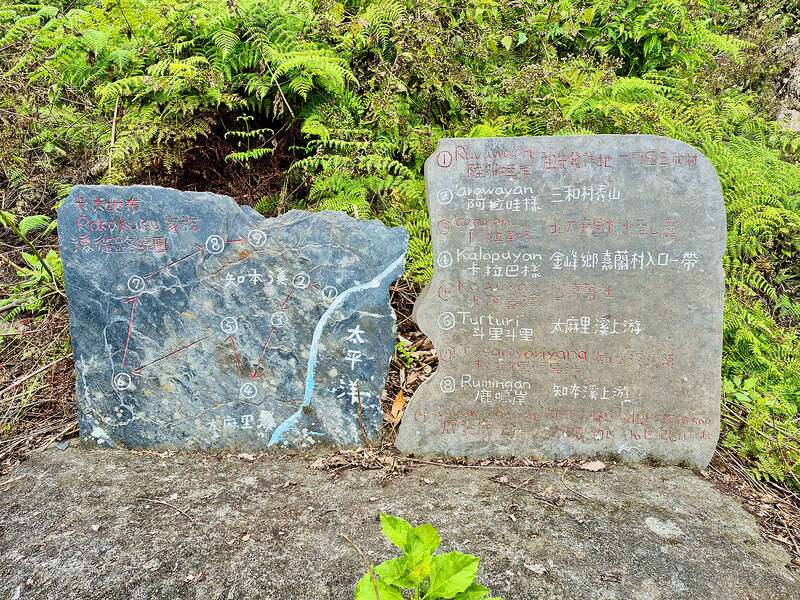
Photo: Tyler Cottenie
A wide swath was once cleared for this trail and it was built up with wooden stairs in places, but it has been unmaintained for what looks like a decade or two and is now only for the truly adventurous with an offline map on their phone. Follow the traces of this heavily overgrown path fifteen minutes uphill to reach a manmade platform with a once-sturdy railing and concrete paving stones, where you get an even better view of the Pacific. Inscribed stones here mark this as the former site of the Ruvaruvangan Beinan village, and document the historical locations of Beinan villages and the people’s migrations over the centuries. It’s unclear why the access to this memorial site has not been maintained.
Back at the high pavilion, retrace your steps for a few minutes until reaching the junction with the Jasmine Orange Tree Trail. For a much gentler descent, take this trail down and then connect with the Forest Trail to get all the way back down to the visitor center and Scenic Trail. Again, expect this to take around 45 minutes to an hour. These trails are very well built, with a wide track, and sturdy stone bridges and retaining walls that blend in with the forest. From April to September, expect a beautiful aroma from the blossoms of nearby orange jasmine trees.
Once you’re back down to the more crowded Scenic Trail area, treat your feet to a cold or warm soak and enjoy the other facilities as long as you like. The park closes at 6pm in July and August and 5pm the rest of the year.
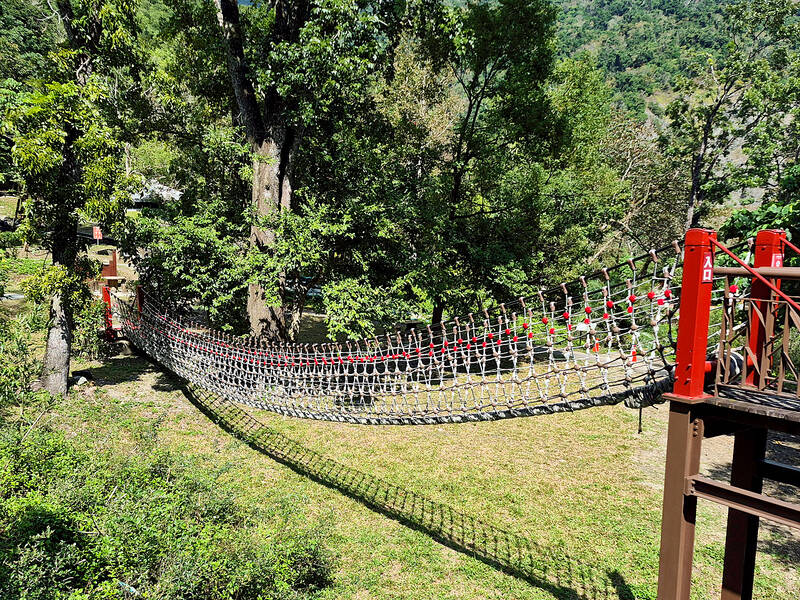
Photo: Tyler Cottenie

Michael slides a sequin glove over the pop star’s tarnished legacy, shrouding Michael Jackson’s complications with a conventional biopic that, if you cover your ears, sounds great. Antoine Fuqua’s movie is sanctioned by Jackson’s estate and its producers include the estate’s executors. So it is, by its nature, a narrow, authorized perspective on Jackson. The film ends before the flood of allegations of sexual abuse of children, or Jackson’s own acknowledgment of sleeping alongside kids. Jackson and his estate have long maintained his innocence. In his only criminal trial, in 2005, Jackson was acquitted. Michael doesn’t even subtly nod to these facts.

The March/April volume of Foreign Affairs, long a purveyor of pro-China pablum, offered up another irksome Beijing-speak on the issues and solutions for the problems vexing the People’s Republic of China (PRC) and the US: “America and China at the Edge of Ruin: A Last Chance to Step Back From the Brink” rang the provocative title, by David M. Lampton and Wang Jisi (王緝思). If one ever wants to describe what went wrong with US-PRC relations, the career of Wang Jisi is a good place to start. Wang has extensive experience in the US and the West. He was a visiting

The January 2028 presidential election is already stirring to life. In seven or eight months, the primary season will kick into high gear following this November’s local elections. By this point next year, we will likely know the Democratic Progressive Party (DPP) candidate and whether the Taiwan People’s Party (TPP) will be fielding a candidate. Also around this time, the Chinese Nationalist Party (KMT) will either have already completed their primary, or it will be heading into the final stretch. By next summer, the presidential race will be in high gear. The big question is who will be the KMT’s

One of the challenges with the sheer availability of food in today’s world is that lots of us end up spending many of our waking hours eating. Whether it’s full meals, snacks or desserts, scientists have found that it’s not uncommon for us to be mindlessly grazing at some point during all of our 16 or so waking hours. The problem? As soon as this food hits the bloodstream in the form of glucose, it initiates the release of the hormone insulin. This in turn activates a switch present in every one of our cells, which is responsible for driving cell


 RSS
RSS