


Take an everyday video on any suburban transport network, add anime-style music and a rosy filter, and it’s suddenly a scene from the Japanese holiday of your dreams.
That’s the “Japan effect”: a Gen Z social media trend satirizing the often-romanticized image of the Asian country, which welcomed a record number of visitors last year.
Residents of Kyoto and other tourist hotspots have expressed exasperation with selfie-taking crowds, and now an online backlash against Japan fever is growing.
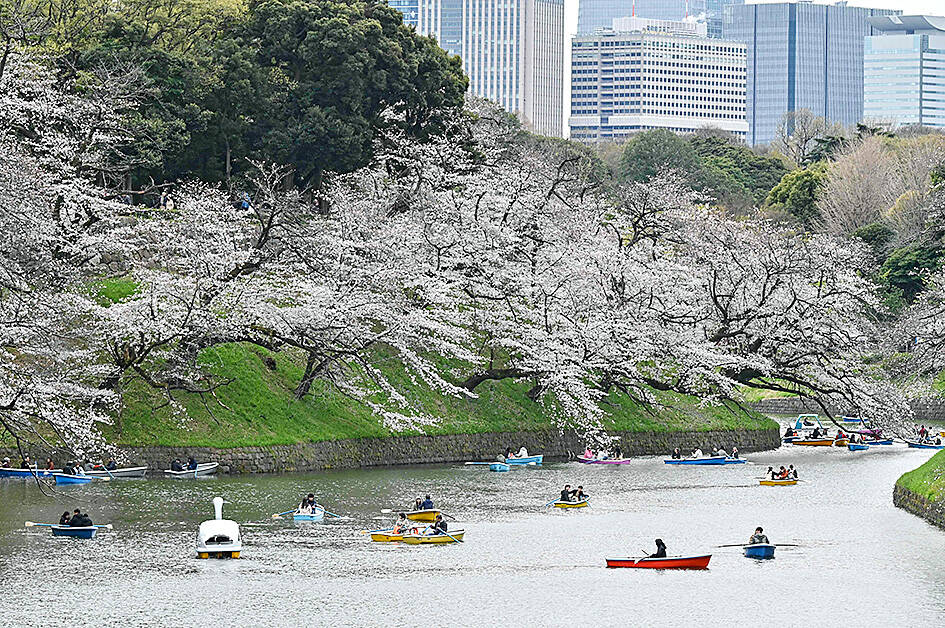
Photo: AFP
The short video posts on platforms like TikTok show how even just the words “Tokyo, Japan” with a cherry blossom emoji can make an otherwise banal street scene more appealing for some users.
“The point is to make fun of Japan’s ‘cute’ image online, with all its cliches and stereotypes,” said 25-year-old French YouTuber Rocky Louzembi, who analyses internet culture.
Along with the chronically weak yen, the booming popularity of anime and game franchises such as Pokemon is drawing tourists to the nation.
But some people take their love of Japan too far, said Louzembi, who goes by the handle rockylevrai.
To describe the phenomenon, he used the slang word “glazing” — to excessively praise something.
A “Japan glazer” is “someone who puts everything that comes from Japan on a pedestal, while disparaging things that come from their own country”, Louzembi said.
’NOT THAT CLEAN’
Japan logged a record 42.7 million tourist arrivals last year, despite a steep fall in Chinese visitors in December due to a diplomatic row.
Many visitors post online about their trip — making pilgrimages to real-life locations from cartoons or joking about spending US$1,000 on flights just so they can eat a US$1 convenience store rice ball.
“The ‘Japan’ portrayed in an anime world is often quite different from how Japanese society is,” said Marika Sato, a 29-year-old who works in marketing in Tokyo.
For instance, many women have experienced groping, said Sato, a contributor to “Blossom The Project,” an Instagram account focused on Japanese social issues.
Graphic designer and fellow Blossom contributor Maya Kubota, 28, said that she appreciates people liking Japan and wanting to visit.
But over-the-top comments such as “Japanese people are next level” give her an “icky vibe,” Kubota said.
Some of the online Gen Z pushback focuses on the exaggerated idea that Japan’s streets are so spotless people don’t even have to wear shoes.
“Japan is clean but not THAT clean,” joked a US couple who post social media content about the country under the name The Hitobito — showing off their dirty white socks after a real-life experiment.
VIRTUAL EFFECT
Japan’s tourist boom has forced some authorities to take action.
A cherry blossom festival boasting a highly Instagrammable view of Mount Fuji was canceled this year after residents complained of overtourism.
“People associate Japan with carefully composed visuals,” said Seio Nakajima, a professor in the Graduate School of Asia-Pacific Studies at Waseda University.
That could be because of the detailed, beautiful backgrounds in anime, or because of a deeper “cultural tradition of emphasising form.”
“If people focus on form rather than meaning, it becomes easier to go viral. Because you don’t need to think,” Nakajima said.
Japan’s formalities — from the complexity of polite language to extreme attention to detail in packaging or wrapping — may surprise visitors, he said.
But “Japan is not always clean and aesthetic. That’s only part of the reality.”
Despite the backlash, tourists in Tokyo’s busy Tsukiji market said that the country had lived up to their expectations.
“In Russia, it’s very popular to hype Japan,” said Tatiana Mokeeva, 25.
When asked if posts about Japan could be unrealistic, she said: “To tell the truth, no... I love all about Japan.”

Ajay Verma, a consultant gastroenterologist at Kettering general hospital in Northamptonshire, says our gut is a “complex machine.” “It is constantly providing us with the nutrition we need, initially to grow and develop, and then for us to survive, thrive and repair from injury and illness.” How can we keep it functioning well? Put simply: “Make sure what you put into it is balanced, and that you clear out its waste products adequately,” Verma says. “In a general gastroenterology clinic, the most common conditions we see are irritable bowel syndrome (IBS), gastroesophageal reflux disease, inflammatory bowel disease and constipation,” says Nisha
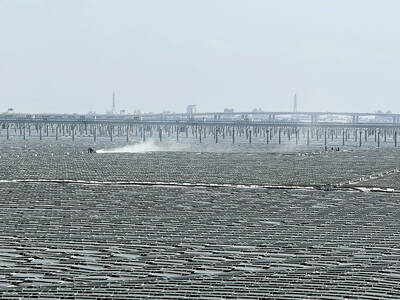
The arithmetic is straightforward and uncomfortable. By the end of 2025, Taiwan had committed itself to a 50-30-20 electricity mix — half natural gas, 30 per cent coal, 20 per cent renewables. The Ministry of Economic Affairs’s (MOEA) own monthly energy reports tell a different story. Natural gas reached 47.8 per cent of generation last year. Coal stood at 35.4 per cent, comfortably above its target ceiling. Renewables came in at 13.1 per cent, well short of the 20 per cent Taipei had pledged a decade earlier. Installed renewable capacity reached roughly half of the 12 gigawatts (GW) the government

Taiwan’s drone exports are taking off, fuelled by the war in Ukraine, as Taiwanese companies seek a stake in the fast-growing global market for unmanned aerial vehicles (UAV). Low-cost drones used for reconnaissance and strikes are in high demand as governments around the world boost defense spending in the face of intensifying conflicts. A relative new player in the increasingly competitive industry, Taiwan’s pitch is to be an “Asian hub” for the production of UAVs and components free of Chinese materials, or “non-red.” That means its UAVs can be up to three times more expensive than their Chinese competitors, like the world’s biggest
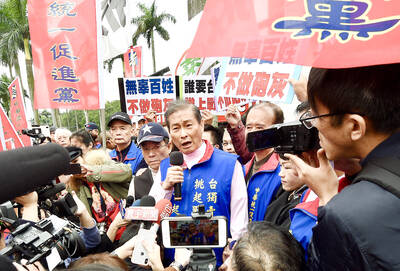
There are shadowy cabals plotting to sell out Taiwan to be annexed by China, by invasion if necessary. Fortunately, they are buffoons. In 2019, former Bamboo Union gangster and founder of the China Unification Promotion Party (CUPP), Chang An-le (張安樂, colorfully known as “White Wolf”), led a protest at the Legislative Yuan against comments made by then-premier Su Tseng-chang (蘇貞昌) that in the event of an attack by China, he would never surrender, but would protect the nation by fighting to the end, even if he only had a broom. Chang had party members bring a wooden casket that they


 RSS
RSS