


Japan’s expedition to southern Taiwan in 1874 was ostensibly aimed at chastising the local indigenous people for killing shipwrecked Okinawan and Japanese mariners. In reality, it was a knowing attempt to establish colonies in southern and eastern Taiwan “in the hope that Japan would be able to take over the entire island in a few year’s time,” as Robert Eskildsen observed in a useful paper on the Japanese Navy’s role in the 1874 invasion. The expedition even prepared seeds of European trees in anticipation of the plantations that would be established
Why did the Japanese colonial program fail in 1874? The opposition of the Manchu (Qing) empire, then in control of roughly half the island, helped prevent the emergence of Japanese colonies, but a key factor was the parlous state of Japan’s navy.
IMPERIAL EXPANSION
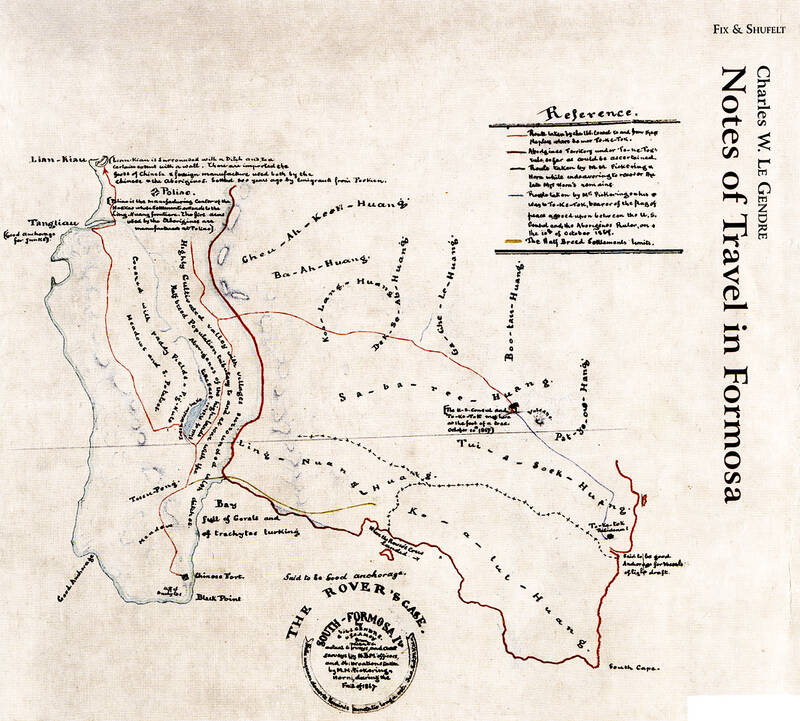
Photo courtesy of Wikimedia Commons
An important player in Japanese thinking about Taiwan was Charles LeGendre, the former US consul in Amoy (Xiamen) in southern China. LeGendre had visited southern Taiwan in the aftermath of the 1867 Rover Incident (羅妹號事件) and was familiar with the Manchu empire’s weak hold on southern and eastern Taiwan. In the fall of 1872 he drew up a series of memos at the request of the foreign minister, Soejima Taneomi, outlining how Taiwan should be handled, in the context of possible imperial expansion. One aspect of his analyses that met resistance in Japanese official circles, Eskildsen says, was LeGendre’s assertion that war with the Manchu empire was highly likely if Japan attempted to occupy part or all of Formosa. LeGendre considered it inevitable, and laid out how Tokyo should station its ships and troops to make a stab at Formosa when the war began.
The 1874 invasion of the south was thus just one possibility among the many ways Japan might have moved on Taiwan in that period. According to Eskildsen, LeGendre suggested stationing troops in Okinawa which could be quickly moved to Taiwan’s ports in the event of war. LeGendre thought the slain Okinawan sailors would make a fine pretext for Japan to seize Taiwan and Penghu.
LeGendre offered numerous scenarios, but the gist of the problem was that Japan needed a functional navy to carry out these projects. Although naval strengthening was already a couple of decades old when the Meiji Restoration occurred in 1868, Japan lacked both modern ships and the sailors to crew them. It had a tiny industrial base and defense spending went to the army out of fear of domestic rebellion.
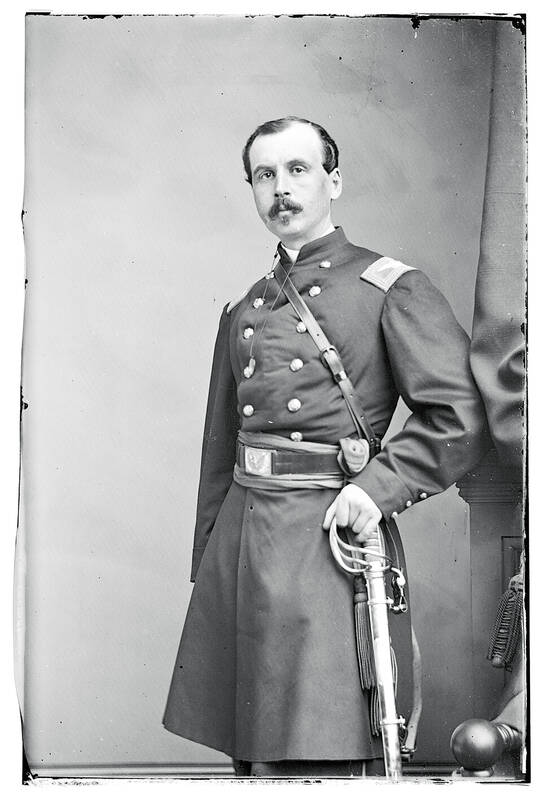
Photo courtesy of Wikimedia Commons
Eskildsen cites an American advisor, Douglas Cassel, who had been sent to help establish a Japanese colony in what is now Taitung. Cassel sent a long missive to LeGendre bemoaning the lack of suitable steamships, saying Japan possessed only one steamship that could be used in such a task. As the expedition went on, cases of malaria and other diseases skyrocketed, requiring the government to ship in more troops and medical resources. Yet the military lacked shipping, and was forced to rely on commercial vessels.
Another problem was trained naval officers. The Japanese military had Japanese commanders, but in many cases they were effectively commanded by foreigners. A few months before the 1874 invasion a Japanese army officer named Kabayama Sukenori (later the first Japanese governor-general of Taiwan) traveled to Yilan County’s Nanao Township (南澳) to scout the area for a possible base that could be used to expand southward along the coast. That area had also been a site of interest for other colonial powers. The warship he traveled on was commanded by a British captain.
INSUBORDINATION
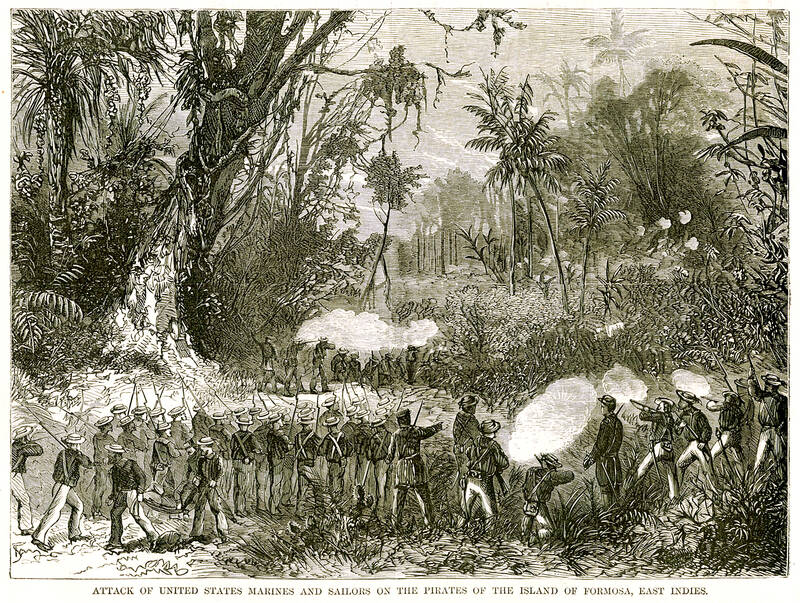
Photo courtesy of Wikimedia Commons
Still another might-have-been with the 1874 expedition is laid out in an interesting article by Danny Orbach on Japanese military’s habit of insubordination at all levels. Orbach traces the roots of this institutional culture indirectly to the 1874 expedition.
Most prominent, of course, is the fact that the invasion itself was an act of insubordination. In April of 1874, the Japanese appointed Saigo Tsugumichi to head the expedition to Taiwan. As the expedition was readied, word of it spread in the western press, and one by one, the major western powers withdrew permission for their citizens to participate. The government began to get cold feet, and ordered it to stop. Saigo, however, waved his imperial decree giving him permission to proceed, arguing too that everything was already in motion.
“The fact that Saigo had received his orders in the form of an edict,” Orbach writes, “and their revocation was a mere government instruction, provided him with optimal conditions to utilize the authority of the emperor for his own purposes.”
The invasion went ahead against government orders. What if Saigo had obeyed?
Once on the ground, the insubordination multiplied. Cassel was among the foreign advisors and observers who noted that junior officers and enlisted men frequently attacked without orders. Their private expeditions threatened good relations with the local indigenous people. J. R. Wasson, an American military officer serving in the Japanese military, noted how soldiers in the rear frequently charged through the lines to the front to participate in the action, despite orders. Early in the decisive Battle of the Stone Gate the Japanese commander ordered his men to retreat, but his men ignored him and continued fighting.
The Japanese military was probably too weak to extend Japanese rule over all of Formosa at that point, but the 1874 expedition confirmed Manchu military weakness in Taiwan. This realization played a role in the French invasion in the Sino-French war a decade later, and in the speculation by the imperialist powers about how they might grab Taiwan. If Saigo had not defied orders from the government, perhaps some other power would have moved on Taiwan. Instead, ironically, the settlement between the two empires ended up with Japan confirming Manchu rule over the island and inspiring the Manchus to upgrade the island’s defenses.
The 1874 expedition shows how, as the west coast of Taiwan became occupied and administered, in the 19th century the attention of would-be colonizers began shifting to the south and east of Taiwan, since they lay outside Manchu control. Early in the century outsiders became well aware of this. For example, the 1807 edition of John Aikins’ Geographical Delineations: Or, A Compendious View of the Natural and Political State of All Parts of the Globe observes that Taiwan was divided into eastern and western parts, “of which the latter only is possessed by the Chinese, while the eastern is left to the original inhabitants.”
The Japanese incursion also highlights how today when we speak of “Taiwan,” we are actually speaking in a subtly anachronistic manner: we treat it as a unitary object with a single destiny, as it is seen today. Preceding history is treated as a prologue to this unity. In the great age of imperialism it was seen as Africa, a place inhabited by various peoples, pieces of which could be bitten off by any power willing to do so. Yet, the island was not ruled in its entirety by a single power until the 20th century and it was only historical contingency that it ended up that way.
Notes from Central Taiwan is a column written by long-term resident Michael Turton, who provides incisive commentary informed by three decades of living in and writing about his adoptive country. The views expressed here are his own.

By global standards, the traffic congestion that afflicts Taiwan’s urban areas isn’t horrific. But nor is it something the country can be proud of. According to TomTom, a Dutch developer of location and navigation technologies, last year Taiwan was the sixth most congested country in Asia. Of the 492 towns and cities included in its rankings last year, Taipei was the 74th most congested. Taoyuan ranked 105th, while Hsinchu County (121st), Taichung (142nd), Tainan (173rd), New Taipei City (227th), Kaohsiung (241st) and Keelung (302nd) also featured on the list. Four Japanese cities have slower traffic than Taipei. (Seoul, which has some

In our discussions of tourism in Taiwan we often criticize the government’s addiction to promoting food and shopping, while ignoring Taiwan’s underdeveloped trekking and adventure travel opportunities. This discussion, however, is decidedly land-focused. When was the last time a port entered into it? Last week I encountered journalist and travel writer Cameron Dueck, who had sailed to Taiwan in 2023-24, and was full of tales. Like everyone who visits, he and his partner Fiona Ching loved our island nation and had nothing but wonderful experiences on land. But he had little positive to say about the way Taiwan has organized its

Michael slides a sequin glove over the pop star’s tarnished legacy, shrouding Michael Jackson’s complications with a conventional biopic that, if you cover your ears, sounds great. Antoine Fuqua’s movie is sanctioned by Jackson’s estate and its producers include the estate’s executors. So it is, by its nature, a narrow, authorized perspective on Jackson. The film ends before the flood of allegations of sexual abuse of children, or Jackson’s own acknowledgment of sleeping alongside kids. Jackson and his estate have long maintained his innocence. In his only criminal trial, in 2005, Jackson was acquitted. Michael doesn’t even subtly nod to these facts.
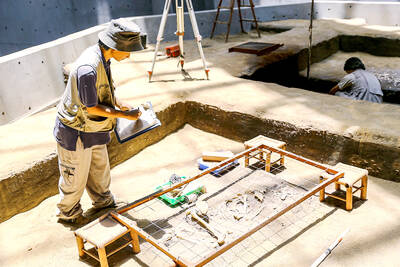
Writing of the finds at the ancient iron-working site of Shihsanhang (十 三行) in New Taipei City’s Bali District (八里), archaeologist Tsang Cheng-hwa (臧振華) of the Academia Sinica’s Institute of History and Philology observes: “One bronze bowl gilded with gold, together with copper coins and fragments of Tang and Song ceramics, were also found. These provide evidence for early contact between Taiwan aborigines and Chinese.” The Shihsanhang Web site from the Ministry of Culture says of the finds: “They were evidence that the residents of the area had a close trading relation with Chinese civilians, as the coins can be


 RSS
RSS