


Since ChatGPT stunned the world three years ago with the powers of generative AI, countries have grappled with how to govern the rapidly developing technology.
As Vietnam’s artificial intelligence law goes into effect on Sunday, here is a look at regulation efforts around the globe:
EU: FIRST MOVE
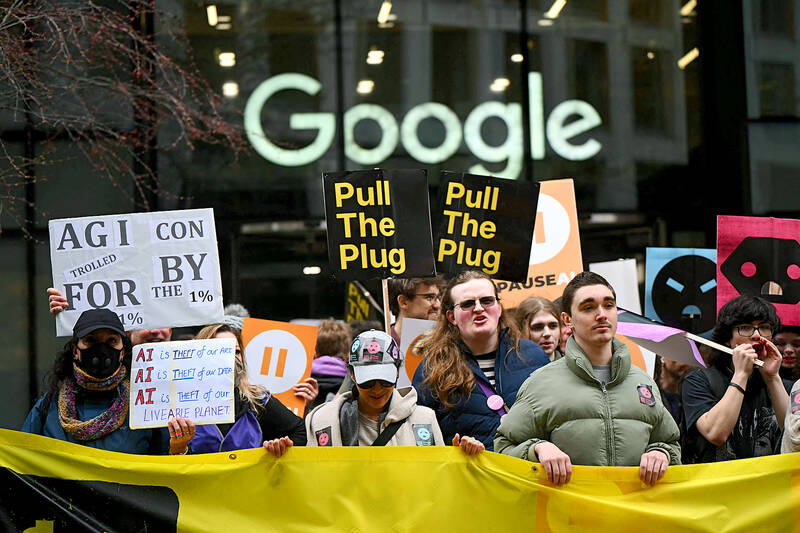
Photo: AFP
The European Union is considered a trailblazer, having adopted in 2024 what it calls “the world’s first comprehensive AI law” penalized with heavy fines.
The law takes a risk-based approach: if a system is high-risk, a company will have a stricter set of obligations to fulfill before being authorized in the EU.
These landmark rules have faced pushback from the US under President Donald Trump, but also from businesses and governments at home that complain they could hamper growth.
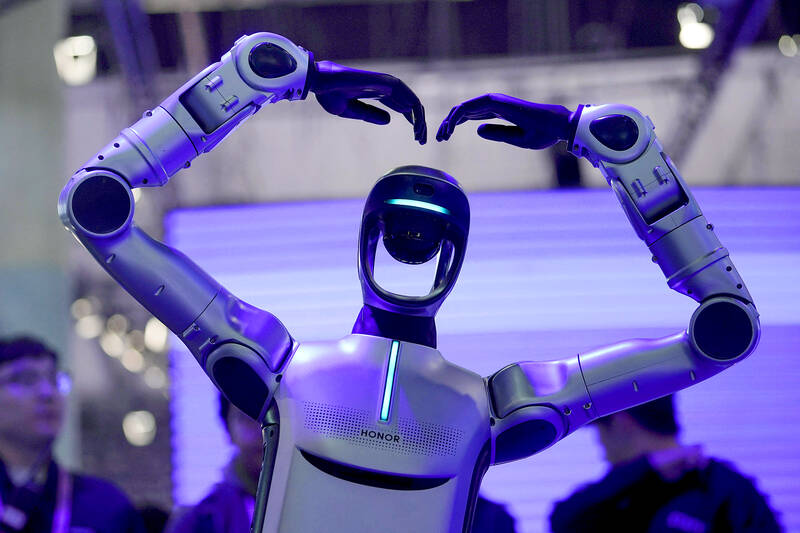
Photo: AFP
The EU bowed to pressure last year and proposed changes including partially delaying the law’s application in a move it says will help European companies compete globally.
The law will now be fully applicable next year, but the EU already allows regulators to ban systems deemed to pose unacceptable risks.
That could include “social scoring” systems that lead to discrimination by classifying individuals or groups based on social behavior or personal traits.
US: LAND OF THE FREE
The US, home to ChatGPT maker OpenAI, chip titan Nvidia and tech giants like Google, is not keen on enacting new rules.
Vice President JD Vance has warned against “excessive regulation” that “could kill a transformative sector.”
And at a major AI summit in New Delhi last month, the US delegation head said the country “totally” rejects global governance of AI.
Some states have taken matters into their own hands, although the Washington is trying to find ways to stop this from happening.
California enacted a first-of-its-kind law in October requiring AI chatbot operators to implement safeguards such as referring people who express thoughts on suicide to crisis services.
ASIA: NEW LAWS
A wide-ranging law took full effect in South Korea in January, requiring companies to tell users when products use generative AI.
It also says they must clearly label content, including deepfakes, that cannot readily be differentiated from reality.
Places like Taiwan and Japan are taking a lighter touch on AI regulation, shying away from penalties in favor of voluntary guidelines promoting innovation.
China — racing to challenge US dominance in the technology — has its own complex and evolving set of guardrails.
“What stands out about China is how regulated it is, despite the innovation happening,” said Seth Hays, author of the Asia AI Policy Monitor newsletter.
“For example, firms need to register their models with the government, and there are stricter content moderation, labeling and user verification requirements not seen elsewhere.”
GLOBAL DEBATE
Many other countries, from Brazil to the United Arab Emirates, are implementing AI frameworks that can roughly be divided into risk-based rules like the EU’s, or pro-innovation guidelines.
At the New Delhi summit, 91 countries and organizations called for “secure, trustworthy and robust” AI.
But their declaration, signed by the US and China, was criticized by AI safety campaigners for being too generic to protect the public.
A 40-member UN expert panel has also been established to work towards “science-led governance” of the technology, the global body’s chief Antonio Guterres has said.
By global standards, the traffic congestion that afflicts Taiwan’s urban areas isn’t horrific. But nor is it something the country can be proud of. According to TomTom, a Dutch developer of location and navigation technologies, last year Taiwan was the sixth most congested country in Asia. Of the 492 towns and cities included in its rankings last year, Taipei was the 74th most congested. Taoyuan ranked 105th, while Hsinchu County (121st), Taichung (142nd), Tainan (173rd), New Taipei City (227th), Kaohsiung (241st) and Keelung (302nd) also featured on the list. Four Japanese cities have slower traffic than Taipei. (Seoul, which has some

Michael slides a sequin glove over the pop star’s tarnished legacy, shrouding Michael Jackson’s complications with a conventional biopic that, if you cover your ears, sounds great. Antoine Fuqua’s movie is sanctioned by Jackson’s estate and its producers include the estate’s executors. So it is, by its nature, a narrow, authorized perspective on Jackson. The film ends before the flood of allegations of sexual abuse of children, or Jackson’s own acknowledgment of sleeping alongside kids. Jackson and his estate have long maintained his innocence. In his only criminal trial, in 2005, Jackson was acquitted. Michael doesn’t even subtly nod to these facts.

Writing of the finds at the ancient iron-working site of Shihsanhang (十 三行) in New Taipei City’s Bali District (八里), archaeologist Tsang Cheng-hwa (臧振華) of the Academia Sinica’s Institute of History and Philology observes: “One bronze bowl gilded with gold, together with copper coins and fragments of Tang and Song ceramics, were also found. These provide evidence for early contact between Taiwan aborigines and Chinese.” The Shihsanhang Web site from the Ministry of Culture says of the finds: “They were evidence that the residents of the area had a close trading relation with Chinese civilians, as the coins can be
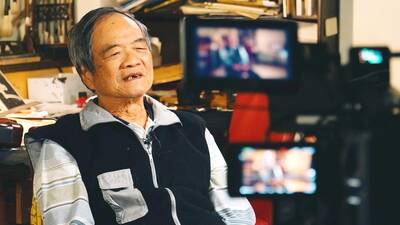
During her 2015 trip to Taiwan, Sophia J. Chang (張詠慧) got fewer answers than she’d hoped for, but more revelations than she could have imagined. “That was the year I last saw my grandmother. She was in hospice care in Tainan, and it was painful to see her in bed, barely able to open her eyes,” says Los Angeles-born Chang. “The grandma I’d known, a fantastic cook and incredibly kind, was already gone.” After their visit, Chang and her grandfather went back to his apartment. There she asked him how he’d met her grandmother. “He hesitated, then started talking a bit.


 RSS
RSS