


In August of 1949 American journalist Darrell Berrigan toured occupied Formosa and on Aug. 13 published “Should We Grab Formosa?” in the Saturday Evening Post. Berrigan, cataloguing the numerous horrors of corruption and looting the occupying Republic of China (ROC) was inflicting on the locals, advocated outright annexation of Taiwan by the US. He contended the islanders would welcome that. Berrigan also observed that the islanders were planning another revolt, and wrote of their “island nationalism.” The US position on Taiwan was well known there, and islanders, he said, had told him of US official statements that Taiwan had not been handed over to China.
In the propaganda of the People’s Republic of China (PRC), the annexation of Taiwan is always presented as an “inevitable” outcome of the tide of history. Yet, Taiwan’s history is the unique result of contingent historical circumstances. If the King of Spain had pursued the Crown’s claims on Formosa with greater alacrity, we might all be learning Tagalog and consider the locals Filipinos. Things that could have happened, such as the expanding Islamic sphere, which reached the Philippines and Malaysia encompassing part of western or southern Taiwan, should also be regarded as part of that historical contingency.
TAIWAN DEBATE
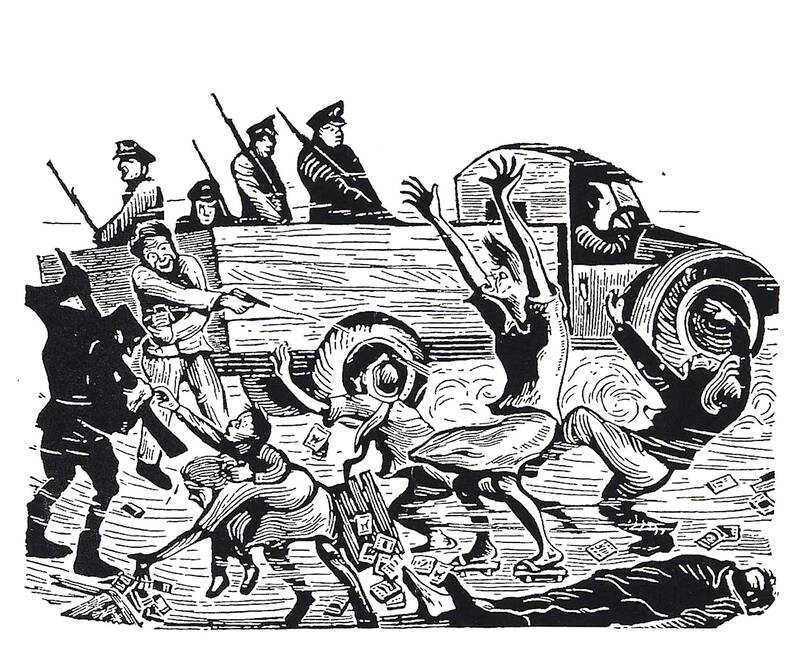
Photo courtesy of Lee Hsiao-feng
One of the more historically contingent moments in the island’s history was the period between the end of World War II in August of 1945 and the outbreak of the Korean War in 1950. During that period the destiny of Taiwan was hotly debated in US policy circles and in the press.
From the moment American officials arrived in Taiwan in the fall of 1945 it was understood in policy circles that the US did not consider Taiwan to have been turned over to China. On Nov. 13, 1945, Richard Butrick, special representative of the US Department of State, said in a dispatch that “Because of the uncertain status of Formosa, the Department did not prepare [consular] seals.”
On Nov. 23, 1945, in the first Consular report by consular agent George Kerr (later author of Formosa Betrayed), a month after ROC troops began their occupation of the island, Kerr noted that senior Formosan figures, long supportive of China, had become alarmed by the massive influx of corruption and organized crime. Kerr questioned whether Formosa ought to be returned to China, become independent or placed under a UN trusteeship. These three choices would dominate future discussions.
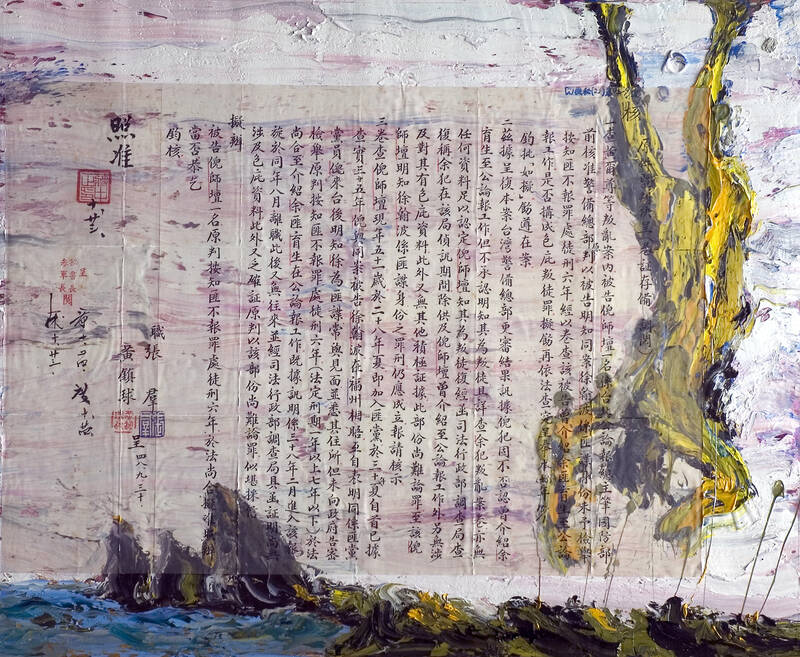
Photo courtesy of the 21st Century Foundation
As Americans — both in government circles and in the press — grew increasingly disgusted with the rampant corruption of the ROC, they soured on the idea of turning Formosa over to China.
Perceptions altered with startling rapidity. The title of a March 21, 1946, Washington Daily News article by William Newton, not even six months after occupation by ROC troops, blared that “Corrupt Chinese Worse than Japs, Say Formosans.”
Similarly, on June 10, 1946, a Time magazine report from Taipei quoted a prominent Formosan as saying “Taiwanese would choose America first and Japan next,” as they had experienced Chinese governance.
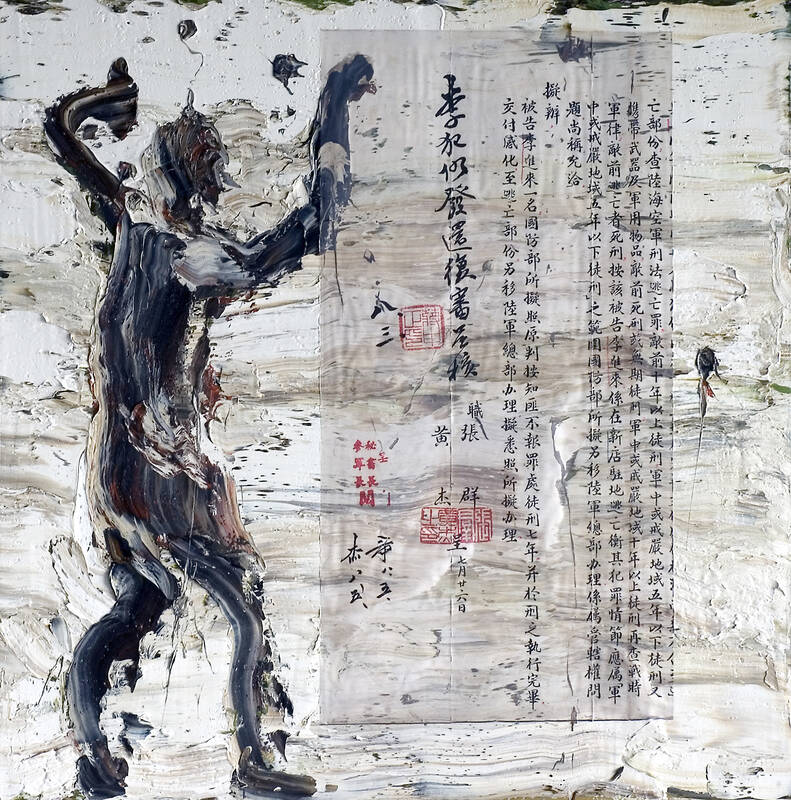
Photo courtesy of the 21st Century Foundation
The brutal and corrupt occupation of Formosa was a constant concern in both the US Embassy in Nanking and in Washington. A revolt followed and Chinese troops arrived on the island at the beginning of 1947 to suppress it. The cities were “pacified” with indiscriminate violence, and several Formosans were murdered against the walls of the US Consulate on the night of March 3. Naturally, this caused US officials to reconsider their positions on Formosa. As ROC troops pillaged and killed, the US consul wrote that intervention is “profoundly desired by Formosans who believe representations at Nanking and direct intervention by United Nations justifiable under present Japanese de jure sovereignty status.”
The Formosans understood very well their own status and the US position.
A key takeaway, often not recognized, is that the current US position on Taiwan crystallized in part as a response to ROC savagery after the 228 Incident. This presents another what if: what if the ROC had behaved with the utmost decorum and civility toward Formosans?
On Nov. 6, 1947, the Consul in Taipei notified the ambassador in Nanking that Formosan leader Joshua Liao (廖文奎) was on his way to Nanjing to present a request for Taiwanese representation at the Japanese peace conference and to ask the US to prevent Taiwan from being turned over to the ROC. Again, Formosan leaders had grasped their position and understood what they needed to do to stop the Chinese.
The Embassy in Nanking cabled the secretary of state on Dec. 17, 1948, noting that “Despite commitment of Cairo Declaration, Taiwan is still legally part of the Japanese empire and occupied territory.” US President Truman’s 1950 statements on Cairo were not responses to the Korean War, but reflected US decisions made long beforehand.
Again, on Jan. 14, 1949, a top secret National Security Council memorandum from acting secretary of state Robert Lovett to president Harry Truman observed that if the Communists grabbed the island, or the Formosans revolted, “justification would exist for action by the United Nations, both on the grounds that the situation represented a threat to peace and based on the de facto status of Formosa.”
The memo also called for the US response to be based on the internationally acceptable principle of “self-determination for the Formosan people.”
Moreover, the unresolved status of Formosa was in fact general knowledge, not some arcane insider understanding of a clique Formosan nationalists. In February of 1949, the American consul in Taipei observed that Chinese fleeing the Communists to Taiwan “are suddenly remembering that Formosa is and will continue until the Japanese Peace Treaty to be a segment of the Japanese Empire.”
TAIWAN ‘RESTORED’
Two months later the Consul in Taipei reported that “there has also been great local interest in American press commentary on Taiwan’s present legal status and possible future... UP and AP reports on the Taiwan independence and trusteeship movement have caused considerable press repercussion locally.” In response to the US press reports, ROC government officials publicly announced that Taiwan was “restored” Chinese territory.
By May 16, 1949, the consulate in Taipei reported that Formosan and Chinese “business leaders eager for [UN] trusteeship solution for Taiwan.” This idea would circulate for the next 18 months or so, but US officials were later asked to downplay Formosan support for the idea.
On Aug. 21, 1950, George Kennan laid out a long memorandum on policy in Asia. He advocated a long-term compromise with Russia, which called for “An approach to the Formosan question based on a UN-conducted plebiscite, again without US participation, and complete subsequent demilitarization of Formosa under whatever regime might be established, the UN acting as permanent supervisor.”
This appears to be the last gasp of the idea of UN trusteeship. A note at the bottom by the archivist says the secretary of state asked that Kennan’s memo not be circulated.
In the end, the idea of UN trusteeship and eventual independence, repeatedly recognized as a possibility in US official circles, was never adopted. Nor did the US simply acquire the island, an act which islanders then would probably have welcomed. Instead, the US — with its usual preference for expediency over doing right — chose the most self-destructive policy of all: supporting Chiang Kai-shek (蔣介石) and denying Taiwanese a democratic choice.
Note that the discussion above should bear on the current Greenland “debate” where supporters dug up old policy documents from 1951 recommending that the US seize Greenland. All sorts of things were advocated in those heady days of American power, and it is not difficult to find a policy document to support any particular current position.
That of course applies to this discussion.
Notes from Central Taiwan is a column written by long-term resident Michael Turton, who provides incisive commentary informed by three decades of living in and writing about his adoptive country. The views expressed here are his own.
By global standards, the traffic congestion that afflicts Taiwan’s urban areas isn’t horrific. But nor is it something the country can be proud of. According to TomTom, a Dutch developer of location and navigation technologies, last year Taiwan was the sixth most congested country in Asia. Of the 492 towns and cities included in its rankings last year, Taipei was the 74th most congested. Taoyuan ranked 105th, while Hsinchu County (121st), Taichung (142nd), Tainan (173rd), New Taipei City (227th), Kaohsiung (241st) and Keelung (302nd) also featured on the list. Four Japanese cities have slower traffic than Taipei. (Seoul, which has some

Michael slides a sequin glove over the pop star’s tarnished legacy, shrouding Michael Jackson’s complications with a conventional biopic that, if you cover your ears, sounds great. Antoine Fuqua’s movie is sanctioned by Jackson’s estate and its producers include the estate’s executors. So it is, by its nature, a narrow, authorized perspective on Jackson. The film ends before the flood of allegations of sexual abuse of children, or Jackson’s own acknowledgment of sleeping alongside kids. Jackson and his estate have long maintained his innocence. In his only criminal trial, in 2005, Jackson was acquitted. Michael doesn’t even subtly nod to these facts.
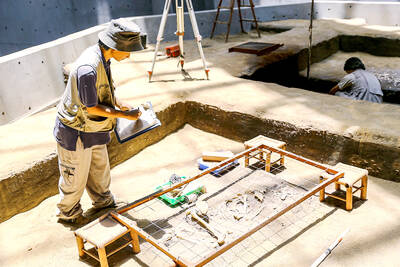
Writing of the finds at the ancient iron-working site of Shihsanhang (十 三行) in New Taipei City’s Bali District (八里), archaeologist Tsang Cheng-hwa (臧振華) of the Academia Sinica’s Institute of History and Philology observes: “One bronze bowl gilded with gold, together with copper coins and fragments of Tang and Song ceramics, were also found. These provide evidence for early contact between Taiwan aborigines and Chinese.” The Shihsanhang Web site from the Ministry of Culture says of the finds: “They were evidence that the residents of the area had a close trading relation with Chinese civilians, as the coins can be
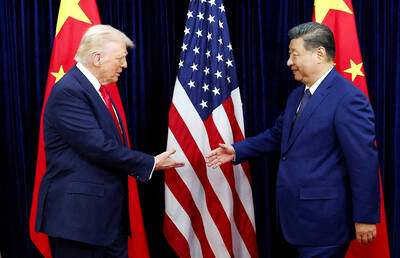
The March/April volume of Foreign Affairs, long a purveyor of pro-China pablum, offered up another irksome Beijing-speak on the issues and solutions for the problems vexing the People’s Republic of China (PRC) and the US: “America and China at the Edge of Ruin: A Last Chance to Step Back From the Brink” rang the provocative title, by David M. Lampton and Wang Jisi (王緝思). If one ever wants to describe what went wrong with US-PRC relations, the career of Wang Jisi is a good place to start. Wang has extensive experience in the US and the West. He was a visiting


 RSS
RSS