


Imagine hundreds of thousands of angry protesters filling the streets, shouting slogans to vent their fury.
American diplomats holed up in the highly fortified American Institute in Taiwan (AIT) complex, each silently thanking their predecessors for having the foresight to build security from the ground up into their new de facto embassy.
McDonald’s franchisees face a plunge in sales, and stop delivering using their own delivery personnel for fear they will come under abuse, or worse.
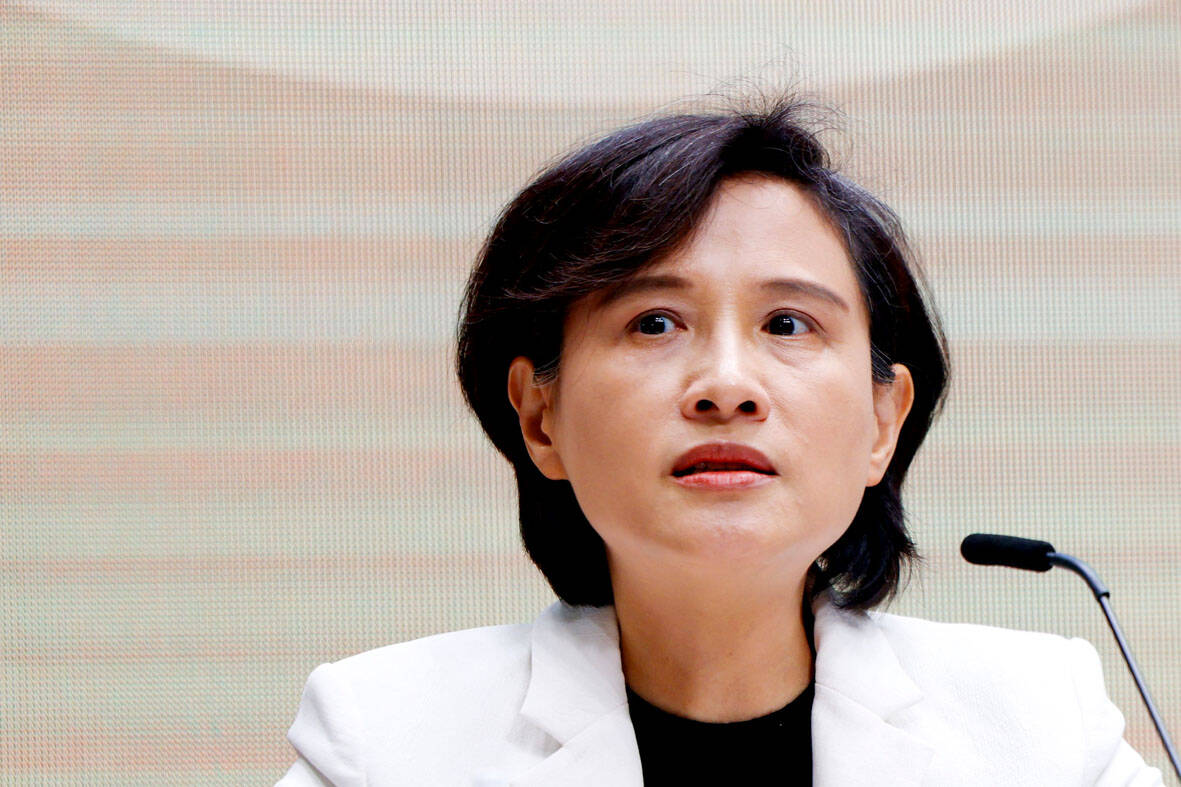
Photo: Reuters
Historically-minded observers would recall the 1957 sacking of the US embassy, and the angry, violent mob that descended on the limousine carrying US diplomats in December of 1978, following the announcement of the cutting of diplomatic relations, smashing windows and rocking the vehicle before narrowly escaping.
If the details that are coming out about the trade deal negotiated between Taipei and Washington had come out at any time in the post-war era before last year’s “liberation day” tariff announcement by US President Donald Trump, there would have been widespread outrage and protests.
Yet, industry groups and most non-partisan experts are praising the administration of President William Lai’s (賴清德) and especially vice premier Cheng Li-chiun (鄭麗君), who led the negotiating team. The sighs of relief in the business community are palpable.
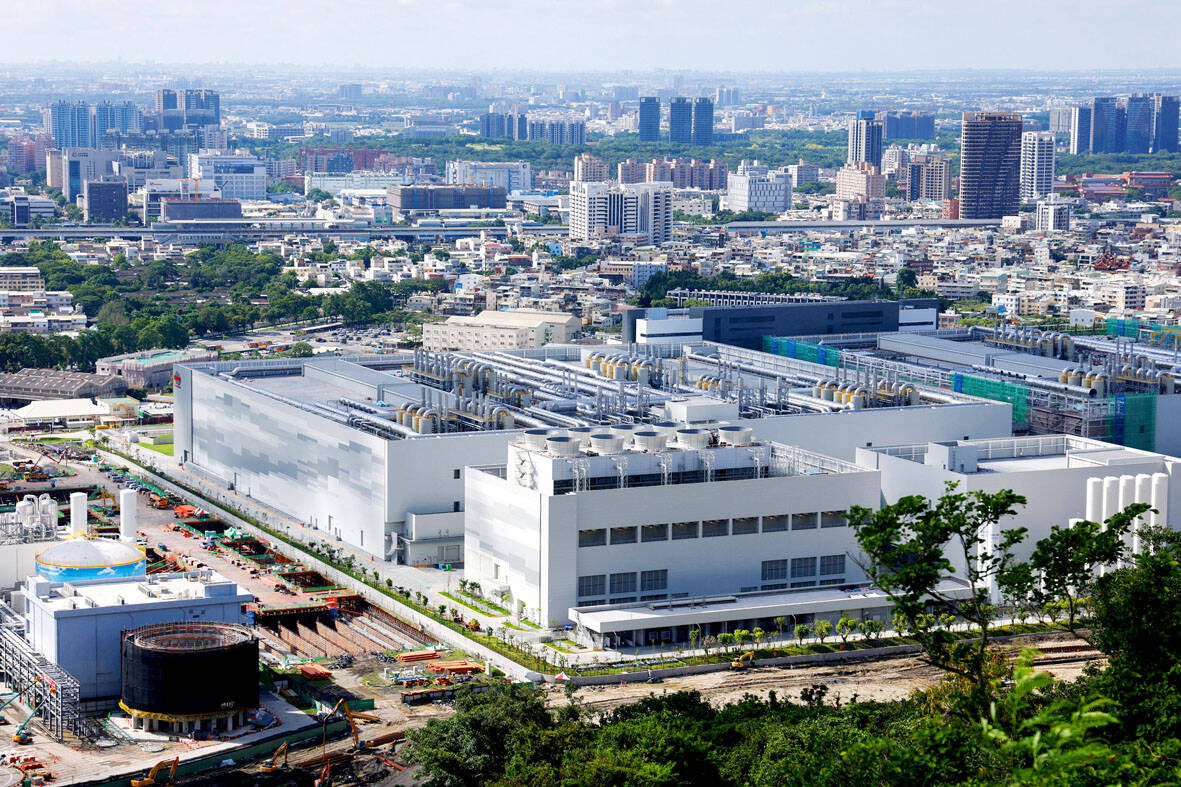
Photo: Reuters
How the world has changed.
DON’T PANIC
President Lai and especially vice premier Cheng deserve the praise they are receiving, but there are some caveats.
Photo: AFP
First, the deal is terrible. Yet, compared to the deals reached by Taiwan’s peers and neighbors, Taiwan came out far ahead.
Unlike most countries, Taiwan did not panic and rush to reach a deal. In their desperation, countries like South Korea and Japan begged to get any deal they could, and the results felt more like they were scribbled out on the back of a napkin than true trade agreements.
Taiwan took a slow, steady approach. Reporting suggests that Cheng and her team lived and breathed these negotiations, jet-lagged and exhausted, and attended over 400 meetings to make it happen.
This patience paid off. The headline tariff rate is now 15 percent, the same as Japan and South Korea, but without any stacking on top of other tariffs or “whichever is higher” tariff applications, as is the case with South Korea. Southeast Asian neighbors face tariffs of around 20 percent, and China 47 percent.
Headlines suggest that Taiwan will need to invest US$500 billion (NT$15.82 trillion) in the US. That is a lot, especially when compared to the US$550 billion from the much larger Japan and US$200 billion (negotiated down from US$350 billion) from South Korea.
A look at the details suggests that Taiwan got a far better deal. Those two nations’ investments are to be “selected by the United States Government,” and those investments will have split profits equally with the US until the principal is recovered, but 90 percent will go to the US after recovery.
That is an outrageous ripoff; no sane business would voluntarily invest on those terms.
Taiwanese firms appear to be able to choose their own investments, free from any profit-sharing arrangement.
Taiwan’s US$500 billion is broken down into two parts. According to a US Department of Commerce fact sheet: “Taiwanese semiconductor and technology enterprises will make new, direct investments totaling at least US$250 billion to build and expand advanced semiconductor, energy and artificial intelligence production and innovation capacity in the United States.”
US Commerce Secretary Howard Lutnick has confirmed that Taiwan Semiconductor Manufacturing Co’s (TSMC) already planned US$100 billion in direct investment is included in the total, leaving US$150 billion in new investment. TSMC can not build new fabs fast enough to keep up with American demand, and between them and their extensive chain of suppliers, it is not unrealistic that the remaining amount could be profitably spent given a reasonable amount of time.
According to the fact sheet: “Taiwan will provide credit guarantees of at least US$250 billion to facilitate additional investment by Taiwanese enterprises, supporting the establishment and expansion of the full semiconductor supply chain and ecosystem in the United States.” Smaller suppliers could use that credit to great benefit.
However, this leaves one giant unanswered question: Will that credit also be counted as direct investment, being counted under both tallies? In other words, if company A is given US$1 billion in Taiwan-backed credit, does that money also count as direct investment when it is spent? If so, then this cuts the total amount actually delivered significantly.
Critics have voiced concerns about Taiwan’s semiconductor industry being “hollowed out.” This is far less of a concern than it appears.
TSMC and its suppliers are continuing to invest in Taiwan at breakneck speed, and are keeping their most advanced fabs here. However, domestically, they are up against serious constraints: A massive talent shortage, tight electricity and water supplies and a shortage of available land.
The reality is they have to invest abroad to keep up with demand, though America might not have been their first choice.
Others have voiced concerns that Taiwan is losing its so-called “silicon shield.” That is a mirage; the “silicon shield” does not exist, and never has. China could not take over Taiwan’s semiconductor industry even if it invaded because it would be starved out of existence through sanctions, and they lack the know-how to operate it.
LOCAL POLITICS
Another important caveat is that so far, we have heard the headline details that the Taiwanese and American governments want to reveal to declare “victory,” but the deal remains unsigned, and there could be unsettling details in the fine print we are unaware of.
Taiwan will likely need to cut import tariffs on American goods, but we do not know the details. This could impact certain industries, such as agriculture. However, the ugly truth is that within a decade, many farmers will no longer be alive, so Taiwan will either have to import farmers or farm goods. Factories also face similar labor shortage problems.
The deal will also need to be approved by the legislature. If the opposition demands renegotiations, that would significantly delay the implementation of the deal, and possibly scupper it. The economic costs would be catastrophic.
More likely, the opposition will be full of bluster and noise, but largely back down. Why am I so confident this is the case?
Because of figures like the highly popular Taichung Mayor Lu Shiow-yen (盧秀燕), who is the frontrunner to represent the Chinese Nationalist Party (KMT) in the next presidential election. Unlike party hardliners, she runs a city and is highly sensitive to the practical concerns of her constituents.
When the deal was announced, Lu praised the negotiators for “doing their best,” noting that Taiwan has obtained most-favored-nation treatment, with a reciprocal tariff of 15 percent and no stacking, representing the lowest rate among nations with a trade surplus against the US. She expressed hope that if the public can accept this outcome, everyone will focus on boosting the economy with peace of mind in the new year.
Lu is smart in usually not putting the cart before the horse and commenting on national politics while she is still mayor, but in this case, she put her foot down firmly. She demonstrated knowledge of the issue, concern for her constituents and sent a clear message to her party that they will be punished at the ballot box if they ignore that.
The opposition will demand subsidies from the government to domestic industries that may suffer, and if they are wise, the Lai administration will oblige and give them face.
None of this changes the fact that the deal sucks. Taiwan was bullied and threatened into it, but under the circumstances, the Lai administration and especially Cheng Li-chiun and her team deserve credit for getting the best deal they could.
Donovan’s Deep Dives is a regular column by Courtney Donovan Smith (石東文) who writes in-depth analysis on everything about Taiwan’s political scene and geopolitics. Donovan is also the central Taiwan correspondent at ICRT FM100 Radio News, co-publisher of Compass Magazine, co-founder Taiwan Report (report.tw) and former chair of the Taichung American Chamber of Commerce. Follow him on X: @donovan_smith.
Yesterday, the Democratic Progressive Party (DPP) nominated legislator Puma Shen (沈伯洋) as their Taipei mayoral candidate, the Chinese Nationalist Party (KMT) put their stamp of approval on Wei Ping-cheng (魏平政) as their candidate for Changhua County commissioner and former legislator Tsai Pi-ru (蔡壁如) of the Taiwan People’s Party (TPP) has begun the process to also run in Changhua, though she has not yet been formally nominated. All three news items are bizarre. The DPP has struggled with settling on a Taipei nominee. The only candidate who declared interest was Enoch Wu (吳怡農), but the party seemed determined to nominate anyone
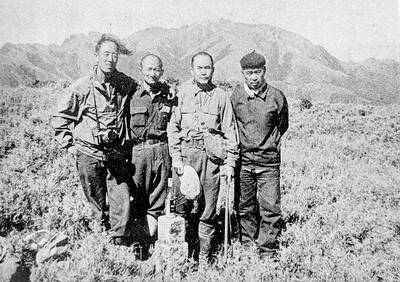
May 18 to May 24 Gathered on Yangtou Mountain (羊頭山) on Dec. 5, 1972, Taiwan’s hiking enthusiasts formally declared the formation of the “100 Peaks Club” (百岳俱樂部) and unveiled the final list of mountains. Famed mountaineer Lin Wen-an (林文安) led this effort for the Chinese Alpine Association (中華山岳協會). Working with other experienced climbers, he chose 100 peaks above 10,000 feet (3,048m) that featured triangulation points and varied in difficulty and character. The list sparked an alpine hiking craze, inspiring many to take up mountaineering and competing to “conquer” the summits. A common misconception is that the 100 Peaks represent Taiwan’s 100 tallest
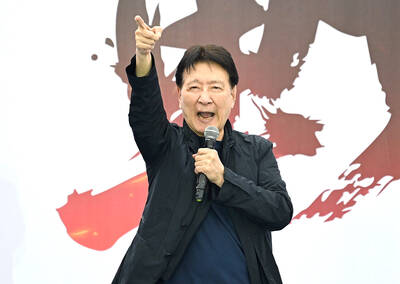
In a sudden move last week, opposition lawmakers of the Chinese Nationalist Party (KMT) and Taiwan People’s Party (TPP) passed a NT$780 billion special defense budget as a preemptive measure to stop either Chinese leader Xi Jinping (習近平) or US President Donald Trump from blocking US arms sales to Taiwan at their summit in Beijing, said KMT heavyweight Jaw Shaw-kong (趙少康), speaking to the Taipei Foreign Correspondents Club on Wednesday night in Taipei. The 76-year-old Jaw, a political talk show host who ran as the KMT’s vice presidential candidate in 2024, says that he personally brokered the deal to resolve
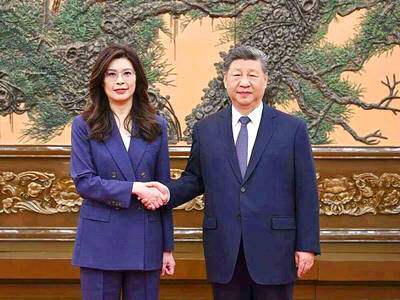
The Chinese Nationalist Party (KMT), alongside their smaller allies the Taiwan People’s Party (TPP), are often accused of acting on behalf of the Chinese Communist Party (CCP). Some go so far as to call them “traitors.” It is not hard to see why. They regularly pass legislation to stymie the normal functioning of the ruling Democratic Progressive Party’s (DPP) administration, and they have yet to pass this year’s annual budget. They slashed key elements of the government’s proposed NT$1.25 trillion (US$40 billion) special military budget, and in the smaller NT$780 billion package they did pass, it is riddled with provisions that


 RSS
RSS