


Successful politicians have a very particular set of skills. In public, they need enormous stamina; appearing likeable and approachable for long hours, seven days a week. Behind the scenes, they need to be relentlessly ambitious, capable of marshalling allies and ruthless towards their enemies.
Party primaries attempt to pick winners, sometimes in brutally competitive contests pitting the toughest and most ambitious politicians in the party against each other.
Atop this process is the party chair, who must steer the party through this often fraught process while managing intense rivalries and keeping the party united. The measure of a good party chair is not if they can stop the emergence of bitter divisions and infighting, but how effectively they manage to keep it from spinning out of control.
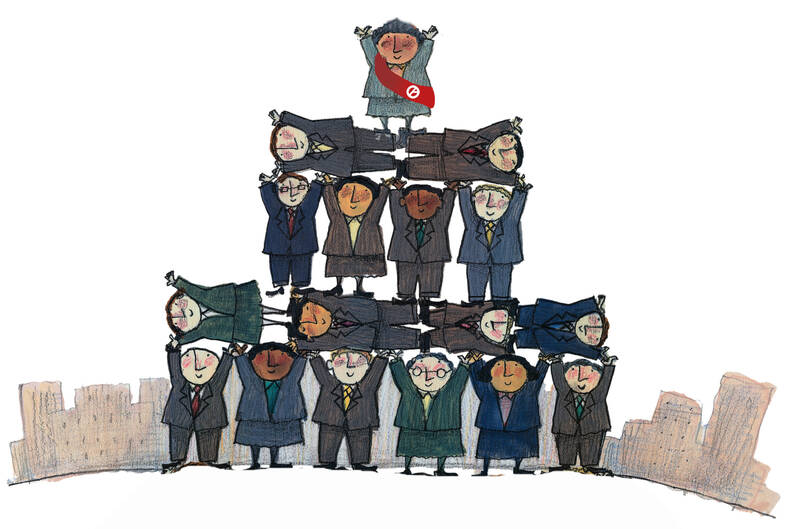
GRAPHIC: TT
The nightmare scenario is when a disgruntled, rebuffed candidate launches an independent run, splitting the vote. The higher up the electoral pyramid, where the stakes are bigger, the more likely that the candidates have a ruthless determination to win, and an ego to match.
In every election cycle, the mix of methods used to determine a party’s candidates differs. For more about this year’s election, see this column, “The stakes in this year’s nine-in-one elections” from last Saturday, Jan. 10, on page 12.
At stake this year are six potential jumping-off points for the presidency. In the democratic era, only twice has a major party run a candidate for president who did not previously lead one of the “big six” special municipalities. Both were from the Democratic Progressive Party (DPP), Peng Ming-min (彭明敏) in 1996, and Tsai Ing-wen (蔡英文) in 2012, 2016, and 2020.
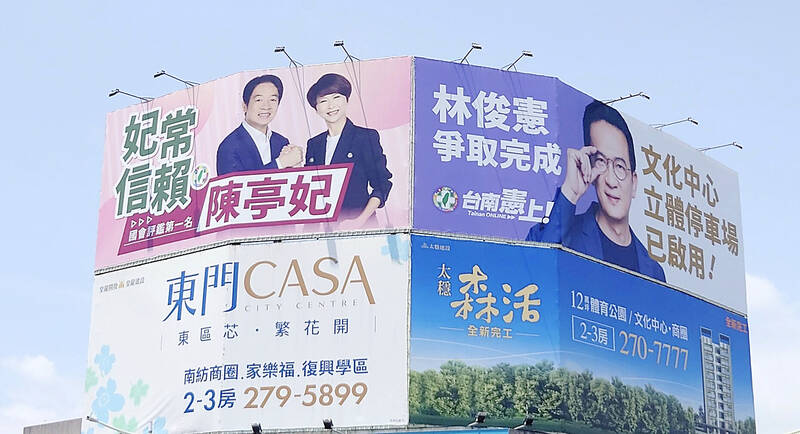
Photo: Hung Jui-chin, Taipei Times
The 2024 presidential candidates were former mayors of Tainan, New Taipei City and Taipei.
The county commissioner positions up for grabs this year are also important, often a waystation before running one of the big six metropolises, the premiership or a cabinet post.
Early in the democratic era, there was a lot of experimentation in the primary process, often involving party members voting. While this provided a good reason to pay party dues, it often led to candidates that were too partisan for voters, and this has been dropped for years.
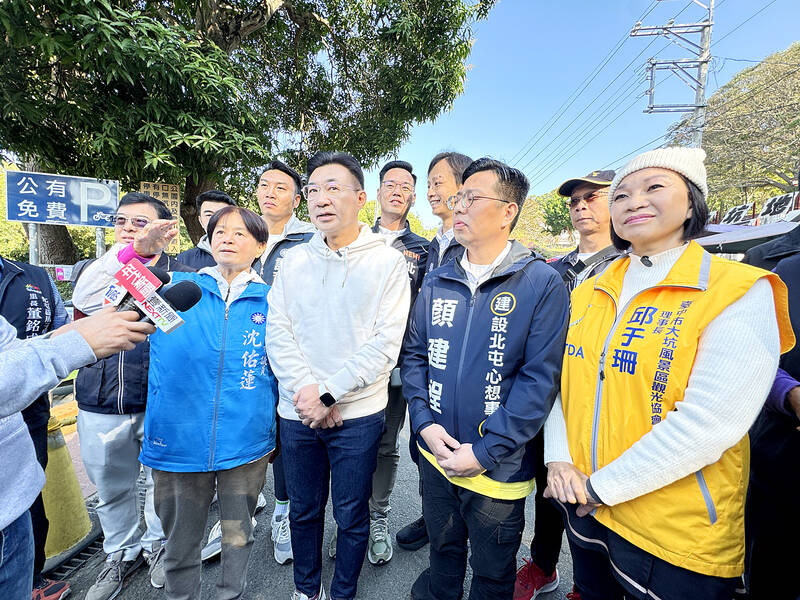
Photo: Taipei Times
FIVE METHODS
Nowadays, there are five basic models for choosing candidates.
The easiest and least risky for a party chair is to appoint incumbents. Rarely are they challenged. The problem is that there is a two-term limit for mayors and county commissioners, so their number is limited.
This time, the Chinese Nationalist Party (KMT) mayors of Taipei and Taoyuan can run, but their mayors in Taichung and New Taipei City are term-limited out. The DPP’s mayors in both Kaohsiung and Tainan are term-limited, creating risks for the party in these strongholds.
The second easiest is a big-shot run, whereby a candidate is of such high stature that no one challenges them. In New Taipei City, the candidates for both the DPP, Su Chiao-hui (蘇巧慧), and the Taiwan People’s Party’s (TPP), Huang Kuo-chang (黃國昌), were unchallenged, as was the KMT’s candidate, Ko Chih-en (柯志恩), in Kaohsiung.
The third method is negotiation or persuasion. In Tainan, there was a challenger to the KMT’s Hsieh Lung-chieh (謝龍介), but he was persuaded to exit the race.
KMT Chairwoman Cheng Li-wun (鄭麗文) will tomorrow attempt to negotiate between the two Taichung candidates: deputy legislative speaker Johnny Chiang (江啟臣) and lawmaker Yang Chiung-ying (楊瓊瓔). This could be a tricky one to resolve.
Chiang was the frontrunner in 2018, but lost the primary in an upset to Lu Shiow-yen (盧秀燕) by the tiniest of margins. The margin was so tight he could have challenged the result, but for the sake of party unity, he accepted the result and threw himself into heading up Lu’s campaign team. Chiang no doubt feels he is “owed” it for his loyalty to Lu and the party.
However, Yang was a former vice mayor under Lu, and belongs to the same KMT patronage faction as Chiang, the Taichung Red Faction. Chiang is widely thought to not play much of a role in faction affairs, but Yang has put in the work and effort. So, Yang likely also feels she is “owed.”
Normally in negotiations, the chair might have something to offer in exchange for dropping out, but Cheng has little to offer either candidate. If Friday’s negotiations fail, they could continue, or they could go to a contested primary.
Currently, the most popular contested primary method is public opinion polling. To ensure fairness, three separate polling companies are hired, and often the methodology used will be negotiated in advance by the candidates or a party election committee. Usually, the winner is the one polling the highest against a hypothetical candidate from the opposing party.
This method’s big advantage is that it is considered objective and fair, making it hard for losing candidates to complain. This reduces the risk of a candidate breaking party ranks and running anyway.
This week’s tight, four-way DPP primary in Kaohsiung produced a winner, but only beating the runner-up by 0.6 percent and the third by only a tiny bit more. Candidate Lin Dai-hua (林岱樺) refused to rule out bolting the party, saying only there “would be nothing to discuss” if the primary was “fair.” She came in fourth and lost by enough of a margin that was clear, and so far she has accepted her loss.
Another risk for the DPP is the Tainan primary taking place as this column is being written. Fifi Chen (陳亭妃) is considered the frontrunner, but if there is an upset and she loses, there is a risk of a nasty split in the party.
Though perceived as fair, the polling method has one big flaw: It does not necessarily pick the best candidate, only the one with the highest name recognition long before voters begin to seriously look into their options.
In 2022, both the KMT and DPP went for the highest risk, highest potential reward option: Both party chairs dictated who the candidates were, skipping primaries altogether.
This strategy worked very well for then-KMT chairman Eric Chu (朱立倫), and the party won in a landslide. However, the costs were high.
Chu’s heavy-handed approach infuriated a lot of powerful party figures. He almost caused a huge split in Taoyuan, lost Miaoli to a KMT-turned-independent candidate, and it may have cost the KMT Kinmen and Penghu. This strategy was so disliked that it likely cost him any chance of running for re-election, and Cheng won the chair race in part on promises not to follow Chu in dictating candidate selection.
POLITELY YIELDING
If the party is allied, there is a final step: The “polite yield” (禮讓). In this election, the KMT and TPP are planning to negotiate which candidates will run unopposed by the other party in New Taipei City, Yilan, Chiayi City, and possibly Hsinchu City if incumbent Mayor Ann Kao (高虹安) rejoins the TPP.
Cheng has indicated Kao will likely not be challenged, but it remains an open question which party Kao will represent, if any. For internal reasons and weak candidates, the KMT may be willing to back off in Chiayi City and Yilan.
New Taipei City will be a tough negotiation. It is the nation’s most populous city and a KMT stronghold. The KMT also has strong potential candidates, and Cheng has already pledged that the KMT must be represented in that race. However, the TPP candidate is their party Chairman Huang.
These negotiations will likely be held in March, when all the pieces are in place. Watch the New Taipei City negotiations; the horse-trading here could be intense.
Donovan’s Deep Dives is a regular column by Courtney Donovan Smith (石東文) who writes in-depth analysis on everything about Taiwan’s political scene and geopolitics. Donovan is also the central Taiwan correspondent at ICRT FM100 Radio News, co-publisher of Compass Magazine, co-founder Taiwan Report (report.tw) and former chair of the Taichung American Chamber of Commerce. Follow him on X: @donovan_smith.
What was the population of Taiwan when the first Negritos arrived? In 500BC? The 1st century? The 18th? These questions are important, because they can contextualize the number of babies born last month, 6,523, to all the people on Taiwan, indigenous and colonial alike. That figure represents a year on year drop of 3,884 babies, prefiguring total births under 90,000 for the year. It also represents the 26th straight month of deaths exceeding births. Why isn’t this a bigger crisis? Because we don’t experience it. Instead, what we experience is a growing and more diverse population. POPULATION What is Taiwan’s actual population?

After Jurassic Park premiered in 1993, people began to ask if scientists could really bring long-lost species back from extinction, just like in the hit movie. The idea has triggered “de-extinction” debates in several countries, including Taiwan, where the focus has been on the Formosan clouded leopard (designated after 1917 as Neofelis nebulosa brachyura). National Taiwan Museum’s (NTM) Web site describes the Formosan clouded leopard as “a subspecies endemic to Taiwan…it reaches a body length of 0.6m to 1.2m and tail length of 0.7m to 0.9m and weighs between 15kg and 30kg. It is entirely covered with beautiful cloud-like spots

For the past five years, Sammy Jou (周祥敏) has climbed Kinmen’s highest peak, Taiwu Mountain (太武山) at 6am before heading to work. In the winter, it’s dark when he sets out but even at this hour, other climbers are already coming down the mountain. All of this is a big change from Jou’s childhood during the Martial Law period, when the military requisitioned the mountain for strategic purposes and most of it was off-limits. Back then, only two mountain trails were open, and they were open only during special occasions, such as for prayers to one’s ancestors during Lunar New Year.
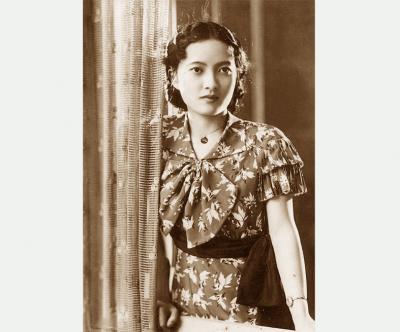
March 23 to March 29 Kao Chang (高長) set strict rules for his descendants: women were to learn music or cooking, and the men medicine or theology. No matter what life path they chose, they were to use their skills in service of the Presbyterian Church and society. As a result, musical ability — particularly in Western instruments — was almost expected among the Kao women, and even those who married into the family often had musical training. Although the men did not typically play instruments, they played a supporting role, helping to organize music programs such as children’s orchestras, writes


 RSS
RSS