


For probably as long as there has been storytelling and certainly for as long as stories have been written down, there has been metafiction. The terminology is inescapably postmodern; the practice as old as the Epic of Gilgamesh — widely considered the first literary work — where a self-referential allusion to the tablets upon which the tale is inscribed takes us outside the text.
In this remarkable, challenging and multilayered novel by Alvin Lu, we are left questioning where the reader and the narrator stand in relation to the various texts that are woven in and out, the motives of the characters and their exact roles in the events described and whether the elusive focal figure has ever existed.
Conflicting, overlapping accounts of Lena Wu — or someone who resembles her — appear throughout the patchwork of narratives, in the ultimate, goose-bump instance, impossibly cutting across generations.
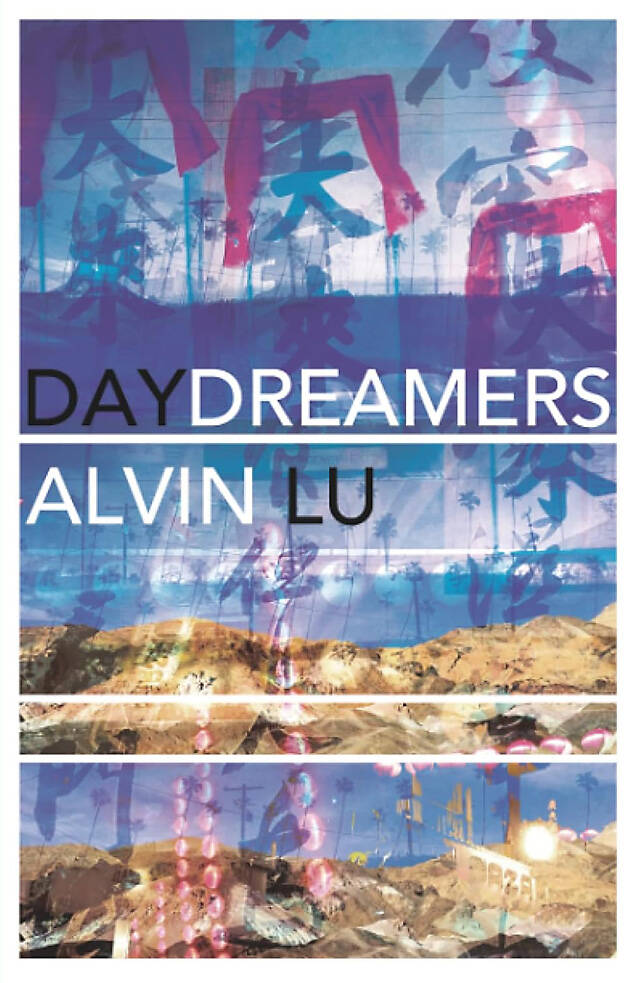
If we know anything about her, it’s that she was somehow embroiled in the death of her presumptive lover, an older man who is referred to as Uncle Rafael on account of his close relationship with the narrator’s father.
Intriguingly, neither of the latter two characters are named, presenting an unreliable narrator (and translator?) conundrum, particularly in light of the scene-setting revelations in the fictive Translator’s Preface. Here, we learn that the forthcoming text was a Chinese-language manuscript found among the father’s personal effects after his death.
The writing, the son informs us, “bears novelistic traces, even as it is preoccupied with the truth,” and this is evident from “the choice of protagonist, who I know, insofar as I know myself, is not the author but someone else whose mind he presumes to speak for.”
While not expressing any resentment over his portrayal in the manuscript, the son supposes “it is this way with all Chinese fathers and their sons.”
The idea of a father with preconceived notions of his children’s personalities is corroborated at points in his own text, particularly in relation to his daughter, a musical prodigy about whom the author had previously published a memoir.
Those who read the work reflected that the talented child “came off as blank,” with the narrator attributing this to a method of writing around the subject, “by adding so much intimate background detail that one could, in effect, see the outline around the empty vessel.”
CUT AND PASTE TECHNIQUE
Here, we are left with the impression of the child as a blank canvas upon which the parent leaves their imprint, both in real life and, perhaps even more ineluctably, through fiction.
What makes the manuscript special is a series of excerpts that have been appended to it. Torn from four other “borrowed texts” — the memoir, two works by Yvonne Fung, an author of some repute in Bay Area’s Taiwanese community and an unattributed fragment — these passages have been taped to the manuscript, with the father’s handwriting “sometimes scrawled around these sections.”
To represent these insertions, the translator’s son has set them off with “crude font changes,” which he admits might look clumsy but “emulates my father’s original labors.” Whether the fragments were to be incorporated into the main text as attributed quotes or “slyly blended in, after having been reworked in the author’s voice, their provenance disguised.”
The final unattributed fragment, which leads to questions of plagiarism and just how much of Lena Wu was a figment of both Fung and the father’s imaginations, is set off in a red font for reasons that the translator explains with an end note.
Aside from this idiosyncrasy, one chapter of the text employs an experimental structure, placing two narratives in juxtaposition and — for this reader at least — causing a good deal of head-scratching. When finally decoded, it was admittedly rather satisfying.
THE RISK OF WRITING
In the character of Fung, we have another enigma. Based on her current career as a real estate agent — a pastime that lends itself to her pursuit of Wu — we might surmise that she is a cut above the assorted dilettante of a Bay Area literary society, headed by the indefatigable Mrs. Hu.
As revealed through an affixed passage from a collection of her short stories on the topic, she was a Kaohsiung native who ended up teaching schoolchildren in Nanjing during the early years of the Cultural Revolution.
Quite how this came to pass is unexplained; one wonders whether Lu, a San Franciscan of Taiwanese heritage, has come across a similar story. Given the need to travel to China, at considerable risk, through third countries, there cannot have been many such cases.
Tasked by the father/manuscript author with producing a book on the circumstances of Uncle Rafael’s death, she embodies the blurred lines of literary fiction. In a lengthy passage from her short story collection, she recalls on the risks of writing during Mao’s crackdown on bourgeois elements.
Writing, she writes, “was action, decisive and irrevocable.” It was more dangerous because “[f]or one thing, unlike in the West, traditional Chinese culture does not associate writing with sophistry, but something like its opposite; for another, it does not harbor the illusion that fiction is somehow not the truth.”
MOVEMENT AND STASIS
In the tradition of such literary luminaries Solzhenitsyn and Genet who committed their works line by line to memory while imprisoned, Fung kept pieces of her story “suspended in my mind for years” before putting them down in exile. “Some pieces that has been superimposed in my mind all that time became set in what felt like an arbitrary sequence and fixed that way forever.”
Having arrived in the US, she found a stark, paradoxical contrast: “Here one must keep moving all the time. This suits me better personally, but writing here is stasis.”
Asked about this idea in an interview with Shawna Yang Ryan, a fellow Taiwanese American (and Californian) novelist, Alvin Lu explains answers with an observation about Mrs. Hu’s emigre literati, who he says are unwittingly humorous in the solemnity of their endeavors.
“Which is exactly right: the whole enterprise is pathetic, they aren’t producing anything of value as far as we can tell, but it is all they have,” he says. “And they have something back of them, which is the knowledge that all this had value somewhere else, even if that place doesn’t exist anymore.”
Perhaps the most interesting is Yang’s feeling that, through the novel’s “multiple levels of translation,” Lu manages to convey “clarity of language, but also a sort of peripheral haziness, as if the reader knows there could be other ways of seeing.”
This pithy interpretation, which evokes Flaubert’s aphorism that truth is essentially perception, neatly captures the essence of this novel — a work of ideas that, as with so much great art, leaves us with more questions than answers.
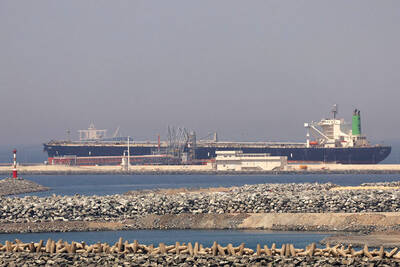
The breakwater stretches out to sea from the sprawling Kaohsiung port in southern Taiwan. Normally, it’s crowded with massive tankers ferrying liquefied natural gas from Qatar to be stored in the bulbous white tanks that dot the shoreline. These are not normal times, though, and not a single shipment from Qatar has docked at the Yongan terminal since early March after the Strait of Hormuz was shuttered. The suspension has provided a realistic preview of a potential Chinese blockade, a move that would throttle an economy anchored by the world’s most advanced and power-hungry semiconductor industry. It is a stark reminder of
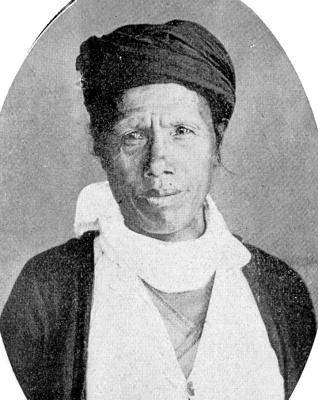
May 11 to May 17 Traversing the southern slopes of the Yushan Range in 1931, Japanese naturalist Tadao Kano knew he was approaching the last swath of Taiwan still beyond colonial control. The “vast, unknown territory,” protected by the “fierce” Bunun headman Dahu Ali, was “filled with an utterly endless jungle that choked the mountains and valleys,” Kano wrote. He noted how the group had “refused to submit to the measures of our authorities and entrenched themselves deep in these mountains … living a free existence spent chasing deer in the morning and seeking serow in the evening,” even describing them as
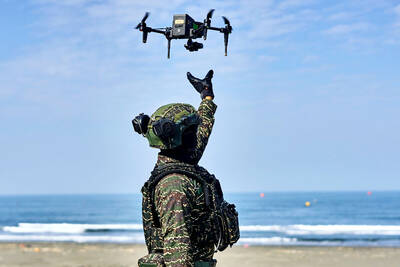
The last couple of weeks spectators in Taiwan and abroad have been treated to a remarkable display of infighting in the Chinese Nationalist Party (KMT) over the supplementary defense budget. The party has split into two camps, one supporting an NT$800 billion special defense budget and one supporting an NT$380 billion budget with additional funding contingent on receiving letters of acceptance (LOA) from the US. Recent media reports have said that the Taiwan People’s Party (TPP) is leaning toward the latter position. President William Lai (賴清德) has proposed NT$1.25 trillion for purchases of US arms and for development of domestic weapons
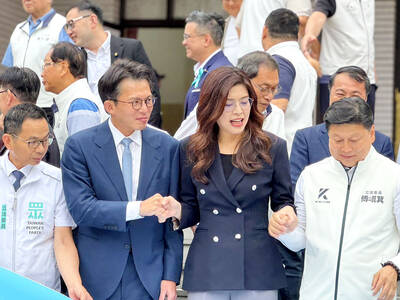
As a different column was being written, the big news dropped that Chinese Nationalist Party (KMT) caucus whip Fu Kun-chi (傅?萁) announced that negotiations within his caucus, with legislative speaker Han Kuo-yu (韓國瑜) of the KMT, party Chair Cheng Li-wun (鄭麗文), Taichung Mayor Lu Shiow-yen (盧秀燕) and Taiwan People’s Party (TPP) Chair Huang Kuo-chang (黃國昌) had produced a compromise special military budget proposal. On Thursday morning, prior to meeting with Cheng over a lunch of beef noodles, Lu reiterated her support for a budget of NT$800 or NT$900 billion — but refused to comment after the meeting. Right after Fu’s


 RSS
RSS