


Books that attempt to explain Taiwan in an accessible manner have proliferated in recent years. This can be traced to Nancy Pelosi’s 2022 visit to Taipei and China’s belligerent reaction, increasing the attention paid to Taiwan in international media and efforts to explain the country’s peculiar status.
GHOST NATION BY CHRIS HORTON
Many books about Taiwan describe it according to a power triangle dominated by the US and China. But what of the actual Taiwanese themselves? Who are they? And should they have any say in the matter?
Chris Horton’s Ghost Nation: The Story of Taiwan and Its Struggle for Survival is perhaps the first general history of Taiwan to answer these questions and do justice to its people and their long fight to build Asia’s most vibrant democracy. Not only is it a compelling read, it’s one that is utterly crucial for understanding both Taiwan’s domestic politics and global importance today.
REVOLUTIONARY TAIWAN BY CATHERINE LILA CHOU AND MARK HARRISON
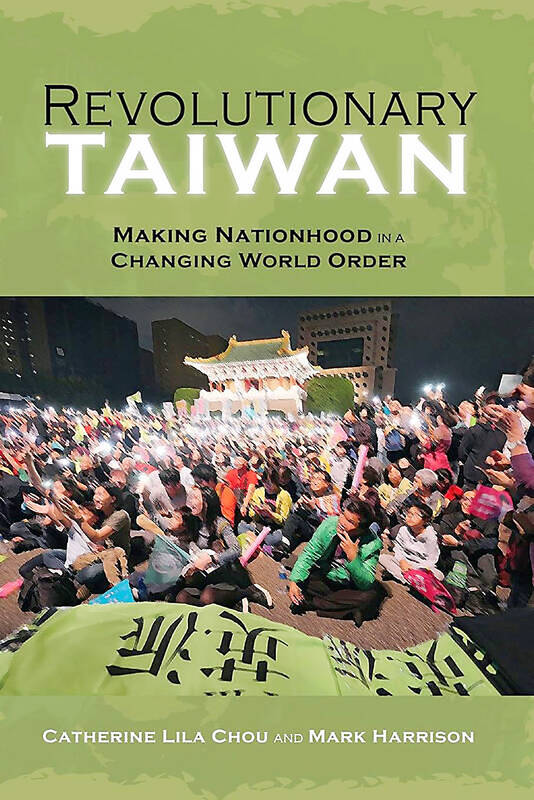
Catherine Lila Chou and Mark Harrison have achieved quite a milestone with Revolutionary Taiwan: Making Nationhood in a Changing World Order. Not only does this book convey Taiwan in the “readably academic” way that the authors intended, it uses a novel yet practical approach.
A central argument of this book is that Taiwan’s post-World War II trajectory and the deep refusal in the international system and its structures of power to see Taiwan as a country or as worthy of nationhood is tied to a particular postcolonial national blueprint: armed rebellion, prolonged war, total defeat of the previous government and the declaration of a new nation.
Packed with elegant analogies, deftly illustrated examples, and subtle but clear, compelling arguments, this book is both educational and immensely enjoyable. The nuanced style mirrors the complex subject matter, and one standout passage makes just such a point: Taiwan’s marginalization, it is argued, “means that seeking to know and understand it is, by definition, a subversive practice.”
DERECOGNITION BY ROBERT PARKER
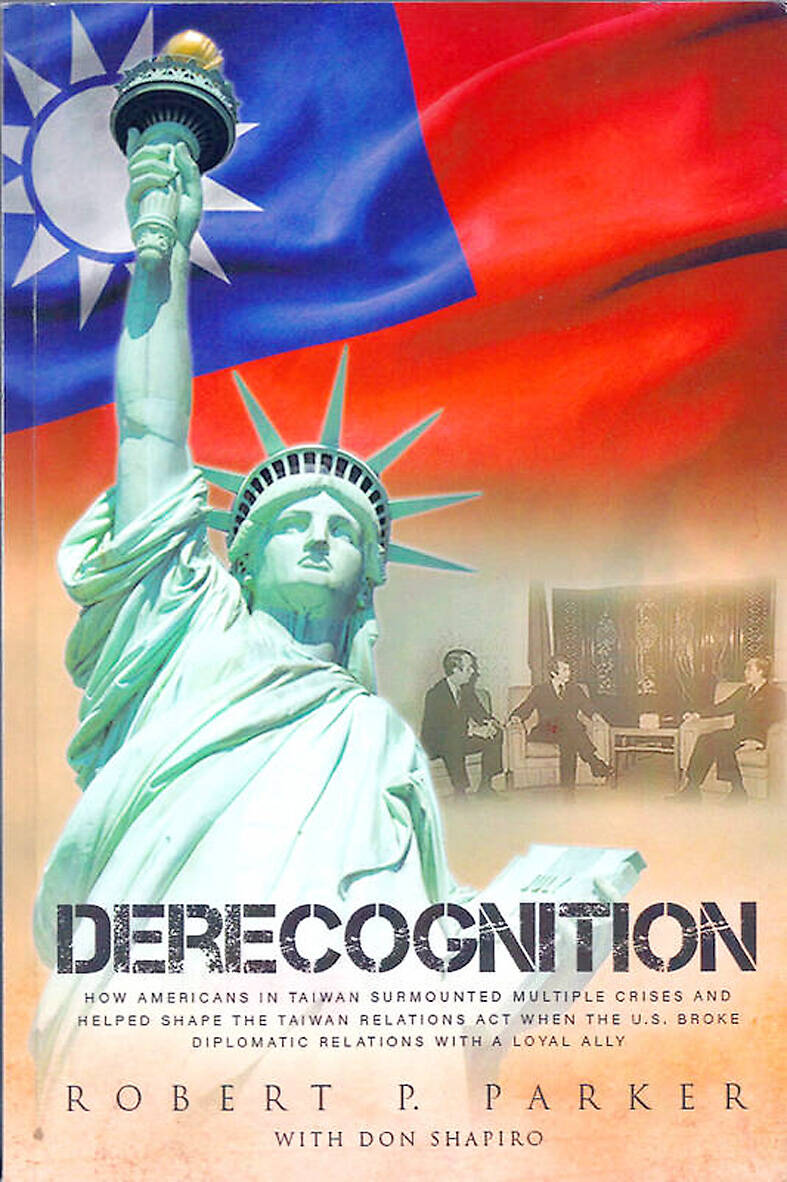
One of the biggest sore spots in Taiwan’s historical friendship with the US came in 1979 when US president Jimmy Carter broke off formal diplomatic relations with Taiwan’s Republic of China (ROC) government so that the US could establish relations with the People’s Republic of China (PRC). Taiwan’s derecognition came purely at China’s insistence, and the US took the deal.
Derecognition portrays the Carter administration as on the verge of casting Taiwan into a diplomatic wasteland, a process stopped by Taiwan’s friends in the US Congress and intense lobbying efforts, including those of Taiwan’s international business community. Author Robert Parker is the man who took up the presidency of the American Chamber of Commerce in Taipei (AmCham) the very day that derecognition went into effect on Jan. 1, 1979.
With AmCham’s weight behind him, Parker became a forceful and vocal advocate for Taiwan’s cause at a time when it badly needed international friends. The Taiwanese gave him nicknames like “the underground ambassador” and “Taiwan’s son-in-law.” Parker says that this new book was only produced after much urging from his peers. It will not be the final word on derecognition but it is an indispensable record of events.
CHRISTIAN MISSION IN SEVENTEENTH-CENTURY TAIWAN BY CHRISTOPHER JOBY
Christopher Joby’s Christian Mission in Seventeenth-Century Taiwan: A Reception History of Texts, Beliefs and Practices zooms in on a period in Taiwan’s history that most people here knows the outlines of: The occupation from 1624 to 1662 of the southwest by the Dutch East India Company (VOC) and of part of the north by the Spanish between 1626 and 1642, and their attempts to convert the island’s indigenous inhabitants.
The book is packed with fascinating details — 10,000 indigenous Taiwanese were baptized by the Dutch, the difficulties of learning indigenous languages, the Siraya community’s practice of mandatory abortion — that keep the narrative alive and flowing.
TAIWAN TINDERBOX BY J MICHAEL COLE
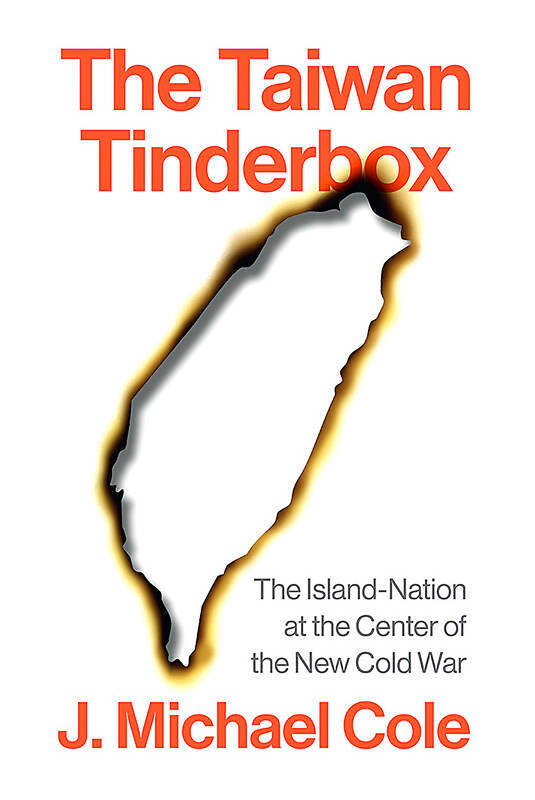
The growth of China’s military strength has been so fast and so explosive, that many have blinked and missed it. Into the early 2000s, Taiwan still had a stronger military than China, but lately the tables have dramatically turned.
Taipei-based, Canadian defense analyst J. Michael Cole, who dissects the current cross-strait strategic balance in The Taiwan Tinderbox, says it’s not so much that China’s policy towards Taiwan has changed in recent years — what’s changed is the PRC’s military capabilities. The book is an aggregation of recent Western discourse — if you’ve been reading the Taipei Times op-ed page, Foreign Affairs and similar sources, you won’t find much new.
But Cole should be credited for presenting a solid outline of the major security concerns surrounding Taiwan. In doing so, he makes a strong case, both strategically and morally, for defending Taiwan as a matter of vital interest to a world we’d want to live in.
BANANA KING BY LEE WANG-TAI
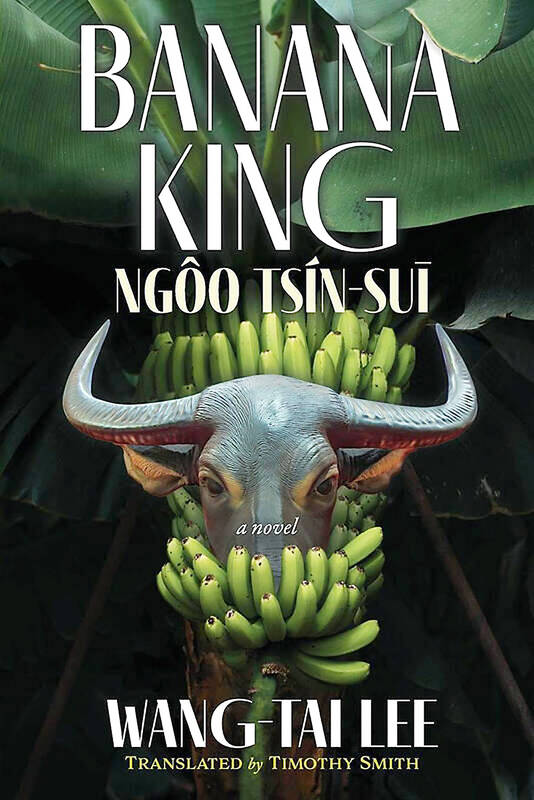
The Chinese Nationalist Party’s (KMT) five-decade authoritarian rule was so rife with injustice that it’s hard to capture how bad things could get. Several works get close: George H. Kerr’s Formosa Betrayed and Elegy of Sweet Potatoes by Tehpen Tsai (蔡德本), for example.
Banana King is a fictionalized but, in its fundamentals, strongly fact-based account by author Lee Wang-tai (李旺台) of a long-forgotten figure from postwar Taiwan’s fruit industry is worthy of shelf space alongside such works. The story of Ngoo Tsin-sui’s metamorphosis during the White Terror from “Banana King” to “Banana Maggot,” stage-managed by senior officials who met defiance of their orders and the associated loss of face with merciless retribution, is shocking, deeply moving and very well written.
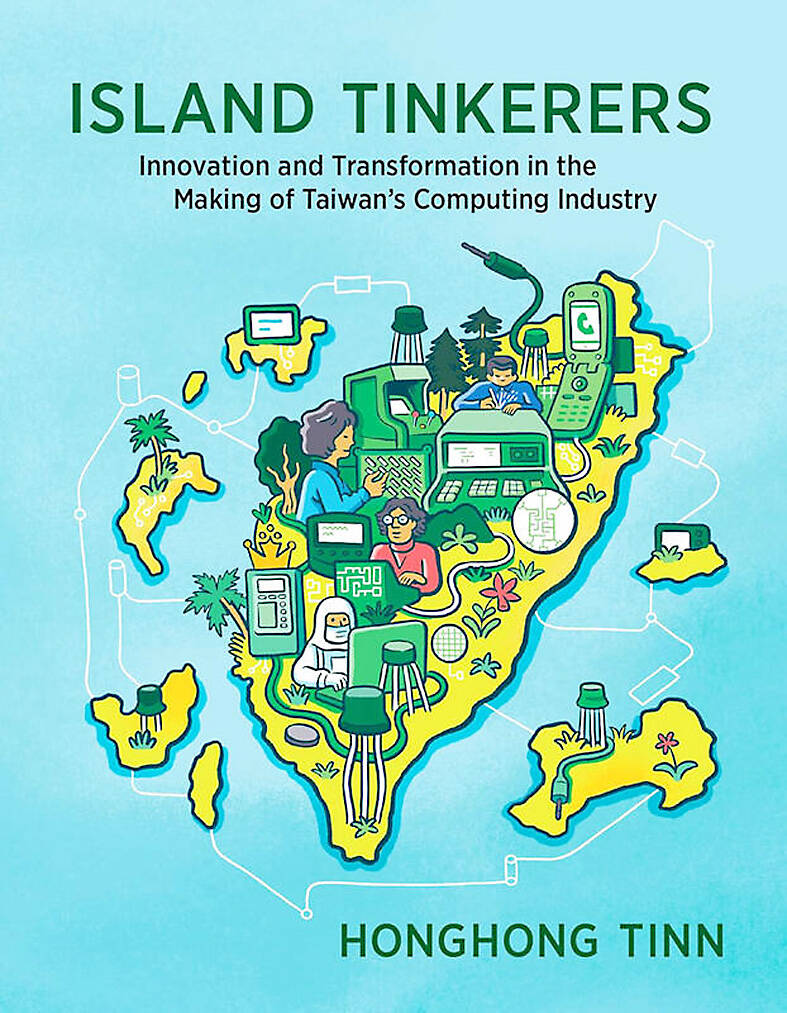
ISLAND TINKERERS BY HONGHONG TINN
Island Tinkerers, by Honghong Tinn (鄭芳芳), is an engrossing and meticulously researched book that follows the formation of Taiwan’s semiconductor industry by the nation’s “tinkerers.”
Tracing the history of Taiwanese tinkering to National Chiao Tung University (NCTU) alumni, Tinn not only contradicts received wisdom about top-down processes, but also shows how this was a transnational process from the start.
Tinn says Taiwan’s contemporary technologists have made their products indispensable — not only to their own national defense but to that of the US and, indeed, the world. The administration of US President Donald Trump would do well to remember where some of the specialized chips used in American fighter jets are sourced.

Taiwan’s English education system is being pulled apart by three opposing forces. Bilingual Nation 2030 pulls students toward English and global communication. Artificial Intelligence (AI) readiness pulls them toward digital judgment, verification and AI-mediated work. But Taiwan’s old exam culture pulls them back toward memorization, grammar drills, timed reading and correct answers. If the education system keeps using old exams to define success, it risks producing graduates who are neither genuinely bilingual nor genuinely AI-ready, but trained for tasks machines can already perform. The first force is Bilingual Nation 2030. Launched in 2018, the policy aimed to “help Taiwan’s workforce connect
It seems every few days one bumps into one of those “real man” comments in which Taiwan is urged to “face reality” or similar, and “make a deal,” with the speaker implying that soon it will be too late. “Deal” advocates always present themselves as having a superior grip on reality, and the manly ability to make the “hard choice.” Their testosterone-laden language often echoes that of Taiwan sellout advocates. Note that such commentary always specifies a process (“make a deal, work with, make progress”), never the end state of what occupation by a violent authoritarian colonialist state will entail. In
June 1 to June 7 "If all Taiwanese were as afraid of dying as you, then what would happen?” Physician Shih Chiang-nan (施江南) reportedly said this to his wife Chen Chiao-tung (陳焦桐) after she urged him to stop intervening on behalf of Taiwanese soldiers stranded overseas after serving in the Japanese Army during World War II. Shih had clashed with high-ranking officials over the issue, engaged in several heated arguments with Taiwan governor-general Chen Yi (陳儀) and allegedly shouted at general Ko Yuan-fen (柯遠芬), chief of staff of the Taiwan Garrison Command, over

“Taiwan’s Opposition Leader Comes to US With a Message Straight Out of Beijing” read a May 31 headline in the Wall Street Journal. Top US administration officials and members of Congress almost certainly read the WSJ, and if there was a bullet point takeaway that people in Washington should absorb ahead of Chinese Nationalist Party (KMT) Chair Cheng Li-wun’s (鄭麗文) arrival in DC on June 9, that headline is it. The last few columns have discussed this very topic, and the timing is not coincidental. While those top officials likely do not read the Taipei Times, judging by the number


 RSS
RSS