


Last week the Australian Strategic Policy Institute (ASPI) published a piece by Nathan Attrill and Bethany Allen warning that Taiwan’s democracy is threatened by President William Lai’s (賴清德) security programs. Taiwan is a kind of test case, they said, of “whether a democracy under prolonged foreign coercion can strengthen its resilience without eroding the liberal values it seeks to defend” (“Taiwan’s democracy must stay liberal under rising pressure,” Dec. 16, 2025).
‘EROSION OF LIBERAL VALUES’
Attrill and Allen then went trawling for examples of the “erosion of liberal values,” coming up with four. The first was Lai’s 17 point security program. The Lai Administration’s limited revival of the military justice system was indeed a real issue, one closely monitored by civil society groups.
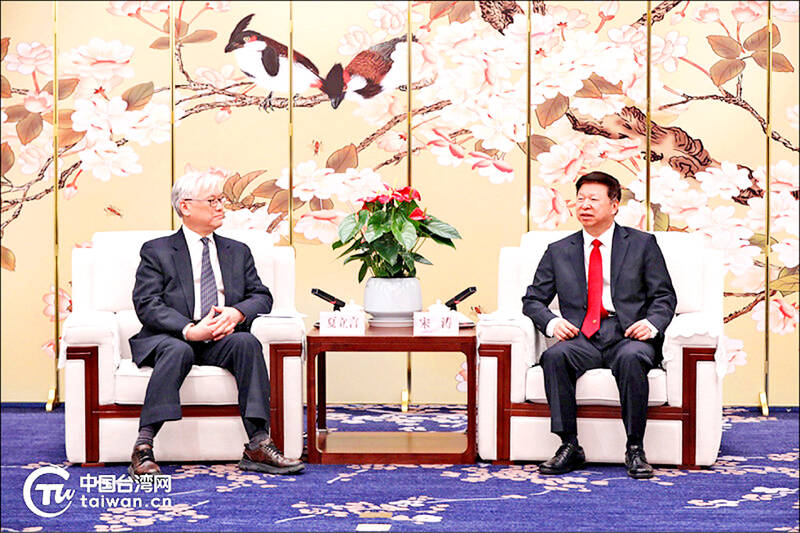
Photo from Taiwan.cn
The next three, however, were desperate examples of ginning up non-issues. First, they instanced the Administration’s requirement that spouses from the People’s Republic of China (PRC), the most privileged, coddled group of foreigners in Taiwan, come into compliance with the law that they give up their household registrations in the PRC. No other group of visa-holders would be permitted to be out of compliance with visa requirements for so long. When migrant workers do that, for example, they are termed “runaways” and hunted by the police.
Attrill and Allen ignore the fact that the government went out of its way to make that easy, allowing some to simply submit affidavits. Nor did they note that most of the PRC spouses finished the process by the end of June and there were no lingering effects. The PRC spouse registration was a complete non-issue from the “threat to democracy” standpoint. It is hard to overstate how absolutely moronic this complaint is.
But the KMT’s bill to enable PRC spouses to hold public office in Taiwan? Not as much as a threat to democracy as making sure such spouses hold valid visas, it appears.
Attrill and Allen also cite the expulsions of PRC influencers calling for the PRC to rain death on Taiwanese, describing them “a test of freedom of speech under pressure.” At least they concede speech calling for the deaths of others has always been subject to limits in democracies. The real issue, which they largely ignore, is the arbitrary nature of the process — there is no due process for those so deported, the offenses are poorly-defined (as they do note) and the influencers were picked only because they made their murderous dreams very public. These are sadly normal attributes of government regulatory actions across many domains in Taiwan.
Attrill and Allen also seem to be unaware that the influencers were not the only PRC citizens this has happened to. The influencers had plenty of warning.
In fact, in many countries visas come with speech limits. Taiwan used to regularly deport foreigners for the heinous crime of publicly performing music. In two other countries I have been a resident of, my visa did not permit me to comment at all in public venues on local politics. Nor could I participate in local political rallies. Both of those are things we can do in Taiwan. The influencer cases actually highlight how robust, how kind, Taiwan’s democracy is: foreigners have a rich variety of democratic speech rights. Indeed, as I write, migrant workers, the lowest members of Taiwan’s visa caste system, are carrying out public protests against a local firm.
CONSTITUTIONAL CRISIS IGNORED
The ASPI piece meanwhile utterly ignores the systematic eradication of constitutional governance by the Chinese Nationalist Party (KMT) and the legislature it controls. Which is the greater threat to democracy: deporting people who call for mass murder, or shutting down the Constitutional Court, the highest court in the land? Which is the greater threat to democracy, making sure visa holders are up to date with their visas, or deliberately gutting the budgets for critical government ministries and public media? Which is the greater threat to democracy: canceling household registrations for the handful of people who obtain PRC passports, or KMT lawmakers regularly tripping to the PRC to consult with officials there? Which will harm Taiwan’s democracy more, slashing military funding and forcing the government to violate its legal debt limits, or a program of 17 measures to shore up the nation’s security?
By now it will have dawned on the reader that all the “erosion of liberal democracy” events the ASPI pair adduce represent limitations on PRC and PRC-supporting activities in Taiwan. In truth, this long missive from ASPI is little more than a highly articulate and piously establishment version of the usual “but what about our poor China?” writing of pro-PRC types. If Attrill and Allen were truly concerned about the erosion of liberal ideals for “security” reasons in Taiwan, many examples could be made, starting with the treatment of migrant workers (the real test of democratic processes is not whether PRC citizens in Taiwan can advocate killing Taiwanese, but whether Filipino fishermen on distant water fishing boats get paid). But, alas, most of them are bipartisan and unrelated to the PRC. They don’t allow the writer to point fingers at the pro-Taiwan side.
Further, note the way Attrill and Allen appear to cynically exploit KMT propaganda that Lai is a “dictator”? Surely, in boning up on Taiwan’s domestic politics they must have noticed that charge. Instead of calling out the KMT, they aligned with it.
TAIWAN AT RISK
The last week also saw Asian Nikkei publish an important piece on officials in Europe warning that the obstruction of the defense budget puts global support for Taiwan at risk. One official’s observation that “this sort of politicization just invites Chinese cognitive warfare tactics to drive wedges in Taiwan’s society,” is spot on. Words, however, are wind. While officials of foreign governments are happy to accurately describe the problems, they will take no action. Since the KMT never suffers punishments, the verbiage from Europe simply signals the KMT that its policies of isolating Taiwan are bearing fruit.
The ASPI piece and the complaining European officials are two instances of deep problems with outsiders, from officials to media workers from democracies, who attempt to describe or interact with Taiwan. The party of democratic government generally draws far more criticism and critiques than the parties apparently attempting to subvert it. Observers often fall back on bothsidesism, attributing issues to “domestic wrangling” rather than obstruction from the pro-PRC side.
This problem has many facets. For example, the unremitting, brainless reporting on former president Tsai Ing-wen’s (蔡英文) approval ratings. Transient declines in her satisfaction provoked gleeful reports in media from democracies, which I as a commentator have made a career out of mocking (thanks, foreign media, for making it so easy!). But rises in her popularity were typically followed by silence. Think that has stopped? Search “Lai approval.”
Consider too: outside commentators exhibit an astonishing blindness to both the regular meetings of KMT officials with PRC officials, and their implications for Taiwan’s security and democracy. That should be a major focus of foreign media reporting, drawing strong observer criticism. Instead, we get hand-wringing about the implications for democracy of deporting a handful of influencers who called for an end to democracy in Taiwan.
ASPI not only misled readers about potential threats to Taiwan’s democracy, it failed to support Australia itself. Do Aussie commentators truly believe that the PRC can occupy Taiwan and carry out its plans of territorial conquest, and that will have no implications for Australia’s Asian trade-dependent economy? If not, then why is the pro-Taiwan side the focus?
If “the task for democracies is not to make that external pressure feel bearable; it is to make it futile,” as they so deftly and beautifully put it, why are they sending positive signals to the internal elements of that external pressure? Taiwan’s freedom, after all, helps secure Australia’s economic stability.
The needless deprecation of and lack of robust support for Taiwan’s democracy is a major failure of too many speakers in the democracies.
It is, in fact, a threat to Taiwan’s democracy.
Notes from Central Taiwan is a column written by long-term resident Michael Turton, who provides incisive commentary informed by three decades of living in and writing about his adoptive country. The views expressed here are his own.

By global standards, the traffic congestion that afflicts Taiwan’s urban areas isn’t horrific. But nor is it something the country can be proud of. According to TomTom, a Dutch developer of location and navigation technologies, last year Taiwan was the sixth most congested country in Asia. Of the 492 towns and cities included in its rankings last year, Taipei was the 74th most congested. Taoyuan ranked 105th, while Hsinchu County (121st), Taichung (142nd), Tainan (173rd), New Taipei City (227th), Kaohsiung (241st) and Keelung (302nd) also featured on the list. Four Japanese cities have slower traffic than Taipei. (Seoul, which has some

In our discussions of tourism in Taiwan we often criticize the government’s addiction to promoting food and shopping, while ignoring Taiwan’s underdeveloped trekking and adventure travel opportunities. This discussion, however, is decidedly land-focused. When was the last time a port entered into it? Last week I encountered journalist and travel writer Cameron Dueck, who had sailed to Taiwan in 2023-24, and was full of tales. Like everyone who visits, he and his partner Fiona Ching loved our island nation and had nothing but wonderful experiences on land. But he had little positive to say about the way Taiwan has organized its

The entire Li Zhenxiu (李貞秀) saga has been an ugly, complicated mess. Born in China’s Hunan Province, she moved to work in Shenzhen, where she met her future Taiwanese husband. Most accounts have her arriving in Taiwan and marrying somewhere between 1993 and 1999. She built a successful career in Taiwan in the tech industry before founding her own company. She also served in high-ranking positions on various environmentally-focused tech associations. She says she was inspired by the founding of the Taiwan People’s Party (TPP) in 2019 by Ko Wen-je (柯文哲), and began volunteering for the party soon after. Ko
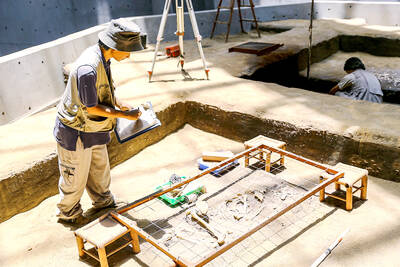
Writing of the finds at the ancient iron-working site of Shihsanhang (十 三行) in New Taipei City’s Bali District (八里), archaeologist Tsang Cheng-hwa (臧振華) of the Academia Sinica’s Institute of History and Philology observes: “One bronze bowl gilded with gold, together with copper coins and fragments of Tang and Song ceramics, were also found. These provide evidence for early contact between Taiwan aborigines and Chinese.” The Shihsanhang Web site from the Ministry of Culture says of the finds: “They were evidence that the residents of the area had a close trading relation with Chinese civilians, as the coins can be


 RSS
RSS