


Beijing’s ironic, abusive tantrums aimed at Japan since Japanese Prime Minister Sanae Takaichi publicly stated that a Taiwan contingency would be an existential crisis for Japan, have revealed for all the world to see that the People’s Republic of China (PRC) lusts after Okinawa. We all owe Takaichi a debt of thanks for getting the PRC to make that public.
The PRC and its netizens, taking their cue from the Chinese Communist Party (CCP), are presenting Okinawa by mirroring the claims about Taiwan. Official PRC propaganda organs began to wax lyrical about Okinawa’s “unsettled status” beginning last month. A Global Times piece dated Nov. 19 notes the establishment of a Ryukyu studies program at Fujian Normal university — Fujian is closely connected to Taiwan in PRC propaganda — and explains why it is necessary for “enduring maintenance of regional peace, the upholding of historical justice and the construction of China’s discourse system within a complex geopolitical landscape.”
UNSETTLED STATUS?
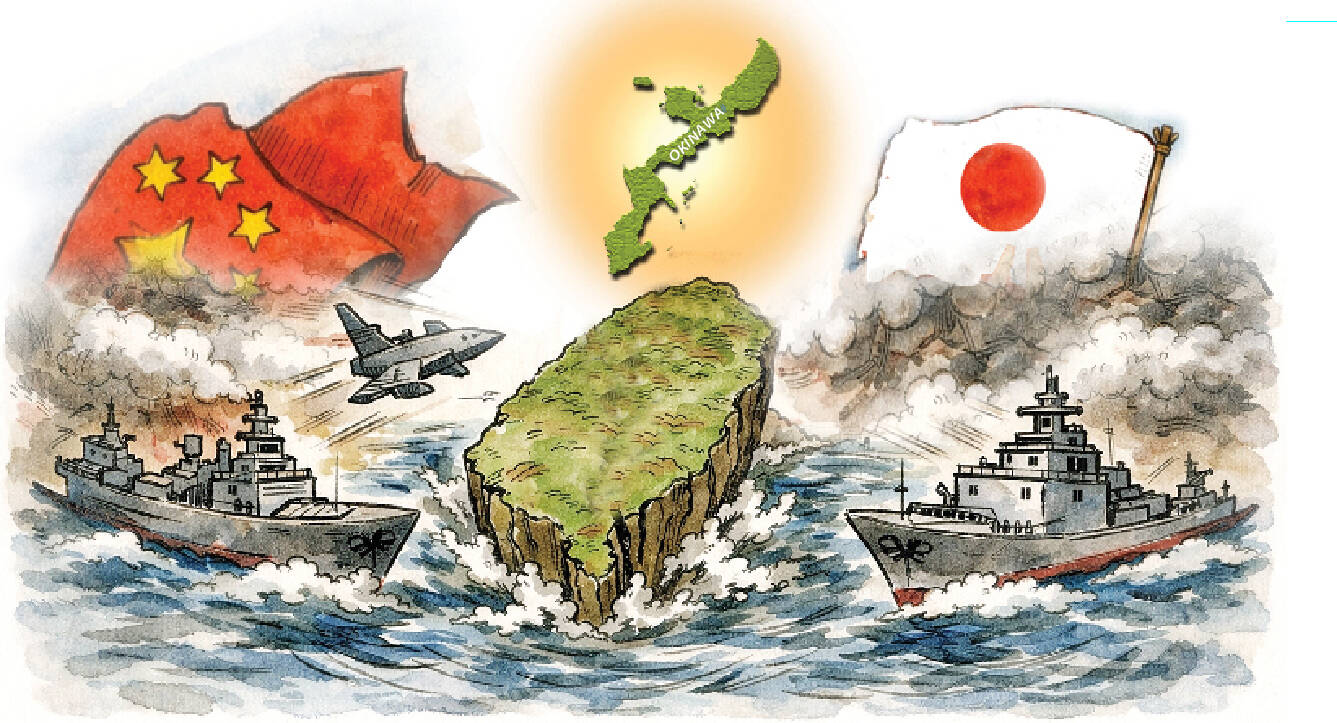
IlLUSTRATION: AI-ASSISTED
A nifty piece at Japan Forward notes that Sankei Shimbun located 40,000 posts on Rednote (Xiaohongshu) that echo the language used about Taiwan’s status under international law, saying Okinawa’s status is “unsettled,” making false claims about history, saying the UN is debating the Ryukyu (Okinawa) question, or that Okinawans do not think of themselves as Japanese. Those posts would not exist if PRC authorities did not want them to.
Needless to say, independence is a fringe movement in Okinawa with low support. Beijing, though, props up that independence movement. Conversely, during the 1950s and 1960s, when the US governed Okinawa, Okinawan support for the reversion movement to revert Okinawa to Japanese control was widespread. No one wanted to become part of the PRC
Note too the Pelosi effect at work, where a prominent action from a democracy “triggers” a temper tantrum that is used to implement long-envisioned PRC policy. The Japan Forward piece cites Makoto Nakashinjo, Editor-in-Chief of the Yaeyama Nippo: “This is not simply a counter to Japan’s Taiwan rhetoric. China has been laying the groundwork for this narrative for years.”
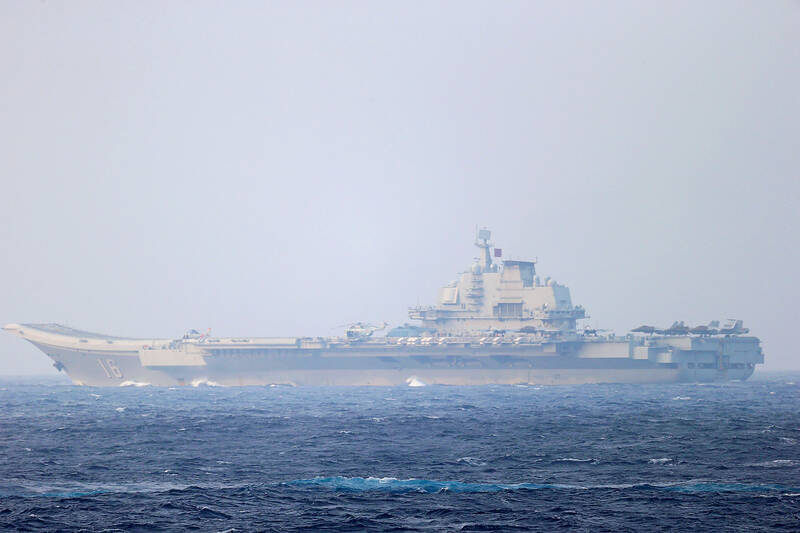
Photo: Reuters
Takaichi simply provided a pretext, just as the Pelosi visit provided a pretext for escalating “gray zone” activities around Taiwan, and Japan’s nationalization of the Senkakus (known as Diaoyutais 釣魚台 in Chinese) was a pretext for escalating “gray zone” activities in the islands.
Recall that back in 2021 deputy prime minister Taro Aso said in a speech that Japan would exercise the right of “collective self-defense” and help defend Taiwan, citing the “existential threat” to Japan’s security. He added that “If Taiwan falls, Okinawa is next.” No tantrums from Beijing, then. It wasn’t ready.
PRC claims to Okinawa go back decades, resurfacing periodically. For example, PRC authorities in 2013 conducted a major Okinawa campaign. Described in a Daily Beast piece by longtime PRC watcher Gordon Chang, it featured an article in a Ministry of Foreign Affairs magazine, a “widely publicized” People’s Daily commentary, two articles in the Global Times and an interview of a major general in the state-run China News Service disseminated via the South China Morning Post that said the Ryukyus had started paying tribute to China in 1372. The general coyly refused to claim that all tributary states belonged to the PRC — perhaps hinting about the future evolution of PRC territorial demands.
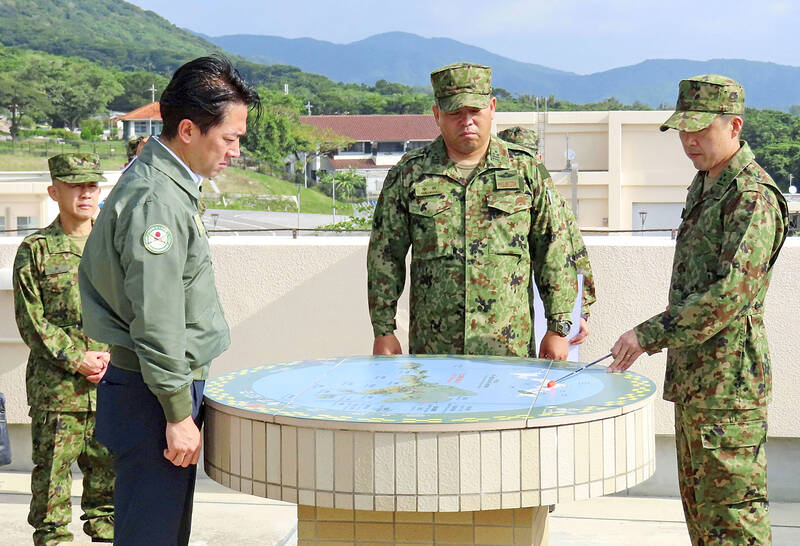
Photo: Reuters
The argument he was making is a common one — Okinawa was a tributary state for a long period, therefore today China owns it. That such arguments can gain any currency is part of how we in the West orientalize the PRC: we would never accept such an argument for any Western state’s control of a given area. Imagine the reaction if the UK demanded the “return” of Ireland because of the Treaty of Windsor in 1175.
The PRC demand for Okinawa is bound up with the PRC desire to annex Taiwan and the Senkakus. Recall too that the Japanese islands to the east of Taiwan, Yoniguni, Ishigaki, and others, are governed as part of Okinawa prefecture. Hence, any claim to Okinawa is likely also a claim to those islands. Expect the PRC to evolve that in the coming years.
In PRC rhetoric, Japanese control of Okinawa always dates from either 1872, when it was incorporated into Japan as the Ryukyu Domain, or 1879, when it became Okinawa prefecture. The latter date is more common, since it is later, making Japanese control more recent. Like so much PRC historical propaganda, this pro-PRC formulation of Okinawan history often appears in Western media presentations.
FAUX HISTORY
It follows the usual PRC principles for faux reconstructions of history, using “ancient” relationships to imply modern ownership, and treating the Manchus as Chinese for the purposes of acquiring their territory.
As with Taiwan, it treats any other sovereignty as non-existent. Many of the islands around Okinawa were independent kingdoms at one time or another, but in PRC parlance they are all “Ryukyus” which paid tribute to “China.”
Just as indigenous sovereignty in Taiwan vanishes, so does the Ryukyu kingdom and its independent existence, except where it is useful to indicate that it was a vassal state of an imperium that the PRC defines as “Chinese.” In PRC rhetoric on Okinawa the period of Japanese control prior to 1879 usually disappears, just as with Taiwan the period before the 17th century disappears, except a few fake historical incidents in which China is said to have administrated Taiwan.
In reality, the southern Japanese kingdom of Satsuma occupied Okinawa in 1609, turning it into a vassal state. Satsuma permitted Okinawa to maintain relations with the Ming Dynasty, and later, the Manchu (Qing) empire, concealing its control, since it did not want to provoke military action by either of those empires, and because trade generated wealth for the kingdom.
One issue that I have not seen raised in this context in any Western media is the Amami-Oshima islands, which lie to the north of Okinawa. When Satsuma took over Okinawa, the Ryukyuan kingdom controlled those islands. However, Satsuma incorporated them into its domain, an act formally recognized by the Shogunate in 1624. Today they are part of Kagoshima prefecture, not Okinawa.
PRC territorial claims always lead to follow-on claims, the way Taiwan is related to Okinawa and the Senkakus in PRC propaganda, or the way the occupation of Tibet has led to a PRC claim on India’s Arunachel Pradesh. A conquest of Okinawa will likely result on PRC claims to any territory Okinawa once ruled, including the Amami-Oshima islands. As with Taiwan, yielding the target to the PRC will not end the conflict. More demands will follow.
“Democratic nations, too, must recognize that Okinawa, like Taiwan, is becoming a frontline in the defense of the rules-based order,” says the Japan Forward piece cited above. Democratic nations are not as forthcoming as they are with Taiwan, however. Few, if any, European leaders have spoken in support of Takaichi since Beijing began its assault on her.
Links between frontline Taiwan and Okinawa prefecture will get a boost this month with the opening of ferry services between Keelung and Ishigaki. Taiwan needs to work to expand these links. Perhaps Tokyo would be more receptive to enhanced defense cooperation as a response to Beijing’s tantrums and rants.
Notes from Central Taiwan is a column written by long-term resident Michael Turton, who provides incisive commentary informed by three decades of living in and writing about his adoptive country. The views expressed here are his own.
By global standards, the traffic congestion that afflicts Taiwan’s urban areas isn’t horrific. But nor is it something the country can be proud of. According to TomTom, a Dutch developer of location and navigation technologies, last year Taiwan was the sixth most congested country in Asia. Of the 492 towns and cities included in its rankings last year, Taipei was the 74th most congested. Taoyuan ranked 105th, while Hsinchu County (121st), Taichung (142nd), Tainan (173rd), New Taipei City (227th), Kaohsiung (241st) and Keelung (302nd) also featured on the list. Four Japanese cities have slower traffic than Taipei. (Seoul, which has some

In our discussions of tourism in Taiwan we often criticize the government’s addiction to promoting food and shopping, while ignoring Taiwan’s underdeveloped trekking and adventure travel opportunities. This discussion, however, is decidedly land-focused. When was the last time a port entered into it? Last week I encountered journalist and travel writer Cameron Dueck, who had sailed to Taiwan in 2023-24, and was full of tales. Like everyone who visits, he and his partner Fiona Ching loved our island nation and had nothing but wonderful experiences on land. But he had little positive to say about the way Taiwan has organized its
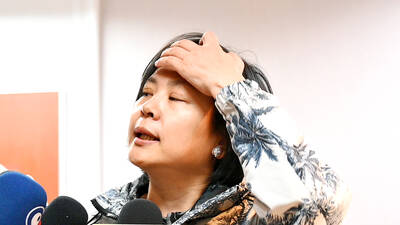
The entire Li Zhenxiu (李貞秀) saga has been an ugly, complicated mess. Born in China’s Hunan Province, she moved to work in Shenzhen, where she met her future Taiwanese husband. Most accounts have her arriving in Taiwan and marrying somewhere between 1993 and 1999. She built a successful career in Taiwan in the tech industry before founding her own company. She also served in high-ranking positions on various environmentally-focused tech associations. She says she was inspired by the founding of the Taiwan People’s Party (TPP) in 2019 by Ko Wen-je (柯文哲), and began volunteering for the party soon after. Ko
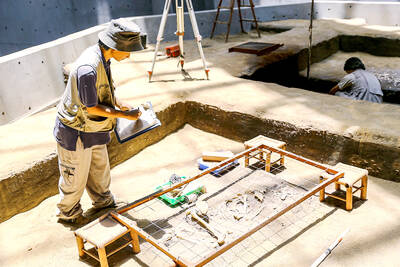
Writing of the finds at the ancient iron-working site of Shihsanhang (十 三行) in New Taipei City’s Bali District (八里), archaeologist Tsang Cheng-hwa (臧振華) of the Academia Sinica’s Institute of History and Philology observes: “One bronze bowl gilded with gold, together with copper coins and fragments of Tang and Song ceramics, were also found. These provide evidence for early contact between Taiwan aborigines and Chinese.” The Shihsanhang Web site from the Ministry of Culture says of the finds: “They were evidence that the residents of the area had a close trading relation with Chinese civilians, as the coins can be


 RSS
RSS