


Most heroes are remembered for the battles they fought. Taiwan’s Black Bat Squadron is remembered for flying into Chinese airspace 838 times between 1953 and 1967, and for the 148 men whose sacrifice bought the intelligence that kept Taiwan secure. Two-thirds of the squadron died carrying out missions most people wouldn’t learn about for another 40 years.
The squadron lost 15 aircraft and 148 crew members over those 14 years, making it the deadliest unit in Taiwan’s military history by casualty rate. They flew at night, often at low altitudes, straight into some of the most heavily defended airspace in Asia. Their job wasn’t to fight, but to photograph military installations, intercept radio signals and sometimes drop agents behind enemy lines. The CIA provided specialized aircraft and worked closely with them throughout, which says much about how valuable their intelligence was to the broader Cold War effort.
FLYING INTO DEATH
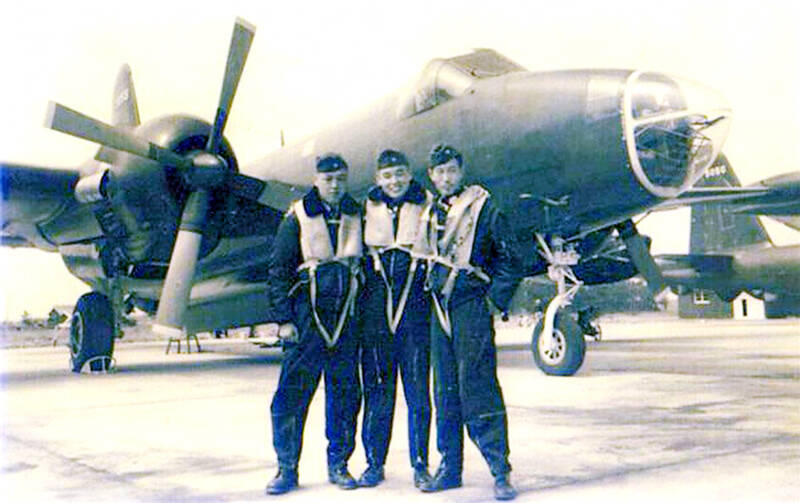
Photo: AP
What makes their story unusual is that most of their planes weren’t really built for combat. They were flying cameras with just enough protection to maybe survive if a Chinese MiG pilot made a mistake or ran out of ammunition, which actually happened at least once. One pilot named Chu Chen survived his 33rd mission only because his attacker’s guns went silent mid-chase. That kind of luck didn’t hold for most.
Remarkably, many individual pilots completed an extraordinary number of missions despite flying planes that weren’t really built for combat. Tai Shu-ching (戴樹清) flew 78 missions, the most of anyone in the squadron, which means he volunteered to face possible death 78 times. Before their first flight, every crew member had to write a will and sign documents swearing them to secrecy. They couldn’t tell their families what they did, where the missions were or how dangerous. When planes went down over China, there was almost no chance of rescue, and in many cases families were never officially informed about how or where their sons and husbands died. These men ended up as names in classified files.
No one spoke about it for decades. While their missions were happening, nobody outside intelligence circles knew the Black Bats existed. It wasn’t until 2009 that Taiwan opened a memorial hall to finally acknowledge what these men had done and preserve their history. That’s more than 40 years of serving without recognition, without public gratitude, without even the basic dignity of having your sacrifice acknowledged.
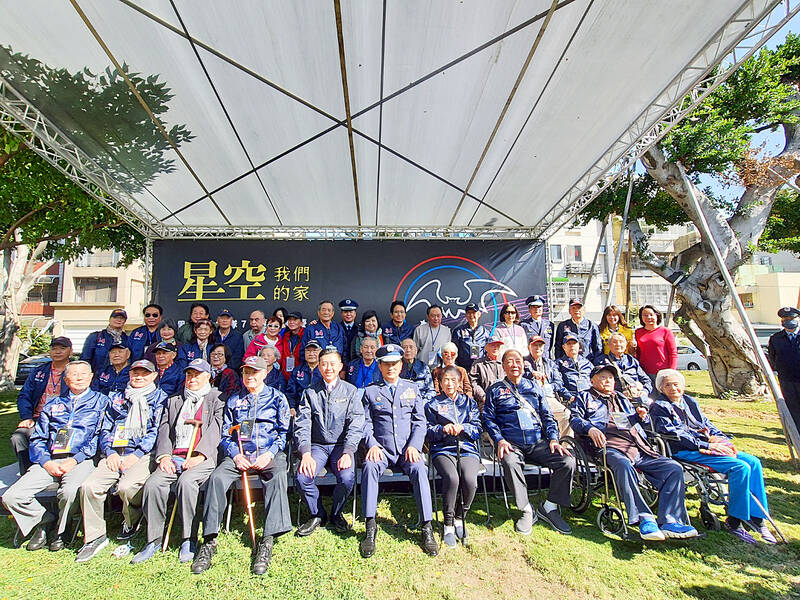
Photo: Hung Mei-hsiu, Taipei Times
CONVICTION
There’s also something important in how they fought. This wasn’t about aggression or conquest or even really about combat. It was about information. The Black Bats represent a kind of strategic thinking that prioritizes knowledge over firepower, intelligence over violence. They prove you can serve your country and defend your people without glorifying killing or destruction. For a generation that might be skeptical of traditional military heroism, that’s a more sophisticated and more mature form of courage.
Their story also reveals what genuine commitment looks like. They didn’t do it for fame because their work was secret. They didn’t do it for money because the pay was ordinary. They didn’t do it for the satisfaction of seeing their impact because they didn’t know how the intelligence was used. The only reason left is genuine belief that what they were doing mattered and that Taiwan’s continued existence was worth dying for. That kind of commitment reveals something essential about human courage and what people are capable of when they truly believe in something larger than themselves.
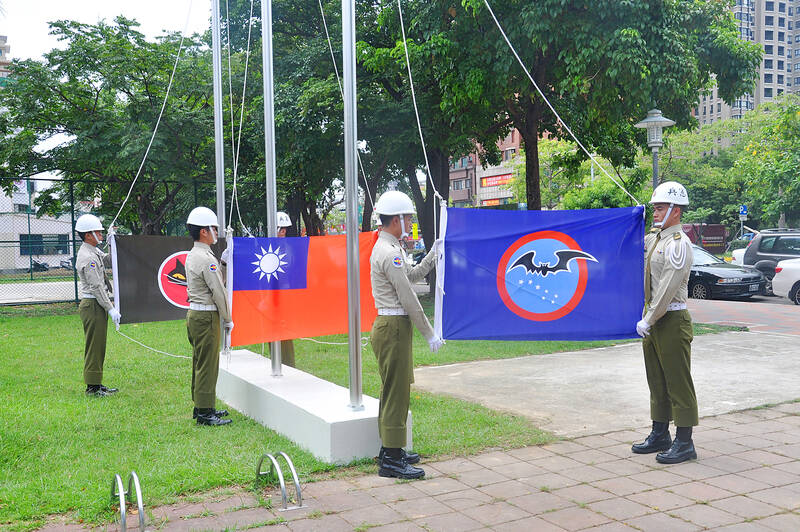
Photo: Fu Chao-piao, Taipei Times
QUIET SACRIFICE
Young Taiwanese live in a democratic, prosperous society that looks nothing like the embattled island of the 1950s and 1960s. That transformation didn’t happen by itself. It was built on decisions made possible by intelligence gathered at enormous human cost. The men on those missions didn’t live to see modern Taiwan. Most of them died young, in the dark, over hostile territory, for intelligence work that nobody would credit them for during their lifetimes. They did it because they believed Taiwan’s survival was worth it, and apparently that was reason enough.
Taiwan’s strategic situation hasn’t gotten easier since 1967. China is larger, wealthier and more militarily capable than it was during the Cold War, and it still claims sovereignty over Taiwan. The specific threats have changed but the fundamental challenge of maintaining Taiwan’s separate existence hasn’t gone away. Young Taiwanese inherit that unresolved problem along with all the benefits of living in a free, democratic society. The past can’t solve the present, but their example proves what serious commitment to Taiwan’s survival has looked like and what it cost the people who made it.
Photo: AP
For a generation trying to understand what Taiwan is and how it got here, the Black Bats provide one answer. The country survived because people were willing to take impossible risks for intelligence that shaped broader strategy. They did it in secret, without recognition, often without even basic acknowledgment that they existed. They kept volunteering for missions with a 66 percent fatality rate because they believed it mattered. Whether that kind of sacrifice will be necessary again is an open question, but knowing it happened and what it achieved gives Taiwan’s younger generations some context for the comfortable, democratic society they’ve inherited and what it took to build it.

Taiwan’s English education system is being pulled apart by three opposing forces. Bilingual Nation 2030 pulls students toward English and global communication. Artificial Intelligence (AI) readiness pulls them toward digital judgment, verification and AI-mediated work. But Taiwan’s old exam culture pulls them back toward memorization, grammar drills, timed reading and correct answers. If the education system keeps using old exams to define success, it risks producing graduates who are neither genuinely bilingual nor genuinely AI-ready, but trained for tasks machines can already perform. The first force is Bilingual Nation 2030. Launched in 2018, the policy aimed to “help Taiwan’s workforce connect

It seems every few days one bumps into one of those “real man” comments in which Taiwan is urged to “face reality” or similar, and “make a deal,” with the speaker implying that soon it will be too late. “Deal” advocates always present themselves as having a superior grip on reality, and the manly ability to make the “hard choice.” Their testosterone-laden language often echoes that of Taiwan sellout advocates. Note that such commentary always specifies a process (“make a deal, work with, make progress”), never the end state of what occupation by a violent authoritarian colonialist state will entail. In

There are shadowy cabals plotting to sell out Taiwan to be annexed by China, by invasion if necessary. Fortunately, they are buffoons. In 2019, former Bamboo Union gangster and founder of the China Unification Promotion Party (CUPP), Chang An-le (張安樂, colorfully known as “White Wolf”), led a protest at the Legislative Yuan against comments made by then-premier Su Tseng-chang (蘇貞昌) that in the event of an attack by China, he would never surrender, but would protect the nation by fighting to the end, even if he only had a broom. Chang had party members bring a wooden casket that they
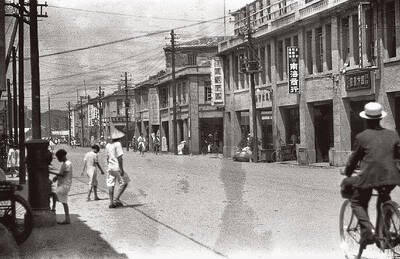
June 1 to June 7 "If all Taiwanese were as afraid of dying as you, then what would happen?” Physician Shih Chiang-nan (施江南) reportedly said this to his wife Chen Chiao-tung (陳焦桐) after she urged him to stop intervening on behalf of Taiwanese soldiers stranded overseas after serving in the Japanese Army during World War II. Shih had clashed with high-ranking officials over the issue, engaged in several heated arguments with Taiwan governor-general Chen Yi (陳儀) and allegedly shouted at general Ko Yuan-fen (柯遠芬), chief of staff of the Taiwan Garrison Command, over


 RSS
RSS