


As I finally slid into the warm embrace of the hot, clifftop pool, it was a serene moment of reflection. The sound of the river reflected off the cave walls, the white of our camping lights reflected off the dark, shimmering surface of the water, and I reflected on how fortunate I was to be here.
After all, the beautiful walk through narrow canyons that had brought us here had been inaccessible for five years — and will be again soon.
The day had started at the Huisun Forest Area (惠蓀林場), at the end of Nantou County Route 80, north and east of Puli Township (埔里). After passing the toll station (NT$200 per adult plus NT$100 or NT$10, respectively, for car or scooter parking) and driving another 10 minutes, we passed the visitor center and parked in the large parking lot with bathrooms, on the right. Bus 6652 from the Puli Bus Station (8:50am or 1:50pm) will also get you here and back (10:30am and 3:30pm).
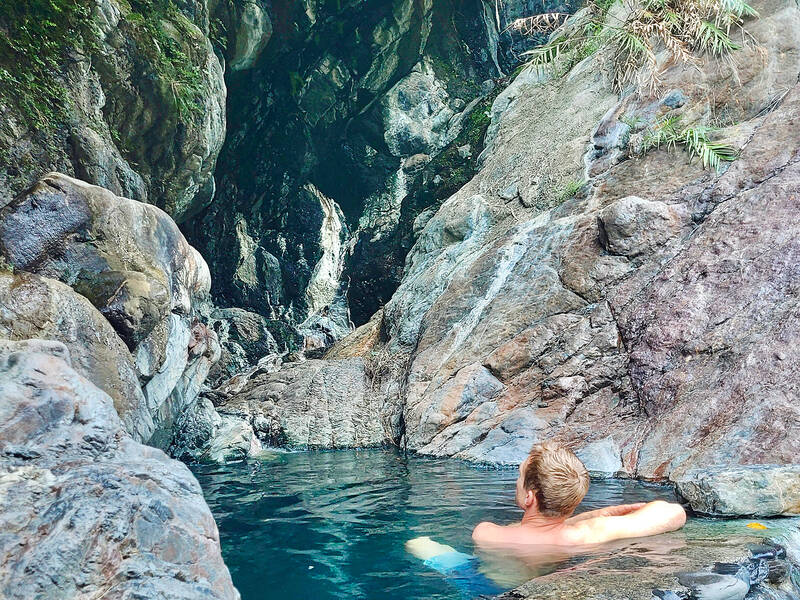
Photo: Tyler Cottenie
Continuing uphill around the next curve on foot, we then took the steeper, narrower road going uphill on our left all the way up to the gate at the top. Despite signs warning that the area was off-limits, the gate was open and off-road vehicles were able to enter and drive all the way to the hot spring. Be aware that the entire area is prone to rockfall so helmets are a good idea, and if there is any chance of rain the trip should be avoided altogether, as the canyons can rapidly flood and drown anyone inside, whether in a vehicle or on foot.
A ROAD THAT WON’T LAST
The road crosses a side stream on a large bridge and eventually winds its way down to the riverbed of the Beigang River (北港溪). At the moment, it is possible to drive or walk right across the river, thanks to a culvert and a minor diversion of the river’s flow. Locals told me that as soon as maintenance on the canal upstream is done, this area will be dug up, returning the river to its original state, so the earlier you visit, the more likely you are to be able to use this easy crossing.
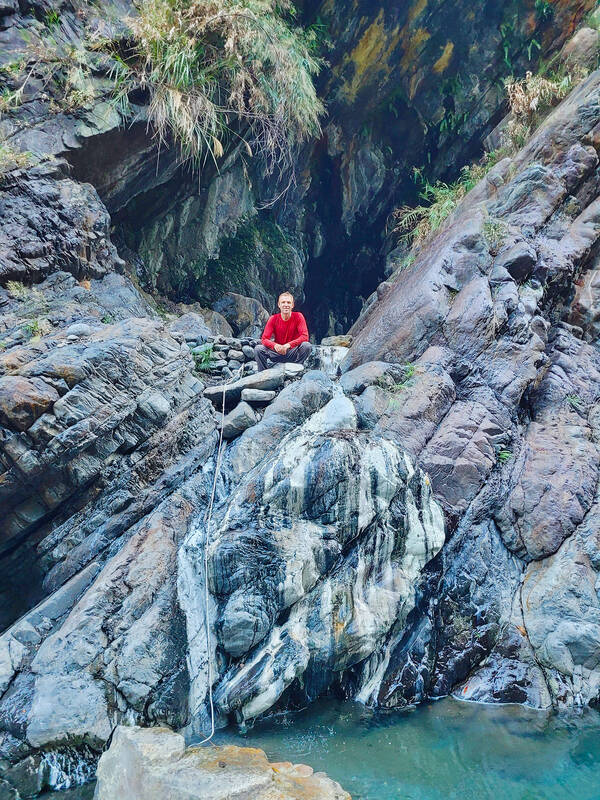
Photo: Tyler Cottenie
Normally, the rest of the walk in to Huisun Hot Spring is an arduous river trace requiring wetsuits, ropes, life jackets and two days. Right now, thanks to upgrade work on the nearby Nenggao Canal (能高大圳), there is a temporary gravel road for work vehicles running all the way to the hot spring and beyond. Until the next major flood here washes out this road, you can walk on a wide path without even getting your feet wet and just take in the splendid scenery all around you as you go.
The road threads its way through narrow canyons with rushing rapids, skirts towering cliffs with crumbling faces (you remembered your helmet, right?), and passes below slender waterfalls. Even without a hot spring at the end, this would be a worthwhile trip on its own for the stunning canyon scenery. At times, it seems impossible that anyone could have built a road in such a treacherous environment seemingly devoid of construction materials, yet there it is.
Less than three hours after leaving the parking lot, you should reach the hot spring: look for the rope going up to a cave in the mountain on the right side. Before going up for a soak, you may want to continue about 10 more minutes to the end of the road, where a major engineering project of the 1960s is still operating.
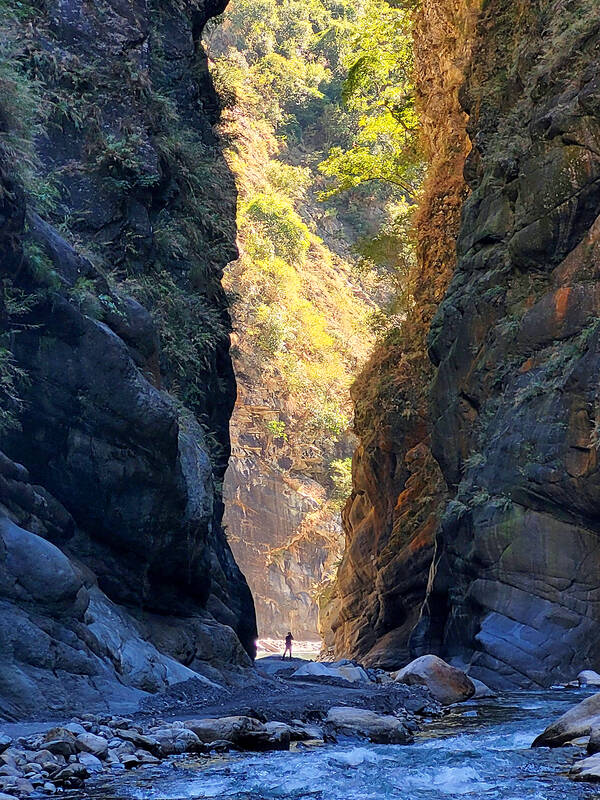
Photo: Tyler Cottenie
THE NENGGAO CANAL
From 1965 to 1972, a 16km aqueduct was constructed, allowing some water from the Beigang River to pass through the mountains toward Puli, where two further branches delivered the water for agricultural use. Of this 16km, over 14km were in a series of 14 tunnels through the mountains.
Nowadays, the Nenggao Canal is still in use and its initial water collection point and first tunnel through the mountains can be seen up close by anyone who cares to walk in past the hot spring. At the end of the road is a two-story concrete workstation, and a taller concrete structure built on the riverbank. Standing on the latter, you can watch the river water pour down a sort of staircase and into an underground passage.
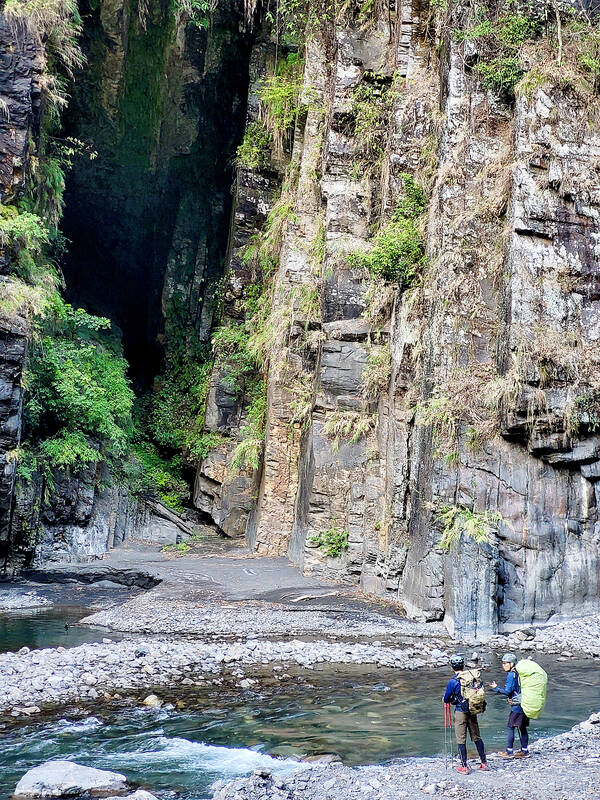
Photo: Tyler Cottenie
Next to the workstation is a long, square concrete passage about 2 meters across, descending slowly into the ground. Grab your flashlight and head down (watch out for the bats) to see the inner workings of the aqueduct. The ramp soon makes a 180-degree turn and continues deeper into the ground. Eventually, you reach a T-intersection with another similar concrete tunnel.
This is the end of the journey, however, as there is an artificial underground river raging along the floor of this tunnel, with diverted Beigang River water flowing underground toward Puli. For regular maintenance not requiring heavy equipment, workers shut the canal’s water off and actually drive small ATVs through several kilometers of tunnels right up to this point. Electricity and Internet for the workstation also pass up through these tunnels.
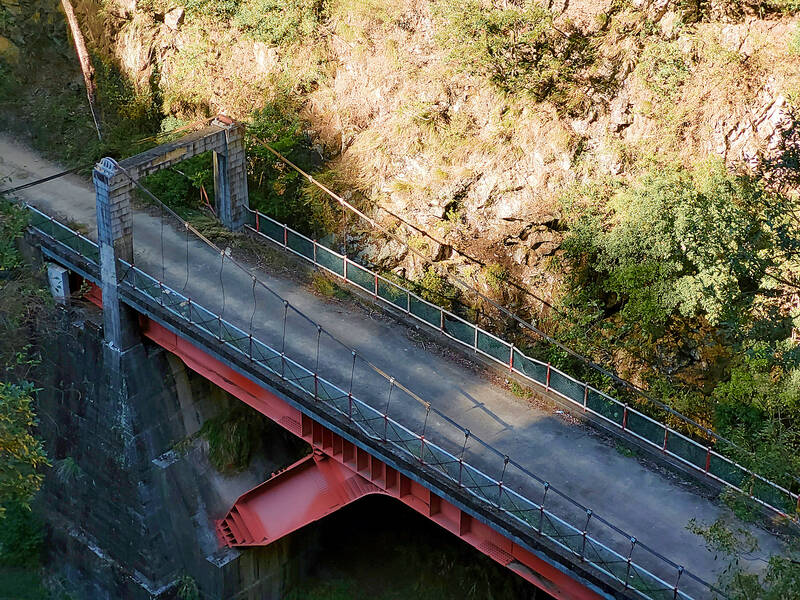
Photo: Tyler Cottenie
A HOT SPRING IN A CAVE
Once your curiosity has been satisfied, it’s time for the main event: a soak in the Huisun Hot Spring. Heading back downstream, the hot spring will be on your left. The entrance is not marked in any way, apart from two ropes locals have installed to help visitors climb up the rock face below the spring. Be very cautious using these ropes, and do not trust either one with your full body weight.
At the top of the climb, a small, clear pool set into a cave awaits. The pool was created by damming up the trickling hot spring with a wall of stones and concrete. The dam makes for a convenient place to sit and cool off as well. The pool can comfortably hold about five people, or, uncomfortably, about 10. Visit on a weekday if it all possible to avoid crowds.
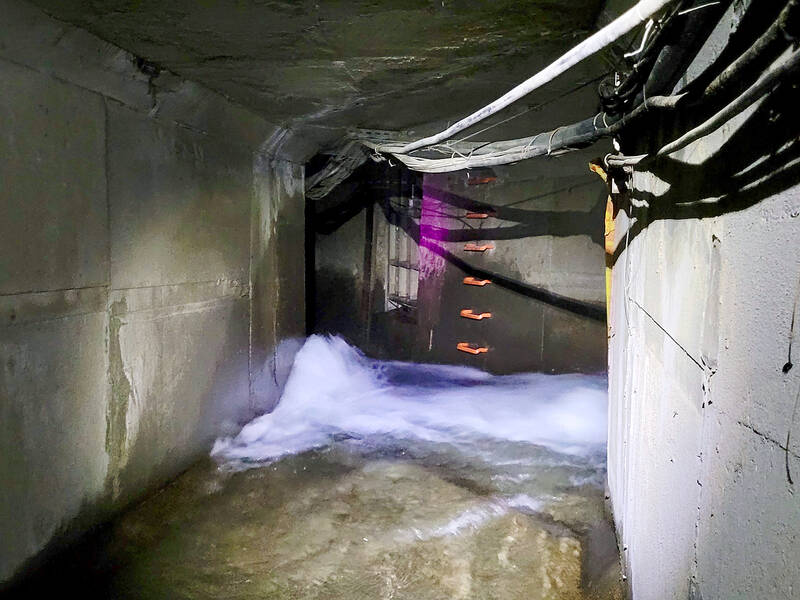
Photo: Tyler Cottenie
As far as wild hot springs go, this is one of the best ones in the whole country for a satisfying soak. The temperature is a stable 38 to 40 degrees throughout the pool. The pool also allows for an adult to sit down up to shoulder depth. Depending on where you sit, you have a view of either the gorgeous Beigang River valley, or the wall of the cave, glistening in multiple colors where the hot spring water trickles down.
If you have the time, camping here is highly recommended. The atmosphere in the hot spring cave at night (bring a few lights) is superb. There is plenty of room to camp upstream near the workstation, and the bathroom, accessed from the back of the building, may have running water.
Don’t set up camp right on the road, as hunters are currently coming and going on the road at all hours of the night on their motorcycles. Don’t set up camp near a cliff where rockfall is likely. Remember to check the weather forecast beforehand and avoid an overnight stay if there is any rain in the forecast that night or the following day.
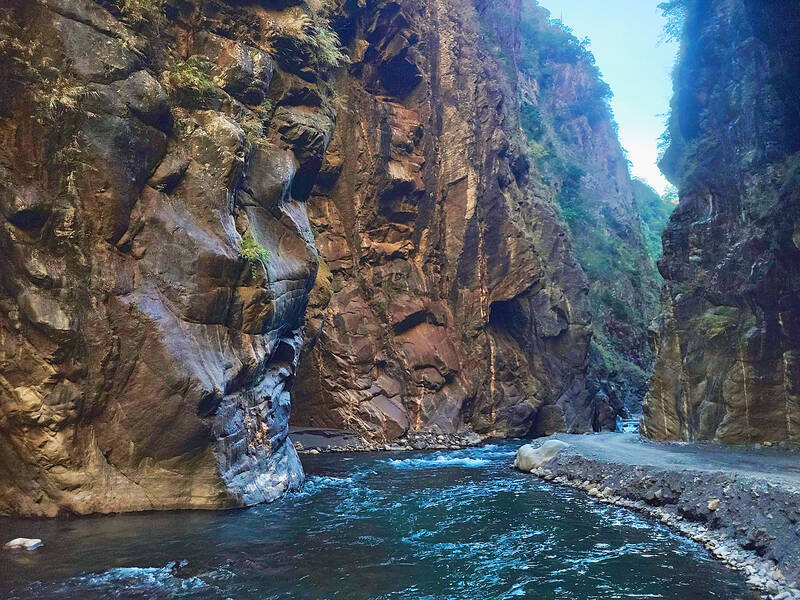
Photo: Tyler Cottenie
Whether you stay overnight, or just make a quick day trip, plan your walk or ride through the Beigang River canyon this winter, before it’s too late.

Taiwan’s English education system is being pulled apart by three opposing forces. Bilingual Nation 2030 pulls students toward English and global communication. Artificial Intelligence (AI) readiness pulls them toward digital judgment, verification and AI-mediated work. But Taiwan’s old exam culture pulls them back toward memorization, grammar drills, timed reading and correct answers. If the education system keeps using old exams to define success, it risks producing graduates who are neither genuinely bilingual nor genuinely AI-ready, but trained for tasks machines can already perform. The first force is Bilingual Nation 2030. Launched in 2018, the policy aimed to “help Taiwan’s workforce connect

It seems every few days one bumps into one of those “real man” comments in which Taiwan is urged to “face reality” or similar, and “make a deal,” with the speaker implying that soon it will be too late. “Deal” advocates always present themselves as having a superior grip on reality, and the manly ability to make the “hard choice.” Their testosterone-laden language often echoes that of Taiwan sellout advocates. Note that such commentary always specifies a process (“make a deal, work with, make progress”), never the end state of what occupation by a violent authoritarian colonialist state will entail. In
June 1 to June 7 "If all Taiwanese were as afraid of dying as you, then what would happen?” Physician Shih Chiang-nan (施江南) reportedly said this to his wife Chen Chiao-tung (陳焦桐) after she urged him to stop intervening on behalf of Taiwanese soldiers stranded overseas after serving in the Japanese Army during World War II. Shih had clashed with high-ranking officials over the issue, engaged in several heated arguments with Taiwan governor-general Chen Yi (陳儀) and allegedly shouted at general Ko Yuan-fen (柯遠芬), chief of staff of the Taiwan Garrison Command, over

“Taiwan’s Opposition Leader Comes to US With a Message Straight Out of Beijing” read a May 31 headline in the Wall Street Journal. Top US administration officials and members of Congress almost certainly read the WSJ, and if there was a bullet point takeaway that people in Washington should absorb ahead of Chinese Nationalist Party (KMT) Chair Cheng Li-wun’s (鄭麗文) arrival in DC on June 9, that headline is it. The last few columns have discussed this very topic, and the timing is not coincidental. While those top officials likely do not read the Taipei Times, judging by the number


 RSS
RSS