


How the politics surrounding President William Lai’s (賴清德) proposed NT$1.25 trillion (US$40 billion) supplementary special defense budget plays out is going to be very revealing. It will also be nerve-wracking, with political, geopolitical and even existential stakes in play that could change the course of history.
Lai broke the news of the eight-year, multilevel national security plan in the Washington Post, describing the centerpiece of it this way: “I am also accelerating the development of ‘T-Dome,’ a multilayered, integrated defense system designed to protect Taiwan from [People’s Republic of China (PRC)] missiles, rockets, drones and combat aircraft.”
For more details and reactions immediately following Lai’s announcement, see our previous column, “President Lai’s big bucks defense budget blitz,” Saturday, November 29, page 12.
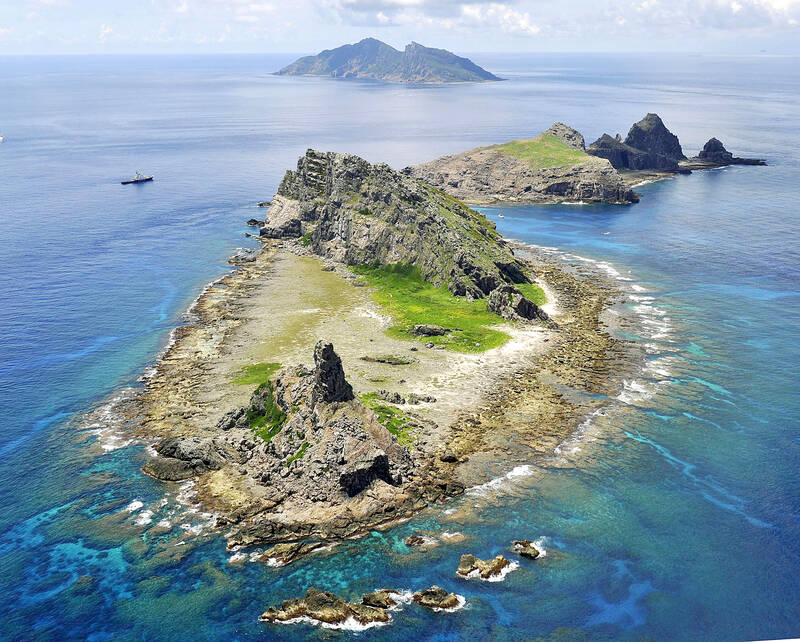
Photo: AP
There are broadly speaking five key players that will determine the outcome, each with their own interests and calculations. This column will examine the interests and agenda of the Chinese Communist Party (CCP).
THE CCP DON’T LIKE IT
Of all the players, the CCP’s agenda is the clearest. They hate it.
Photo: Reuters
Lai’s description of the T-Dome’s capabilities bringing “us closer to the vision of an unassailable Taiwan, safeguarded by innovation and technology,” must not have been well received in Zhongnanhai (中南海).
The CCP mouthpiece Global Times ran this headline, which neatly sums up their attitude and strategy: “Mainland spokesperson slams Lai’s $40B extra ‘defense budget’ to push Taiwan toward disaster; island voices accuse him of ‘selling out’ Taiwan.”
Expect their “island voices” to do whatever they can to undermine support for Lai’s plans.
The big question is whether they will do anything dramatic towards Taiwan to try and influence the debate. More big military exercises, perhaps?
In the short term, it is unlikely.
There is no clear domestic imperative to do so, and they have their hands full with drumming up ethnationalistic fury at a bigger fish: the Japanese.
New Japanese Prime Minister Takaichi Sanae’s military expansion plans are bigger and already in motion, and could complicate the CCP’s strategic calculations across the region.
Lai’s plans are still ill-defined and face a hard political battle ahead to get passed in the legislature. In the short term, the CCP will lean heavily on local assets and allies inside Taiwan to stymie Lai’s agenda to kill it off in the legislature.
Better for the CCP to concentrate their firepower on the immediate military buildup in Japan than a theoretical, long-term one in Taiwan. If they can get Japan to back down on their military buildup, it would also weaken the ability of the United States to intervene militarily.
Takaichi’s comments on Japanese military support during a “Taiwan contingency” — despite her merely openly stating what everyone already knew — is the excuse the CCP is using to fan the flames of nationalistic fury.
Children in China are taught to hate Japan from a young age, and nationalistic outrage is an easy card to play, and serves the CCP domestically by distracting from dissatisfaction with local economic pressures.
Targeting Taiwan would distract from those goals and confuse the messaging domestically.
TARGETING JAPAN TO STYMIE LAI
Targeting Japan also serves a purpose in their agenda in Taiwan by framing the conflict as Chinese versus Japanese.
This framing appeals to Chinese nationalist elements within the Chinese Nationalist Party (KMT), whose sympathies lie with their “Chinese compatriots.” The combination of flexing Chinese muscle against Japan scares those afraid of war in Taiwan, and appeals to ethnic unity may help provide backbone to some KMT lawmakers opposed to Lai’s defense priorities.
The KMT is split internally between those who support a robust military defensive posture, those who vehemently oppose it as “provocative” to China and those who want to win elections and care about public opinion.
A dramatic flexing of military muscle towards Taiwan to try and influence the outcome of a legislative vote on the special military budget would backfire and help ensure it passes by swinging public opinion against the CCP, severely weakening the hand of those in the KMT hoping to kill Lai’s plans.
Rather than do something dramatic against Taiwan, it would be more strategically sound for the CCP to target Japan.
The default, easy assumption would to significantly increase military activities around the Diaoyutai Islands (釣魚台), also known as the Senkaku Islands, ruled by Japan but claimed by both China and Taiwan. It would put pressure on Japan and the US, while simultaneously appealing to hardline KMT nationalists who also resent Japan’s “occupation” of the islands that they claim are part of Taiwan’s Yilan County (a position also held by China).
There is a problem with that plan, however. They have already increased their military activities around the Diaoyutai Islands about as much as they can without risking an all-out war. The US has reaffirmed that the Diaoyutai Islands are included in its mutual defense treaty with Japan.
There is not much new they can add to their pressure campaign there.
RYUKYU KINGDOM
Another possibility would be to increase pressure around the Yaeyama Islands in Okinawa Prefecture, especially Yonaguni Island, which is only 107.4km from Taiwan. Japan is dramatically boosting its military presence there, alongside US Marines.
The CCP may already be preparing the Chinese public for this, and for the entire Okinawa Prefecture that encompasses those islands. Though not new, they have recently been significantly ramping up their propaganda over Japan’s sovereignty over the islands.
Okinawa was occupied by the Japanese in the nineteenth century, but prior to that it was the Ryukyu Kingdom. That kingdom was for a time a Chinese tributary state.
After World War II, Okinawa was under American occupation until 1972, when it reverted to Japan. The CCP has been questioning the legal status of Okinawa, and in a dig at the official US and Japanese position on Taiwan, refers to Okinawa’s status as “undermined.”
They have also been playing up both their independent past, local opposition to US bases and former ties to China to stoke up domestic resentment against Japan, both inside Okinawa and in China itself.
Significant military activities in that region, likely short of causing a war but coming close to the line, would have a four birds with one stone effect from the CCP’s perspective. It would bolster domestic resentment against Japan, rattle the new Japanese government, and put pressure on the Americans.
If it is dramatic enough, it would also embolden those in Taiwan who argue that resisting China is hopeless and futile. That could help swing the KMT and potentially the Taiwan People’s Party (TPP) caucuses in their direction to defeat Lai’s proposals in the legislature.
It is still possible that Beijing will instead directly ramp up military pressure around Taiwan to make their opposition to the special military budget felt, but strategically it makes little sense.
Another possibility would be to rapidly increase pressure to the south of Taiwan around the Philippines, possibly in concert with actions around Okinawa. This would make more strategic sense than targeting Taiwan directly, but they would risk biting off more than they can chew, it would confuse their domestic messaging, and would risk alarming the Chinese nationalist lawmakers in Taiwan, whose support they need.
Donovan’s Deep Dives is a regular column by Courtney Donovan Smith (石東文) who writes in-depth analysis on everything about Taiwan’s political scene and geopolitics. Donovan is also the central Taiwan correspondent at ICRT FM100 Radio News, co-publisher of Compass Magazine, co-founder Taiwan Report (report.tw) and former chair of the Taichung American Chamber of Commerce. Follow him on X: @donovan_smith.
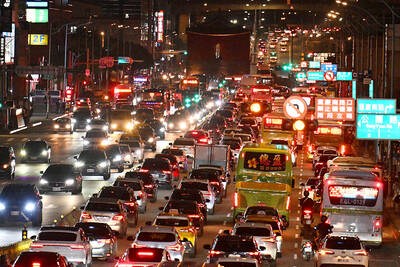
By global standards, the traffic congestion that afflicts Taiwan’s urban areas isn’t horrific. But nor is it something the country can be proud of. According to TomTom, a Dutch developer of location and navigation technologies, last year Taiwan was the sixth most congested country in Asia. Of the 492 towns and cities included in its rankings last year, Taipei was the 74th most congested. Taoyuan ranked 105th, while Hsinchu County (121st), Taichung (142nd), Tainan (173rd), New Taipei City (227th), Kaohsiung (241st) and Keelung (302nd) also featured on the list. Four Japanese cities have slower traffic than Taipei. (Seoul, which has some

In our discussions of tourism in Taiwan we often criticize the government’s addiction to promoting food and shopping, while ignoring Taiwan’s underdeveloped trekking and adventure travel opportunities. This discussion, however, is decidedly land-focused. When was the last time a port entered into it? Last week I encountered journalist and travel writer Cameron Dueck, who had sailed to Taiwan in 2023-24, and was full of tales. Like everyone who visits, he and his partner Fiona Ching loved our island nation and had nothing but wonderful experiences on land. But he had little positive to say about the way Taiwan has organized its
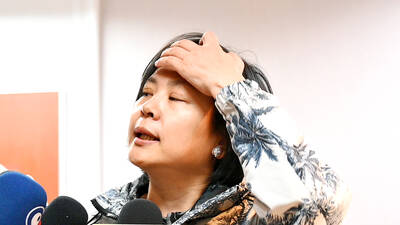
The entire Li Zhenxiu (李貞秀) saga has been an ugly, complicated mess. Born in China’s Hunan Province, she moved to work in Shenzhen, where she met her future Taiwanese husband. Most accounts have her arriving in Taiwan and marrying somewhere between 1993 and 1999. She built a successful career in Taiwan in the tech industry before founding her own company. She also served in high-ranking positions on various environmentally-focused tech associations. She says she was inspired by the founding of the Taiwan People’s Party (TPP) in 2019 by Ko Wen-je (柯文哲), and began volunteering for the party soon after. Ko
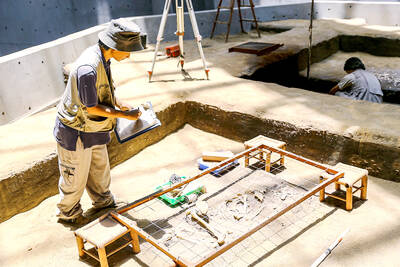
Writing of the finds at the ancient iron-working site of Shihsanhang (十 三行) in New Taipei City’s Bali District (八里), archaeologist Tsang Cheng-hwa (臧振華) of the Academia Sinica’s Institute of History and Philology observes: “One bronze bowl gilded with gold, together with copper coins and fragments of Tang and Song ceramics, were also found. These provide evidence for early contact between Taiwan aborigines and Chinese.” The Shihsanhang Web site from the Ministry of Culture says of the finds: “They were evidence that the residents of the area had a close trading relation with Chinese civilians, as the coins can be


 RSS
RSS