


Sept. 29 to OCT. 5
With their compass broken, the small boat carrying 18 South Vietnamese refugees drifted at sea for more than a week, their rations running low. They had all but lost hope of reaching their destination of Manila when a Taiwanese fishing vessel spotted them and eventually brought them to Penghu.
It was June 1981, six years after the fall of Saigon, and the group joined the millions who had fled the communist takeover of Vietnam. Taiwan was not a main destination for Vietnamese refugees, but more than 2,100 boat people arriving on 51 vessels passed through two refugee camps in Penghu between 1977 and 1988. People stayed until they were resettled elsewhere, some waiting for years.
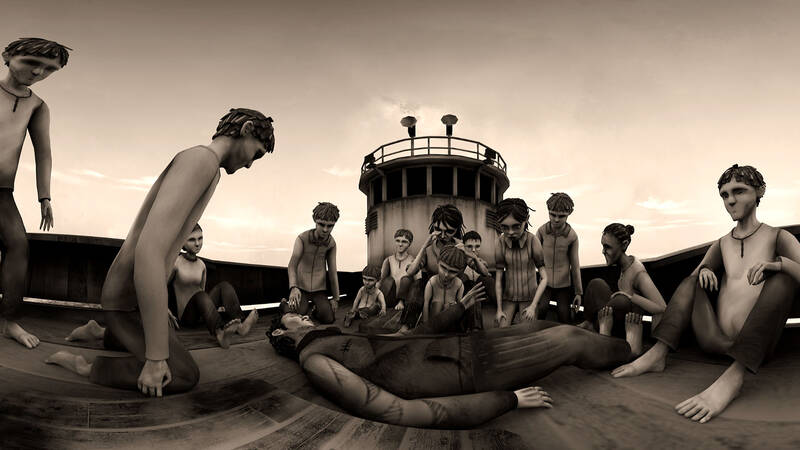
Photo courtesy of Asio Liu
Because Taiwan was no longer a member of the UN, the Penghu camps were not recognized in international records, and their existence was gradually forgotten.
The captain of that 1981 vessel and his wife welcomed a son the following year, one of 106 children to be born in the camps. They named him Nguyen Quoc Viet, and soon after they left for the US where they were granted asylum.
Nguyen is one of four main subjects featured in Asio Liu’s (劉吉雄) latest documentary, Strangers and Their Babies (陌生人與他們的小孩), now streaming on Public Television Service Plus. The film — along with Liu’s other works exploring this forgotten chapter of history — is screening twice a day as part of the “Virtually Embodied” (虛擬生肉) exhibition, which opened last weekend at The Cube Project Space in Taipei. Running until Nov. 16 and curated by Chen Hung-yi (陳泓易), the exhibit features photographs, books, archival materials, music and VR experiences.
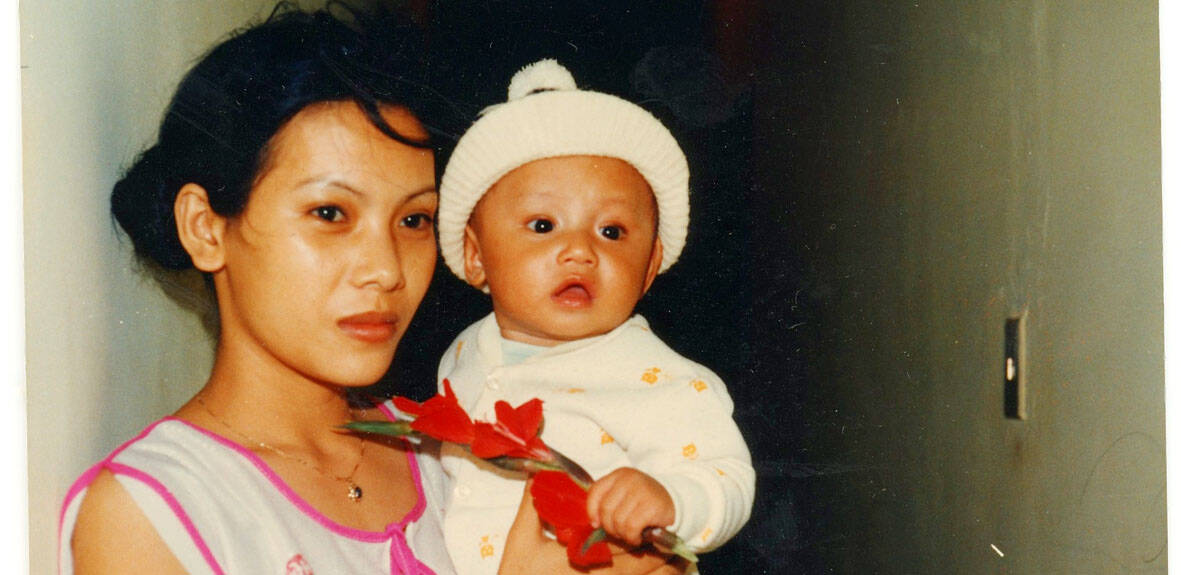
Photo courtesy of Public Television Service
REFUGEE BABIES
When Nguyen Quoc Viet returned to Taiwan in 2011, the camps were gone, having been torn down in 2003.
Liu’s interest in the subject began in 1995, during his military service in Penghu, when he started having cryptic dreams that he felt were connected to Southeast Asia. In one, a Cambodian genocide victim asked him, “Have you been there?”
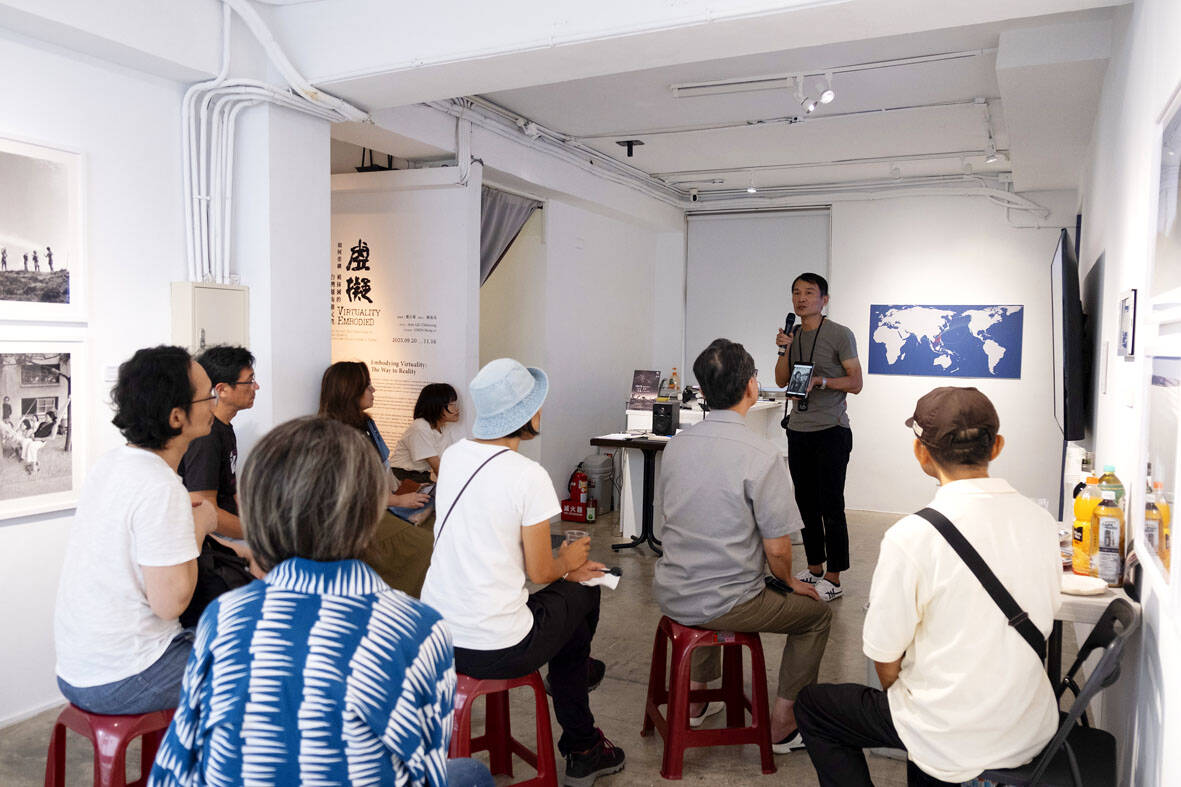
Photo courtesy of The Cube Project Space
The final dream was in 2003, when he saw a pile of umbrellas being blown away on an overgrown field. When he woke up, a message lingered in his head: “The refugee camps will be torn down next month.” Motivated by these experiences, Liu rushed to document the site before its demolition. That footage and early photographs are on display at the Virtually Embodied exhibition. His short film, Chin Liu Tao (金六刀), which recounts the dreams and their influence on his filmmaking, is also on view.
Liu has been working to shed light on this past, spending 10 years producing the 2023 documentary A Camp Unknown, directed by Awei Liu (劉建偉).
Strangers and Their Babies shows Nguyen’s family reflecting on their journey, as well as his return to his birthplace in Penghu and his emotional reunion with Huang Chin-yu (黃瑾瑜), the camp’s deputy director, who had helped care for them decades earlier. Liu also helps reconnect Nguyen with a crewmember of the ship that rescued his parents at sea.
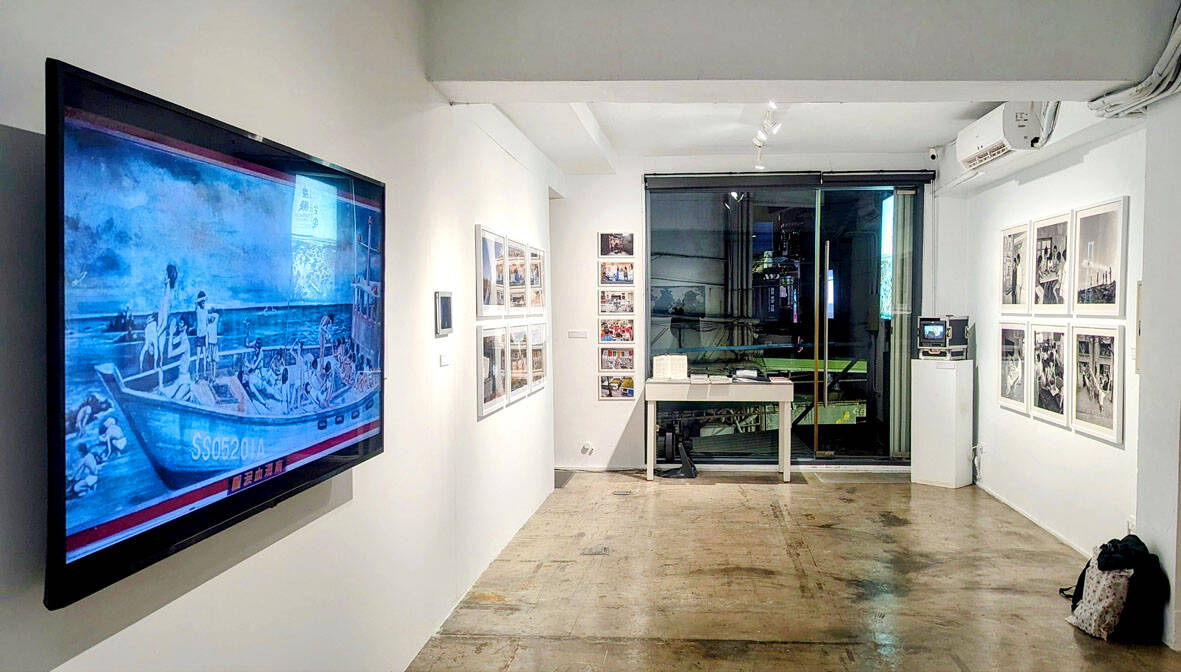
Photo: Han Cheung, Taipei Times
Although Taiwan was under no international obligation to accept the refugees, Catholic charity Caritas Taiwan persuaded the government to allow them to stay temporarily. Huynh managed the camp on behalf of the Free China Relief Association (中華民國救濟總會), which ran numerous humanitarian projects in Asia during the Cold War. Caritas assisted refugees with asylum applications, most of whom were resettled in the US, Canada or Europe.
The film also profiles three other individuals whose lives intersected with Penghu. Ni Yen-yen’s (倪燕燕) mother married a local resident and stayed in Taiwan while the rest of the family resettled in US. Nguyen Tan Vinh’s parents spent four years in the camp before emigrating to the US; he later returned with his wife, whose own family had fled Vietnam on the same boat.
Finally, Nguyen Thi Ha — whose mother rarely spoke of the past — traces a different refugee route that took her family through China and Macau before they reached Penghu. Since they were North Vietnamese, they had trouble seeking asylum and settled in Taiwan.
SHIP OF BLOOD AND TEARS
Most of those fleeing Vietnam were not as fortunate, as countless perished at sea. The harrowing, 66-day ordeal of the Thanh Phong vessel, of which only 34 of 146 passengers survived, captured national attention in 1978 especially because they reportedly had to consume the flesh of the deceased to survive. To make matters worse, the captain of the Taiwanese rescue boat allegedly drove slowly on purpose and extorted money and valuables from the refugees in exchange for food and supplies.
The tragedy was perfect anti-communist material during the Martial Law era. The Youth Warrior Daily (青年戰士日報) serialized the survivors’ story under the title “Blood and Tears of the South China Sea” (南海血淚) and it was later adapted into a movie. A different version, Blood Letter from the South China Sea (南海血書), was presented as a first-person account highlighting communist brutality and was even included in school textbooks with the notable slogan: “If we don’t fight for freedom today, tomorrow we’ll become refugees on the sea!” In 2003, the author admitted that it was mostly fabricated.
One of the survivors of the Thanh Phong, Kim Chi, lost her entire family and spent several years in the Penghu camp before being resettled in Brussels. While doing his research, Liu found a photo of her standing in front of a grisly mural depicting the ordeal, and they eventually connected. Kim Chi’s return to Taiwan is shown in A Camp Unknown.
Her heart-wrenching story, combined with Liu’s dreams and historical sources, inspired the haunting VR movie Somewhere Unknown in Indonchina (中南半島未知某處). The piece is available at the exhibition on weekends by registration.
Taiwan in Time, a column about Taiwan’s history that is published every Sunday, spotlights important or interesting events around the nation that either have anniversaries this week or are tied to current events.
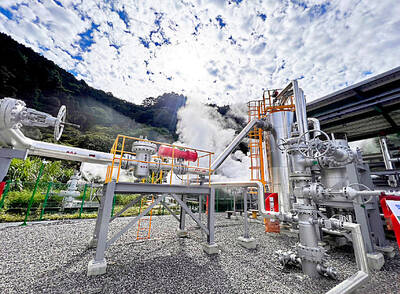
Taiwan’s semiconductor industry consumes electricity at rates that would strain most national grids. Taiwan Semiconductor Manufacturing Co (TSMC) alone accounted for more than 9 percent, or 2,590 megawatts (MW), of the nation’s power demand last year. The factories that produce chips for the world’s phones and servers run around the clock. They cannot tolerate blackouts. Yet Taiwan imports 97 percent of its energy, with liquefied natural gas reserves measured in days. Underground, Taiwan has options. Studies from National Taiwan University estimate recoverable geothermal resources at more than 33,000 MW. Current installed capacity stands below 10 MW. OBSTACLES Despite Taiwan’s significant geothermal potential, the

In our discussions of tourism in Taiwan we often criticize the government’s addiction to promoting food and shopping, while ignoring Taiwan’s underdeveloped trekking and adventure travel opportunities. This discussion, however, is decidedly land-focused. When was the last time a port entered into it? Last week I encountered journalist and travel writer Cameron Dueck, who had sailed to Taiwan in 2023-24, and was full of tales. Like everyone who visits, he and his partner Fiona Ching loved our island nation and had nothing but wonderful experiences on land. But he had little positive to say about the way Taiwan has organized its
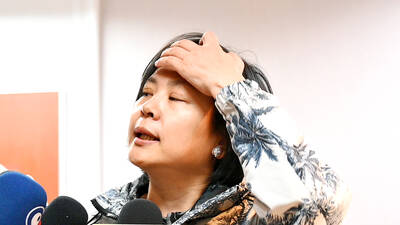
The entire Li Zhenxiu (李貞秀) saga has been an ugly, complicated mess. Born in China’s Hunan Province, she moved to work in Shenzhen, where she met her future Taiwanese husband. Most accounts have her arriving in Taiwan and marrying somewhere between 1993 and 1999. She built a successful career in Taiwan in the tech industry before founding her own company. She also served in high-ranking positions on various environmentally-focused tech associations. She says she was inspired by the founding of the Taiwan People’s Party (TPP) in 2019 by Ko Wen-je (柯文哲), and began volunteering for the party soon after. Ko
Chinese Nationalist Party (KMT) Chair Cheng Li-wun (鄭麗文) returned from her trip to meet People’s Republic of China (PRC) dictator Xi Jinping (習近平) bearing “a gift” for the people of Taiwan: 10 measures the PRC proposed to “facilitate the peaceful development of cross-strait relations.” “China on Sunday unveiled 10 new incentive measures for Taiwan,” wrote Reuters, wrongly. The PRC’s longstanding habit with Taiwan relations is to repackage already extant or once-existing policies and declare that they are “new.” The list forwarded by Cheng reflects that practice. NEW MEASURES? Note the first item: establishing regular communication mechanisms between the Chinese Communist Party


 RSS
RSS