


It’s been years since mass arrests all but silenced pro-democracy activism in Hong Kong. But a crackdown on dissent in the semiautonomous Chinese city is still expanding, hitting restaurants, bookstores and other small businesses.
Shops and eateries owned by people once associated with the largely subdued pro-democracy movement are feeling a tightening grip through increased official inspections, anonymous complaint letters and other regulatory checks.
Those critical of the city’s political changes say it’s a less visible side of a push to silence dissent that began five years ago when Beijing imposed a national security law to crush challenges to its rule, under which opposition politicians were jailed and pro-democracy newspaper Apple Daily was shuttered.
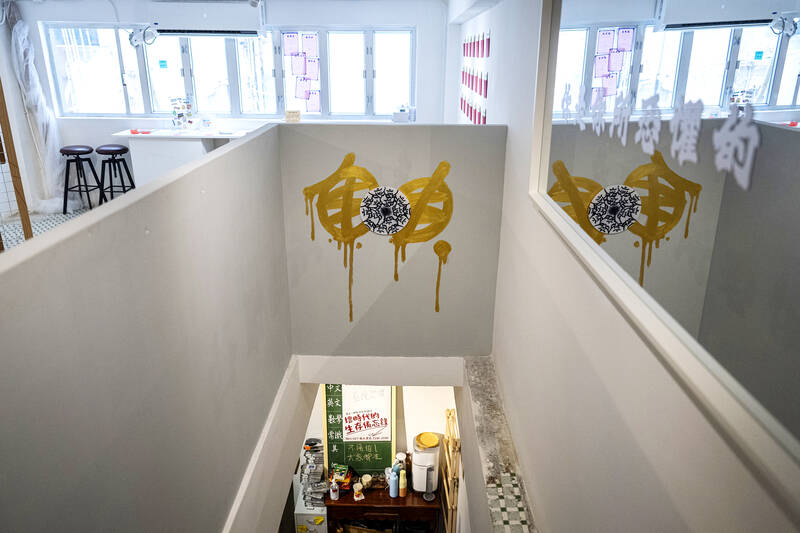
Photo: AP
China said the law was necessary for the city’s stability following anti-government protests in 2019.
Last year, the city passed its own national security law, which has been used to jail people for actions like writing pro-independence messages on the back of bus seats and wearing a T-shirt carrying a protest slogan that authorities deemed could imply the separation of Hong Kong from China, a red line for Beijing.
In recent weeks, food authorities sent letters to restaurants warning that their business licenses could be revoked if the government deems them to be endangering national security or public interest.
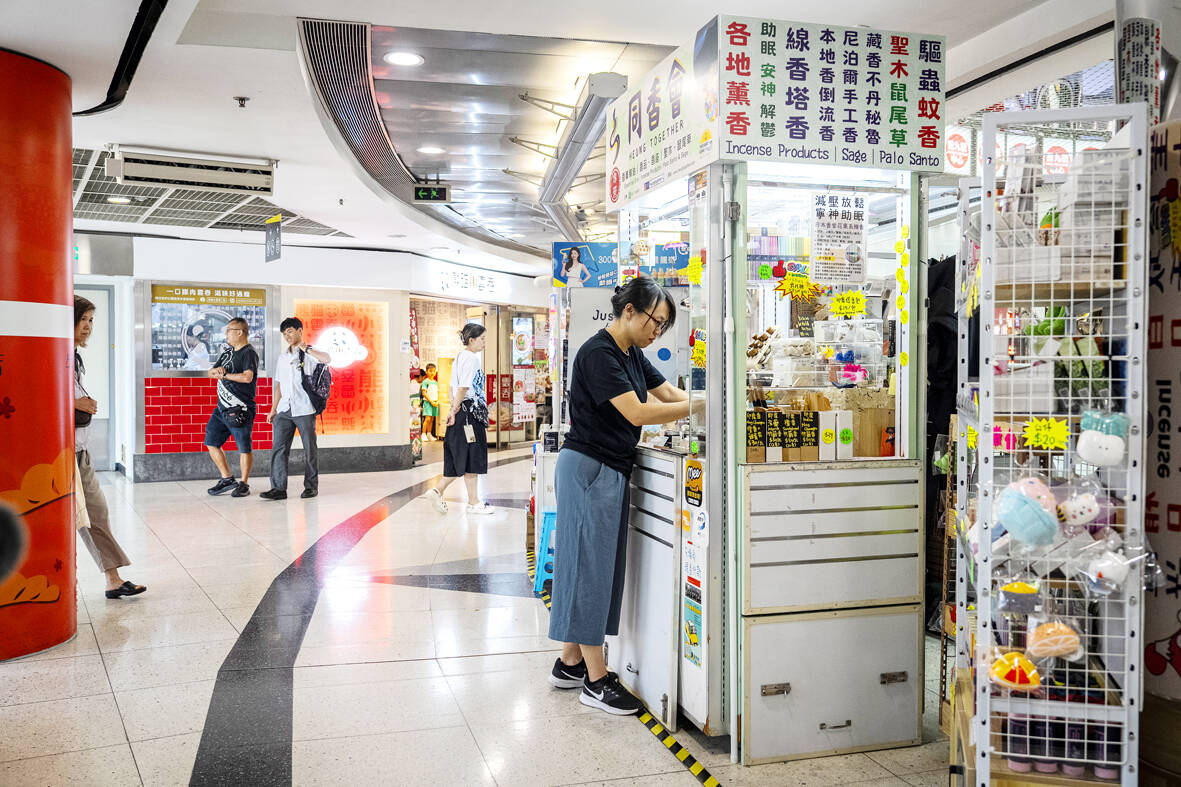
Photo: AP
FREQUENT INSPECTIONS
Leticia Wong (黃文萱), a former pro-democracy district councilor who now runs a bookstore, says her shop is frequently visited by food and hygiene inspectors, the fire department or other authorities over complaints about issues like hosting events without a license. It happens most often around June 4, the anniversary of the 1989 Tiananmen Square massacre.
Her records show government authorities took measures against her shop some 92 times between July 2022 and last month, including inspecting her shop, conspicuously patrolling outside, or sending letters warning her of violations. She has been studying regulations to protect herself from accidentally breaking them.
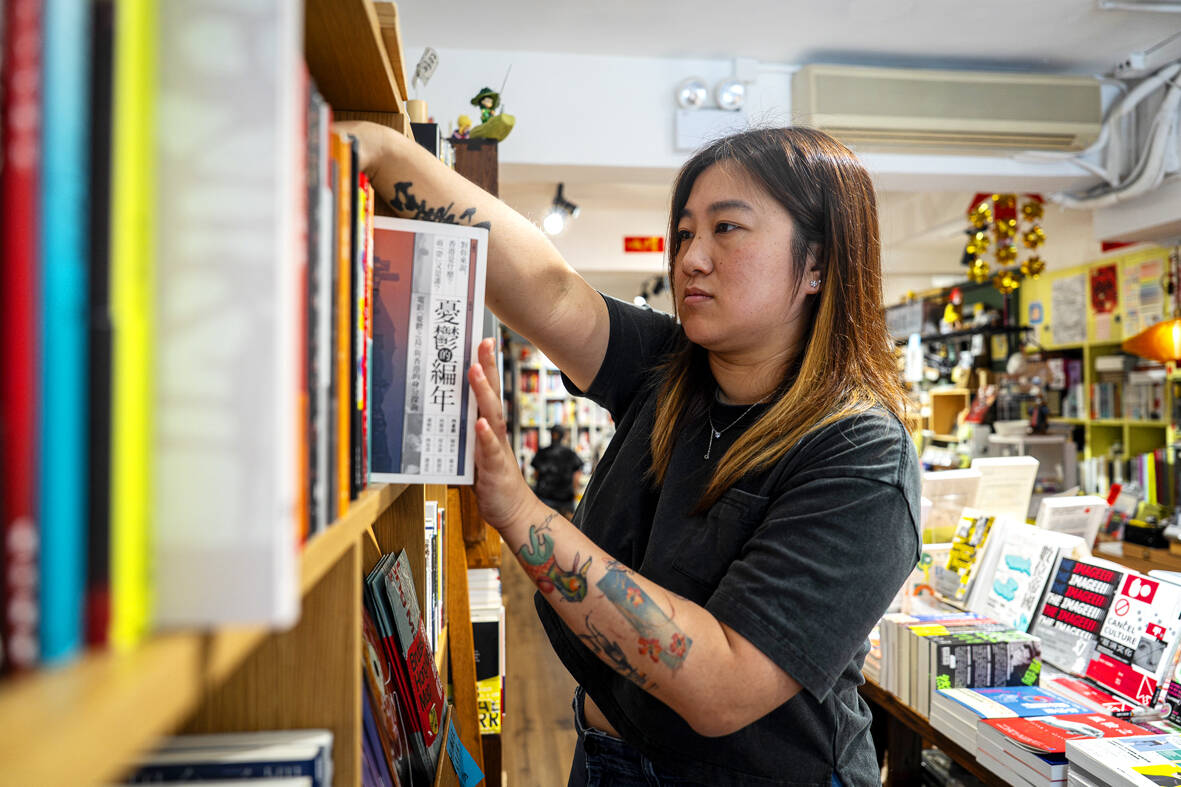
Photo: AP
“Some areas look trivial — and they really are — but they still have the power to make you face consequences,” she said.
In an E-mailed reply, the fire department said it conducted checks at Wong’s business following multiple complaints this year. Wong’s bookstore passed most of them but still faces enforcement action for failing to provide valid certificates for two fire extinguishers and its emergency lighting system, it said.
Other small business owners described similar experiences.
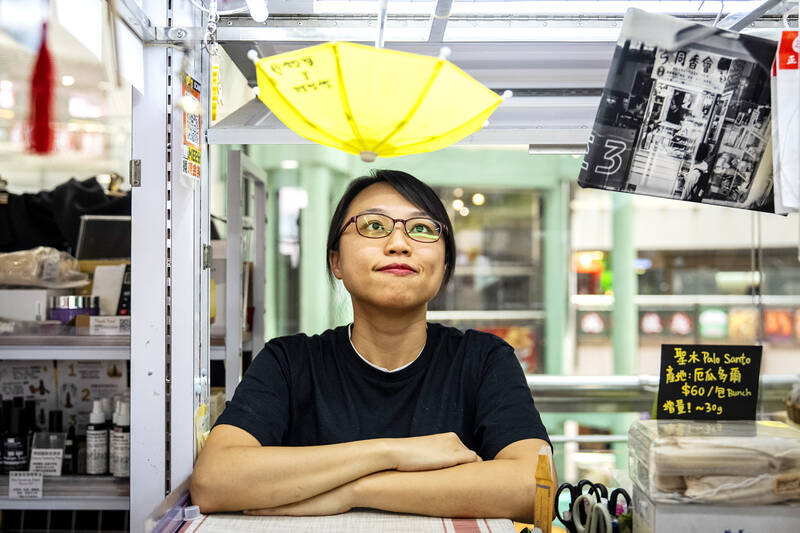
Photo: AP
A bakery that put up pro-democracy decorations during the 2019 protests saw food authorities’ inspections jump from quarterly to monthly over the past one to two years, mostly over labeling complaints. Its owner, who asked to remain anonymous fearing government retribution, said the frequent inspections made running the business a struggle.
A restaurant owner who received the notice of the newly added terms on possible license revocation over national security violations said he doesn’t know what could be considered a violation and fears one wrong move could cost his staff their jobs. He spoke on the condition of anonymity, fearing potential impact on his business partners and employees.
Food authorities said inspections follow the law, information and public complaints. They maintained that the new national security conditions for food business licenses were clearly defined and would not affect law-abiding operators.
The Hong Kong Chief Executive’s office has not immediately commented.
ANONYMOUS DENUNCIATIONS
Others say they have lost opportunities after anonymous letters were sent to employers or business partners.
Wong said an anonymous letter sent to an organization that had planned an event at her shop prompted them to cancel the booking. Separately, she lost a freelance job after a funder demanded that a social enterprise not hire her without a specific reason.
Her landlord also received an anonymous letter warning them not to rent the space to her.
“I feel that this society is working very hard — that is, within the system, under the official system, working very hard to reject me, or to make my life difficult,” Wong said.
Chan Kim-kam (陳劍琴), another former district councilor, says she lost both a part-time job and a role in a play after the people she worked for were pressured. A school where she taught sociology part-time asked her to leave after it received a letter claiming that she made a student uncomfortable.
The letter, which was written in the simplified Chinese characters used in mainland China but less prominently in Hong Kong, included links to news reports about her arrest under the homegrown national security law last year, though she was never charged.
Meanwhile, the city’s Leisure and Cultural Services Department told her drama group to replace her or lose their venue, she said.
“I think it’s really such a pity. When the culture of reporting people has become so intense, it destroys the trust between people,” she said.
Cultural authorities, declining to discuss specific bookings, said all their venue bookings were managed under established procedures.
RULE OF LAW IN QUESTION
Hong Kong leader John Lee (李家超) has said the security law upholds the rule of law principle and only an extremely small portion of people were targeted. He noted 332 people have been arrested for offenses related to national security, about 66 each year on average, or 0.2 percent of the police’s annual arrest figures. Still, he warned of persisting soft resistance, saying “the streets are full of petty people.”
Local broadcaster i-Cable News said national security guidelines would be issued to government workers. Secretary for Security Chris Tang (鄧炳強) told the broadcaster that even a cleaner should report words endangering national security, if any are found during their job.
But Eric Lai (黎恩灝), a research fellow at Georgetown Center for Asian Law, said Hong Kong is using regulatory powers to monitor and regulate dissent without checks and balances. Local courts were unable to check the powers granted to the government under the security laws, he said.
It fits a common pattern among undemocratic governments like mainland China, he said. In many cases across the border, law enforcement officers frequently harass and surveil dissenters without formal charges.
“It tells the world that the so-called rule of law in Hong Kong is only a facade of rule by men,” he said.
Outside a court on June 12, members of the pro-democracy party League of Social Democrats protested against their convictions over street booth activities with a banner that says “rule of law in name, silencing voices in reality.”
They were fined for collecting money without a permit and displaying posters without approval. The judge said freedom of expression was not absolute and restrictions could be imposed to maintain public order.
On Sunday, the party announced it had dissolved, citing immense political pressure and consideration of consequences for its members, months after the city’s biggest pro-democracy party announced to move toward disbandment. Its chairperson Chan Po-ying (陳寶瑩) wiped away tears at the news conference.
“In the past, the government said it focused on a small portion of people. Now, it includes various kinds of people in Hong Kong, ordinary residents,” she said.
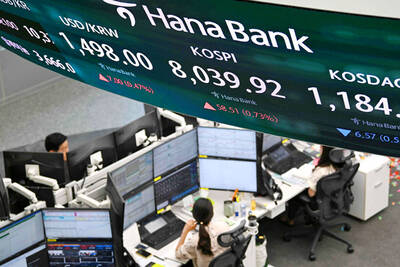
Taiwan’s overtaking of South Korea in GDP per capita is not a temporary anomaly, but the result of deeper structural problems in the South Korean economy says Chang Young-chul, the former CEO of Korea Asset Management Corp. Chang says that while it reflects Taiwan’s own gains, it also highlights weakening growth momentum in South Korea. As design and foundry capabilities become more important in the AI era, Seoul risks losing competitiveness if it relies too heavily on memory chips. IMF forecasts showing Taiwan widening its lead over South Korea have fueled debate in Seoul over memory chip dependence, industrial policy and

And so, in the wake of US President Donald Trump’s trip to the People’s Republic of China (PRC), all the experts on the Strait of Hormuz suddenly became experts on US-China-Taiwan relations. The Internet has certainly expanded human knowledge. Lots of these sudden experts made noise this week about Trump’s words after the meeting with PRC dictator Xi Jin-ping (習近平). Trump is going to sell out Taiwan! Longtime Taiwan commentator J. Michael Cole summed the situation up neatly in the Guardian: “We need to keep in mind that he has a tendency to say many things — sometimes contradicting himself within
There is considerable frustration and confusion among many, both in Taiwan and abroad — including in Washington — as to why the Chinese Nationalist Party (KMT) seems so dead set on using their legislative leverage to slash defense spending and disrupt the ability of the ruling Democratic Progressive Party (DPP) administration to function. Are they pawns of the Chinese Communist Party (CCP)? Are they traitors? In reality, there are multiple reasons. In the first column in this series on this subject, “Donovan’s Deep Dives: How and why the TPP and KMT help Beijing” (Sat May 16, page 12), we examined three

It took 12 years and months of standing in the same mountain location for director Liang Chieh-te (梁皆得) to capture a few seconds of footage: Taiwan’s largest resident raptor locking talons with its mate and spinning through the air in a courtship ritual. With only about 1,000 left in the wild and very short flight windows, the mountain hawk-eagle remains among Taiwan’s most elusive birds. The species generally produces only one offspring per year. Using forest cameras, the film crew and research teams document the arduous process the monogamous pairs go through for the chick to hatch and grow up, weathering


 RSS
RSS