


On this small island in rural Nagasaki, Japan’s Hidden Christians gather to worship what they call the Closet God.
In a special room about the size of a tatami mat is a scroll painting of a kimono-clad Asian woman. She looks like a Buddhist Bodhisattva holding a baby, but for the faithful, this is a concealed version of Mary and the baby Jesus. Another scroll shows a man wearing a kimono covered with camellias, an allusion to John the Baptist’s beheading and martyrdom.
There are other objects of worship from the days when Japan’s Christians had to hide from vicious persecution, including a ceramic bottle of holy water from Nakaenoshima, an island where Hidden Christians were martyred in the 1620s.
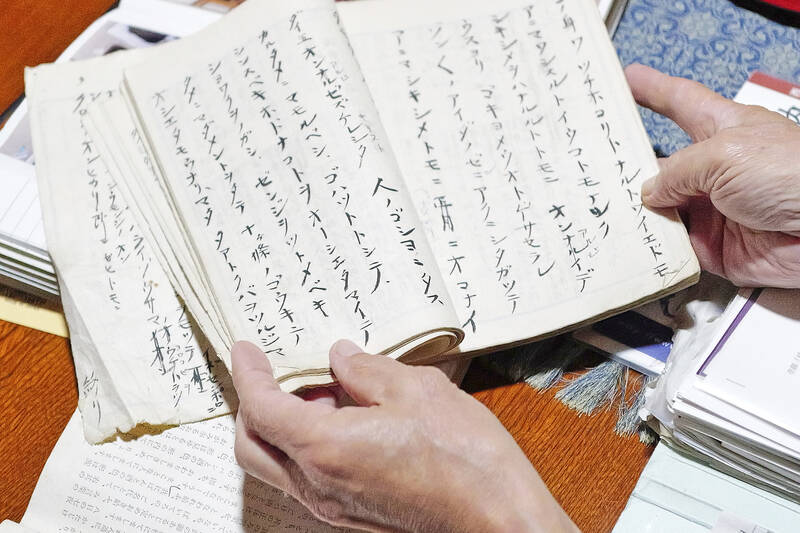
Photo: AP
Little about the icons in the tiny, easy-to-miss room can be linked directly to Christianity — and that’s the point.
After emerging from cloistered isolation in 1865, following more than 200 years of violent harassment by Japan’s insular warlord rulers, many of the formerly underground Christians converted to mainstream Catholicism.
Some, however, continued to practice not the religion that 16th century foreign missionaries originally taught them, but the idiosyncratic, difficult to detect version they’d nurtured during centuries of clandestine cat-and-mouse with a brutal regime.
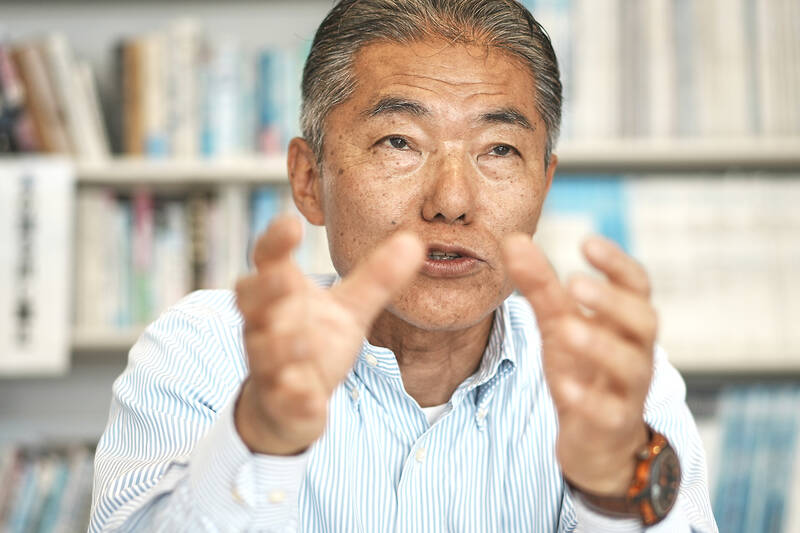
Photo: AP
On Ikitsuki and other remote sections of Nagasaki prefecture, Hidden Christians still pray to these disguised objects. They still chant in a Latin that hasn’t been widely used in centuries. And they still cherish a religion that directly links them to a time of samurai, shoguns and martyred missionaries and believers.
Now, though, the Hidden Christians are dying out, and there is growing certainty that their unique version of Christianity will die with them. Almost all are now elderly, and as the young move away to cities or turn their backs on the faith, those remaining are desperate to preserve evidence of this offshoot of Christianity — and convey to the world what its loss will mean.
“At this point, I’m afraid we are going to be the last ones,” said Masatsugu Tanimoto, 68, one of the few who can still recite the Latin chants that his ancestors learned 400 years ago. “It is sad to see this tradition end with our generation.”
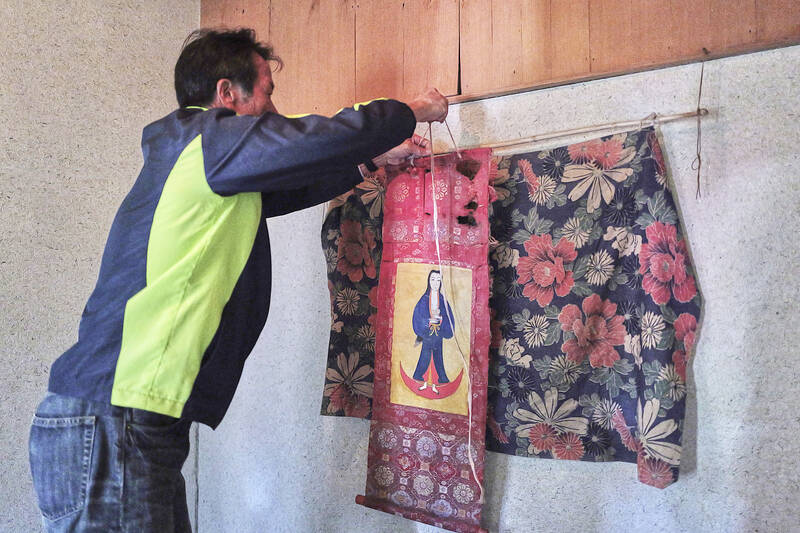
Photo: AP
UNIQUE RELIGION
Christianity spread rapidly in 16th century Japan when Jesuit priests had spectacular success converting warlords and peasants alike, most especially on the southern main island of Kyushu, where the foreigners established trading ports in Nagasaki. Hundreds of thousands, by some estimates, embraced the religion.
That changed after the shoguns began to see Christianity as a threat. The crackdown that followed in the early 17th century was fierce, with thousands killed and the remaining believers chased underground.
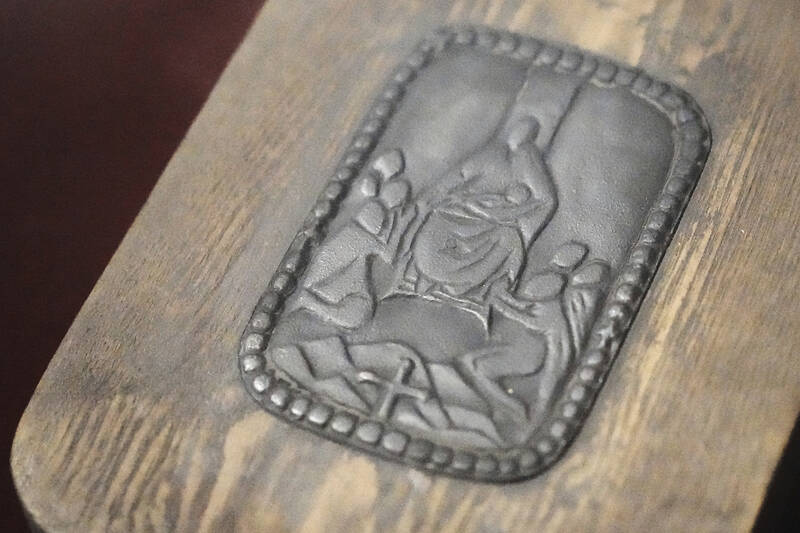
Photo: AP
As Japan opened up to foreign influence, a dozen Hidden Christians clad in kimono cautiously declared their faith, and their remarkable perseverance, to a French Catholic priest in March 1865 in Nagasaki city.
Many became Catholics after Japan formally lifted the ban on Christianity in 1873.
But others chose to stay Kakure Kirishitan (Hidden Christians), continuing to practice what their ancestors preserved during their days underground.
LINK TO THE PAST
Hidden Christians spoke of a deep communal bond stemming from a time when a lapse could doom a practitioner or their neighbors.
Hidden Christians were forced to hide all visible signs of their religion after the 1614 ban on Christianity and the expulsion of foreign missionaries. Households took turns hiding precious ritual objects and hosting the secret services that celebrated both faith and persistence.
This still happens today, with the observance of rituals unchanged since the 16th century.
The group leader in the Ikitsuki area is called Oji, which means father or elderly man in Japanese. Members take turns in the role, presiding over baptisms, funerals and ceremonies for New Year, Christmas and local festivals.
Different communities worship different icons and have different ways of performing the rituals.
In Sotome, for instance, people prayed to a statue of what they called Maria Kannon, a genderless Bodhisattva of mercy, as a substitute for Mary.
In Ibaragi, where about 18,000 residents embraced Christianity in the 1580s, a lacquer bowl with a cross painted on it, a statue of the crucified Christ and an ivory statue of Mary were found hidden in what was called “a box not to be opened.”
ANCESTOR WORSHIP
Many Hidden Christians rejected Catholicism after the persecution ended because Catholic priests refused to recognize them as real Christians unless they agreed to be rebaptized and abandon the Buddhist altars that their ancestors used.
“They are very proud of what they and their ancestors have believed in” for hundreds of years, even at the risk of their lives, said Emi Mase-Hasegawa, a religion studies professor at J.F. Oberlin University in Tokyo.
Tanimoto believes his ancestors continued the Hidden Christian traditions because becoming Catholic meant rejecting the Buddhism and Shintoism that had become a strong part of their daily lives underground.
“I’m not a Christian,” Tanimoto said. Even though some of their Latin chants focus on the Virgin Mary and Jesus Christ, their prayers are also meant to “ask our ancestors to protect us, to protect our daily lives,” he said. “We are not doing this to worship Jesus or Mary. … Our responsibility is to faithfully carry on the way our ancestors had practiced.”
ARCHAIC LATIN CHANTS
Hidden Christians’ ceremonies often include the recitation of Latin chants, called Orasho.
The Orasho comes from the original Latin or Portuguese prayers brought to Japan by 16th century missionaries.
Recently on Ikitsuki, three men performed a rare Orasho. All wore dark formal kimonos and solemnly made the sign of the cross in front of their faces before starting their prayers — a mix of archaic Japanese and Latin.
Tanimoto, a farmer, is the youngest of only four men who can recite Orasho in his community. As a child, he regularly saw men performing Orasho on tatami mats before an altar when neighbors gathered for funerals and memorials.
About 40 years ago, in his mid-20s, he took Orasho lessons from his uncle so he could pray to the Closet God that his family has kept for generations.
Tanimoto recently showed a weathered copy of a prayer his grandfather wrote with a brush and ink, like the ones his ancestors had diligently copied from older generations.
As he carefully turned the pages of the Orasho book, Tanimoto said he mostly understands the Japanese but not the Latin. It’s difficult, he said, but “we just memorize the whole thing.”
Today, because funerals are no longer held at homes and younger people are leaving the island, Orasho is only performed two or three times a year.
DYING TRADITION
There are few studies of Hidden Christians so it’s not clear how many still exist.
There were an estimated 30,000 in Nagasaki, including about 10,000 in Ikitsuki, in the 1940s, according to government figures. But the last confirmed baptism ritual was in 1994, and some estimates say there are less than 100 Hidden Christians left on Ikitsuki.
Hidden Christianity is linked to the communal ties that formed when Japan was a largely agricultural society. Those ties crumbled as the country modernized after World War II, with recent developments revolutionizing people’s lives, even in rural Japan.
The accompanying decline in the population of farmers and young people, along with women increasingly working outside of the home, has made it difficult to maintain the tight networks that nurtured Hidden Christianity.
“In a society of growing individualism, it is difficult to keep Hidden Christianity as it is,” said Shigeo Nakazono, the head of a local folklore museum who has researched and interviewed Hidden Christians for 30 years. Hidden Christianity has a structural weakness, he said, because there are no professional religious leaders tasked with teaching doctrine and adapting the religion to environmental changes.
Nakazono has started collecting artifacts and archiving video interviews he’s done with Hidden Christians since the 1990s, seeking to preserve a record of the endangered religion.
Mase-Hasegawa agreed that Hidden Christianity is on its way to extinction.
“As a researcher, it will be a huge loss,” she said.
Masashi Funabara, 63, a retired town hall official, said most of the nearby groups have disbanded over the last two decades. His group, which now has only two families, is the only one left, down from nine in his district. They meet only a few times a year.
“The amount of time we are responsible for these holy icons is only about 20 to 30 years, compared to the long history when our ancestors kept their faith in fear of persecution. When I imagined their suffering, I felt that I should not easily give up,” Funabara said.
Just as his father did when memorizing the Orasho, Funabara has written down passages in notebooks; he hopes his son, who works for the local government, will one day agree to be his successor.
Tanimoto also wants his son to keep the tradition alive. “Hidden Christianity itself will go extinct sooner or later, and that is inevitable, but I hope it will go on at least in my family,” he said. “That’s my tiny glimmer of hope.”
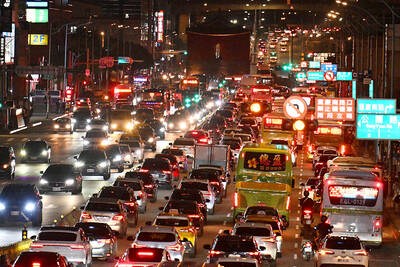
By global standards, the traffic congestion that afflicts Taiwan’s urban areas isn’t horrific. But nor is it something the country can be proud of. According to TomTom, a Dutch developer of location and navigation technologies, last year Taiwan was the sixth most congested country in Asia. Of the 492 towns and cities included in its rankings last year, Taipei was the 74th most congested. Taoyuan ranked 105th, while Hsinchu County (121st), Taichung (142nd), Tainan (173rd), New Taipei City (227th), Kaohsiung (241st) and Keelung (302nd) also featured on the list. Four Japanese cities have slower traffic than Taipei. (Seoul, which has some

Michael slides a sequin glove over the pop star’s tarnished legacy, shrouding Michael Jackson’s complications with a conventional biopic that, if you cover your ears, sounds great. Antoine Fuqua’s movie is sanctioned by Jackson’s estate and its producers include the estate’s executors. So it is, by its nature, a narrow, authorized perspective on Jackson. The film ends before the flood of allegations of sexual abuse of children, or Jackson’s own acknowledgment of sleeping alongside kids. Jackson and his estate have long maintained his innocence. In his only criminal trial, in 2005, Jackson was acquitted. Michael doesn’t even subtly nod to these facts.
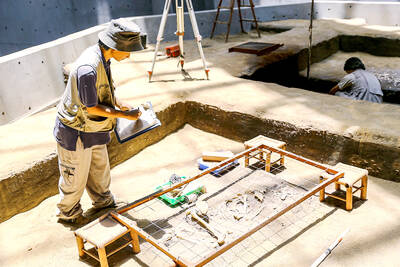
Writing of the finds at the ancient iron-working site of Shihsanhang (十 三行) in New Taipei City’s Bali District (八里), archaeologist Tsang Cheng-hwa (臧振華) of the Academia Sinica’s Institute of History and Philology observes: “One bronze bowl gilded with gold, together with copper coins and fragments of Tang and Song ceramics, were also found. These provide evidence for early contact between Taiwan aborigines and Chinese.” The Shihsanhang Web site from the Ministry of Culture says of the finds: “They were evidence that the residents of the area had a close trading relation with Chinese civilians, as the coins can be
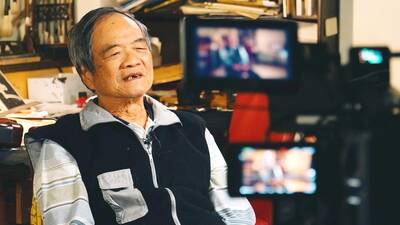
During her 2015 trip to Taiwan, Sophia J. Chang (張詠慧) got fewer answers than she’d hoped for, but more revelations than she could have imagined. “That was the year I last saw my grandmother. She was in hospice care in Tainan, and it was painful to see her in bed, barely able to open her eyes,” says Los Angeles-born Chang. “The grandma I’d known, a fantastic cook and incredibly kind, was already gone.” After their visit, Chang and her grandfather went back to his apartment. There she asked him how he’d met her grandmother. “He hesitated, then started talking a bit.


 RSS
RSS