


The 27th Taipei Film Festival yesterday announced the nominees for this year’s Taipei Film Awards, with Dead Talents Society leading with 14 nominations, closely followed by Yen and Ai-Lee and Mongrel with 12 and 10 nominations respectively.
Known for its million-dollar grand prize, a total of 274 entries were submitted this year, the organizer said in a statement.
After an intense second-round jury deliberation, 32 works were selected for the final nomination list: 15 narrative features, six documentaries, six short films and five animations, it said.
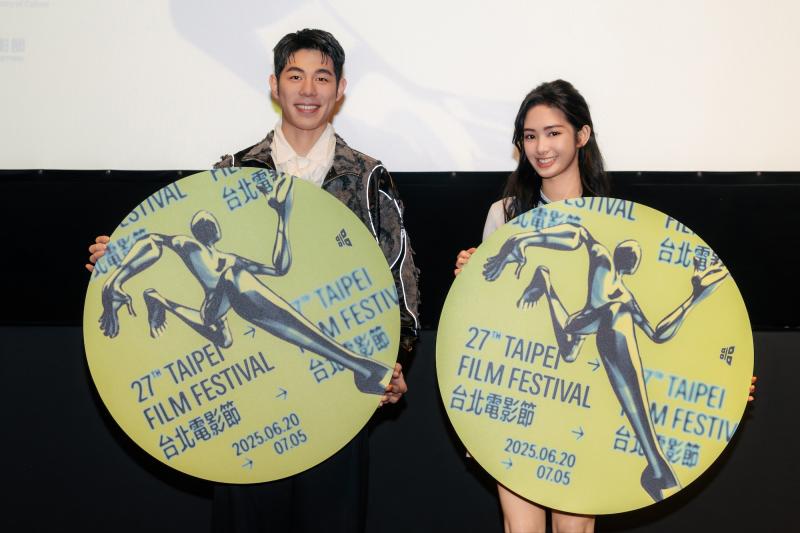
Photo courtesy of the Taipei Film Festival
Dead Talents Society emerged as the frontrunner with nominations for Best Narrative Feature, Best Director, Best Screenplay, Best Actor, Best Actress and Best Supporting Actress.
The acting categories are packed with star power and fresh faces, with newcomer Chi Chiang (江齊) challenging veteran actress Sylvia Chang (張艾嘉) for Best Actress.
The Best Actor award will also see fierce competition between the well-known TV star Lan Wei-hua (藍葦華) and Akira Huang (黃冠智), a 29-year-old actor who shines in the Taiwanese TV series Three Tears in Borneo.
The final jury is to be chaired by veteran Hong Kong director Jacob Cheung Chi-leung (張之亮), joined by Malaysian director Chong Keat Aun (張吉安) and 11 second-round jurors to select this year’s winners, the organizer said.
The Taipei Film Festival is to run from June 20 to July 5 at Zhongshan Hall, VieShow Cinemas Xinyi and SPOT Huashan Cinema.
The Film Guide is to be released on June 8, with ticket sales also beginning that day via OPENTIX.
The Taipei Film Awards ceremony is to be held on July 5.
Here are some of the nominations:
Best Narrative Feature
Yen and Ai-Lee
Mongrel
Dead Talents Society
Stranger Eyes
Intimate Encounter
Best Director
Tom Lin Shu-yu (林書宇) — Yen and Ai-Lee
Chiang Wei-Liang (曾威量) and Yin You-qiao (尹又巧) — Mongrel
John Hsu (徐漢強) — Dead Talents Society
Yeo Siew Hua (楊修華) — Stranger Eyes
Chang Tso-chi (張作驥) — Intimate Encounter
Best Screenplay
Huang Xi (黃熙) — Daughter’s Daughter
Tom Lin Shu-yu (林書宇) — Yen and Ai-Lee
Pan Ke-yin (潘客印) — Family Matters
John Hsu (徐漢強) and Vincent Tsai (蔡坤霖) — Dead Talents Society
Yeo Siew Hua (楊修華) — Stranger Eyes
Best Actor
Wanlop Rungkumjad — Mongrel
Lan Wei-hua (藍葦華) — Family Matters
Devin Pan (潘綱大) — EEL
Chen Bo-lin (陳柏霖) — Dead Talents Society
Akira Huang (黃冠智) — Silent Sparks
Best Actress
Sylvia Chang (張艾嘉) — Daughter’s Daughter
Kimi Hsia (夏于喬) — Yen and Ai-Lee
Chi Chiang (江齊) — Lovesick
Alexia Kao (高伊玲) — Family Matters
Sandrine Pinna (張榕容) — Dead Talents Society
Best Supporting Actor
Sam Tseng (曾國城) — Yen and Ai-Lee
Daniel Hong Yu-hong (洪瑜鴻) — Mongrel
Shih Ming-shuai (施名帥) — Doubles Match
Tseng Jing-hua (曾敬驊) — Family Matters
Lee Kang-sheng (李康生) — Silent Sparks
Best Supporting Actress
Karena Lam Ka-yan (林嘉欣) — Daughter’s Daughter
Winnie Chang (張詩盈) — Yen and Ai-Lee
Yang Kuei-mei (楊貴媚) — Yen and Ai-Lee
Lu Yi-ching (陸弈靜) — Mongrel
Eleven Yao Yi-ti (姚以緹) — Dead Talents Society
Best New Talent
Ng Ki-pin (黃奇斌) — Yen and Ai-Lee
Queena Huang (黃珮琪) — Family Matters
Liu Hsiu-fu (劉修甫) — Pierce
Shawn Liang (梁湘華) — The Chronicles of Libidoists
Lin Cheng-hsun (林政勳) — Intimate Encounter
Best Documentary
Island of the Winds
Another Home
Dancing Home
Soul of Soil
Colour Ideology Sampling.mov
Best Short Film
Side A: A Summer Day
The Fishbowl Girl
Ready! Serve! Smash!
Till Next Time
Dewi
Best Animation
Essence
Moments
Minus Plus Multiply
Vor
Rocked by the Wind

The small platform at Duoliang Train Station in Taitung County’s Taimali Township (太麻里) served villagers from 1992 to 2006, but was eventually shut down due to lack of use. Just 10 years later, the abandoned train station had become widely known as the most beautiful station in Taiwan, and visitors were so frequent that the village had to start restricting traffic. Nowadays, Duoliang Village (多良) is known as a bit of a tourist trap, with a mandatory, albeit modest, admission fee of NT$10 giving access to a crowded lane of vendors with a mediocre view of the ocean and the trains
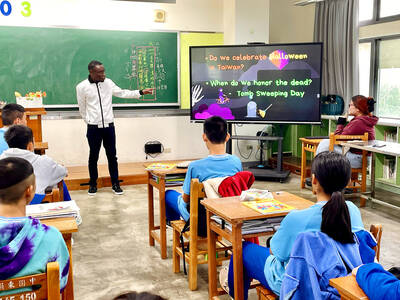
For many people, Bilingual Nation 2030 begins and ends in the classroom. Since the policy was launched in 2018, the debate has centered on students, teachers and the pressure placed on schools. Yet the policy was never solely about English education. The government’s official plan also calls for bilingualization in Taiwan’s government services, laws and regulations, and living environment. The goal is to make Taiwan more inclusive and accessible to international enterprises and talent and better prepared for global economic and trade conditions. After eight years, that grand vision is due for a pulse check. RULES THAT CAN BE READ For Harper Chen (陳虹宇), an adviser

Traditionally, indigenous people in Taiwan’s mountains practice swidden cultivation, or “slash and burn” agriculture, a practice common in human history. According to a 2016 research article in the International Journal of Environmental Sustainability, among the Atayal people, this began with a search for suitable forested slopeland. The trees are burnt for fertilizer and the land cleared of stones. The stones and wood are then piled up to make fences, while both dead and standing trees are retained on the plot. The fences are used to grow climbing crops like squash and beans. The plot itself supports farming for three years.
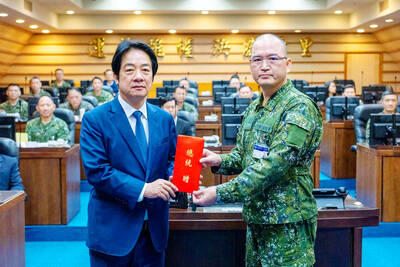
President William Lai (賴清德) on Nov. 25 last year announced in a Washington Post op-ed that “my government will introduce a historic US$40 billion supplementary defense budget, an investment that underscores our commitment to defending Taiwan’s democracy.” Lai promised “significant new arms acquisitions from the United States” and to “invest in cutting-edge technologies and expand Taiwan’s defense industrial base,” to “bolster deterrence by inserting greater costs and uncertainties into Beijing’s decision-making on the use of force.” Announcing it in the Washington Post was a strategic gamble, both geopolitically and domestically, with Taiwan’s international credibility at stake. But Lai’s message was exactly


 RSS
RSS