


On her way to catch a foreign flick in Beijing, Jane Yao bought a cinnamon roll, had ramen, visited a bookshop, and dropped by a supermarket to grab some snacks.
Such an impulse splurge has become all too rare in China, a country where consumption growth is still far below pre-Covid levels and poses a major hurdle for the economy. Equally surprising was Yao’s choice of entertainment — a rescreening of Harry Potter and the Chamber of Secrets during a retrospective showing across China not long ago — which drew a big crowd of mostly millennial viewers on a weekend afternoon.
A blockbuster run for many international films — old and new — stood out in a market whose overall box office receipts slumped to a decade low, excluding the pandemic. Though deeply conflicted about foreign cultural influence, China aired 93 new imported films last year, the most since 2019, according to China Movie News, an outlet managed by the government body that oversees film approvals for local audiences.
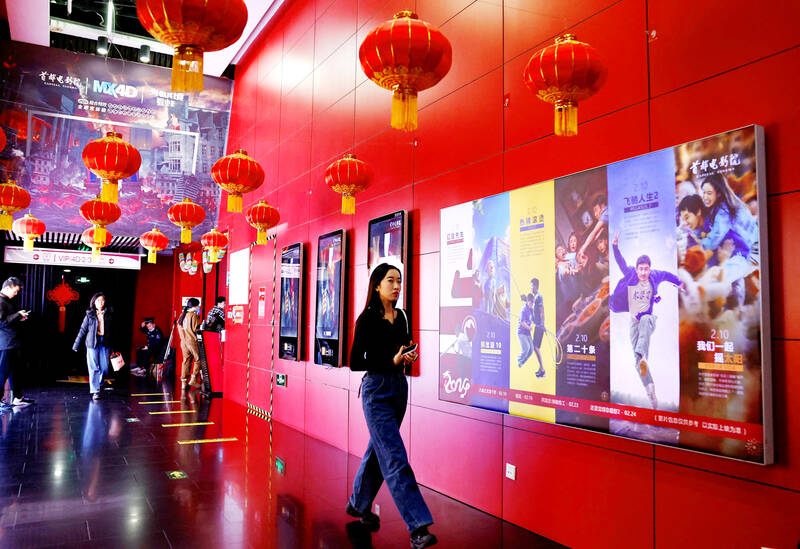
Photo: Reuters
SHIFTING PRIORITIES
President Xi Jinping’s (習近平) government has been cracking down on anything perceived as too Western or immoral at the box office in recent years. But as officials try to boost the consumer spending to support a cooling economy, there are early signs those constraints are easing.
“Chinese authorities’ attitude has been oscillating between the two extremes of nationalistic pride and liberal globalization,” said Wendy Su, an associate professor at the University of California, Riverside, who specializes in China film studies and Hollywood’s relationship with the country.
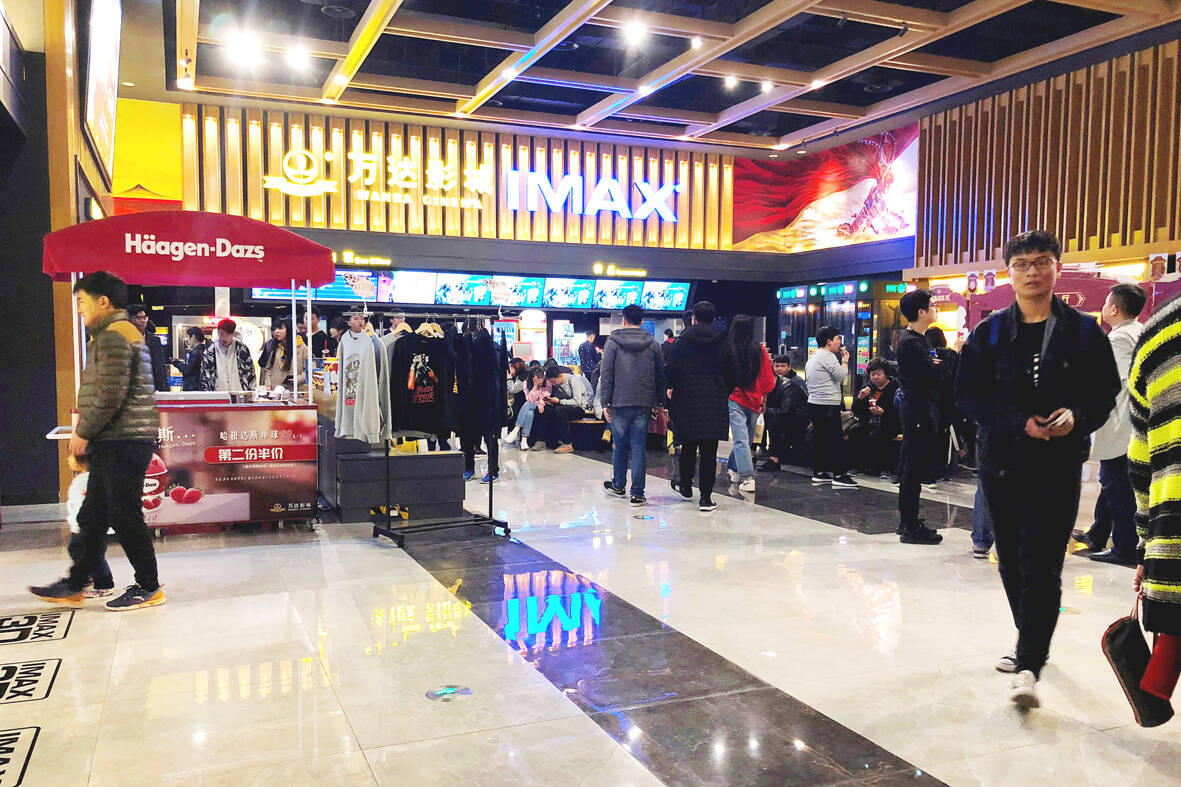
Photo: Reuters
“Now that China’s economy is not in a good shape, China wants to amend the relations with foreign countries and bring in more foreign films.”
Moviegoers have a particular appeal since most of China’s cinemas are located in malls, creating an opportunity for people to squeeze in some shopping on the side. Unleashing domestic demand is especially important as China stares down the growing possibility of a second trade war with the US after Donald Trump’s return to the White House.
Foreign films that garnered success at the box office also came from countries that Beijing has been mending ties with ahead of Trump’s comeback, such as longtime adversaries India and Japan. The Tamil-language film Maharaja became the highest-grossing Indian movie in China in years, while for the first time, a Japanese import fared better in an overseas market than at home, according to the state-run Securities Times, with animated fantasy The Boy and the Heron reeling in 791 million yuan (US$109 million).
Guo Yuan, a 27-year-old fintech worker, said there weren’t any decent seats left when she was booking a ticket at a cinema in Guangzhou to see Maharaja.
“I’m a big fan of thrillers, and have a pretty good impression of Indian movies,” said Guo, who had a meal at the shopping center before the show.
Even as China’s box office haul plunged by nearly a quarter to 42.5 billion yuan, foreign films had their best tally since before the pandemic to raise their share to 21 percent of the overall market, according to a report by Chinese ticketing service Maoyan Entertainment this month.
In a rarity for China, R-rated Hollywood productions like Warner Bros.’ Joker: Folie a Deux, a less gory sequel to the 2019 hit, were being premiered last year. China blocked the first film, which came out as protests roiled Hong Kong and where some demonstrators wore face coverings including Joker masks.
The independent New York-based studio A24 had its first opening in China with the release of Civil War, a dystopian blockbuster set in an America ravaged by conflict.
China’s motivations can be murky to outside observers and censors don’t specify the reasons for their decisions. Still, the outlines of the new approach started to become more clear around the middle of last year, when Mao Yu, the executive vice director of the China Film Administration, pledged to bring in more global films “with an open and accepting attitude.”
By August, China made improving the supply of films part of a plan to get people to spend more on services.
After a year when foreign productions were absent from the list of the best grossing films, two international blockbusters, including Godzilla x Kong: The New Empire, cracked the box office top 10 last year. The world’s second-biggest market, which was once a goldmine for US releases, saw 42 American and 24 Japanese films debut last year, the most since 2019, according to data compiled by Bloomberg from Maoyan Entertainment.
“Instead of producing domestic films, the distribution and ticket sales have become an important source of revenue for the industry,” said Wing-Fai Leung, a specialist in the East Asian film and media industries at King’s College London.
“That leaves the idea of importing more diverse films,” she said.
Consumption has meanwhile become a key area of focus for Xi’s government in recent months as it embarked on one of its biggest stimulus efforts in years to reverse a slowdown in the world’s second-largest economy.
POLITICAL AS PERSONAL
But cultural imports have long been at the mercy of Beijing’s censors.
Walt Disney Co.’s Shang-Chi and the Legend of the Ten Rings attracted unwanted attention in 2021 because the protagonist’s father in the original comic books was Fu Manchu, a character viewed as perpetuating racist stereotypes. In the end, the first Marvel superhero film to star an Asian actor in the lead role was never officially released in China.
Geopolitics can also shape priorities. Following clashes with Indian troops in a disputed border area in 2020, China approved no Indian movies for screening until two years later, with a total of 11 permitted since 2022.
The chokehold on Hollywood has at times been just as tight, especially after ties with the US came under strain during the first Trump administration. In the years that followed, China tended to favor its own films in theaters and blocked numerous US films including the 2022 blockbuster Top Gun: Maverick. It didn’t clear the release of a single movie from the Marvel superhero franchise between 2020 and 2022.
CONSUMER GLOOM
Economics is increasingly becoming a factor. The film administration’s Mao said in August that “crisis is here” for the market, citing among reasons a lack of diverse and quality offerings and the rising popularity of short streaming videos.
Apart from the annual quota for foreign films under a profit-sharing model that typically applies to Hollywood blockbusters, China has a more flexible system where distributors can import some 30 movies for a fixed fee while keeping the profits. Older movies usually aren’t subject to these limits when they are rescreened.
“The Chinese film industry alone does not have the capacity nor the stability to churn out enough titles to feed the domestic market,” said Ying Zhu, the author of Hollywood in China: Behind the Scenes of the World’s Largest Movie Market.
“China needs heavyweight Hollywood blockbusters as well as small international films to sustain its market.”
The consumer gloom that’s swept across China last year added to the urgency for authorities. Spending on nonessential purchases like jewelry and cosmetics all declined last year, according to official data. More than a fifth of respondents in a survey by Beacon Research Institute said they scaled back on travel, dining out, clothing and offline shopping in 2024.
“When the economy goes bad, people cut spending on movies,” said Eric Zhu of Bloomberg Economics.
China is pulling out all the stops to boost attendance at cinemas. The film authority introduced subsidies worth 600 million yuan for ticket purchases during the holiday season between last December and February. Local governments including in the provinces of Hainan and Hubei are giving out similar vouchers.
Movie theaters are adding some flair of their own. The showing of Detective Conan: Crossroad in the Ancient Capital featured fake cherry blossom petals raining on the audience during its premiere in Shanghai, recreating a famous scene from the movie.
As China gradually cracks open its lucrative market to Hollywood, Imax Corp. plans to open as many as 25 new locations in the country over the next three years and upgrade 100 existing sites over a longer time frame. The effort by Imax, known for its giant screens, would help bring more foreign blockbuster films to China and allow extra space for big-budget local productions.
Leveraging the success of foreign films will still be an uphill battle for China, however, especially with consumers continuing to hunker down.
On a recent Sunday afternoon, a new cinema in one of Beijing’s busiest and trendiest shopping areas was only about one-third filled for a screening of Paddington in Peru. Some were unfazed.
“I’m a fan of the Paddington series, so I’m wasting no time coming to watch the third one,” said one of the viewers, who only gave her surname as Wu. Near the cinema, LVMH’s promised new luxury flagship store remains fenced off.
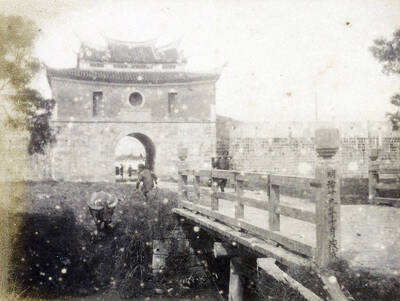
June 9 to June 15 A photo of two men riding trendy high-wheel Penny-Farthing bicycles past a Qing Dynasty gate aptly captures the essence of Taipei in 1897 — a newly colonized city on the cusp of great change. The Japanese began making significant modifications to the cityscape in 1899, tearing down Qing-era structures, widening boulevards and installing Western-style infrastructure and buildings. The photographer, Minosuke Imamura, only spent a year in Taiwan as a cartographer for the governor-general’s office, but he left behind a treasure trove of 130 images showing life at the onset of Japanese rule, spanning July 1897 to
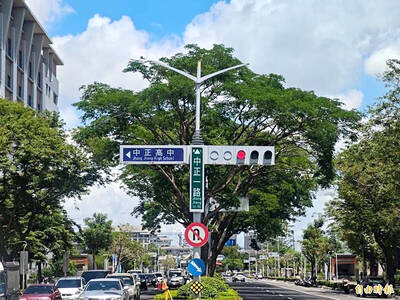
One of the most important gripes that Taiwanese have about the Democratic Progressive Party (DPP) is that it has failed to deliver concretely on higher wages, housing prices and other bread-and-butter issues. The parallel complaint is that the DPP cares only about glamor issues, such as removing markers of Chinese Nationalist Party (KMT) colonialism by renaming them, or what the KMT codes as “de-Sinification.” Once again, as a critical election looms, the DPP is presenting evidence for that charge. The KMT was quick to jump on the recent proposal of the Ministry of the Interior (MOI) to rename roads that symbolize

On the evening of June 1, Control Yuan Secretary-General Lee Chun-yi (李俊俋) apologized and resigned in disgrace. His crime was instructing his driver to use a Control Yuan vehicle to transport his dog to a pet grooming salon. The Control Yuan is the government branch that investigates, audits and impeaches government officials for, among other things, misuse of government funds, so his misuse of a government vehicle was highly inappropriate. If this story were told to anyone living in the golden era of swaggering gangsters, flashy nouveau riche businessmen, and corrupt “black gold” politics of the 1980s and 1990s, they would have laughed.

It was just before 6am on a sunny November morning and I could hardly contain my excitement as I arrived at the wharf where I would catch the boat to one of Penghu’s most difficult-to-access islands, a trip that had been on my list for nearly a decade. Little did I know, my dream would soon be crushed. Unsure about which boat was heading to Huayu (花嶼), I found someone who appeared to be a local and asked if this was the right place to wait. “Oh, the boat to Huayu’s been canceled today,” she told me. I couldn’t believe my ears. Surely,


 RSS
RSS