


“Manifest,” meaning to dream or will something into existence, has been named this year’s word by Cambridge Dictionary, after a surge of celebrity-inspired popularity on social media.
Though far from a new coinage — as an adjective meaning “clear” or “obvious,” the word dates back in English to at least the 1300s — the dictionary’s decision rests on its newest meaning as a verb, which attests to the power of visualization and positive thinking in making fervently held dreams come to pass.
The singer Dua Lipa has attributed her success — which included headlining Glastonbury in June — to manifesting, saying: “Manifesting is a big thing for me. I stand very firmly in the belief of putting things into the world. Subconsciously, you just work towards them. Nothing’s ever too big.”

Photo: AP
Simone Biles, too, has been credited with manifesting her award-winning gymnastics career, after speaking of visualizing future success when she was a young girl.
Wendalyn Nichols, the publishing manager of the Cambridge Dictionary, said the word manifest had “increased notably in lookups” this year, being searched for 130,000 times on the Cambridge Dictionary Web site.
“Its use widened greatly across all types of media due to events in 2024, and it shows how the meanings of a word can change over time,” she said.
Derived from French and Latin, the word, spelled “manyfest,” was used by Chaucer in the late 14th century in its adjectival sense meaning clear or obvious.
Shakespeare employed the word as both a noun and a verb, meaning both obvious and to make obvious. In King Lear, the Duke of Albany denounces Edmund for his “heinous, manifest, and many treasons,” while Twelfth Night’s tragi-comic figure Malvolio delights in supposed praise of his yellow stockings from Olivia, saying: “And in this she manifests herself to my love.”
The King James Bible of 1611 translates the first epistle of John to read: “In this was manifested the love of God towards us.”
The word can also be used as a noun, meaning the full list of a ship’s cargo, a usage that dates to 1561, while “manifest destiny” was a term employed by the US president Andrew Jackson in the 1830s to suggest it was ordained that American settlers should spread westward across the continent.
However, its most recent meaning, of “speaking your dreams into existence” is first recorded only in the early 20th century, associated with Spiritualism, and has become widespread only more recently.
Sander van der Linden, a professor of social psychology at Cambridge University, credited social media and the pandemic for popularizing the term and practice of manifesting, but cautioned that it had no scientific validity.
“Manifesting is what psychologists call ‘magical thinking’ or the general illusion that specific mental rituals can change the world around us. Manifesting gained tremendous popularity during the pandemic on TikTok with billions of views, including the popular 3-6-9 method, which calls for writing down your wishes three times in the morning, six times in the afternoon and nine times before bed.”
Van der Linden added that this procedure promotes obsessive and compulsive behavior with no discernible benefits.
But can we really blame people for trying it, when prominent celebrities have been openly manifesting their success?
“There is good research on the value of positive thinking, self-affirmation and goal-setting … However, it is crucial to understand the difference between the power of positive thinking and moving reality with your mind — the former is healthy, whereas the latter is pseudoscience.”
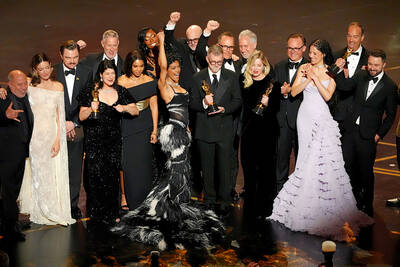
Paul Thomas Anderson’s “One Battle After Another” was crowned best picture at the 98th Academy Awards, handing Hollywood’s top honor to a comic, multi-generational American saga of political resistance. The ceremony Sunday, which also saw Michael B. Jordan win best actor and “Sinners” cinematographer Autumn Durald Arkapaw make Oscar history as the first female director of photography to win the award, was a long-in-coming coronation for Anderson, a San Fernando Valley native who made his first short at age 18 and has been one of America’s most lionized filmmakers for decades. Before Sunday, Anderson had never won an Oscar. But “One Battle
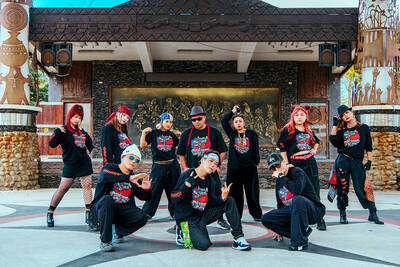
In Kaohsiung’s Indigenous People’s Park (原住民主題公園), the dance group Push Hands is training. All its members are from Taiwan’s indigenous community, but their vibe is closer to that of a modern, urban hip-hop posse. MIXING CULTURES “The name Push Hands comes from the idea of pushing away tradition to expand our culture,” says Ljakuon (洪濬嚴), the 44-year-old founder and main teacher of the dance group. This is what makes Push Hands unique: while retaining their Aboriginal roots, and even reconnecting with them, they are adamant about doing something modern. Ljakuon started the group 20 years ago, initially with the sole intention of doing hip-hop dancing.

What was the population of Taiwan when the first Negritos arrived? In 500BC? The 1st century? The 18th? These questions are important, because they can contextualize the number of babies born last month, 6,523, to all the people on Taiwan, indigenous and colonial alike. That figure represents a year on year drop of 3,884 babies, prefiguring total births under 90,000 for the year. It also represents the 26th straight month of deaths exceeding births. Why isn’t this a bigger crisis? Because we don’t experience it. Instead, what we experience is a growing and more diverse population. POPULATION What is Taiwan’s actual population?

You would never believe Yancheng District (鹽埕) used to be a salt field. Today, it is a bustling, artsy, Kowloon-ish “old town” of Kaohsiung — full of neon lights, small shops, scooters and street food. Two hundred years ago, before Japanese occupiers developed a shipping powerhouse around it, Yancheng was a flat triangle where seawater was captured and dried to collect salt. This is what local art galleries are revealing during the first edition of the Yancheng Arts Festival. Shen Yu-rung (沈裕融), the main curator, says: “We chose the connection with salt as a theme. The ocean is still very near, just a


 RSS
RSS