


Like much in the world today, theater has experienced major disruptions over the six years since COVID-19. The pandemic, the war in Ukraine and social media have created a new normal of geopolitical and information uncertainty, and the performing arts are not immune to these effects.
“Ten years ago people wanted to come to the theater to engage with important issues, but now the Internet allows them to engage with those issues powerfully and immediately,” said Faith Tan, programming director of the Esplanade in Singapore, speaking last week in Japan.
“One reaction to unpredictability has been a renewed emphasis on nostalgia, fun and light entertainment,” she said.
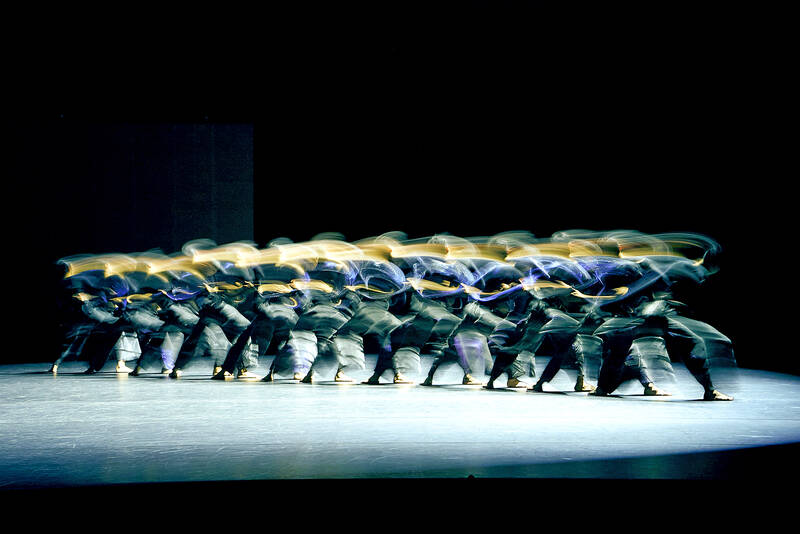
Photo courtesy of Sugawara Kota
REGIONAL FOCUS
Tan, along with hosts of playwrights, actors and other theater professionals, discussed the current challenges of the performing arts last week at the symposium, “Presence and Resonance: The Future of Theaters,” held at one of Asia’s most important gatherings for stage arts, the Yokohama International Performance Arts Meeting (YPAM), from Nov. 28 to Dec. 14.
The two-week program included wow-factor productions like the international premiere of a new, technology-inspired dance performance by Taiwan’s Cloud Gate Dance Theater, Waves, and a blinged-up parody called North Korean Dance by South Korean choreographer Ahn Eun-me.
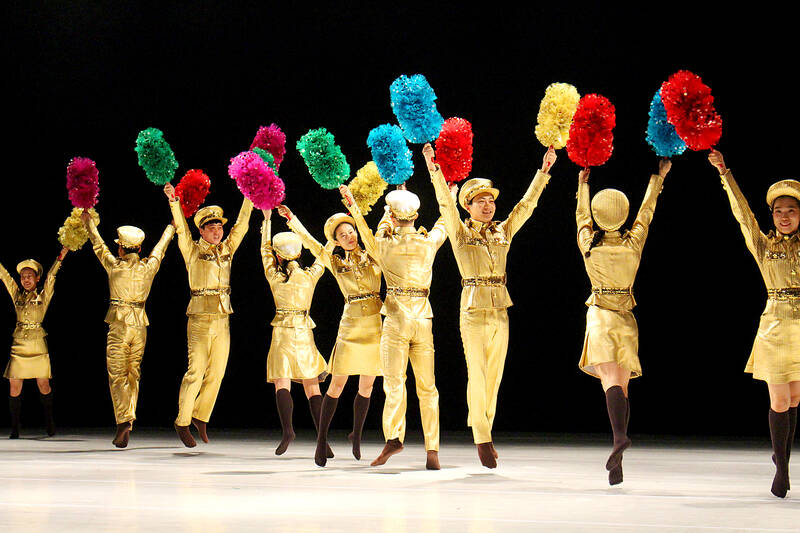
Photo courtesy of JM Chabot
A substantial Fringe section meanwhile plied the cutting edge and the experimental. One of the more radical images I’m left with from the festival is however from the main showcase. It's that of a woman in a hijab, a southeast Asian dramaturg, watching a rubber-gloved enactment of the sexual act of fisting, albeit fully clothed, by Taiwanese trans performer Su Pin-wen (蘇品文).
Four Taiwanese groups participated in all, including Cloud Gate, Su’s one-person show First Son, VR and XR (extended reality) experiences exploring male “animal nature” in a gay sauna by Chou Tong-yen (周東彥) and a multimedia performance and installation on Japanese colonial legacies in Taiwan by Hsu Chia-wei (許家維), Ting-tong Chang (張碩尹) and Cheng Hsien-yu (鄭先喻).
YPAM showcases also featured French choreographer Jerome Bel, Japan’s Mirai Circus, a Noh play reimagined as a lapdance, an examination of social recluses called It’s Okay To Be a Shut In! Hello from the Closet and small Japanese troupes engaging with politically taboo histories like the Nanjing Massacre and World War II comfort women.
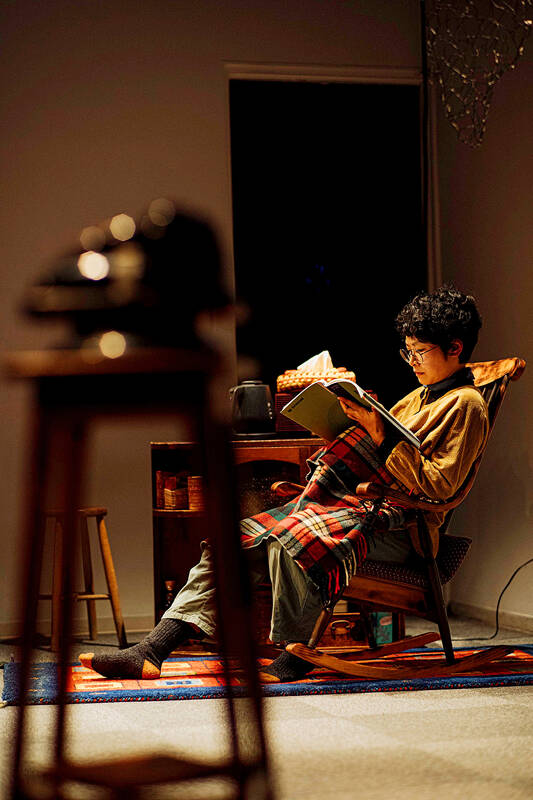
Photo courtesy of Kamome Machine
The strong regional focus was only marred by a Chinese group pulling out following Beijing’s recent tantrum against statements by Japanese prime minister Sanae Takaichi. In recent weeks, China’s government has blocked numerous performance exchanges between Japan and China.
Japan’s culture bodies meanwhile pushed a new initiative that aims to increase regional — as opposed to purely national — development of new works through co-production with regional partners.
The initiative is backed by a new three-year, ¥1.5 billion (US$9.6 million) budget, launched last year by the Japan Creator Support Fund, that aims “to revitalize the theater industry not only by focusing on Japan, but by expanding international markets and increasing exports,” said Masahiko Yokobori, a veteran dramaturg and advisor to the fund.
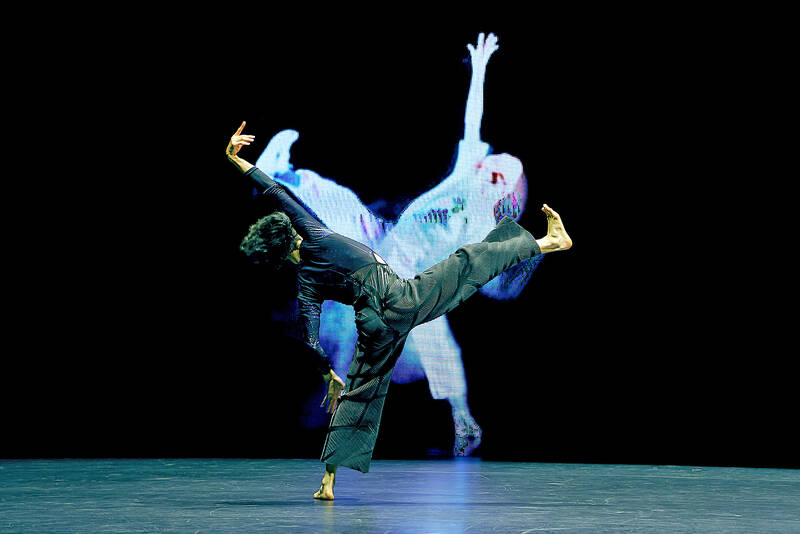
Photo courtesy of Sugawara Kota
The initiative in certain ways follows the lead of South Korea and Taiwan, both known for substantial arts funding, and applies to a range of arts, from visual arts to pop culture. Japan’s government has identified creative content as one of Japan’s top exports and calculates that the global content market is almost twice as large as that for semiconductors.
“The whole world already knows Japanese manga and the visual art of Takashi Murakami,” said Yokobori, “so why not theater?”
CROSS-BORDER COLLAB
An example of cross-border collaboration is Cloud Gate’s Waves, which was conceived by the Taiwanese modern dance troupe in cooperation with Japanese digital artist Daito Manabe.
The piece, conceived around the transmission of tangible and intangible energies, is a futuristic sci-fi vision in which real life dancers perform against their own digital mirror images.
Manabe, who has worked with pop artists like Bjork and at the Rio de Janeiro Olympics created a section of the closing ceremony using augmented reality, not only composed the techno soundtrack for Waves, he also used digital processes to record data from dancers, including their breathing and the electric pulses of their muscles, and invent various dance movements, some of which were not possible for Cloud Gate’s human dancers to recreate.
The movement vocabulary of Waves is underpinned by a constant rhythmic undulations in ensemble, pair and solo dances. Soloists expand on this flow in impossible backbends — think of Keanu Reeves dodging bullets in the Matrix — and sudden movements, like they’re being yanked at the waist by invisible strings.
The show’s technical production is breathtaking, and the dancing — Cloud Gate’s trademark mix of modern dance, tai chi and martial arts — is elite. But the show’s concept, while mesmerizing, is not quite as strong. Beyond the dancers’ initial startling encounters with a second, virtual reality, it’s difficult to tell what’s really being passed across the technological looking glass.
Su pin-wen’s First Son was a completely different kind of experience. Staged in the large multi-purpose space of a recreational center with normal lighting, Su stood at the center of the room and delivered an interactive monologue while more than a hundred audience members sat around her on the floor.
I’m not generally drawn to works that advertise themselves as addressing trans identity, but Su’s expositions on love and gender identity and intimate touching, were, as viewers noted in the post-performance discussion, “incredibly generous” in their courage “to be vulnerable in public.”
The piece was one of the most genuine displays I encountered at YPAM. It ended with Su addressing a portrait of her deceased grandmother and asking, with tears in her eyes, if, despite her non-binary sexual identity, she would be allowed to occupy the place of the “first son” in the funeral procession — hence the performance’s title.
HISTORICAL TABOOS
Two other works I found to exhibit different kinds of courage took unflinching looks at Japanese historical taboos.
Kamome Machine’s Nanjing Project Vol. 6 made a frank evaluation of how Japan might address the legacy of the Nanjing Massacre, in which Japanese soldiers are believed to have slaughtered around 200,000 Chinese civilians and prisoners of war in 1937. In Japan, it is referred to as the “Nanjing Incident” and frequently denied or dismissed by the right wing.
The performance begins with an elderly Japanese couple at home in their living room. Through telephone calls and then multimedia projections, they begin to receive accounts of the massacre from various sources — Japanese soldiers, Chinese victims and subsequent official statements from involved governments.
Writer-director Yuta Hagiwara said he took three years attempting to understand this contentious history. His process included interviews with Chinese residents of Tokyo, a residency in Chiayi County and a research trip to war memorials in Nanjing. Through these experiences, he was able to unlearn, then relearn, and finally work towards an intercultural understanding of this history.
“Fear is really the basis of this whole thing,” Hagiwara said, noting that fear of the Chinese drove Japanese soldiers to the 1937 killing spree, and today the fear is about confronting this ugly history.
“That’s a very important point for us, how to deal with this fear.”
Another piece, Bird Park’s She Swims Away Beyond Reach, addressed the legacies of Japanese prostitutes in southeast Asia from the late 1800s to the “comfort stations,” or military brothels, of World War II.
Presented as a script reading, the story focuses on a common Japanese woman who, aged 16 in 1905, is tricked into selling her body in a Singapore brothel during the Russo-Japanese War. Years later and transformed by her profession, in 1943 she becomes a mama-san for a Japanese military comfort station in Kuala Lumpur.
These last two works are both by tiny theater companies that operate far from the Japanese mainstream.
“I still need to keep this very underground,” said Hagiwara. “If I take it overground, I have a real fear that some right-wingers will attack me.”

Growing up in a rural, religious community in western Canada, Kyle McCarthy loved hockey, but once he came out at 19, he quit, convinced being openly gay and an active player was untenable. So the 32-year-old says he is “very surprised” by the runaway success of Heated Rivalry, a Canadian-made series about the romance between two closeted gay players in a sport that has historically made gay men feel unwelcome. Ben Baby, the 43-year-old commissioner of the Toronto Gay Hockey Association (TGHA), calls the success of the show — which has catapulted its young lead actors to stardom -- “shocking,” and says

Inside an ordinary-looking townhouse on a narrow road in central Kaohsiung, Tsai A-li (蔡阿李) raised her three children alone for 15 years. As far as the children knew, their father was away working in the US. They were kept in the dark for as long as possible by their mother, for the truth was perhaps too sad and unjust for their young minds to bear. The family home of White Terror victim Ko Chi-hua (柯旗化) is now open to the public. Admission is free and it is just a short walk from the Kaohsiung train station. Walk two blocks south along Jhongshan

The 2018 nine-in-one local elections were a wild ride that no one saw coming. Entering that year, the Chinese Nationalist Party (KMT) was demoralized and in disarray — and fearing an existential crisis. By the end of the year, the party was riding high and swept most of the country in a landslide, including toppling the Democratic Progressive Party (DPP) in their Kaohsiung stronghold. Could something like that happen again on the DPP side in this year’s nine-in-one elections? The short answer is not exactly; the conditions were very specific. However, it does illustrate how swiftly every assumption early in an

Snoop Dogg arrived at Intuit Dome hours before tipoff, long before most fans filled the arena and even before some players. Dressed in a gray suit and black turtleneck, a diamond-encrusted Peacock pendant resting on his chest and purple Chuck Taylor sneakers with gold laces nodding to his lifelong Los Angeles Lakers allegiance, Snoop didn’t rush. He didn’t posture. He waited for his moment to shine as an NBA analyst alongside Reggie Miller and Terry Gannon for Peacock’s recent Golden State Warriors at Los Angeles Clippers broadcast during the second half. With an AP reporter trailing him through the arena for an


 RSS
RSS