


While US arms sales to Taiwan will likely continue whoever wins the presidential election, analysts say there are concerns in Taipei over a re-elected Donald Trump’s willingness to defend the country against China.
American voters will choose between Democratic Vice President Kamala Harris and Republican former president Trump on Nov. 5, with polls showing the pair neck and neck.
China has in recent years ramped up military pressure on Taiwan and has refused to rule out using force to bring it under its control.
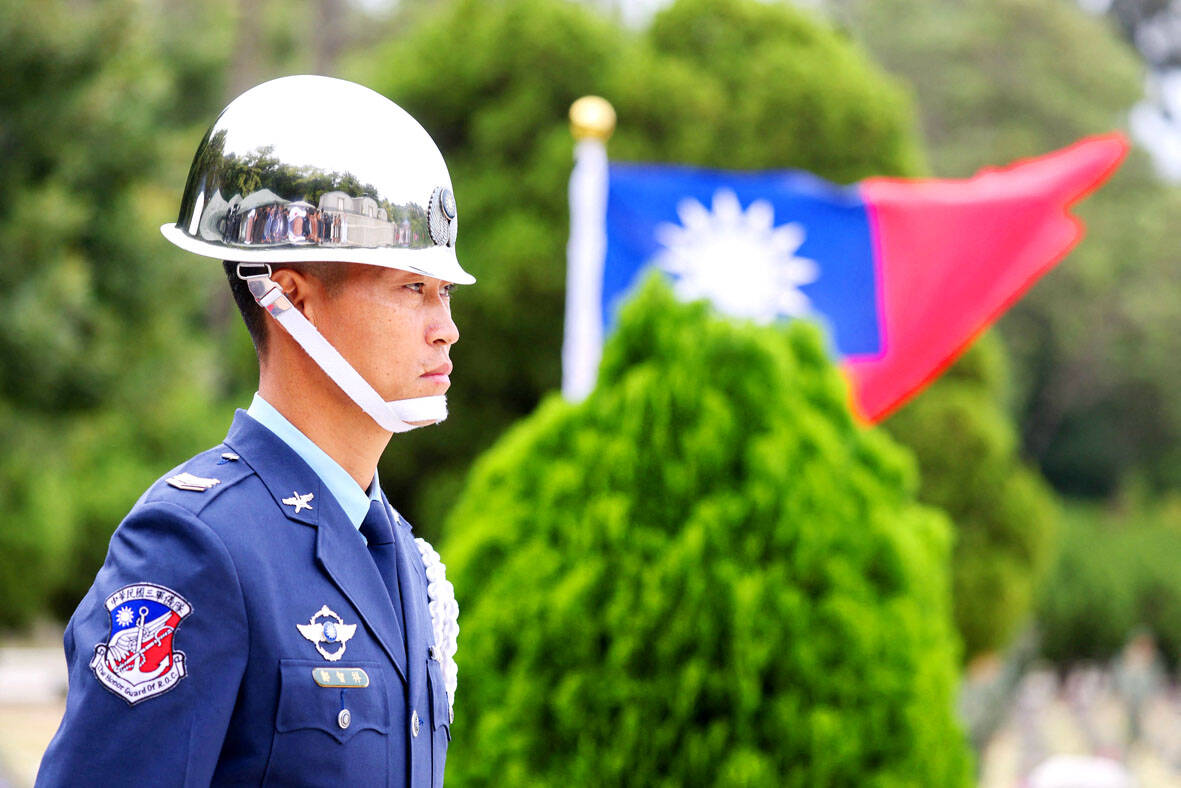
Photo: AFP
CIA director William Burns said last year that Chinese President Xi Jinping (習近平) had ordered his military to be ready to carry out a successful invasion by 2027, and Xi recently told troops to strengthen their preparedness for war.
“There will be more uncertainty under a Trump administration,” said Chen Fang-yu (陳方隅), assistant professor of political science at Soochow University in Taipei.
Chen said Trump had suggested in interviews that the US cannot commit to defend Taiwan because they want to “bargain with China,” which he said was worrying.
Washington is Taipei’s most important ally and biggest supplier of weapons, but has long maintained a so-called “strategic ambiguity” when it comes to deploying troops to defend Taiwan.
Democratic President Joe Biden has said on several occasions that he would intervene if necessary, which the White House has walked back each time, but neither Harris nor Trump have been clear-cut.
Harris said in a recent interview that Washington “should not seek conflict” with China and declined to say whether the US would use military force to support Taiwan.
Trump has caused jitters by suggesting Taiwan pay the US for its defense, as well as accusing the country of stealing the US chip industry. John Bolton, who served as national security adviser to the former president before the two fell out, told the BBC recently that Taiwan was “potentially toast” if Trump were re-elected.
“Taiwan is no doubt anxious about the outcome of the US presidential campaign,” said Sung Wen-ti (宋文笛), a nonresident fellow at the Atlantic Council’s Global China Hub, who is based in Taipei.
Sung said there were concerns that Harris might be “more inward looking than Biden,” and worries about Trump’s “transactionalist and mercantilist sentiments.”
‘TOO MUCH BAD BLOOD’
After Washington switched diplomatic recognition from Taiwan to China in 1979, the US Congress enshrined into law a commitment to provide arms for the nation’s defense.
The US has sold Taiwan billions of dollars worth of military equipment and ammunition, including F-16 fighter jets and warships, despite repeated protests from Beijing.
On Friday last week, the US State Department approved a US$2 billion arms sales package for Taiwan that includes advanced surface-to air missile systems. While US officials insist that conflict with China is “neither imminent nor inevitable,” Washington’s efforts to arm Taiwan and China’s near-constant military presence around the island were fueling a cycle of escalating tensions.
This month, China deployed fighter jets, warships and coast guard vessels to encircle Taiwan in a large-scale military exercise. That was followed by a US and a Canadian warship transiting the Taiwan Strait, a Chinese aircraft carrier group sailing through the sensitive waterway, and Chinese and Taiwanese live-fire drills.
Each side perceived the other’s actions as “threatening” and therefore in need of a “defensive response,” said Rorry Daniels, managing director of the Asia Society Policy Institute.
“If you can deliver a credible reassurance that what you’re doing is defensive in nature, then the risk goes down,” she said, but there was “too much bad blood” for that to happen.
RECORD DEFENSE SPENDING
Taiwan would be massively outgunned in terms of troop numbers and firepower in any war with China and in recent years has jacked up spending on its military. Taipei allocated a record US$19 billion for this year and next year’s budget is set to hit a new high, as it seeks to bolster a more agile defense approach.
But the island has faced challenges in upgrading its defenses, Taipei-based security analyst J Michael Cole said.
A backlog of US arms sales to Taiwan now exceeds US$20 billion, according to Washington think tank Cato Institute. Cole said delivery delays for Taiwan were due to COVID-19 disruptions, and US weapons shipments to Ukraine and Israel.
And there has been resistance from some older generals in Taiwan to the move away from flashy purchases such as fighter jets and frigates to “more agile” and “survivable” equipment such as drones and missile launcher trucks.
“Turning these big conservative organizations around takes time,” Cole said. “The problem for Taiwan is that we don’t know how much time we have.”

As mega K-pop group BTS returns to the stage after a hiatus of more than three years, one major market is conspicuously missing from its 12-month world tour: China. The omission of one of the group’s biggest fan bases comes as no surprise. In fact, just the opposite would have been huge news. China has blocked most South Korean entertainment since 2016 under an unofficial ban that also restricts movies and the country’s popular TV dramas. For some Chinese, that means flying to Seoul to see their favorite groups perform — as many were expected to do for three shows opening
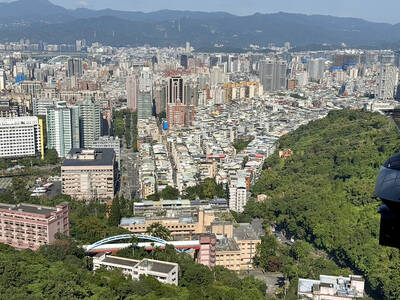
A recent report from the Environmental Management Administration of the Ministry of Environment highlights a perennial problem: illegal dumping of construction waste. In Taoyuan’s Yangmei District (楊梅) and Hsinchu’s Longtan District (龍潭) criminals leased 10,000 square meters of farmland, saying they were going to engage in horticulture. They then accepted between 40,000 and 50,000 cubic meters of construction waste from sites in northern Taiwan, charging less than the going rate for disposal, and dumped the waste concrete, tile, metal and glass onto the leased land. Taoyuan District prosecutors charged 33 individuals from seven companies with numerous violations of the law. This
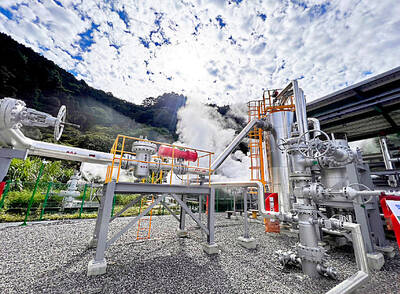
Taiwan’s semiconductor industry consumes electricity at rates that would strain most national grids. Taiwan Semiconductor Manufacturing Co (TSMC) alone accounted for more than 9 percent, or 2,590 megawatts (MW), of the nation’s power demand last year. The factories that produce chips for the world’s phones and servers run around the clock. They cannot tolerate blackouts. Yet Taiwan imports 97 percent of its energy, with liquefied natural gas reserves measured in days. Underground, Taiwan has options. Studies from National Taiwan University estimate recoverable geothermal resources at more than 33,000 MW. Current installed capacity stands below 10 MW. OBSTACLES Despite Taiwan’s significant geothermal potential, the
Chinese Nationalist Party (KMT) Chair Cheng Li-wun (鄭麗文) returned from her trip to meet People’s Republic of China (PRC) dictator Xi Jinping (習近平) bearing “a gift” for the people of Taiwan: 10 measures the PRC proposed to “facilitate the peaceful development of cross-strait relations.” “China on Sunday unveiled 10 new incentive measures for Taiwan,” wrote Reuters, wrongly. The PRC’s longstanding habit with Taiwan relations is to repackage already extant or once-existing policies and declare that they are “new.” The list forwarded by Cheng reflects that practice. NEW MEASURES? Note the first item: establishing regular communication mechanisms between the Chinese Communist Party


 RSS
RSS