


In the 1970s, Harlem’s deserted streets and tumbledown tenements told the story of a neighborhood left behind. Disinvestment had taken its toll.
Violence, crime and poor living conditions had become the norm and nearly 50,000 residents — a third of the area’s population — left Harlem over the decade. Amid the exodus, a girl named LeeSandra Moore hugged her own mother goodbye. Her mother was relocating to Virginia.
“It was a scary time,” said Moore, now 52 and still living in Harlem. “I couldn’t blame her for that.”
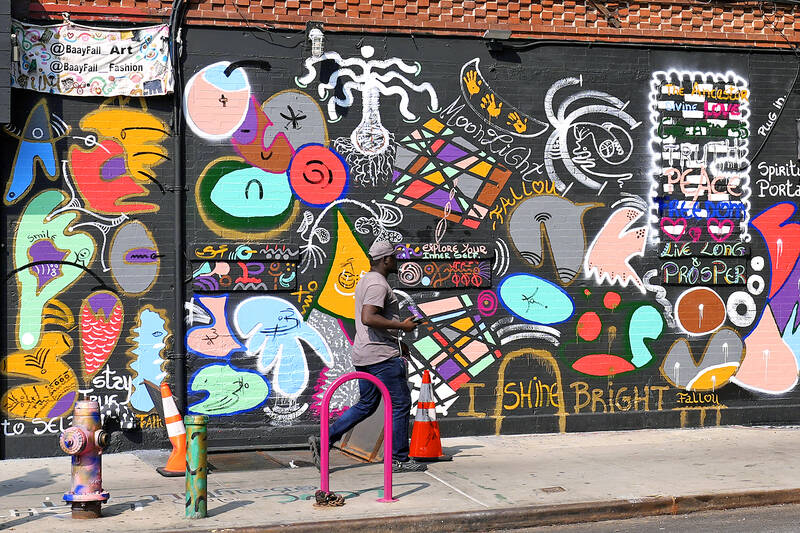
Photo: AP
Harlem and hardship were often seen as one, but in 1974 Percy Sutton, then the Manhattan borough president, launched a revitalization campaign. His brainchild, Harlem Week, shifted the spotlight from Harlem’s troubles to its legacy as a global Black mecca of arts, culture and entrepreneurship. Over the years, it helped bring back long-departed residents.
On Sunday, New York celebrated Harlem Week’s 50th anniversary, capping off 18 days of free programming that showcased all the iconic neighborhood has to offer. Through challenges and changes, said the Reverend Al Sharpton, whose National Action Network is headquartered in Harlem, “Harlem Week has been the constant line through the last 50 years of America’s most historic Black neighborhood.”
‘SINKING SHIP’
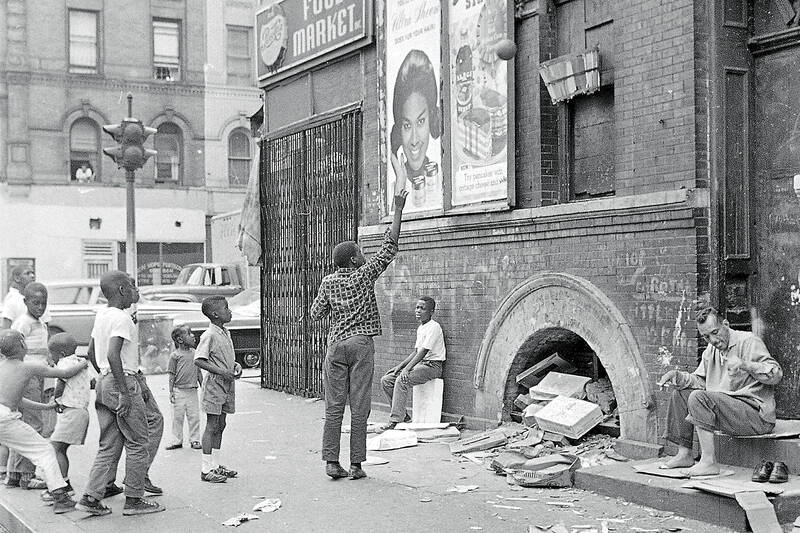
Photo: AP
In the 1970s, considered the neighborhood’s darkest years by many historians, Sutton knew Harlem needed a resurrection.
Those who stayed during urban flight — mostly low-income, Black families — turned on their televisions to see news reporters describe their home as a “sinking ship.” They had lived through recent unrest, such as a 1964 riot that killed an unarmed Black teenager, Malcolm X’s assassination in 1965 and the turmoil after the Reverend Martin Luther King Jr.’s assassination in 1968.
Ahead of the first Harlem Day in 1974, Sutton called up elected officials. He gathered cultural icons, including James Baldwin, Sidney Poitier, Ruby Dee, Maya Angelou, Tito Puente and Max Roach.
Radio DJs Hal Jackson and Frankie Crocker staged a concert, and actor Ossie Davis cut a ribbon at 138th Street and 7th Avenue, declaring the start of “Second Harlem Renaissance.” That ceremony renamed 7th Avenue to Adam Clayton Powell Jr. Boulevard, in honor of the congressman who represented Harlem, and marked the debut of Harlem Day.
It was the first time a New York City street took the name of a person of color.
“It was such a successful day,” said Lloyd Williams — one of Harlem Day’s co-founders and the current president of the Greater Harlem Chamber of Commerce — that New Yorkers wanted to make it annual. Harlem Day then evolved into Harlem Weekend and eventually Harlem Week, which, before the pandemic, entailed a full month of festivities.
“Only in Harlem could a week be more than seven days,” said Williams, whose family has lived in Harlem since 1919. “Our development impacts communities of color in America and around the world — what we call a ‘Harlem State of Mind.’”
CELEBRATION, HEALING
This year’s celebration involved hundreds of food and merchandise vendors and entertainment, from Broadway performances and an Apollo Hour to a tribute to Harry Belafonte. Residents engaged in empowerment activities: financial literacy workshops, career training and the Children’s Festival, where every child walked away with a back-to-school backpack.
The air buzzed not only with celebration, but healing — a drive to address Harlem’s long-standing health crises. During hip-hop artist JSWISS’ performance at the State Office Building, white-coated volunteers wheeled a cart to take concert-goers’ blood pressure. And during a Black health summit, attendees heard lectures on drug misuse, HIV/AIDS and healthy aging.
Jennifer Saunders, a 33-year-old resident of the Bronx, attended the summit learn about her health, “so I can live long.” Since her Type 2 Diabetes diagnosis in 2017, she has attended Harlem Week five times.
Cynthia Bailey, 57, a model and Real Housewives of Atlanta star, attended this year’s Harlem Week as a celebrity speaker, sharing her journey with fibroids and her mother’s with cancer.“There’s so much fear. My mom was terrified when she found out that she had breast cancer, and that keeps us from going into screenings,” Bailey said. “These types of events are super important because it just helps us understand that your life is more important than the fear.”
Malik Yoba, 55, born in the Bronx and raised in Harlem, says he spent his childhood playing in the dirt of vacant lots. But as an actor, Yoba brought Harlem’s story to screens nationwide, and now, he fights the housing inequality he experienced.
“When you grow up in disenfranchised and divested communities, you can’t see the forest through the trees,” said Yoba, who was another featured speaker at Harlem Week. “You can grow up believing that walking by burnt-down buildings is your birthright, as opposed to understanding that building is a business.”
Hazel Dukes, 92, a prominent New York civil rights activist and Harlem resident of 30 years, has spent her life fighting discrimination. She lived in the same Harlem building as Sutton and organized alongside him, later becoming a national president of the NAACP in 1989.
“I know what it feels to be denied,” said Dukes, who was born and raised in Montgomery, Alabama, where she endured Jim Crow segregation.
REVITALIZATION
Organizers and residents credit Harlem Week with spurring revitalization: Restored buildings, new enterprises, and immigrants who add to an already vibrant melting pot. Harlem’s streets sing with local jazz, reggae, R&B, and gospel traditions.
Since the renaming of 7th Avenue 50 years ago, other streets now bear names such as Frederick Douglass Boulevard, Judge Sheila Abdus-Salaam Way and Ann Petry Place, in honor of bygone trailblazers. While hope abounds, there’s also unease over ongoing issues like diabetes and rising gentrification.
Moore, the Harlem native whose mother moved to Virginia, watched as big chains like Whole Foods, Trader Joe’s, and Old Navy moved in, sometimes displacing local shops and driving up rent prices. “Some of that is okay, but what about the small business where you can get that great sandwich that doesn’t cost an arm and a leg?” she asked.
“Fast food is just about on every corner,” added Moore, who advocates for healthy eating as a chef and teaches culinary classes to local K-12 students. She rattled off the locations of local McDonald’s: two within an eight-minute walk along 125th Street; and in the past, even one within Harlem Hospital.
At Harlem Week, Moore represented GirlTrek, a national movement of Black women promoting health through walking. Taking a break from handing out flyers, she said, “I feel like I should have left a long time ago, but something about Harlem draws me back to it.”
“Harlem is my beginning. Harlem is my future. Harlem is a huge part of what makes me who I am,” she continued. “I will rep Harlem forever. I will, no matter what.”
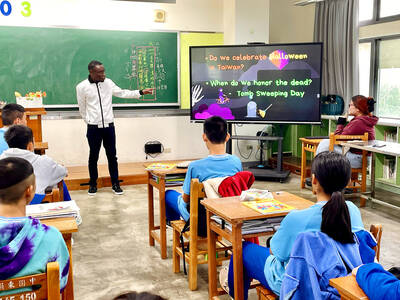
For many people, Bilingual Nation 2030 begins and ends in the classroom. Since the policy was launched in 2018, the debate has centered on students, teachers and the pressure placed on schools. Yet the policy was never solely about English education. The government’s official plan also calls for bilingualization in Taiwan’s government services, laws and regulations, and living environment. The goal is to make Taiwan more inclusive and accessible to international enterprises and talent and better prepared for global economic and trade conditions. After eight years, that grand vision is due for a pulse check. RULES THAT CAN BE READ For Harper Chen (陳虹宇), an adviser
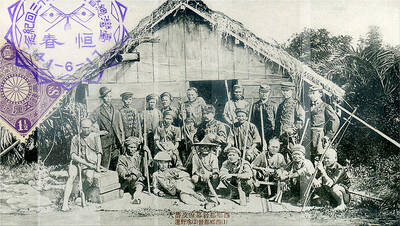
Traditionally, indigenous people in Taiwan’s mountains practice swidden cultivation, or “slash and burn” agriculture, a practice common in human history. According to a 2016 research article in the International Journal of Environmental Sustainability, among the Atayal people, this began with a search for suitable forested slopeland. The trees are burnt for fertilizer and the land cleared of stones. The stones and wood are then piled up to make fences, while both dead and standing trees are retained on the plot. The fences are used to grow climbing crops like squash and beans. The plot itself supports farming for three years.

President William Lai (賴清德) on Nov. 25 last year announced in a Washington Post op-ed that “my government will introduce a historic US$40 billion supplementary defense budget, an investment that underscores our commitment to defending Taiwan’s democracy.” Lai promised “significant new arms acquisitions from the United States” and to “invest in cutting-edge technologies and expand Taiwan’s defense industrial base,” to “bolster deterrence by inserting greater costs and uncertainties into Beijing’s decision-making on the use of force.” Announcing it in the Washington Post was a strategic gamble, both geopolitically and domestically, with Taiwan’s international credibility at stake. But Lai’s message was exactly

May 4 to May 10 It was once said that if you hadn’t performed at the Sapphire Grand Cabaret (藍寶石大歌廳), you couldn’t truly be considered a star. Taking the stage at the legendary Kaohsiung club was more than just a concert. Performers were expected to entertain in every sense, wearing outlandish or revealing costumes and staying quick on their feet as sharp-tongued, over-the-top hosts asked questions and delivered jokes that would be seen as vulgar, even offensive, by today’s standards. Opening in May 1967 during a period of strict political and social control, Sapphire offered a rare outlet for audiences in


 RSS
RSS