


July 7 to July 13
While visiting historic buildings, you might see red bricks that bear the mark “TR” or “S.” The two manufacturers, Taiwan Brick Corporation (Taiwan Renga in Japanese) and Samuel Foreign Trade Company waged a bidding war between 1914 and 1917, even willing to sacrifice all profits to win.
The Japanese-run TR was well-established since 1895 as Taiwan’s largest brickmaker, while the newcomer, a British venture spearheaded by Taiwanese businessman Huang Tung-mao (黃東茂), hoped to unseat them with cutting-edge dry-press technology imported from England.
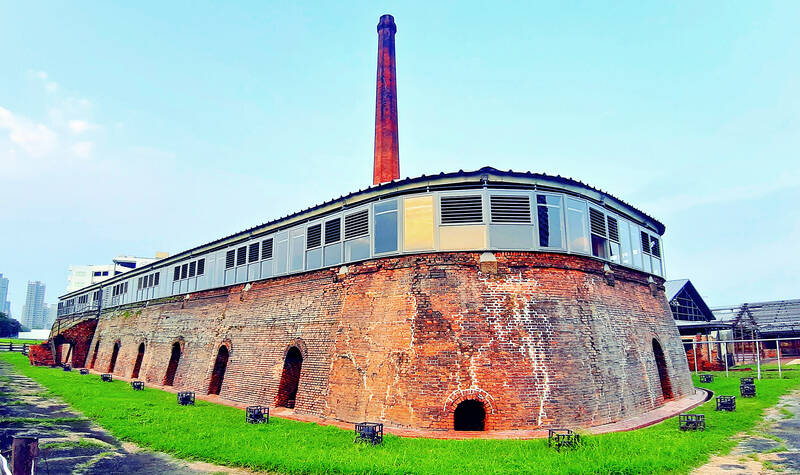
Photo courtesy of Wikimedia Commons
Huang’s ambition was sparked at the grand opening of the ultra-posh Taiwan Railway Hotel in October 1908, where it was announced that every brick in the building was provided by TR. He was determined to seize a piece of the pie for his employer, Samuel & Samuel Company, which found success primarily through Taiwan’s kerosene industry.
As Huang was busy setting up the new factory, TR owner Shintaro Ushiroku approached him about the possibility of buying out Samuel’s brick operations. The Taiwan Daily News (台灣日日新報) reports that Huang saw this gesture as a “provocation and humiliation.” He soundly rejected Ushiroku’s offer, and even revealed his entire manufacturing process to the public, making repeated statements about the superiority of dry-press over TR’s wet-press.
The battle was on.
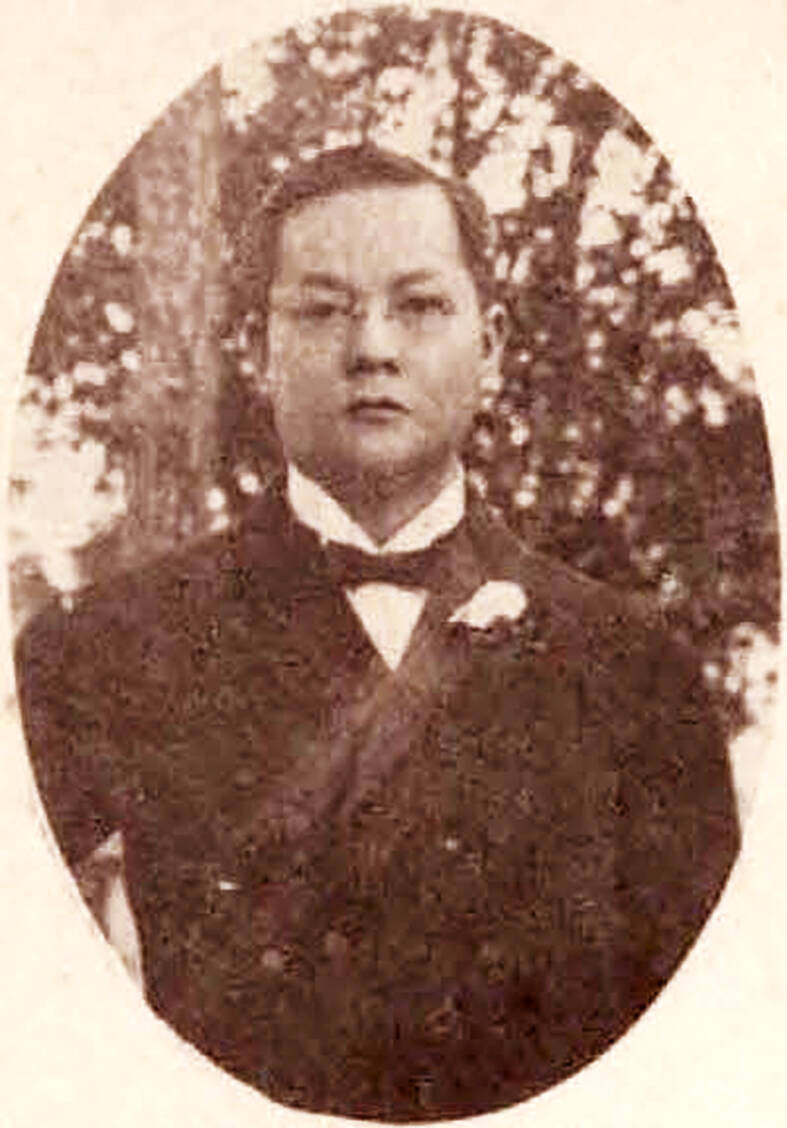
Photo courtesy of Wikimedia Commons
INDUSTRY PIONEER
Sources show that bricks were not commonly used in Taiwan during the Qing Dynasty. Local manufacturers relying on traditional ground kilns had a hard time controlling the quality of their products, and were unable to mass produce. There was a spike in brick structures during the late 1800s, but builders mostly used imported material from China’s Fujian Province.
The Japanese preferred wood structures when they first took over Taiwan in 1895, but soon found them to be unsuitable due to Taiwan’s humid climate and termite infestations, writes Wong Chin-chieh (翁靖傑) in “A study on the red bricks adopted in Taiwan’s modern architecture during the Japanese era” (日治時期台灣近代建築建築材料紅磚的使用之研究). Eventually, they developed a hybrid style using bricks as the main foundation with wooden roofs.
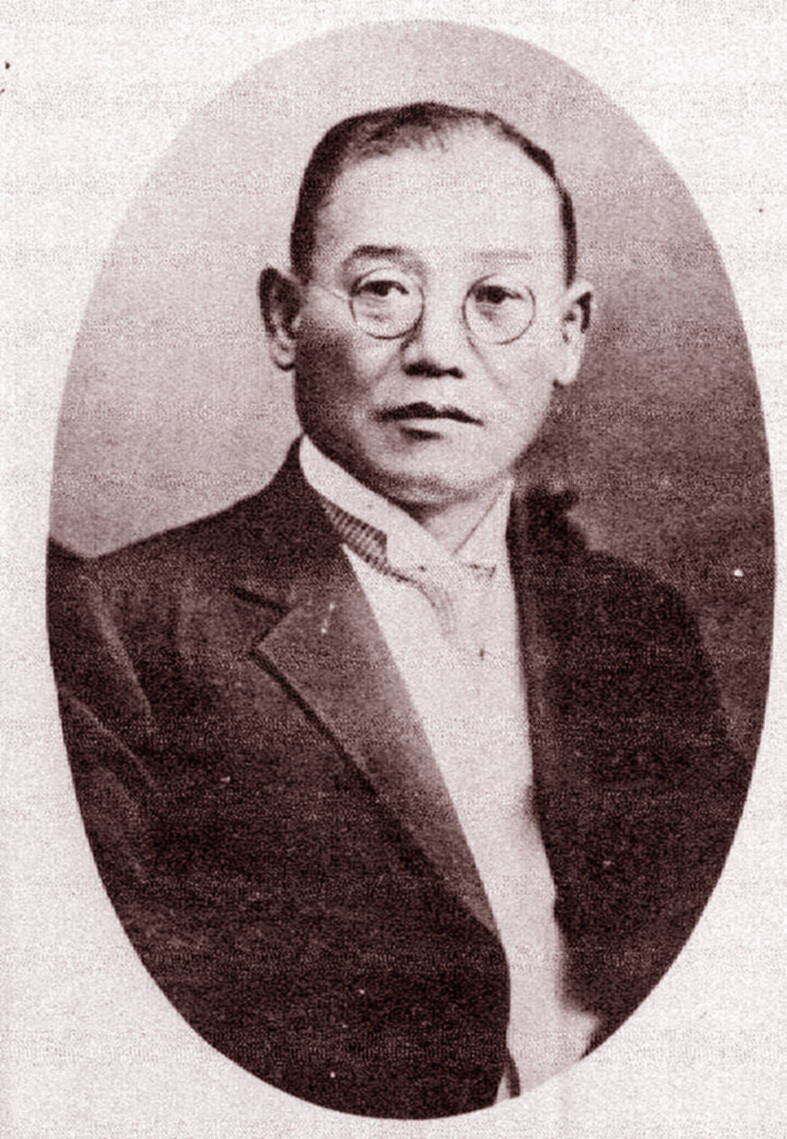
Photo courtesy of Taiwan Cultural Memory Bank
At a time when only Japanese officials or military personnel were allowed to come to Taiwan, Mori Samejima arrived in May 1895 as part of the army staff. He resigned upon arrival and began working as a translator for the government’s civil engineering department, gaining an understanding of which materials the Japanese needed to build up the colony, Wong writes.
In July 1895, Samejima quit and established Samejima Trading Company, which would later become TR. At first, Samejima imported bricks and other construction material from Japan for government projects, but shipments were constantly delayed due to inclement weather and rough seas. In 1896, he built a kiln and factory in Taiwan.
By April 1897, Samejima was producing about 1 million bricks per month, and it was the most lucrative item in the company, selling for double the production costs. The factory employed about 1,000 workers, and by 1899 they had expanded to Kaohsiung.
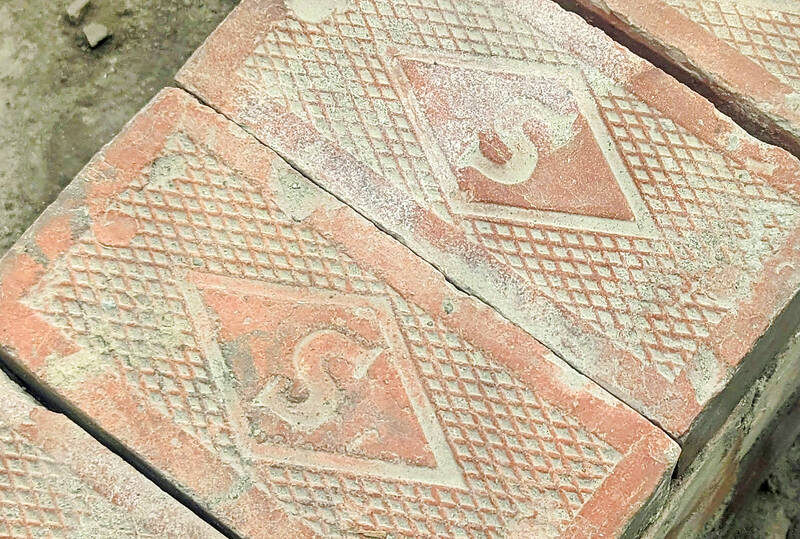
Photo: Han Cheung
Samejima died in 1901. His son was not interested in taking over, so the company went to Ushiroku. Ushiroku also came to Taiwan in 1895 as an employee for the governor-general’s office. He met Samejima there, and the two left together to launch their own venture. Samejima had industry knowledge and connections, but Ushiroku had business acumen.
Ushiroku returned to Japan in 1896 due to his health, but returned a year later with the idea of making it rich through selling Kobe beef. However, his venture failed as beef eating never caught on with locals. He returned to Samejima’s shop in 1898 and continued to grow the business after taking over, introducing new techniques and better machinery.
CHALLENGER APPEARS
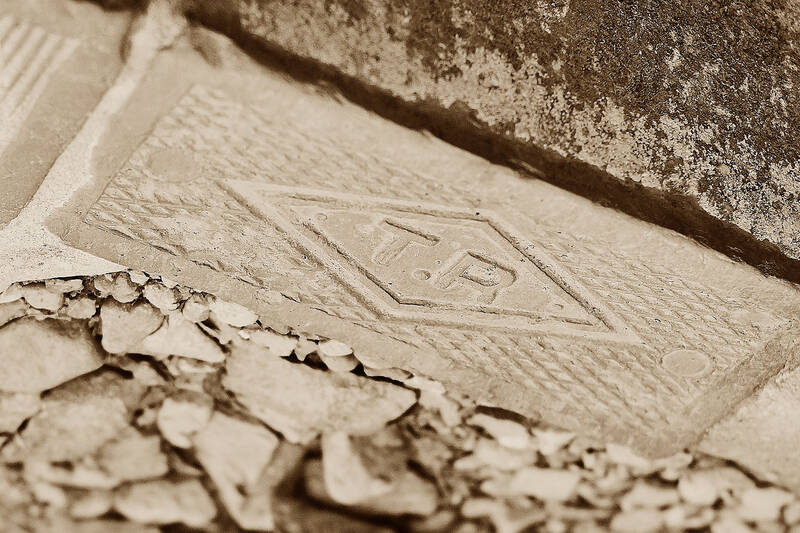
Photo courtesy of Wikimedia Commons
Brick demand continued to grow over the next decade, catching the attention of the Yokohama-based Samuel & Samuel company, which served as the Asian arm of Marcus Samuel’s Shell Transport and Trading Company (predecessor to today’s Shell PLC).
The company had set up shop in Taipei’s Dadaocheng area, importing daily goods and manufacturing camphor oil, opium and kerosene. Facing pressure due to low sales, the company’s local agent Chao Man-chao (趙滿朝) hired the well-connected and sociable Huang to help him sell kerosene and manage company affairs.
Born in Xiamen, China, Huang came to Taiwan in 1888. He became a successful businessman and was known for his Western-style mansion in Tamsui, which boasted a tennis court, swimming pool and several yachts. He imported Kandelia plants from his hometown to protect his pool and boats from typhoons, and some experts believe that these grew into the mangrove forests seen along the Tamsui River today.
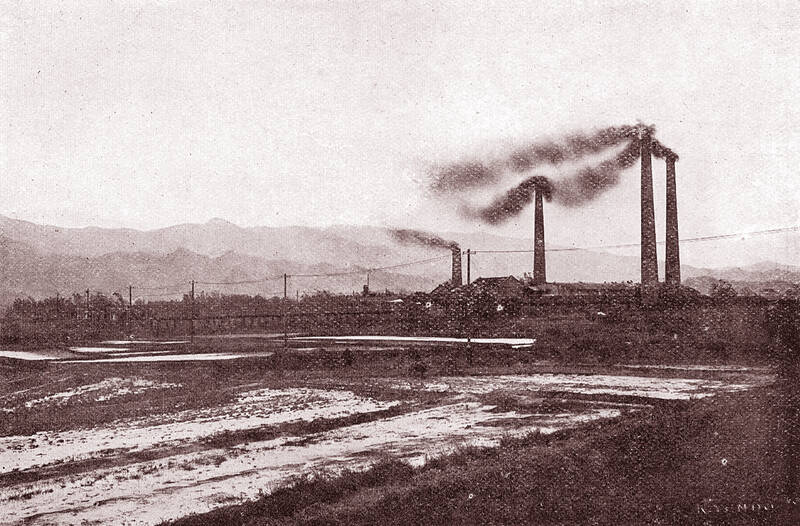
Photo courtesy of Academia Sinica
Due to a 1912 law that favored Japanese-owned businesses in Taiwan, Samuel & Samuel was forced to operate under the Samuel Foreign Trade Company, while Samejima was reorganized into the Taiwan Brick Corporation. That same year, with capital from wealthy Taiwanese friends, Huang began building a new brick factory that would be the first in Taiwan to employ the dry-pressed method. Compared to TR’s wet-pressed process, Samuel’s operation was more efficient and did not rely on the weather to dry the wet bricks.
However, the factory had a rough start. Operations were delayed for months as crucial machinery was lost to a storm in the Red Sea. The first batch of bricks were cracked. But after careful testing, including sending the products back to England for examination, Samuel was ready to begin producing. In their first year in 1914, they had the capacity to produce 80 million bricks annually.
BIDDING WAR
Up to this point, TR’s main competition had been smaller Taiwanese manufacturers, which numbered more than 600 in 1911. Competition between them had already driven down market prices, and the emergence of reinforced concrete also affected brick demand. Now with the two giants fully clashing, countless brickmakers were put out of business. While TR mostly focused on government projects, Huang gained a foothold in the Taiwanese market, further driving out local manufacturers, Wong writes.
TR and Samuel engaged in numerous bidding wars for government projects in 1914 and 1915, with TR gaining the upper hand. At one point, things got so heated that Taiwan Railway Department officials offered to make their decision solely by comparing their products. They concluded that TR’s bricks were “slightly better,” and coupled with their dirt-cheap prices, the winner was clear.
A 1916 Taiwan Daily News article states that the war had “led both sides to give up all profits and focus solely on winning at the cost of their own capital. Smaller-scale brick factories have been pressured into a tragic state. The competition between these two companies is certainly not a fortunate occurrence for the brick industry …”
A concerned Marcus Samuel visited Taiwan that year, where he was told that the company lost most of their bids because the government favored Japanese companies. Samuel then personally attended the bidding in place of Huang. He demanded that the officials reveal the bids immediately, and after Samuel saw Ushiroku’s offer, he shrugged and said, “Can you really do it with that price? Are you even making any money?” Ushiroku smiled and remained silent.
“I’ve lost,” Samuel said and shook Ushiroku’s hand, returning promptly to the UK.
SAMUEL’S DEMISE
Through a mediator, the two sides agreed to cooperate and sell bricks at a fixed, open price to mitigate the damage they caused the industry. But once it was announced that the Taoyuan Canal project would require more than 16 million bricks, the two reneged and began bidding against each other again.
Huang lost once more, and that was the last straw. In 1917, Huang and Ushiroku met at the Taiwan Railway Hotel, where it all started, to discuss a buyout. TR acquired Samuel’s brick operations the following year.
Huang became one of TR’s board members, and as of 1923, he held the most shares out of the 70 Taiwanese shareholders. Despite his defeat, he remained successful in numerous other ventures until his death, including the ritzy Penglaige (蓬萊閣) banquet hall in Dadaocheng. He died on July 7, 1929.
By 1922, Ushiroku had 12 factories across Taiwan producing more than 90 million bricks per year, earning him the undisputed title of “Brick King.” He later made another fortune by investing in the Jinguashi gold mines, and today he’s better remembered as the “Gold Mountain King.” He left Taiwan after World War II.
Archaeologist Liu Jiunn-yu (劉俊昱) questions in “Research on Excavated Bricks from the Taipei Machinery Bureau Site” (臺北機器局遺址出土磚材之研究) the decision that TR’s products were truly better than Samuel’s, and posits that it was simply impossible for a non-Japanese company to break into a supply chain system that had been in place since 1895.
“Otherwise, TR would not have continued to use Samuel’s dry-press methods after obtaining their factory,” he writes. “They even invested in new dry-press machines, and those [bricks] became the company’s highest grade products.”
Taiwan in Time, a column about Taiwan’s history that is published every Sunday, spotlights important or interesting events around the nation that either have anniversaries this week or are tied to current events.
Taiwan’s overtaking of South Korea in GDP per capita is not a temporary anomaly, but the result of deeper structural problems in the South Korean economy says Chang Young-chul, the former CEO of Korea Asset Management Corp. Chang says that while it reflects Taiwan’s own gains, it also highlights weakening growth momentum in South Korea. As design and foundry capabilities become more important in the AI era, Seoul risks losing competitiveness if it relies too heavily on memory chips. IMF forecasts showing Taiwan widening its lead over South Korea have fueled debate in Seoul over memory chip dependence, industrial policy and

And so, in the wake of US President Donald Trump’s trip to the People’s Republic of China (PRC), all the experts on the Strait of Hormuz suddenly became experts on US-China-Taiwan relations. The Internet has certainly expanded human knowledge. Lots of these sudden experts made noise this week about Trump’s words after the meeting with PRC dictator Xi Jin-ping (習近平). Trump is going to sell out Taiwan! Longtime Taiwan commentator J. Michael Cole summed the situation up neatly in the Guardian: “We need to keep in mind that he has a tendency to say many things — sometimes contradicting himself within
There is considerable frustration and confusion among many, both in Taiwan and abroad — including in Washington — as to why the Chinese Nationalist Party (KMT) seems so dead set on using their legislative leverage to slash defense spending and disrupt the ability of the ruling Democratic Progressive Party (DPP) administration to function. Are they pawns of the Chinese Communist Party (CCP)? Are they traitors? In reality, there are multiple reasons. In the first column in this series on this subject, “Donovan’s Deep Dives: How and why the TPP and KMT help Beijing” (Sat May 16, page 12), we examined three

It took 12 years and months of standing in the same mountain location for director Liang Chieh-te (梁皆得) to capture a few seconds of footage: Taiwan’s largest resident raptor locking talons with its mate and spinning through the air in a courtship ritual. With only about 1,000 left in the wild and very short flight windows, the mountain hawk-eagle remains among Taiwan’s most elusive birds. The species generally produces only one offspring per year. Using forest cameras, the film crew and research teams document the arduous process the monogamous pairs go through for the chick to hatch and grow up, weathering


 RSS
RSS