


It’s dangerous. It’s addictive. Get off your phone.
Kids constantly hear about the downsides of social media from the adults in their lives, often in the form of dire warnings and commands. But these adults did not grow up with social media themselves.
They didn’t get a phone handed to them as toddlers, just to keep them quiet in a restaurant. They didn’t join TikTok’s predecessor Musica.ly and do silly dances before they even learned to read. They didn’t have their schools shut down in a global pandemic, their connections to friends and peers relegated to phone and computer screens.
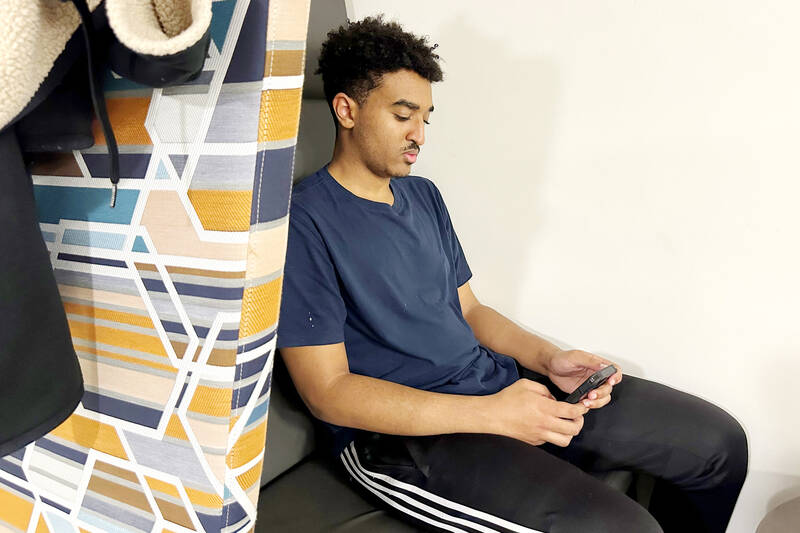
Photo: AP
Kids coming of age with social media are forging ahead in a whole new world. And now that they are getting older, they have some advice for their younger peers.
Here’s what they wish they knew when they first got online.
“It’s so easy to look at your friends’ stories and feel this feeling of FOMO, of missing out and comparing yourself, like: ‘Oh, my friend just got a new car.’ It’s like this overwhelming sense of comparison. But the things that people post on social media, it’s just the highlight reel, like the 1 percent of their life that they want to showcase to other people.”
Photo: AP
— Bao Le, 18, a freshman at Vanderbilt University
“My main point of advice would be not to take it too seriously. Be yourself. I feel like what I was exposed to as a 12-year-old was much more limited than what is accessible to 12–year-olds nowadays. Younger kids want to be who they idolize. And when the TikTok stars or the social media stars are 20, 18, 16, they’re going to want to be like them. You’re getting younger kids that are now obsessing over products and brands, and it’s just getting really hard to be young. And it shouldn’t be really hard to be young. You should be enjoying childhood. And we shouldn’t be rushing to grow up. It’s OK to be 12. It’s OK to be young. It’s OK to enjoy childhood.”
— Doreen Malata, 22, a senior at the University of Maryland
“It seems like it would be really easy to just put your phone down and stop scrolling. But it is not. If there was advice that I could give to my younger self, it would be to tell my parents to set up time limits for me — even though I would have never said that when I was starting social media. Also, I personally would not let my kid have TikTok. I would try to resist it as long as I could. It’s so addictive.”
— Sienna Keene, 17, a high school senior in Orinda, California
“When you first get these apps, it hits you — like, BOOM, there is so much content. Styles, fashion models. It really impacts you heavily when you first get it, this feeling of: ‘How do they do it? How do they look like this? How do they get clothes like that?’ When you’re new to social media, these trends can overtake you. I started to use screentime (monitoring) on my phone and limit the amount of time I am on social media. I’ve been taking phone detoxes. On weekends, I’ll take a social media detox for 10 hours or the majority of the day. I’ll hang out with my family, ride my bike. I only have notifications for my messages and workspaces. I don’t have any notifications on for social media apps.”
— Ava Havidic, 18, a high school senior in Broward County, Florida
“Often I hear the term ‘social media user,’ but I felt like I was being used by social media. I had this routine of scrolling mindlessly through TikTok, just scrolling and scrolling and comparing myself to other people. It ultimately really affected my body image, my perception of what was considered beautiful or accepted into society. But the only thing I was getting out of social media was feeling fatigued, or I would feel sad.
“You can use social media to amplify your passions, but in order to do that you need to do a lot of work outside of social media, to discover who you are as a person, what matters to you and what contributions you can make to the world.”
— Lea Nepomuceno, 18, a freshman at George Washington University
“I would say just don’t use it. It’s kind of a waste of time. You’re just having conversations about pointless things, random pop culture stuff. It just sucks your time. You’re not really getting anything out of it, just short-term satisfaction. It’s kind of meaningless. I know this is kind of outlandish, but I feel like there should be some sort of age limit because I don’t think children should be on the internet.”
— Mikael Makonnen, 18, a freshman at American University
“A lot of people make their life artificial so that they’re perceived in a certain way. And I think going into social media, I wish I knew it is a tool to learn from. There’s so much information, and you’re able to learn so much about different things. ... I wish people had that outlook rather than the whole idea of other people viewing you and having to be seen a certain way.”
— Nour Mahmoud, 21, a junior at Virginia Commonwealth University

Michael slides a sequin glove over the pop star’s tarnished legacy, shrouding Michael Jackson’s complications with a conventional biopic that, if you cover your ears, sounds great. Antoine Fuqua’s movie is sanctioned by Jackson’s estate and its producers include the estate’s executors. So it is, by its nature, a narrow, authorized perspective on Jackson. The film ends before the flood of allegations of sexual abuse of children, or Jackson’s own acknowledgment of sleeping alongside kids. Jackson and his estate have long maintained his innocence. In his only criminal trial, in 2005, Jackson was acquitted. Michael doesn’t even subtly nod to these facts.

Writing of the finds at the ancient iron-working site of Shihsanhang (十 三行) in New Taipei City’s Bali District (八里), archaeologist Tsang Cheng-hwa (臧振華) of the Academia Sinica’s Institute of History and Philology observes: “One bronze bowl gilded with gold, together with copper coins and fragments of Tang and Song ceramics, were also found. These provide evidence for early contact between Taiwan aborigines and Chinese.” The Shihsanhang Web site from the Ministry of Culture says of the finds: “They were evidence that the residents of the area had a close trading relation with Chinese civilians, as the coins can be

The March/April volume of Foreign Affairs, long a purveyor of pro-China pablum, offered up another irksome Beijing-speak on the issues and solutions for the problems vexing the People’s Republic of China (PRC) and the US: “America and China at the Edge of Ruin: A Last Chance to Step Back From the Brink” rang the provocative title, by David M. Lampton and Wang Jisi (王緝思). If one ever wants to describe what went wrong with US-PRC relations, the career of Wang Jisi is a good place to start. Wang has extensive experience in the US and the West. He was a visiting

The January 2028 presidential election is already stirring to life. In seven or eight months, the primary season will kick into high gear following this November’s local elections. By this point next year, we will likely know the Democratic Progressive Party (DPP) candidate and whether the Taiwan People’s Party (TPP) will be fielding a candidate. Also around this time, the Chinese Nationalist Party (KMT) will either have already completed their primary, or it will be heading into the final stretch. By next summer, the presidential race will be in high gear. The big question is who will be the KMT’s


 RSS
RSS