


Taichung: a sprawling urban metropolis, an intelligent city of glimmering high-rises, an up-and-coming culture hub with a thriving art scene. Or at least, that’s what Instagram sold us.
Disembarking from Taichung Station, things are looking more gray and certainly more dilapidated than promised. But evidence of change is on the horizon, and it feels like the city is yet to settle on an identity.
Finding beauty instead in the contradictions of old and new, neglected and innovative, industrial concrete with pops of color, we give Taichung a day of our time — and the benefit of the doubt.
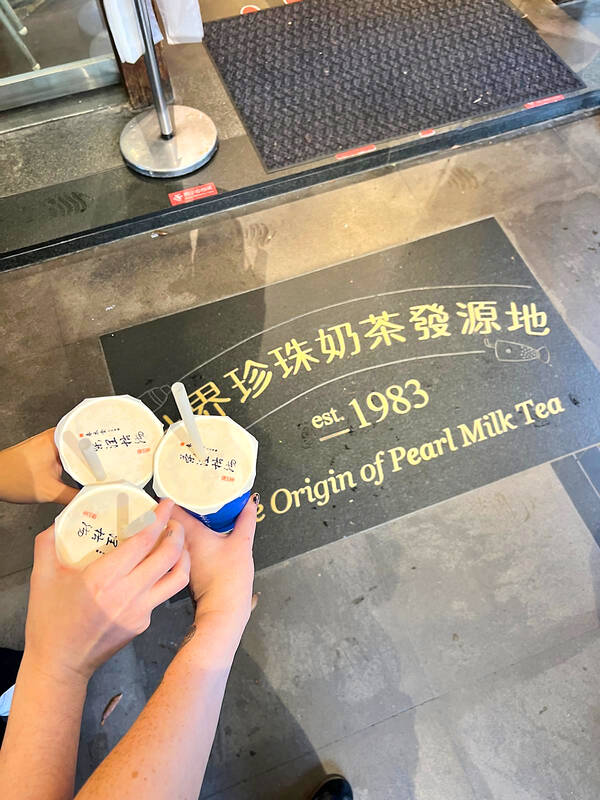
Photo: Hollie Younger
From the photographable Rainbow Village and the world’s first bubble tea, to Japanese colonial-era relics and the area known as Little Southeast Asia, Taichung has plenty to do when passing through, firmly cementing itself on the beaten track for travelers to Sun Moon Lake, as we did, or further afield.
RAINBOW VILLAGE
Our first attraction Rainbow Village (彩虹眷村) is just an eight-minute Uber ride from Taichung HSR station. When the government came knocking to demolish this military dependents’ village in 2008, one resident wasn’t going down without a fight.
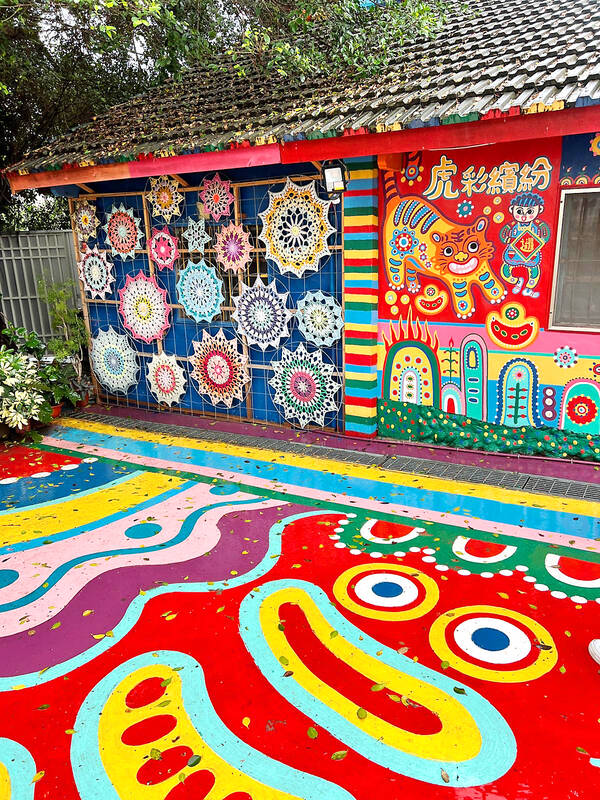
Photo: Hollie Younger
Huang Yung-fu (黃永阜), aka Rainbow Grandpa (彩虹爺爺), defiantly painted the walls and floors in vibrant cherry red, swirling psychedelic patterns and colorful murals, my favorite showing the 12 animals of the zodiac. Thanks to its touristic appeal, his village remained untouched. Rainbow Grandpa passed away earlier this year at age 101, but his legacy continues through tourism, visiting school groups and contributing artists.
After spending 30 minutes perusing the murals and snapping some pictures, we catch one of the many buses from a stop opposite Rainbow Village and head to Taichung city center, alighting in Taichung’s Central District (中區) 45 minutes later.
LITTLE SOUTHEAST ASIA
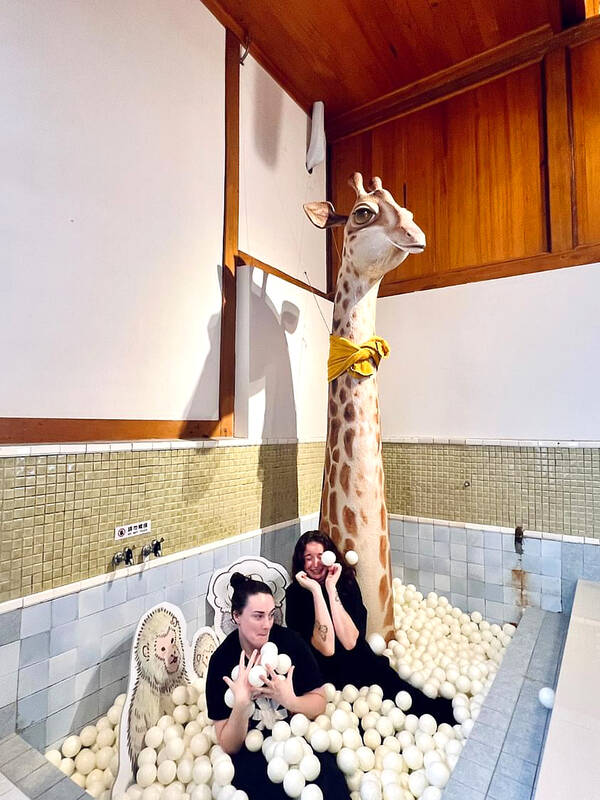
Photo: Hollie Younger
At Taichung Station, I was intrigued to find bathroom signage in Mandarin, English and then — unlike Taipei’s offering of Japanese or Korean — in Vietnamese and Indonesian. Walking just a few blocks into Taichung’s old town, it quickly becomes apparent why.
Reflecting the city’s changing demographic, what was once the First Public Market during the Japanese colonial era, is now dubbed Little Southeast Asia. Nothing feels little about it and it was buzzing with energy on the Sunday afternoon I visited.
Whizzing juice blenders and the cacophony of budgies in cages, the nostalgic stench of Durian and clove cigarettes — an affront to the senses I haven’t experienced anywhere in Taiwan. One moment we’re buying knockoff sportwear in a wholesale market reminiscent of Hanoi. Cross the road, and it’s lunchtime at a crowded hawker stall that could be right out of Kuala Lumpur.
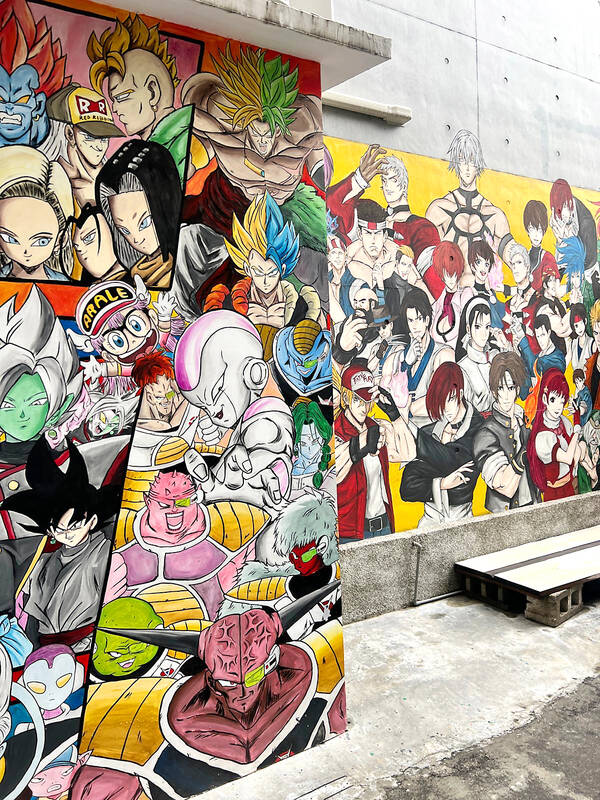
Photo: Hollie Younger
Here you can exchange your Philippine peso to New Taiwan dollars, buy a Vietnamese Coffee and dine on Malaysian chicken satay while watching Indonesian music videos, then grab a Thai banana pancake to finish.
At the center is ASEAN Square (東協廣場), a multistory mall for everything Southeast Asian. At first glace, however, we were shocked to pass a group of neon-vested policemen carrying submachine guns waiting for an elevator to the upper floors, where notorious nightclubs and questionable KTV parlors lie.
But downstairs, workers hunch over chomping sewing machines under fluorescent office lighting, while vendors flog diamante-studded denim hotpants and push-up bras.
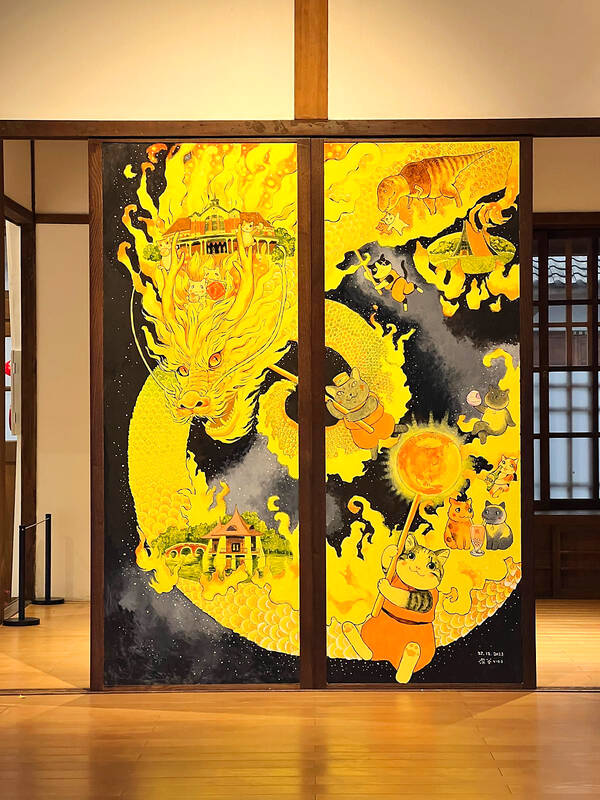
Photo: Hollie Younger
Browsing the racks, my friend finds a shirt with the misspelled words “giobai warming” in neon colors. She disappears behind a makeshift changing room curtain as I wait, drawing in a crowd of curious workers.
We struggle through a brief yet animated conversation — they are Vietnamese, and I English — but are interrupted as the curtain swings open. The crowd erupts into cheers. Facing a sea of smiles and thumbs-ups, we simply had to buy the shirt.
Next, our sweet tooth leads us to the world’s first bubble tea shop, Chun Shui Tang (春水堂). A photographable plaque outside announces “The Origin of Pearl Milk Tea est. 1983.”
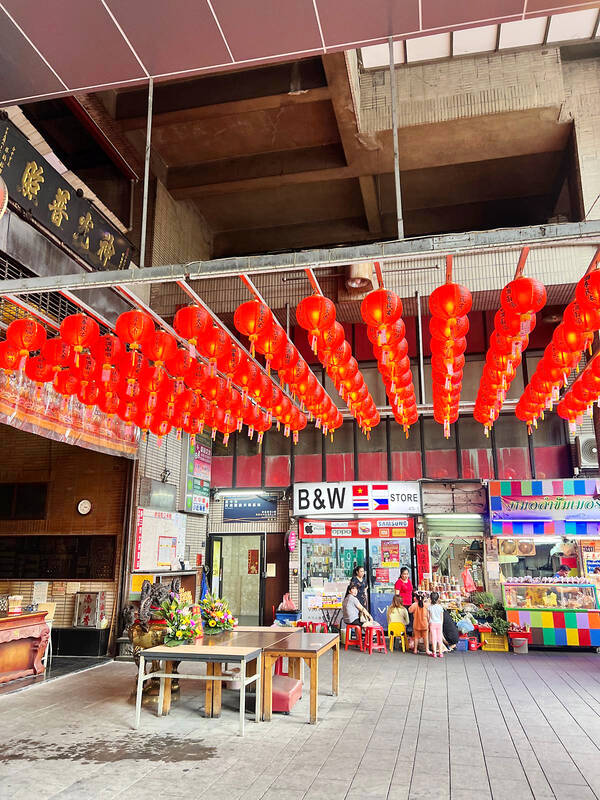
Photo: Hollie Younger
I order a small classic pearl milk tea for takeout, at a pricey NT$90 a pop. Perhaps it’s worth it for the bragging rights.
ARTY ATTRACTIONS
Taichung appears to be following in the footstep of Rainbow Grampa and slapping murals on side streets left and right, redesigning abandoned sites as culture parks. We all know the drill.
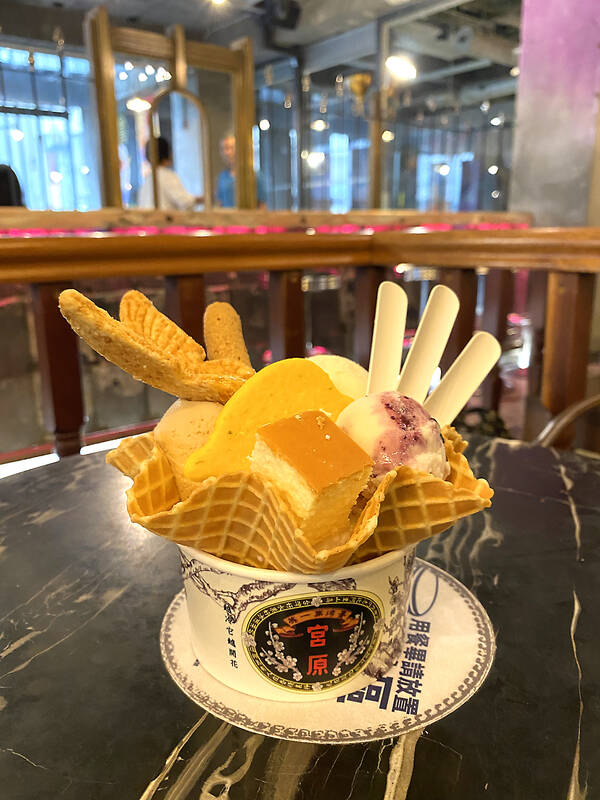
Photo: Hollie Younger
Keen to explore and bubble tea in hand, we are grateful for a break in the gray urban landscape at Painted Animation Lane (動漫彩繪巷). A tourist photo spot, this short alleyway is plastered with murals of cartoons from Japanese anime One Piece to the Simpsons.
We continue to the National Taiwan Museum of Comics (國家漫畫博物館). Built in 1937 as a martial arts training hall for colonial-era Japanese police and prison officers, the complex later became the official Taichung Prison of the Chinese Nationalist Party, before opening last year as a repurposed cultural park.
With an imposing entry hall of sloping Japanese roofs, gigantic sprawling banyan trees and tranquil Japanese-style gardens, the complex is surrounded by small cabins hosting contemporary art exhibitions; the best being an interactive display inside the original prisoner washrooms, with Japanese-style tubs repurposed as ball pits for visitors to jump into.
INSTAGRAMMABLE ICE CREAM
Undoubtedly the most Instagrammed spot in the city, ice-cream cult favorite Miyahara (宮原眼科), lies inside the steely skeleton of the 1940s Fourth Credit Union Bank (台中市第四信用合作社). Inside, fanciful fairytale-like decor, old-school-diner-style seating and pink lighting is nostalgic of Gringotts’s Bank in Harry Potter.
We order their classic giant waffle-cone bowl (NT$295), filled with three ice-cream scoops and topped with their instantly recognizable butterfly-shaped biscuit.
We were surprised that this place is worth the hype, because although the place was gimmicky it was more than just a gimmick. The salted caramel scoop wasn’t afraid to be bold and salty, and the honey and cheese flavor was the standout, so tart and playfully acidic it could either be in an ice cream or a cheese board.
Miyahara was a perfect ending to a short but sweet stop in Taichung before continuing onward to Sun Moon Lake.
She’s no supermodel, but Taichung offers an urban grittiness and spunky personality unmatched in modern Taipei or ancient Tainan. Amid dynamic development and a rapidly changing demographic, the city, anthropologically and culturally, makes for a fascinating day trip.
By global standards, the traffic congestion that afflicts Taiwan’s urban areas isn’t horrific. But nor is it something the country can be proud of. According to TomTom, a Dutch developer of location and navigation technologies, last year Taiwan was the sixth most congested country in Asia. Of the 492 towns and cities included in its rankings last year, Taipei was the 74th most congested. Taoyuan ranked 105th, while Hsinchu County (121st), Taichung (142nd), Tainan (173rd), New Taipei City (227th), Kaohsiung (241st) and Keelung (302nd) also featured on the list. Four Japanese cities have slower traffic than Taipei. (Seoul, which has some
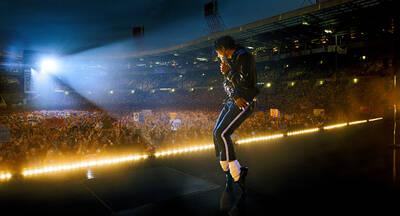
Michael slides a sequin glove over the pop star’s tarnished legacy, shrouding Michael Jackson’s complications with a conventional biopic that, if you cover your ears, sounds great. Antoine Fuqua’s movie is sanctioned by Jackson’s estate and its producers include the estate’s executors. So it is, by its nature, a narrow, authorized perspective on Jackson. The film ends before the flood of allegations of sexual abuse of children, or Jackson’s own acknowledgment of sleeping alongside kids. Jackson and his estate have long maintained his innocence. In his only criminal trial, in 2005, Jackson was acquitted. Michael doesn’t even subtly nod to these facts.
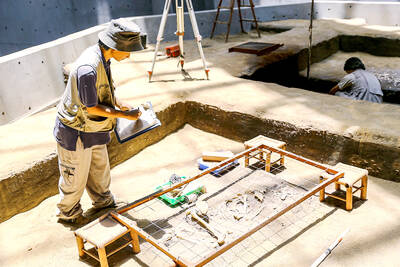
Writing of the finds at the ancient iron-working site of Shihsanhang (十 三行) in New Taipei City’s Bali District (八里), archaeologist Tsang Cheng-hwa (臧振華) of the Academia Sinica’s Institute of History and Philology observes: “One bronze bowl gilded with gold, together with copper coins and fragments of Tang and Song ceramics, were also found. These provide evidence for early contact between Taiwan aborigines and Chinese.” The Shihsanhang Web site from the Ministry of Culture says of the finds: “They were evidence that the residents of the area had a close trading relation with Chinese civilians, as the coins can be
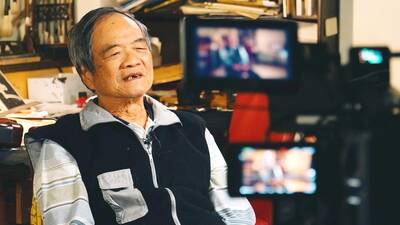
During her 2015 trip to Taiwan, Sophia J. Chang (張詠慧) got fewer answers than she’d hoped for, but more revelations than she could have imagined. “That was the year I last saw my grandmother. She was in hospice care in Tainan, and it was painful to see her in bed, barely able to open her eyes,” says Los Angeles-born Chang. “The grandma I’d known, a fantastic cook and incredibly kind, was already gone.” After their visit, Chang and her grandfather went back to his apartment. There she asked him how he’d met her grandmother. “He hesitated, then started talking a bit.


 RSS
RSS