


Next to the Air Force base in Kaohsiung’s Gangshan District (岡山), a large hangar has been converted into a museum of sorts and opened to the public. Airplane or military history buffs can get lost for hours in the impressive collection of airplanes resting (or hanging) in the hangar, which span Republic of China (ROC, not Taiwanese per se) aviation history from its very first native-built airplane up to aircraft only recently retired from service.
For the casual tourist, there are still plenty of interesting stories and aircraft that will pique your curiosity. From spy planes to enemy planes to planes that land on water, the variety and attractive layout of aircraft in the facility make this a great way to spend part of the day the next time you’re in Kaohsiung.
PRESIDENTIAL AIRCRAFT
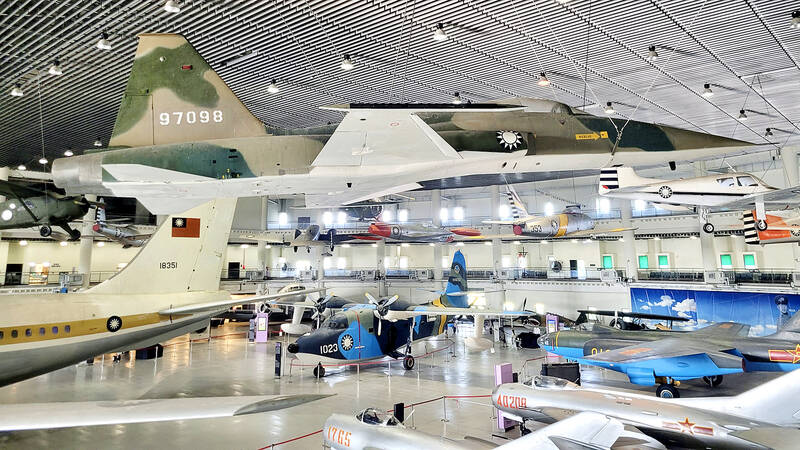
Photo: Tyler Cottenie
One of the main attractions at the Aviation Education Exhibit Hall is the presidential aircraft, of which there are two. Featured right in the middle of the hangar on the first floor is the Chung-Mei (中美號). Visitors can walk all the way around the aircraft to see it from every angle, and for an additional fee of NT$100, you can tour the interior. Entrance includes a small gift bag and a pair of disposable slippers that serve to protect the carpet inside. This Boeing 720’s cabin was modified from the original layout used by Northwestern Airlines in the US after the ROC purchased it in 1971.
It was divided into something like economy seating at the back, business seating in the middle and the president’s personal cabin near the front, complete with lounge, bed and personal washroom. Look for the two gauges on the wall in the lounge: these allowed the president to keep an eye on the aircraft’s altitude and airspeed at all times. The furnishings are comfortable throughout the plane but not lavish. The lavatory for the “economy” area of the plane was in surprisingly rough shape, almost as if the abuse it suffered in its previous life as a passenger airliner in the US was not even covered up after the ROC purchased it.
The other presidential plane on display here has a much richer history than the Chung-Mei, though visitors cannot tour the inside. Emblazoned on the outside of this C-47 are the Chinese characters Mei-Ling (美齡), the given name of president Chiang Kai-Shek’s (蔣介石) wife. It was given this name in 1947 when it was selected as the presidential aircraft. After the ROC relocated to Taiwan and Chiang refused to fly abroad, it remained in service for VIP transport and pilot training until 1994. The most interesting part of this plane’s service life came before all this, however.
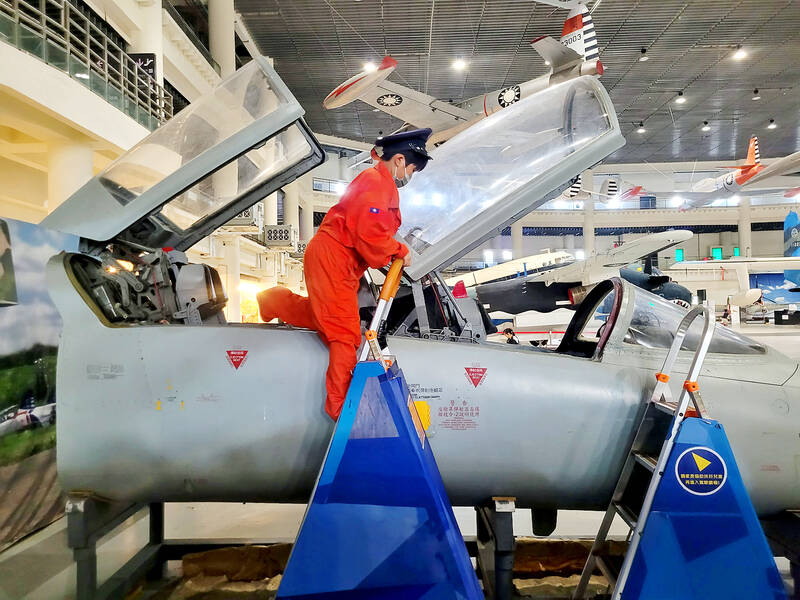
Photo: Tyler Cottenie
This C-47, along with many others, flew dangerous missions over the Himalayas to resupply Allied (US and China) bases there from India, after land resupply was cut off by the Japanese. The planes had to navigate mountain turbulence in unknown weather conditions while under constant threat of attack by Japanese fighters nearby. The operation ran for over three years and killed over 1,600 people, with nearly 600 aircraft suffering irreparable destruction or simply going missing in the Himalayas. This aircraft was one of the lucky ones that survived, and went on to enjoy a much easier and safer assignment carting around the president and other VIPs.
TRAINING AND FIGHTING
Many of the aircraft on display here never saw combat, nor were they intended to. Instead, they were assigned for pilot training. The PL-1 on the first floor is a prime example of a basic trainer. Small in size and running a single piston engine, this is one of the simplest powered aircraft around. It was named the Chieh Shou (介壽), a common moniker throughout Taiwan in decades past proclaiming the desire for a long life for Chiang.
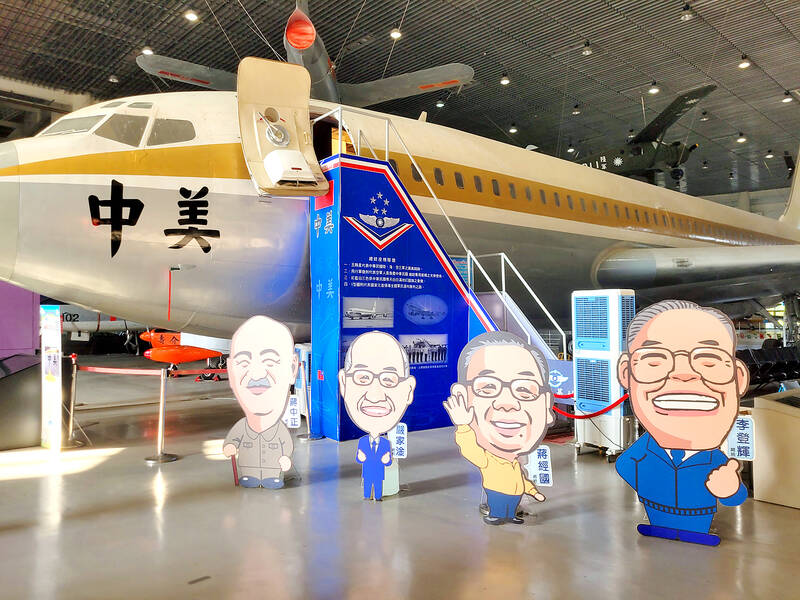
Photo: Tyler Cottenie
The T-28A Trojan is another simple aircraft on display here. It features tandem seating and served as a trainer for new pilots. The T-CH-1 also served as a single-engine trainer for a while and is notable for being developed in Taiwan. Twin-engine piston trainers are also on display here, like the AT-11. The T-33A Shooting Star, painted in a sharp silver and orange pattern, was used as a jet trainer for over two decades before it was assigned to combat operations.
An essential part of any pilot’s training is simulator time, which allows for quick alternation between different scenarios and greatly reduces training cost. In one of the side rooms off the main hangar space, two training simulators are on display. Visitors can get a close-up view of both the complexity of these cockpits and the former reliance on analog technology. In one simulator, a paper map is laid out under glass and an instrument for measuring distances and angles was slid across it.
There is also no shortage of combat aircraft at the museum. The ROC’s first jet fighter, the F-84G, is the airplane hanging from the ceiling near the main entrance with lightning bolts painted on its wing tanks. The F-86F was one of the most successful fighters in the Air Force, winning a 31:1 victory against the People’s Liberation Army (PLA) Air Force during the 1958 Second Taiwan Strait Crisis. For those interested in the bombs and missiles the ROC has used or held ready for combat, one of the side rooms has a large collection on display, including one that delivered the now-banned napalm.
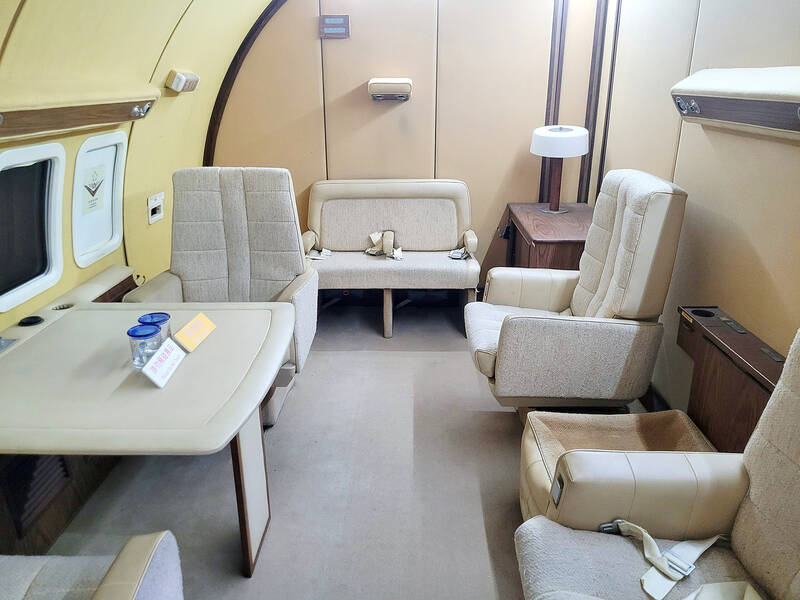
Photo: Tyler Cottenie
SPYING, DEFECTING AND RESCUING
Some of the most unique pieces in the Exhibition Hall are the aircraft that are only in Taiwan today because they were flown here by defectors from the People’s Republic of China (PRC). Three MiGs are lined up in a row on the first floor, each arriving in Taiwan at different airports at different times, in Taichung, Taoyuan and Kinmen. The IL-28 Beagle next to them was flown here by three PLA pilots.
Defection was encouraged by the dropping of flyers in PRC territory and by supporting undercover agents there. The B-26 Invader light bomber served this dual purpose, rather than actual bombing, during its service with the ROC Air Force in the 1950s. Provided by the US, it was eventually returned to them in 1960. Years later, the museum was able to secure a B-26 for display here by trading two ROC aircraft with the Classic Aircraft Aviation Museum in Oregon.
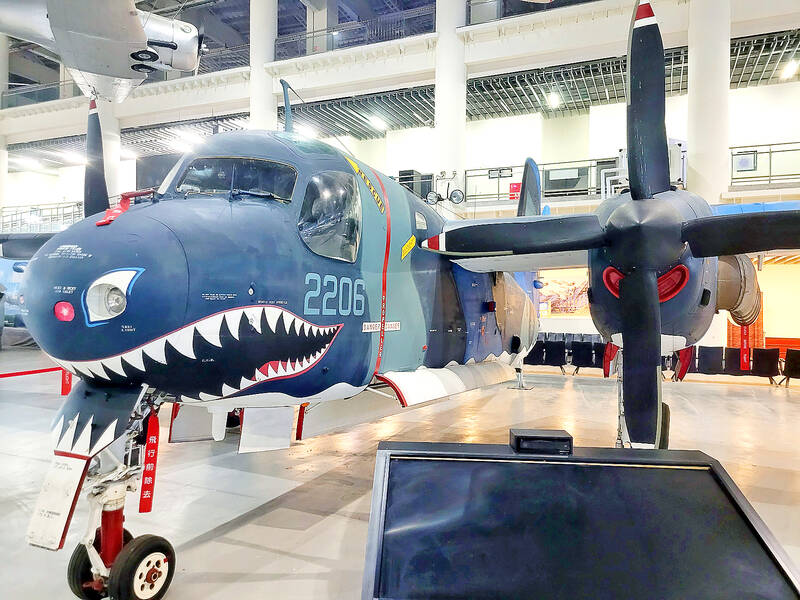
Photo: Tyler Cottenie
The S-2T Turbo Tracker on the main hangar floor is painted in a conspicuous shark motif and has been a successful maritime surveillance aircraft, specifically in locating submarines. During the Han Kuang military exercise of 1994, one of these aircraft successfully spotted a PRC submarine near Tainan, just outside the 12-mile territorial water limit.
Finally, there are aircraft on display that have served in other miscellaneous military operations, like search-and rescue. In the middle of the floor behind the Chung-Mei, there is a somewhat ungainly aircraft. This is the only aircraft in the museum designed to land on water, as evidenced by the floats hanging from its wings and the streamlined shape of its belly. This aircraft can conduct low-altitude searches over water for up to 12 hours at a time.
Finally, hanging high near the middle of the ceiling is a versatile single-engine aircraft most well known for its service as a bush plane in northern Canada and Alaska, the U-6A Beaver. It served a multitude of purposes in Taiwan for 19 years, including search-and-rescue and paradropping.
Photo: Tyler Cottenie
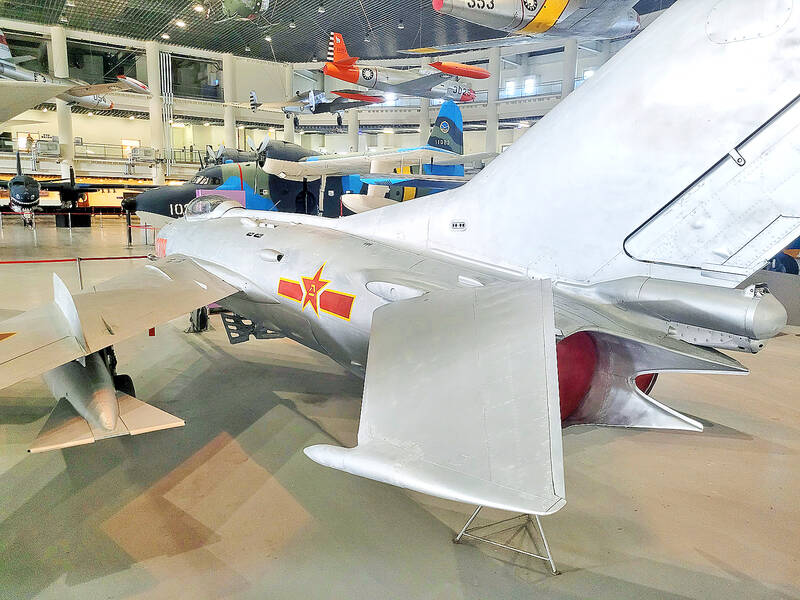
Photo: Tyler Cottenie
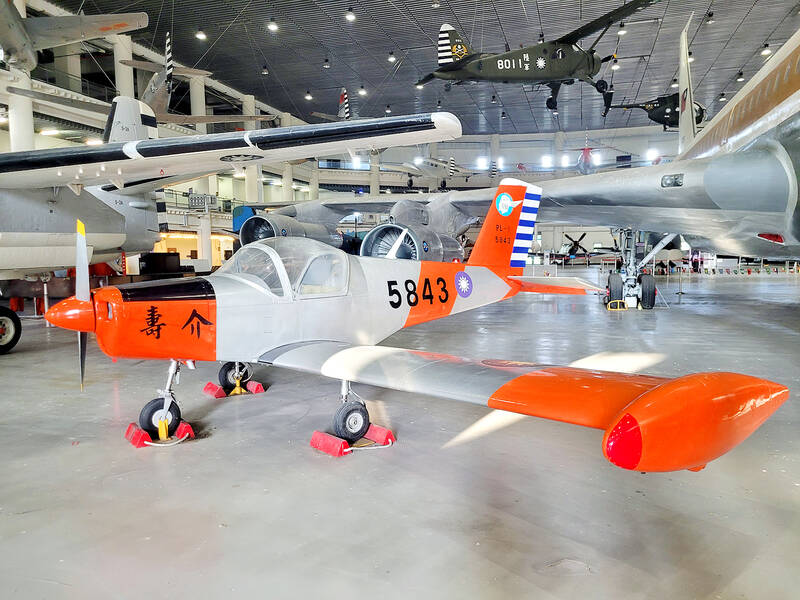
Photo: Tyler Cottenie
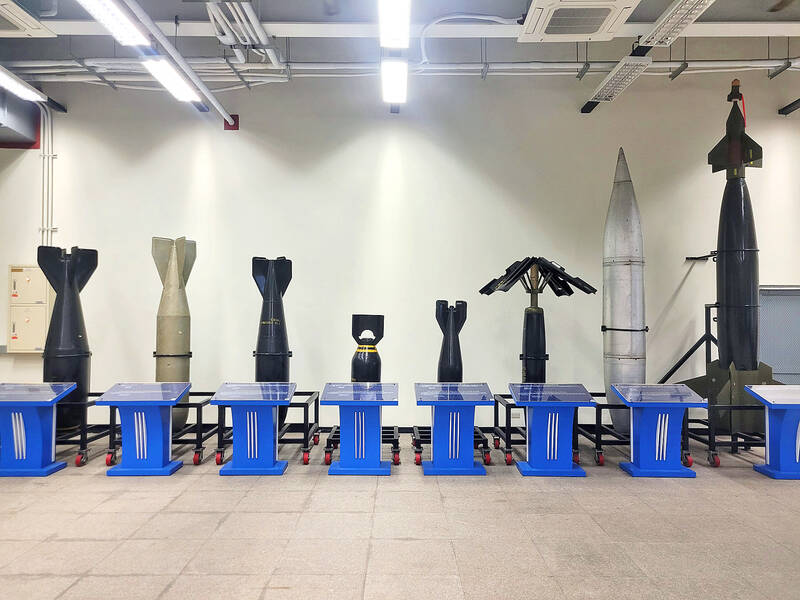
Photo: Tyler Cottenie
Michael slides a sequin glove over the pop star’s tarnished legacy, shrouding Michael Jackson’s complications with a conventional biopic that, if you cover your ears, sounds great. Antoine Fuqua’s movie is sanctioned by Jackson’s estate and its producers include the estate’s executors. So it is, by its nature, a narrow, authorized perspective on Jackson. The film ends before the flood of allegations of sexual abuse of children, or Jackson’s own acknowledgment of sleeping alongside kids. Jackson and his estate have long maintained his innocence. In his only criminal trial, in 2005, Jackson was acquitted. Michael doesn’t even subtly nod to these facts.
Writing of the finds at the ancient iron-working site of Shihsanhang (十 三行) in New Taipei City’s Bali District (八里), archaeologist Tsang Cheng-hwa (臧振華) of the Academia Sinica’s Institute of History and Philology observes: “One bronze bowl gilded with gold, together with copper coins and fragments of Tang and Song ceramics, were also found. These provide evidence for early contact between Taiwan aborigines and Chinese.” The Shihsanhang Web site from the Ministry of Culture says of the finds: “They were evidence that the residents of the area had a close trading relation with Chinese civilians, as the coins can be
The March/April volume of Foreign Affairs, long a purveyor of pro-China pablum, offered up another irksome Beijing-speak on the issues and solutions for the problems vexing the People’s Republic of China (PRC) and the US: “America and China at the Edge of Ruin: A Last Chance to Step Back From the Brink” rang the provocative title, by David M. Lampton and Wang Jisi (王緝思). If one ever wants to describe what went wrong with US-PRC relations, the career of Wang Jisi is a good place to start. Wang has extensive experience in the US and the West. He was a visiting

The January 2028 presidential election is already stirring to life. In seven or eight months, the primary season will kick into high gear following this November’s local elections. By this point next year, we will likely know the Democratic Progressive Party (DPP) candidate and whether the Taiwan People’s Party (TPP) will be fielding a candidate. Also around this time, the Chinese Nationalist Party (KMT) will either have already completed their primary, or it will be heading into the final stretch. By next summer, the presidential race will be in high gear. The big question is who will be the KMT’s


 RSS
RSS