


It’s not easy to stitch together a documentary featuring more than 70 interviewees without a central character, but Hsiao Chu-chen (蕭菊貞) does an effective job in On the Train (南方, 寂寞鐵道), shot during the years leading up to the electrification of the South Link Line in December 2020. Hsiao is a veteran in the non-fiction field, winning the 1999 Golden Horse for best documentary with The Red Leaf Legend (紅葉傳奇).
The protagonist in this film is the railway that connects Pingtung and Taitung, which took more than 30 years to plan and 12 years to construct, most of it perilous work blasting through steep mountains in hellish conditions. It was the last piece of the puzzle to complete the round-island railway; before that the only option between the two locales was a six-hour, bumpy and winding bus ride that provided bags for passengers to vomit in.
The line’s construction is quite a tale, but Hsiao only devotes a small portion to that. Instead, she spotlights the people who built it and kept the line running for the past 30 years. And it’s the candid, heartfelt and often unintentionally funny interviews they provide that give character and soul to the story.
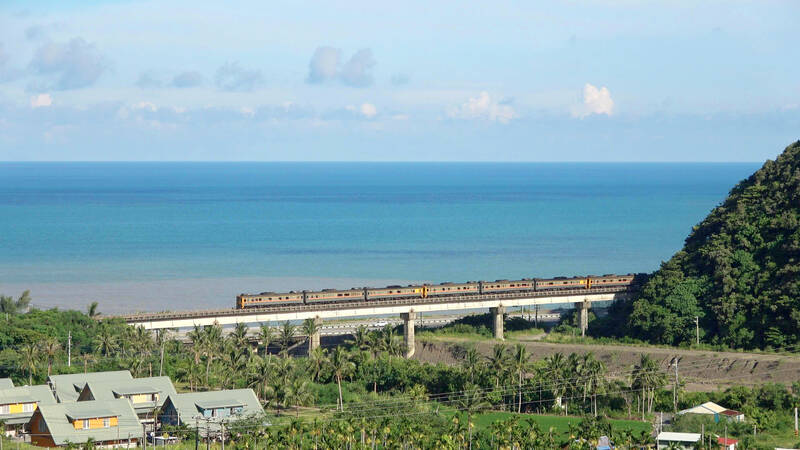
Photos courtesy of Shang Shan Yi Cultural Studio
From construction workers to local residents, frequent riders, train drivers and other staff, the railroad seemed to have a special place in the hearts of many, especially due to the area’s isolation. Many spoke wistfully about the permanent changes that the upcoming electrification would bring, and people packed the final ride on the iconic blue cars before they were retired in 2020. These were the only non-air conditioned cars left in Taiwan at the time, and have since been revived as a tourist attraction.
We hear from families who have worked on the railroad for three generations, watch an eager young man pass his final certification to achieve his dream of becoming a train driver, and also learn about the dangers and loneliness of the positions where people rarely get to see their families.
Not only was the single-track route treacherous with delays common, but there was also a series of intentional derailments by unknown criminals in the 2000s — one driver talks about how he survived one that caused the train to tumble sideways down a hill. He was seriously injured, but still kept at the job after recovering.
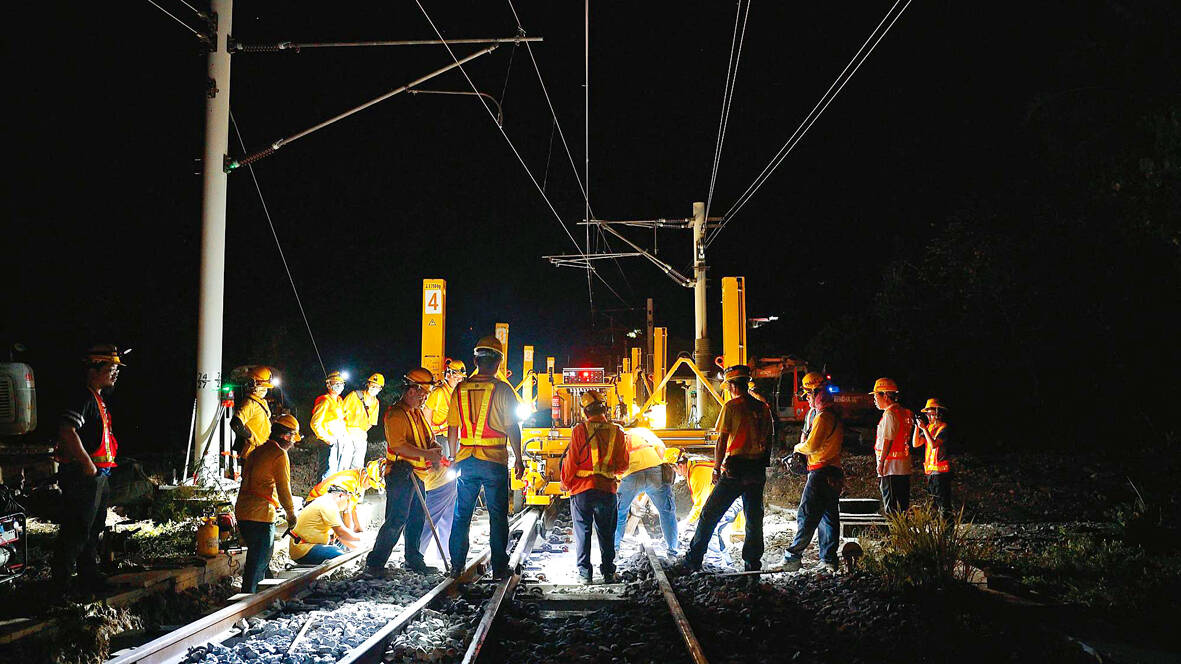
Photo courtesy of Shang Shan Yi Cultural Studio
The railroad also brought great changes to the few communities along the way. A mother and daughter discuss their food shop that prospered for a decade as a hotspot for railroad construction workers to hang out at (and their romantic dalliances with them), but one town that was once a bustling midway stop for the bus journey quickly became a shell of its former self with the railway’s completion.
Some of the characters only appear for a few minutes, but they are somehow quite memorable. There’s the station master who requested to be transferred to one of the quietest and remote locations for the nature and solitude.
“It’s not loneliness,” he emphasizes, “that is sad.”
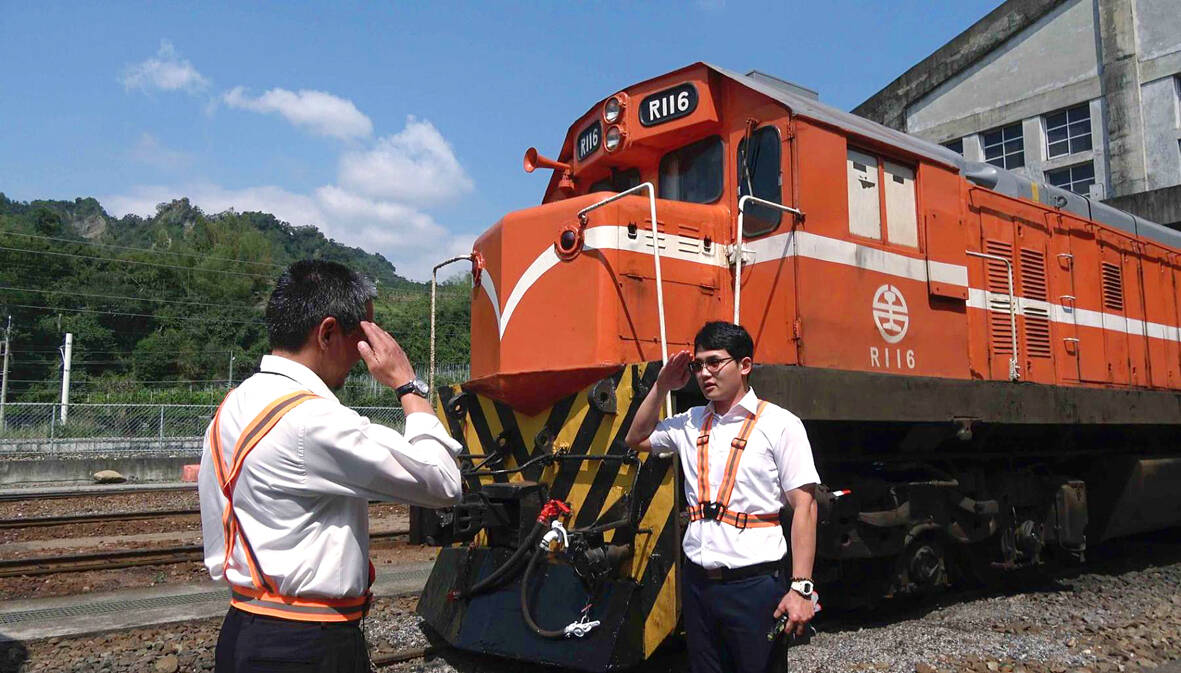
Photo courtesy of Shang Shan Yi Cultural Studio
“Solitude is enjoyable.”
There’s the driver who describes the immense pressure he faced to complete his final journey without incident to maintain a perfect career record.
“Even if you make it to the final destination, you might brake a bit too hard and someone falls over and hurts their head,” he says. “You can’t imagine the pressure during the ride and the joy one feels after completing it.”
There’s nothing all too exciting or dramatic and the film moves at a singular pace, a bit too slow and meandering at times. But for the most part this treatment is quite apt, creating a contemplative, almost dream-like feeling of nostalgia. What brings the atmosphere to the next level is the subdued yet soulful Taiwanese folk-inspired soundtrack by the legendary bard Chen Ming-chang (陳明章), which fades in and out at the right times and never takes over. He wrote the song Lonely Train to the South (南方寂寞火車) especially for the film, his wistful voice accompanied by a ming lute, accordion and indigenous Amis flute.
Hsiao, who spent six years producing On the Train, told the media that many initially questioned the value and commercial viability of documenting this often-forgotten railroad. But that’s the point, recording the invaluable and moving memories of the ordinary folks who would otherwise never be heard from, and preserving them just in time.

Taiwan’s English education system is being pulled apart by three opposing forces. Bilingual Nation 2030 pulls students toward English and global communication. Artificial Intelligence (AI) readiness pulls them toward digital judgment, verification and AI-mediated work. But Taiwan’s old exam culture pulls them back toward memorization, grammar drills, timed reading and correct answers. If the education system keeps using old exams to define success, it risks producing graduates who are neither genuinely bilingual nor genuinely AI-ready, but trained for tasks machines can already perform. The first force is Bilingual Nation 2030. Launched in 2018, the policy aimed to “help Taiwan’s workforce connect

It seems every few days one bumps into one of those “real man” comments in which Taiwan is urged to “face reality” or similar, and “make a deal,” with the speaker implying that soon it will be too late. “Deal” advocates always present themselves as having a superior grip on reality, and the manly ability to make the “hard choice.” Their testosterone-laden language often echoes that of Taiwan sellout advocates. Note that such commentary always specifies a process (“make a deal, work with, make progress”), never the end state of what occupation by a violent authoritarian colonialist state will entail. In

There are shadowy cabals plotting to sell out Taiwan to be annexed by China, by invasion if necessary. Fortunately, they are buffoons. In 2019, former Bamboo Union gangster and founder of the China Unification Promotion Party (CUPP), Chang An-le (張安樂, colorfully known as “White Wolf”), led a protest at the Legislative Yuan against comments made by then-premier Su Tseng-chang (蘇貞昌) that in the event of an attack by China, he would never surrender, but would protect the nation by fighting to the end, even if he only had a broom. Chang had party members bring a wooden casket that they
June 1 to June 7 "If all Taiwanese were as afraid of dying as you, then what would happen?” Physician Shih Chiang-nan (施江南) reportedly said this to his wife Chen Chiao-tung (陳焦桐) after she urged him to stop intervening on behalf of Taiwanese soldiers stranded overseas after serving in the Japanese Army during World War II. Shih had clashed with high-ranking officials over the issue, engaged in several heated arguments with Taiwan governor-general Chen Yi (陳儀) and allegedly shouted at general Ko Yuan-fen (柯遠芬), chief of staff of the Taiwan Garrison Command, over


 RSS
RSS