


Despite the lack of a clear path, I manage to stay on track for most of my descent from Damaopu Mountain (大茅埔) by looking for the hiking ribbons and support ropes. I must have taken a wrong turn at the very last stretch, as I literally tumble out of the woods down a hill into an empty lumber yard.
The adjacent path meanders through a graveyard to the imposing Runji Temple (潤濟宮), the center of worship for the Shuangcheng (雙城) area in northwestern Sindian District (新店). The temple has been expanded and renovated numerous times, but parts of the original structure that protected the area’s Han settlers for more than a century is preserved in the dragon god (龍神) shrine in the very back. That’s the spirit of the land the temple sits on, the temple staff tells me.
Shuangcheng is the final stop of the Ankeng Light Rail (安坑輕軌), which opened in February providing easier access to this area mostly known for its hillside housing complexes. Looking for new areas to explore without straying too far from Taipei, I hopped on at Shisizhang station (十四張) from the MRT’s Circular Line and took it all the way to the end.
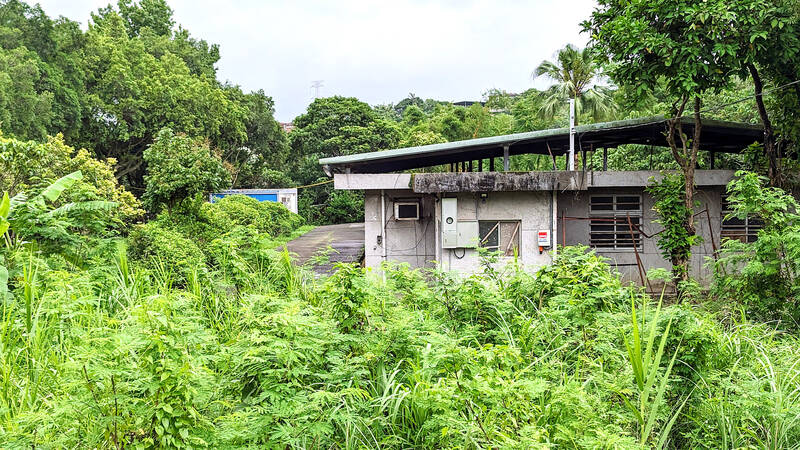
Photo: Han Cheung, Taipei Times
At first glance, there doesn’t appear to be much to do in the largely residential and industrial area — much of the information online details the photo ops with the cute installations at each stop and nearby cafes. But just look a bit harder and you’ll find pieces of interesting history and charming natural scenery.
TEMPLE TREK
After exiting Shuangcheng station, I hang a left up the hill to the Tianmimi (甜蜜蜜) neighborhood, one of the numerous older hillside development projects that sprung up here in the late 1970s and 1980s. One can get a view of the verdant valley and mountains beyond along Hecheng Street (和成街), just across the stream is the sprawling Central Engraving and Printing Plant, where your NT dollars have been printed since 1964.
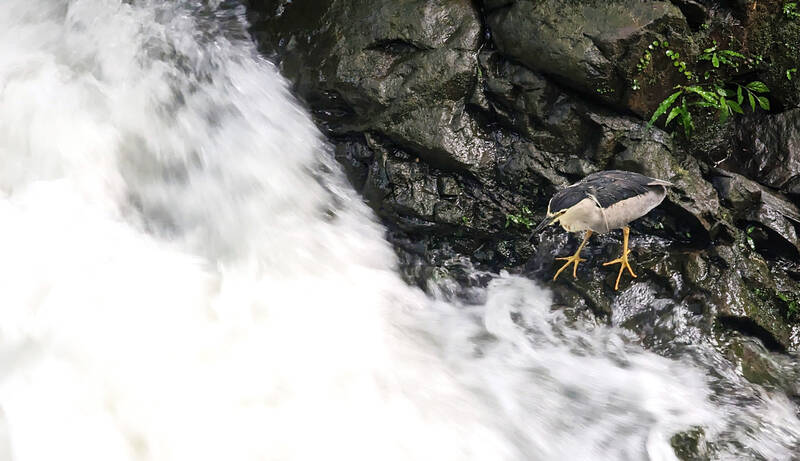
Photo: Han Cheung, Taipei Times
I’m looking for the Ankang Guesthouse (安康招待所), a detention center where political prisoners were housed and interrogated between 1974 and 1987. It fell into disrepair over the decades and was further damaged by flooding and vandals who allegedly made off with various artifacts, according to a Taipei Times editorial. It’s now fenced off and will open to the public in the future as a “historical site of injustice,” but the structure is still visible from Yuhe Street (裕合街).
The detention center was moved here from Sanzhangli (三張犁) in today’s Xinyi District; that area’s population was growing in Taipei and the authorities needed a more inconspicuous spot to carry out their White Terror dirty work.
I turn left at Ankang Road (安康路), the main throughway of the area lined with eateries and industrial facilities, and head on to Runji Temple. The Runji Temple trail begins after the public restroom. The first stretch of it is delightful; it’s relatively undeveloped as the wooden stairs give way to dirt paths with butterflies of all colors and sizes fluttering about. If you’re a novice hiker, turn right when you reach the first wooden pavilion and follow the stone steps back to the temple; the loop should take an hour or less.
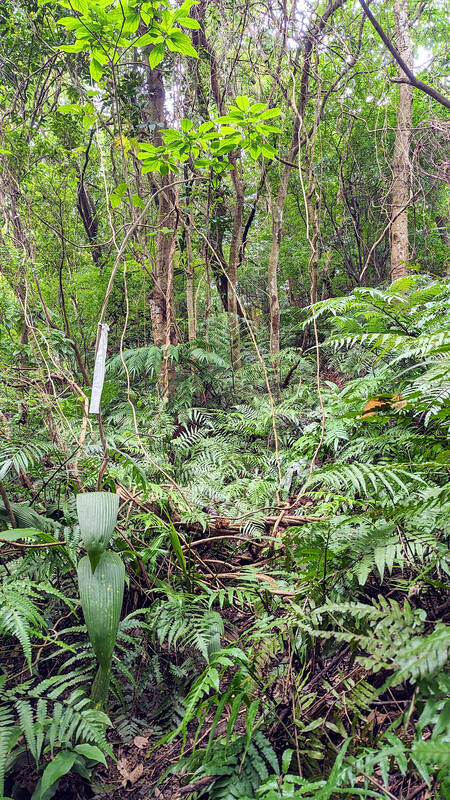
Photo: Han Cheung, Taipei Times
I mosey on to the Damaopu Mountain peak (294m), where the trail gets pretty wild, covered as it is with vegetation with parts that require pulling on ropes and climbing up boulders. The route gets less and less clear, but the yellow and white ribbons help guide my way to the top, a modest grassy clearing without a view. Here is where you really should turn back if you don’t have much trekking experience. Stubborn me insists on continuing on, and there’s barely a path anymore as I become completely reliant on the ribbons and ropes to identify which direction to go in.
This section includes sharp drops and parts where you have to climb over or under fallen logs and clear away obstacles. It only gets more difficult. The only reassurance is a sign pointing toward Runji Temple on a tree. I make it out somehow with just a few scrapes.
TALE OF TWO VILLAGES
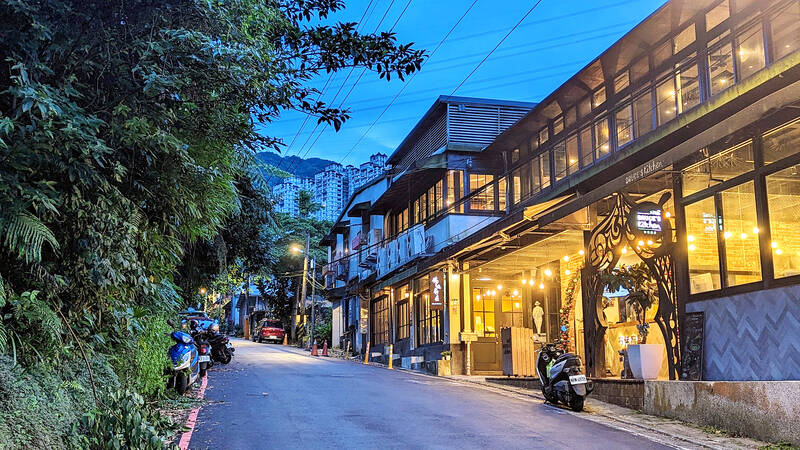
Photo: Han Cheung, Taipei Times
For a more structured hike with pretty vistas, Erbazi Botanical Garden (二叭子植物園) on the other side of the train tracks is a good option. There are three ways to get up the mountain; from Shuangcheng Road (雙城路), the Taipei Xiaocheng (台北小城) community or via Chezi Road (車子路) through the Daguan (達觀) community.
I go up from Shuangcheng Road, a small paved route hugging a stream. Behind some dilapidated buildings on the right are a pottery studio and a cat cafe that seems pretty popular from its online reviews. Both are reservation only and unfortunately I’m allergic to cats. One can hike up to the park via the Changshou Pavilion path (長壽庭) that appears to the left, or continue on the road, where there’s a few scenic viewpoints of spots where the stream turns into waterfalls. I spot a Malayan night heron feeding by the rapids.
The botanical park is pretty built up, but it’s quiet, easily traversable and visitors can learn about the resident flora and fauna. For a post-hike treat, exit the garden from the Daguan Community path, which leads first to Wenshan New Village (文山新村), a one-street former military dependents village housing people from across China, including the Dachen (大陳) islands that were evacuated in 1955.
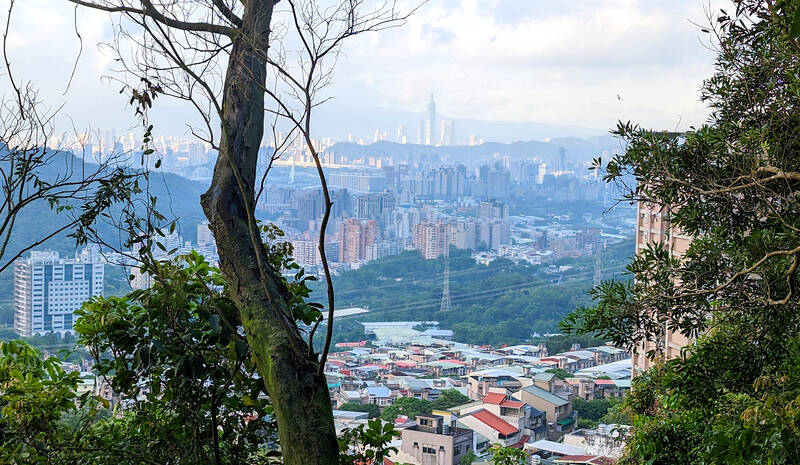
Photo: Han Cheung, Taipei Times
The first section of the street has been completely rebuilt into new residences, trendy coffee shops and the expansive vegetarian Western eatery Bruce’s Kitchen (布佬廚房). Walk further in to get an idea of what the place used to look like, but many of these houses have been upgraded too.
By contrast, the Chezi Road village at the bottom of the hill retains much of its original flavor; a resident feeding his ducks tells me that not much has changed. The twisting and branching lanes make up a confusing maze, purposely designed this way to defend against indigenous people and bandits during the early days of Han settlement.
Between the two villages is a large pond covered with lotus plants. Some of the flowers are in bloom. It’s nothing on the scale of the pond near the Taipei Botanical Gardens, but you pretty much have the whole place to yourself.
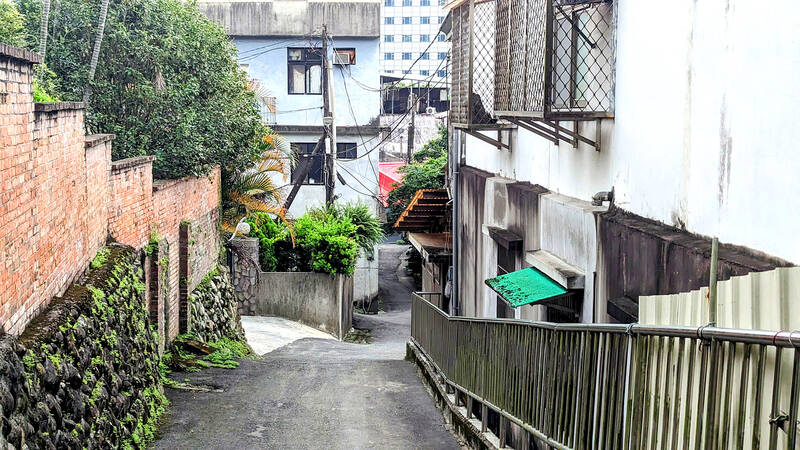
Photo: Han Cheung, Taipei Times
I continue down Chezi Road to reach the Cardinal Tien Hospital Ankang Branch (耕莘安康院區) light rail station, where I head back to Taipei. But I’ll be back to see what else I can find at the light rail’s other stops.
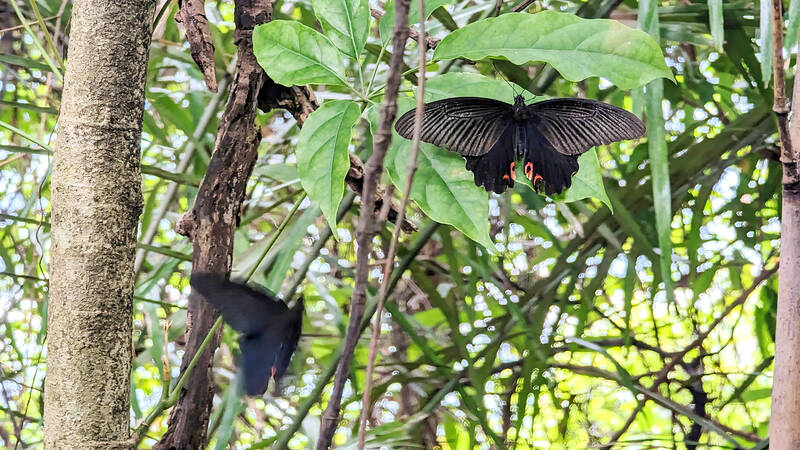
Photo: Han Cheung, Taipei Times

Taiwan’s English education system is being pulled apart by three opposing forces. Bilingual Nation 2030 pulls students toward English and global communication. Artificial Intelligence (AI) readiness pulls them toward digital judgment, verification and AI-mediated work. But Taiwan’s old exam culture pulls them back toward memorization, grammar drills, timed reading and correct answers. If the education system keeps using old exams to define success, it risks producing graduates who are neither genuinely bilingual nor genuinely AI-ready, but trained for tasks machines can already perform. The first force is Bilingual Nation 2030. Launched in 2018, the policy aimed to “help Taiwan’s workforce connect

It seems every few days one bumps into one of those “real man” comments in which Taiwan is urged to “face reality” or similar, and “make a deal,” with the speaker implying that soon it will be too late. “Deal” advocates always present themselves as having a superior grip on reality, and the manly ability to make the “hard choice.” Their testosterone-laden language often echoes that of Taiwan sellout advocates. Note that such commentary always specifies a process (“make a deal, work with, make progress”), never the end state of what occupation by a violent authoritarian colonialist state will entail. In
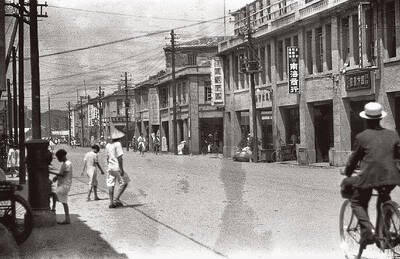
June 1 to June 7 "If all Taiwanese were as afraid of dying as you, then what would happen?” Physician Shih Chiang-nan (施江南) reportedly said this to his wife Chen Chiao-tung (陳焦桐) after she urged him to stop intervening on behalf of Taiwanese soldiers stranded overseas after serving in the Japanese Army during World War II. Shih had clashed with high-ranking officials over the issue, engaged in several heated arguments with Taiwan governor-general Chen Yi (陳儀) and allegedly shouted at general Ko Yuan-fen (柯遠芬), chief of staff of the Taiwan Garrison Command, over

“Taiwan’s Opposition Leader Comes to US With a Message Straight Out of Beijing” read a May 31 headline in the Wall Street Journal. Top US administration officials and members of Congress almost certainly read the WSJ, and if there was a bullet point takeaway that people in Washington should absorb ahead of Chinese Nationalist Party (KMT) Chair Cheng Li-wun’s (鄭麗文) arrival in DC on June 9, that headline is it. The last few columns have discussed this very topic, and the timing is not coincidental. While those top officials likely do not read the Taipei Times, judging by the number


 RSS
RSS