


A man from South Africa speaks Sepedi to a Peruvian woman who knows only Quechua, yet they can understand each other.
The universal translator is a staple of science fiction, but Google, Meta and others are locked in a battle to get as many languages as possible working with their AI models.
Meta chief Mark Zuckerberg announced on Wednesday that his firm now had a block of 200 languages that could be translated into each other, doubling the number in just two years.
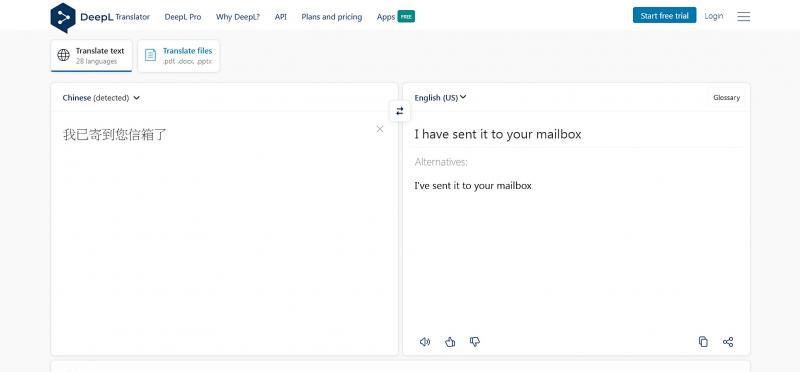
Photo: Screen grab
Meta’s innovation, trumpeted in 2020, was to break the link with English — long a conduit language because of the vast availability of sources.
Instead, Meta’s models go direct from, say, Chinese to French without going through English.
In May, Google announced its own great leap forward, adding 24 languages to Google Translate after pioneering techniques to reduce noise in the samples of lesser-used languages.
Sepedi and Quechua, of course, were among them — so the Peruvian and the South African could now communicate, but so far only with text.
Researchers warn that the dream of a real-time conversation translator is still some way off.
QUALITY VS QUANTITY
Both Google and Meta have business motivations for their research, not least because the more people using their tools, the better the data to feed back into the AI loop. They are also in competition with the likes of Microsoft, which has a paid-for translator, and DeepL, a popular web-based tool that focuses on fewer languages than its rivals.
The challenge of automatic translation is “particularly important” for Facebook because of the hate speech and inappropriate content it needs to filter, researcher Francois Yvon said.
The tool would help English-speaking moderators, for example, to identify such content in many other languages.
Meta’s promotional videos, however, focus on the liberating aspects of the technology — amateur chefs having recipes from far and wide appearing at their fingertips.
But both companies are also at the forefront of AI research, and both accompanied their announcements with academic papers that highlight their ambitions.
The Google paper, titled “Building Machine Translation Systems for the Next Thousand Languages,” makes clear that the firm is not satisfied with the 133 languages it already features on Google Translate.
However, as the cliche goes, quantity does not always mean quality.
EUROPEAN PRIMACY
“We should not imagine that the 200x200 language pairs will be at the same level of quality,” said Yvon of Facebook’s model. European languages, for example, would probably always have an advantage simply because there are more reliable sources.
As regular users of tools such as Google Translate and other automatic program will attest, the text produced can be robotic and mistakes are not uncommon.
While this may not be a problem for day-to-day use of restaurant menus, it does limit the utility of those tools.
“When you’re working on the translation of an assembly manual for a fighter jet, you can’t afford a single mistake,” said Vincent Godard, who runs French tech firm Systran.
And the ultimate nut to crack is inventing a tool that can seamlessly translate the spoken word.
“We’re not there yet, but we’re working on it,” said Antoine Bordes, who runs Fair, Meta’s AI research lab.
He said Meta’s speech translation project works on far fewer languages at the moment.
“But the interest will be in connecting the two projects, so that one day we will be able to speak in 200 languages while retaining intonations, emotions, accents,” he said.
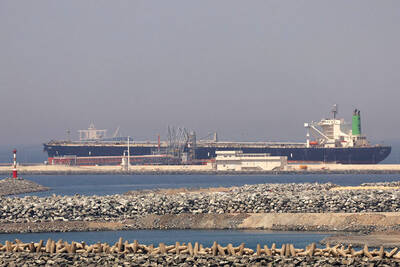
The breakwater stretches out to sea from the sprawling Kaohsiung port in southern Taiwan. Normally, it’s crowded with massive tankers ferrying liquefied natural gas from Qatar to be stored in the bulbous white tanks that dot the shoreline. These are not normal times, though, and not a single shipment from Qatar has docked at the Yongan terminal since early March after the Strait of Hormuz was shuttered. The suspension has provided a realistic preview of a potential Chinese blockade, a move that would throttle an economy anchored by the world’s most advanced and power-hungry semiconductor industry. It is a stark reminder of
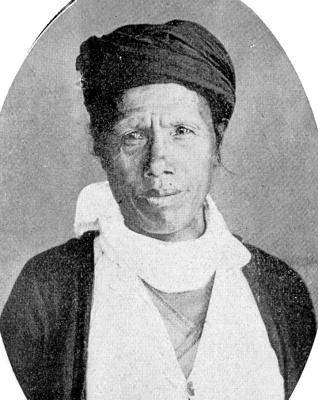
May 11 to May 17 Traversing the southern slopes of the Yushan Range in 1931, Japanese naturalist Tadao Kano knew he was approaching the last swath of Taiwan still beyond colonial control. The “vast, unknown territory,” protected by the “fierce” Bunun headman Dahu Ali, was “filled with an utterly endless jungle that choked the mountains and valleys,” Kano wrote. He noted how the group had “refused to submit to the measures of our authorities and entrenched themselves deep in these mountains … living a free existence spent chasing deer in the morning and seeking serow in the evening,” even describing them as

The last couple of weeks spectators in Taiwan and abroad have been treated to a remarkable display of infighting in the Chinese Nationalist Party (KMT) over the supplementary defense budget. The party has split into two camps, one supporting an NT$800 billion special defense budget and one supporting an NT$380 billion budget with additional funding contingent on receiving letters of acceptance (LOA) from the US. Recent media reports have said that the Taiwan People’s Party (TPP) is leaning toward the latter position. President William Lai (賴清德) has proposed NT$1.25 trillion for purchases of US arms and for development of domestic weapons

As a different column was being written, the big news dropped that Chinese Nationalist Party (KMT) caucus whip Fu Kun-chi (傅?萁) announced that negotiations within his caucus, with legislative speaker Han Kuo-yu (韓國瑜) of the KMT, party Chair Cheng Li-wun (鄭麗文), Taichung Mayor Lu Shiow-yen (盧秀燕) and Taiwan People’s Party (TPP) Chair Huang Kuo-chang (黃國昌) had produced a compromise special military budget proposal. On Thursday morning, prior to meeting with Cheng over a lunch of beef noodles, Lu reiterated her support for a budget of NT$800 or NT$900 billion — but refused to comment after the meeting. Right after Fu’s


 RSS
RSS