


As Taiwan continues to reclaim its suppressed past, there’s been a proliferation of documentaries on notable writers — in this case the legendary author and critic Yeh Shi-tao (葉石濤) — in a bid to bring them back to the national consciousness, especially among young people.
Born in Tainan in 1925, Yeh showed his genius from a young age, publishing his first novel as a teenager. Things went south for him after World War II; as a member of the “translingual generation” he was forced to compose in an unfamiliar language — Mandarin. Additionally, he was thrown in jail for three years 1951 for “harboring communists” during White Terror era.
The ensuing decade was a dark one for Yeh as he struggled to make ends meet after his release, but once he picked up the pen again in 1964, it was full steam ahead until his death in 2008. In addition to depicting the lives of everyday Taiwanese, he was also a sharp literary critic and completed the History of Taiwanese Literature (台灣文學史綱) during a time when local works were still not valued by the government or most scholars.
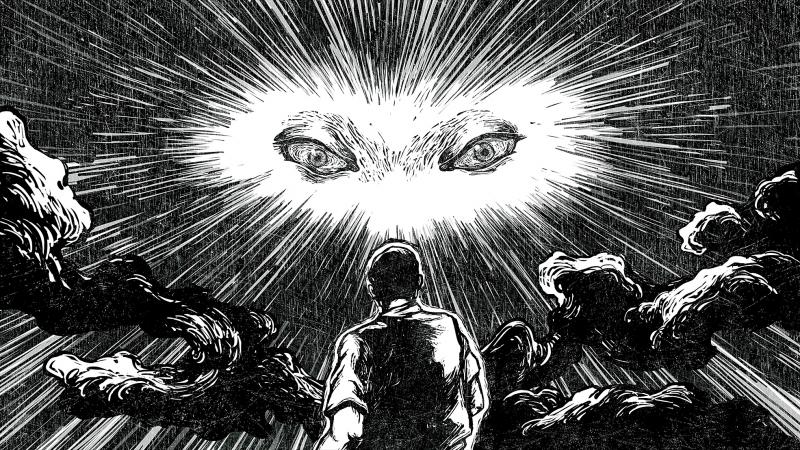
Photo courtesy of Wonder Woods Films
Born in the same year as Taoyuan’s Chung Chao-cheng (鍾肇政), an exemplar of Taiwan’s “nativist literature movement,” the two are often referred together as “Chung of the North, Yeh of the South, 北鍾南葉).
Yeh Shih-tao, A Taiwan Man (台灣男子葉石濤) eschews a linear approach, instead it pieces together Yeh’s life through extensive interviews with more than a dozen friends and family members, and re-interprets his work through modern dance, drama and woodblock-style animations. It’s very ambitious of director Hsu Hui-lin (許卉林) to include so many productions within her production, and the result pays off. The narrative still drifts in a generally chronological direction, so it’s not too confusing.
The film immediately draws in the viewers during the opening scene, with Yeh (played by an actor) sitting at his desk writing, while dancers in pig masks prance around the minimalist stage. They are acting out a scene from his short story Spring Dream at Gourd Alley (葫蘆巷春夢), where a quaint, tiny alley was turned into a smelly, chaotic dump after an old man started a pig-raising craze among the residents. As Yeh continues to narrate the tale, one of the dancers walks over and crams the pig mask over his head.

Photo courtesy of Wonder Woods Films
Other memorable performances include a four-person dance troupe interpreting a violent White Terror arrest scene from The Red Shoes (紅鞋子), while the mostly subdued tones of the film suddenly turn warm and lush as a nude woman sensually gyrates by the beach to encapsulate the mother earth-like sexuality in The Last of the Siraya (西拉雅族的末裔).
These vivid modern interpretations provide a fresh and creative way to tell Yeh’s remarkable life story, but the meat of the information still comes from the interviews.
The most valuable parts are the insights into Yeh’s character and private life, painting a well-rounded picture of this warm, determined character who was so immersed in his craft and mission that he did not know how to do a lot of basic things such as load a stapler. This succession of talking heads gets tedious at times, and there could be more creative scenes to break the monotony — but overall, the film really brings Yeh to life despite him only briefly appearing in old footage. Even those who haven’t read his work should walk out of the theater with a general understanding of what Yeh was trying to express.
One interesting decision is that even though Yeh mostly wrote in Mandarin, his writings are mostly read aloud in his native Hoklo (commonly known as Taiwanese). This can’t be done character-for-character in a meaningful way, and as a result, what’s being read is not Yeh’s original prose, but again a modern-day interpretation of it. Is this taking too much liberty with a deceased master’s work without his permission, or returning his long-denied right to compose in his mother tongue? It’s hard to say.

Taiwan’s English education system is being pulled apart by three opposing forces. Bilingual Nation 2030 pulls students toward English and global communication. Artificial Intelligence (AI) readiness pulls them toward digital judgment, verification and AI-mediated work. But Taiwan’s old exam culture pulls them back toward memorization, grammar drills, timed reading and correct answers. If the education system keeps using old exams to define success, it risks producing graduates who are neither genuinely bilingual nor genuinely AI-ready, but trained for tasks machines can already perform. The first force is Bilingual Nation 2030. Launched in 2018, the policy aimed to “help Taiwan’s workforce connect
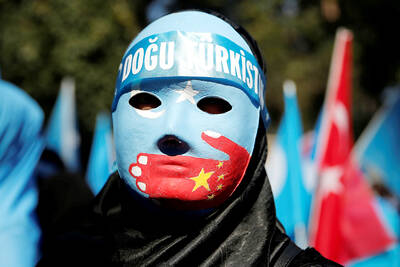
It seems every few days one bumps into one of those “real man” comments in which Taiwan is urged to “face reality” or similar, and “make a deal,” with the speaker implying that soon it will be too late. “Deal” advocates always present themselves as having a superior grip on reality, and the manly ability to make the “hard choice.” Their testosterone-laden language often echoes that of Taiwan sellout advocates. Note that such commentary always specifies a process (“make a deal, work with, make progress”), never the end state of what occupation by a violent authoritarian colonialist state will entail. In
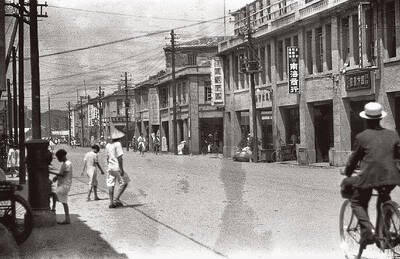
June 1 to June 7 "If all Taiwanese were as afraid of dying as you, then what would happen?” Physician Shih Chiang-nan (施江南) reportedly said this to his wife Chen Chiao-tung (陳焦桐) after she urged him to stop intervening on behalf of Taiwanese soldiers stranded overseas after serving in the Japanese Army during World War II. Shih had clashed with high-ranking officials over the issue, engaged in several heated arguments with Taiwan governor-general Chen Yi (陳儀) and allegedly shouted at general Ko Yuan-fen (柯遠芬), chief of staff of the Taiwan Garrison Command, over

“Taiwan’s Opposition Leader Comes to US With a Message Straight Out of Beijing” read a May 31 headline in the Wall Street Journal. Top US administration officials and members of Congress almost certainly read the WSJ, and if there was a bullet point takeaway that people in Washington should absorb ahead of Chinese Nationalist Party (KMT) Chair Cheng Li-wun’s (鄭麗文) arrival in DC on June 9, that headline is it. The last few columns have discussed this very topic, and the timing is not coincidental. While those top officials likely do not read the Taipei Times, judging by the number


 RSS
RSS