


I usually get lost in long documentaries that stitch together numerous storylines, characters and artistic elements without much of a direct plot, but Chen Hui-ling (陳慧齡) does it just right in Letter to A’ma (給阿媽的一封信), which took her 10 years to make.
The editing is superb, melding everything into a poignant and layered composition that’s enjoyable and illuminating to watch without having to fully follow every subject and catch every bit of information. In place of a gripping narrative is a powerful emotional buildup that slowly draws the viewer in and hits hard later. It’s not difficult to see why it was nominated for Best Documentary in last year’s Golden Horse Film Festival.
Featuring young people trying to understand the experiences of their grandparents through interviews, writing, art and music, Letter to A’ma is a beautiful and compelling ode to those who went through Taiwan’s turbulent past and lived on to share their memories, no matter how painful.
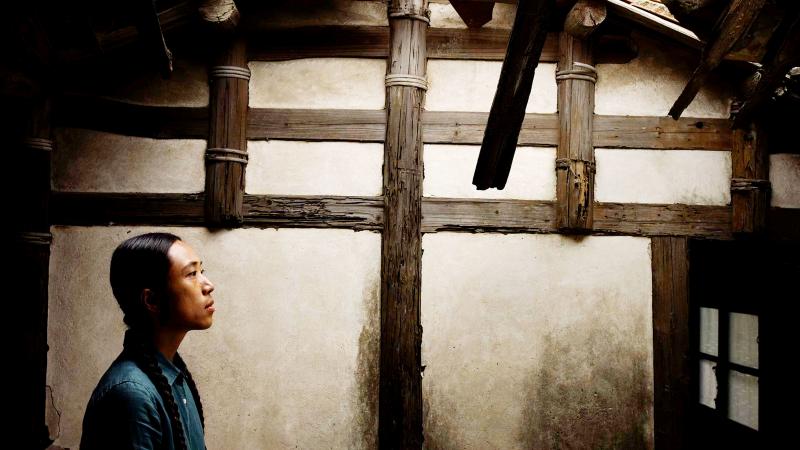
Photo courtesy of sky digi entertainment
Due to the political climate, the grimier parts of Taiwanese history were rarely discussed at the dinner table or taught in schools. Chen is seen in the film leading her “The Island’s Collective Memories Project” (島嶼的集體記憶計畫) classes in various schools, where students ask their grandparents questions, present their findings and create drawings based on their impressions.
Chen never got to do this herself, and the stories are interspersed with images of her reading a poem to her deceased grandmother: I can’t seem to be able to see you, so I can only try to view you through other people’s eyes, she says in one line.
But as the film goes on, it’s evident that the purpose of this exercise goes beyond just getting to know one’s grandparents. It’s about trying to patch together these buried memories from different groups in Taiwan — Hoklo, Hakka, indigenous or mainlander — and creating a deeper understanding of the nation as a collective whole.
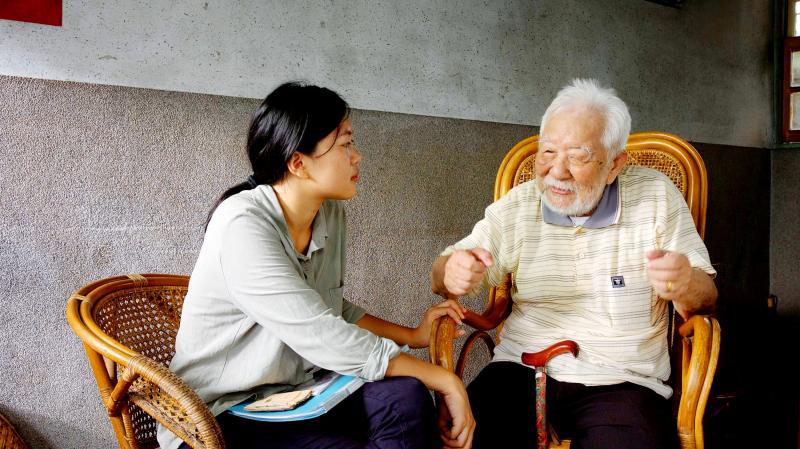
Photo courtesy of sky digi entertainment
We Taiwanese are like bats, one indigenous grandpa says, referring to Aesop’s The Bats, Birds and Beasts. But unlike the opportunistic bat in the fable, they never really had a choice of who to side with as the nation passed through the often-brutal hands of various rulers.
In addition to the numerous student presentations, Chen also does a deep dive on six adult subjects. Their unique tales are also chopped up and dispersed throughout the film, with some more memorable than others, but collectively they provide a strong backbone that binds together the other bits and pieces.
Chen employs an extremely layered and complex approach, adding long shots, color shifts and seamlessly overlapping images and voices to her cinematic collage. The scenes start from basic interviews but build up into performances within performances as the subjects recreate their grandparents’ experiences: one man rebuilds a cramped brick chamber where his elderly interviewee hid his Communist brother from the authorities for 12 years, while another woman visits Shenyang, China where her grandfather worked when it was under Japanese occupation.
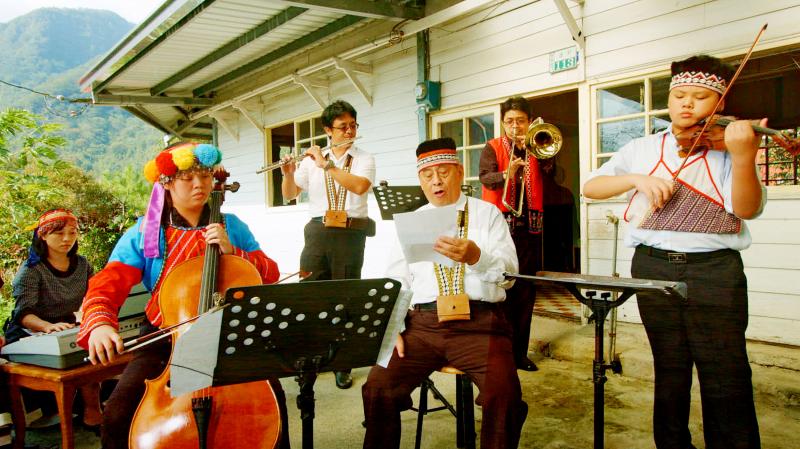
Photo courtesy of sky digi entertainment
In one sequence, it’s the grandmother — whose husband, brother-in-law and father-in-law were executed in the aftermath of the 228 Incident — who is painting a picture with the words “freedom” in the center.
A more elaborate scene features the descendants of indigenous Tsou White Terror victim Uyongu Yata’uyungana getting together to play an orchestral piece that he wrote. While they set up their instruments, Uyongu’s son, the grandfather who is interviewed in the film, copies Uyongu’s final letter to his wife before he was put to death in 1954. Finally, the scene of him reading it aloud is juxtaposed with him singing the song with his family.
It’s hard to sum up all the intricacies of this film as different components keep coming to mind. Just go watch it when it comes out.
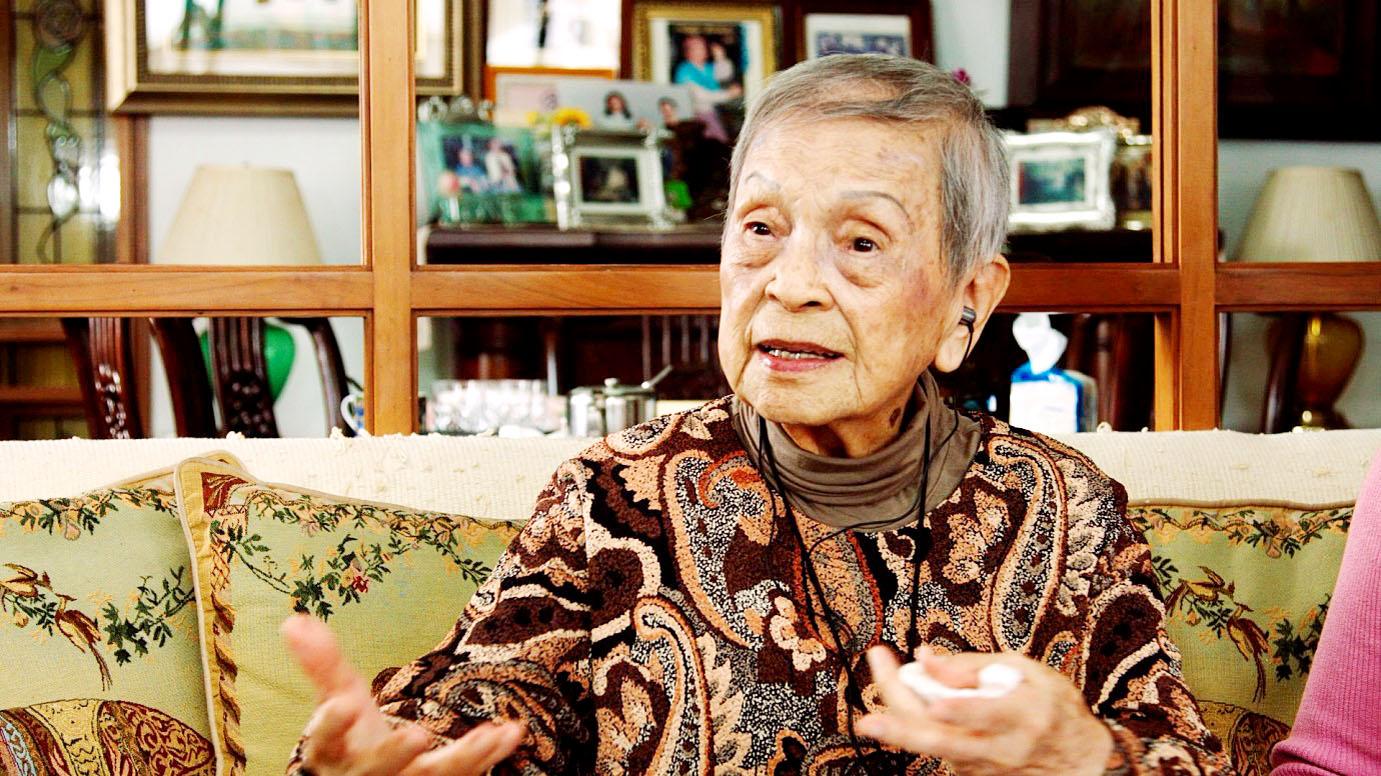
Photo courtesy of sky digi entertainment

Yesterday, the Democratic Progressive Party (DPP) nominated legislator Puma Shen (沈伯洋) as their Taipei mayoral candidate, the Chinese Nationalist Party (KMT) put their stamp of approval on Wei Ping-cheng (魏平政) as their candidate for Changhua County commissioner and former legislator Tsai Pi-ru (蔡壁如) of the Taiwan People’s Party (TPP) has begun the process to also run in Changhua, though she has not yet been formally nominated. All three news items are bizarre. The DPP has struggled with settling on a Taipei nominee. The only candidate who declared interest was Enoch Wu (吳怡農), but the party seemed determined to nominate anyone

In a sudden move last week, opposition lawmakers of the Chinese Nationalist Party (KMT) and Taiwan People’s Party (TPP) passed a NT$780 billion special defense budget as a preemptive measure to stop either Chinese leader Xi Jinping (習近平) or US President Donald Trump from blocking US arms sales to Taiwan at their summit in Beijing, said KMT heavyweight Jaw Shaw-kong (趙少康), speaking to the Taipei Foreign Correspondents Club on Wednesday night in Taipei. The 76-year-old Jaw, a political talk show host who ran as the KMT’s vice presidential candidate in 2024, says that he personally brokered the deal to resolve
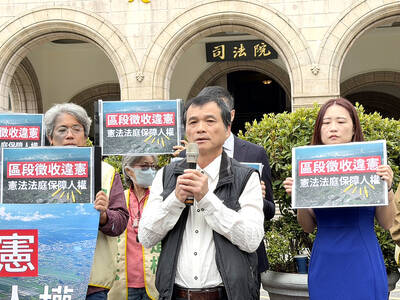
What government project has expropriated the most land in Taiwan? According to local media reports, it is the Taoyuan Aerotropolis, eating 2,500 hectares of land in its first phase, with more to come. Forty thousand people are expected to be displaced by the project. Naturally that enormous land grab is generating powerful pushback. Last week Chen Chien-ho (陳健和), a local resident of Jhuwei Borough (竹圍) in Taoyuan City’s Dayuan District (大園) filed a petition for constitutional review of the project after losing his case at the Taipei Administrative Court. The Administrative Court found in favor of nine other local landowners, but
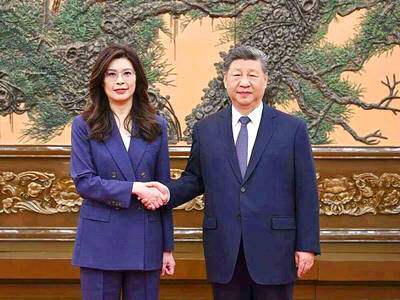
The Chinese Nationalist Party (KMT), alongside their smaller allies the Taiwan People’s Party (TPP), are often accused of acting on behalf of the Chinese Communist Party (CCP). Some go so far as to call them “traitors.” It is not hard to see why. They regularly pass legislation to stymie the normal functioning of the ruling Democratic Progressive Party’s (DPP) administration, and they have yet to pass this year’s annual budget. They slashed key elements of the government’s proposed NT$1.25 trillion (US$40 billion) special military budget, and in the smaller NT$780 billion package they did pass, it is riddled with provisions that


 RSS
RSS