


For a meandering, slice-of-life film that doesn’t have a strong narrative, there’s something alluring about Eagle Hand (老鷹之手), which managed to keep my attention for its 103 minutes.
The story of aging lotus farmers in Chiayi’s Niutoushan (牛斗山) is definitely one worth telling. Toiling tirelessly in the expansive fields, these farmers all have “eagle hands” — swollen and bent from decades of digging up the 30cm to 40cm deep roots. Niutoushan was once the top lotus producing area in Taiwan with more than 100 households involved in the trade, but today there are only 27 left as young people are unwilling to take on such grueling work.
Having grown up in the village, director Lai Li-chun (賴麗君) is able to get quite an intimate, up-close view of a few of the remaining farmers. Although she still had to gain their trust, having lived outside the community for over two decades, her familiarity with the place and its people is evident. The subjects, including the rare young farmhand, are very candid and likeable, and there’s a warmth to their interviews that’s upbeat and moving.
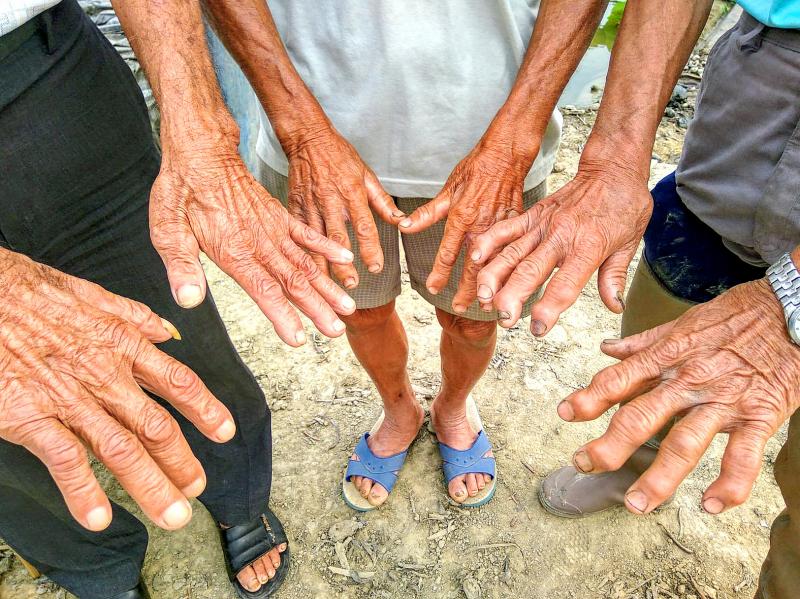
Photo courtesy of Sky Digi Entertainment
That, along with the captivating, lush scenery and detailed shots of lotus harvesting and processing, make the film a soothing experience despite a lot of it being repetitive. Lai guides the audience through a whole year of life in Niutoushan (stitched together from three years of filming), painting a comprehensive picture that explains the rise and decline of the industry and hardships of the farmers.
The movie works well visually because presumably very few people in Taiwan have the chance to see this fascinating process in such a detailed manner. However, a truly compelling documentary requires a more unique angle. The problem is that rural flight and dying traditions are common across Taiwan. Besides the mangled hands, which make up the main visuals of the attractive promotional material, Lai doesn’t do much to set the narrative apart from what countless other farming communities suffer from.
There’s little conflict or tension in the film outside the fact that the industry is dying, and although the farmers do face challenges such as price crashes and inclement weather, it’s more or less a flat, straight-up depiction of their plight. Too much screen time is devoted to the mundane daily scenes, which are indeed beautiful and moving, but could definitely be cut down for tighter storytelling.
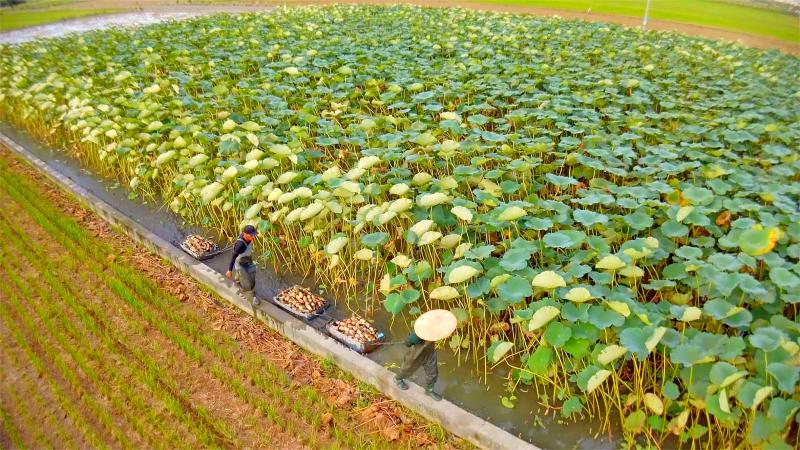
Photo courtesy of Sky Digi Entertainment
Nevertheless, rural decline is still an important challenge that rapidly aging Taiwan faces today. Lai presents the issue to the audience in an enjoyable manner, yet do the farmers have a future? Will Niutoushan’s lotus fields eventually disappear?
The film does feature some younger farmers, including a half-Indonesian teenager who is still finding his way in this world, and his more business-minded, middle-aged boss, who seems to be doing better than everyone else even after the price crash. We also hear from the bosses wife, who does farmwork wearing fake nails and eyelashes and proclaims that she “loves money more than anything else.”
These people did not grow up farming and chose to enter the profession later in life — a trend followed by young people tired of eking out a living in the city. But where do they fit in with the industry’s future? There’s something intriguing there that could have been explored further without taking anything away from the older, traditional farmers. After all, they’re the ones with the eagle hands; modern techniques have made it unnecessary for farmers to dig with their hands anymore.
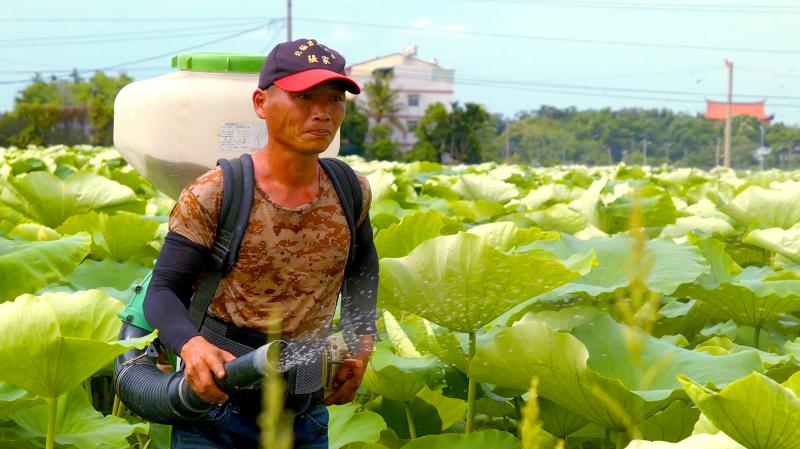
Photo courtesy of Sky Digi Entertainment
Eagle Hand does its job as an attention-getting introduction to the plight of Niutoushan and its lotus fields, and perhaps there could be a shorter follow-up that takes a deeper look at the future of the industry and how younger farmers are using modern ideas to stay afloat.
According to press interviews, Lai plans to move back to help revitalize the industry, and it would be interesting to see what this endeavor yields.

Taiwan’s English education system is being pulled apart by three opposing forces. Bilingual Nation 2030 pulls students toward English and global communication. Artificial Intelligence (AI) readiness pulls them toward digital judgment, verification and AI-mediated work. But Taiwan’s old exam culture pulls them back toward memorization, grammar drills, timed reading and correct answers. If the education system keeps using old exams to define success, it risks producing graduates who are neither genuinely bilingual nor genuinely AI-ready, but trained for tasks machines can already perform. The first force is Bilingual Nation 2030. Launched in 2018, the policy aimed to “help Taiwan’s workforce connect

It seems every few days one bumps into one of those “real man” comments in which Taiwan is urged to “face reality” or similar, and “make a deal,” with the speaker implying that soon it will be too late. “Deal” advocates always present themselves as having a superior grip on reality, and the manly ability to make the “hard choice.” Their testosterone-laden language often echoes that of Taiwan sellout advocates. Note that such commentary always specifies a process (“make a deal, work with, make progress”), never the end state of what occupation by a violent authoritarian colonialist state will entail. In

There are shadowy cabals plotting to sell out Taiwan to be annexed by China, by invasion if necessary. Fortunately, they are buffoons. In 2019, former Bamboo Union gangster and founder of the China Unification Promotion Party (CUPP), Chang An-le (張安樂, colorfully known as “White Wolf”), led a protest at the Legislative Yuan against comments made by then-premier Su Tseng-chang (蘇貞昌) that in the event of an attack by China, he would never surrender, but would protect the nation by fighting to the end, even if he only had a broom. Chang had party members bring a wooden casket that they
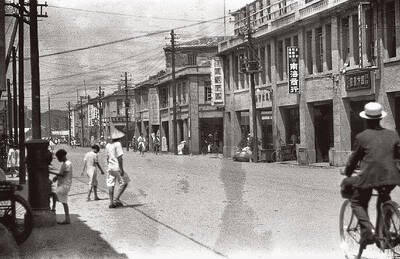
June 1 to June 7 "If all Taiwanese were as afraid of dying as you, then what would happen?” Physician Shih Chiang-nan (施江南) reportedly said this to his wife Chen Chiao-tung (陳焦桐) after she urged him to stop intervening on behalf of Taiwanese soldiers stranded overseas after serving in the Japanese Army during World War II. Shih had clashed with high-ranking officials over the issue, engaged in several heated arguments with Taiwan governor-general Chen Yi (陳儀) and allegedly shouted at general Ko Yuan-fen (柯遠芬), chief of staff of the Taiwan Garrison Command, over


 RSS
RSS