


Ciron Seneres is a Filipino artist who is inspired by Manila’s slums. Focusing on cityscapes that are often neglected or regarded as messy or dirty, he creates photorealistic paintings with tight compositions and a monochromatic palette. Although he draws from the chaos of urban environments, there is a sense of calmness to his paintings, says Taipei gallery Nunu Fine Art, where his solo exhibition Unintentional Forming Objects (UFO, 無意識形成物) is currently being held. The gallery describes his interpretation of Manila as a contemplation of the rapid urbanization that has not only happened in the Philippines but across different Asian cities. These cities share the same problems of wealth inequality, rapid population growth — all with a cyberpunk aesthetic.
■ Nunu Fine Art (路由藝術), 5, Ln 67, Jinshan S Rd Sec 1, Taipei City (台北市金山南路一段67巷5號), tel: (02) 3322-6207. Open Wednesdays to Sundays from noon to 7pm
■ Until Sept. 8

Photo courtesy of Tina Keng Gallery
Organized by the National Taiwan Museum of Fine Arts (國立臺灣美術館), The Variations of Formations (玩形變奏曲) is a group exhibition about form. Form, as a fundamental concept of art, can be discussed through various mediums, styles, patterns and textures, says the museum. It can give shape to an idea and order to an artistic expression. The show presents different approaches to form as demonstrated by selected works from the museum’s permanent collection. There is a sense of artistic playfulness in the show, as well as an appreciation for the diverse pursuits of beauty and aesthetics. Exhibition highlights include works from the late Lee Hsi-chi (李錫奇), a member of Ton Fan Art Group (東方畫會) who was known for his abstract compositions and rhythmic contours; works by Lee Yu-chen (李育貞), a young painter who deconstructs and reassembles personal memories; and contemporary interpretations of landscape (山水, shanshui or “mountain water”) paintings by Taiwanese artist Yuan Jai (袁旃).
■ 1F Gallery, Ministry of Culture, Xinzhuang Joint Office Tower, Executive Yuan (行政院新莊聯合辦公大樓南棟1樓文化部藝廊), South Building, 439 Jhongping Rd, Sinjhuang District, New Taipei City (新北市新莊區中平路439號南棟), tel: (02) 8512-6000. Opens daily from 9am to 5pm
■ Until Sept. 22
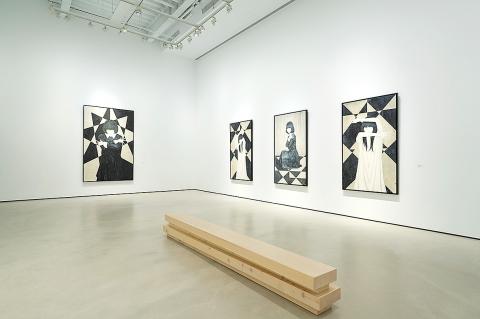
Photo Courtesy of Whitestone Gallery
Museum of Contemporary Art Taipei (台北當代藝術館) presents Why Did You Come to Taiwan? (台灣!我來了), an exhibition that describes itself as an experimental site for discussion on issues surrounding decolonization. Since the 16th Century, Taiwan has had its fair share of foreign occupiers who have introduced various cultural influences. The title is from a quote by Salvador Diaz, a historical figure from the 17th century who served for the Dutch as a translator. According to curator Cheng Shao-hung (程少鴻), Diaz’s simple question serves as a starting point for the show to explore identities, ethnicities and relationships that are involved in Taiwan’s history of colonialism. Spanish-Welsh artist Rafael Perez Evans creates installations that raise questions about knowledge systems, ethnographies and ideas related to progress. His VR project, The Devil’s Bird, Ornithomancy, immerses the viewer in a narrative set in the 17th century that involves conflicts between the Spanish missionaries and Taiwanese Aborigines. Henrielle Baltazar Pagkaliwangan is a Fiipino artist whose work draws from the connection between natural history and human civilization.
■ Museum of Contemporary Art, Taipei (台北當代藝術館, MOCA, Taipei), 39, Changan W Rd, Taipei City (台北市長安西路39號), tel: (02) 2559-6615. Open Tuesdays to Sundays from 10am to 6pm
■ Until Sept. 29
Allure: Portrait (汝色: 肖像展) is a three-person exhibition of portrait paintings inspired by art history. Drawing from classic art movements such as the Renaissance and the Pre-Raphaelites, artists create their own interpretations with unique sensibilities and ideas of beauty. Japanese artist Yu Kawashima creates monochromatic works featuring emotionally distant human figures. Fabio Modica is a painter from Italy who is interested in the idea of human topography. His work depicts faces and bodies, often in an abstract manner. For Modica, painting is a process of expanding the self awareness. Israeli artist Yigal Ozeri creates portraits that explore notions of femininity. He is best known for large-scale photographs of young women standing against rich, scenic landscapes.
■ White Stone Gallery (白石畫廊), 1 Jihu Rd, Taipei City (台北市基湖路1號), tel: (02) 8751-1185. Opens Tuesdays to Sundays from 11am to 9pm.
■ Until Aug. 18
The late painter Wang Pan-Youn (王攀元) was a pivotal figure in Taiwanese modern art history. Wang moved to Taiwan from China in 1949 and began to garner attention after he co-founded the Lanyang Painting Association in 1961. A retrospective of his works, The Realm of Solitude (寂盡之境), is now on view at Tina Keng Gallery, which chronicles Wang’s life from his early struggles to his later years of contentment. His works are marked by a distinct feeling of melancholy and solitude, says the gallery, which suggests his tumultuous life of displacement and personal loss. His paintings often portrayed minimal compositions of solitary animals, figures, boats and houses. “This poignant aesthetics of solitude reflects not only the artist’s personal experience, but a fragment of collective memory.”
■ Tina Keng Gallery (耿畫廊), 15, Ln 548, Ruiguang Rd, Taipei City (台北市瑞光路548巷15號B1), tel: (02) 2659-0798. Open Tuesdays to Sundays from 11am to 7pm
■ Until Aug. 18
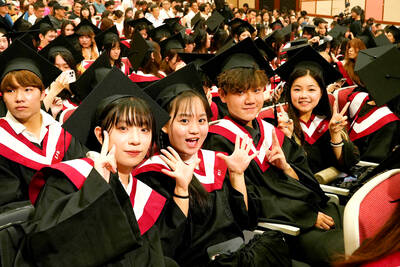
Taiwan’s English education system is being pulled apart by three opposing forces. Bilingual Nation 2030 pulls students toward English and global communication. Artificial Intelligence (AI) readiness pulls them toward digital judgment, verification and AI-mediated work. But Taiwan’s old exam culture pulls them back toward memorization, grammar drills, timed reading and correct answers. If the education system keeps using old exams to define success, it risks producing graduates who are neither genuinely bilingual nor genuinely AI-ready, but trained for tasks machines can already perform. The first force is Bilingual Nation 2030. Launched in 2018, the policy aimed to “help Taiwan’s workforce connect
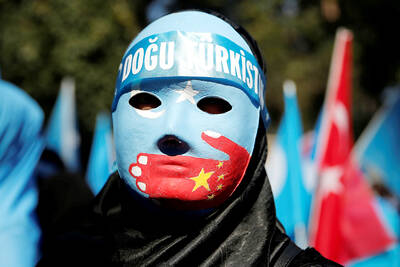
It seems every few days one bumps into one of those “real man” comments in which Taiwan is urged to “face reality” or similar, and “make a deal,” with the speaker implying that soon it will be too late. “Deal” advocates always present themselves as having a superior grip on reality, and the manly ability to make the “hard choice.” Their testosterone-laden language often echoes that of Taiwan sellout advocates. Note that such commentary always specifies a process (“make a deal, work with, make progress”), never the end state of what occupation by a violent authoritarian colonialist state will entail. In
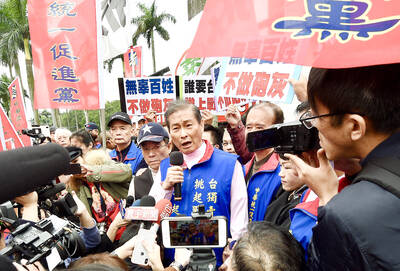
There are shadowy cabals plotting to sell out Taiwan to be annexed by China, by invasion if necessary. Fortunately, they are buffoons. In 2019, former Bamboo Union gangster and founder of the China Unification Promotion Party (CUPP), Chang An-le (張安樂, colorfully known as “White Wolf”), led a protest at the Legislative Yuan against comments made by then-premier Su Tseng-chang (蘇貞昌) that in the event of an attack by China, he would never surrender, but would protect the nation by fighting to the end, even if he only had a broom. Chang had party members bring a wooden casket that they
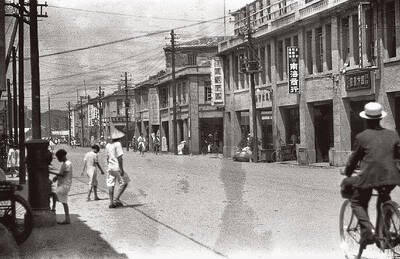
June 1 to June 7 "If all Taiwanese were as afraid of dying as you, then what would happen?” Physician Shih Chiang-nan (施江南) reportedly said this to his wife Chen Chiao-tung (陳焦桐) after she urged him to stop intervening on behalf of Taiwanese soldiers stranded overseas after serving in the Japanese Army during World War II. Shih had clashed with high-ranking officials over the issue, engaged in several heated arguments with Taiwan governor-general Chen Yi (陳儀) and allegedly shouted at general Ko Yuan-fen (柯遠芬), chief of staff of the Taiwan Garrison Command, over


 RSS
RSS