


Synchronic Constellation — Le Moulin Poetry Society and its Time: A Cross-Boundary Exhibition (共時的星叢:「風車詩社」與跨界域藝術時代) is a retrospective of exchanges between modernist literature and art in the Western world and Asia at the beginning of the 20th century. In particular, the show casts a spotlight on Le Moulin Poetry Society (風車詩社), a group of surrealist-inspired Japanese and Taiwanese poets who were active in Taiwan in the 1930s. Working in the cultural climate of the Japanese colonial era, Le Moulin Poetry Society was a robust force in intellectual circles, whose members drew from their studies of Western culture while studying abroad in Japan. Although short-lived, the association was revived in the 1970s, which prompted a wave of discussions regarding Taiwanese pre-war art as well as art produced during World War II. The show includes original works, reproductions, documents and multimedia installations that integrate contemporary means of expression with the presentation of archival material. Curators Huang Ya-li (黃亞歷), Sun Sung-jung (孫松榮) and Kunio Iwaya describe Le Moulin Poetry Society as an important point in Taiwanese cultural production intricately connected to the cultural pulse of Europe, the US, Japan and Korea at the time.
■ National Taiwan Museum of Fine Arts (國立台灣美術館), 2, Wuquan W Rd Sec 1, Taichung City (台中市五權西路一段2號), tel: (04) 2372-3552. Open Tuesdays to Fridays from 9am to 5pm, Saturdays and Sundays from 9am to 6pm
■ Until Sep. 15
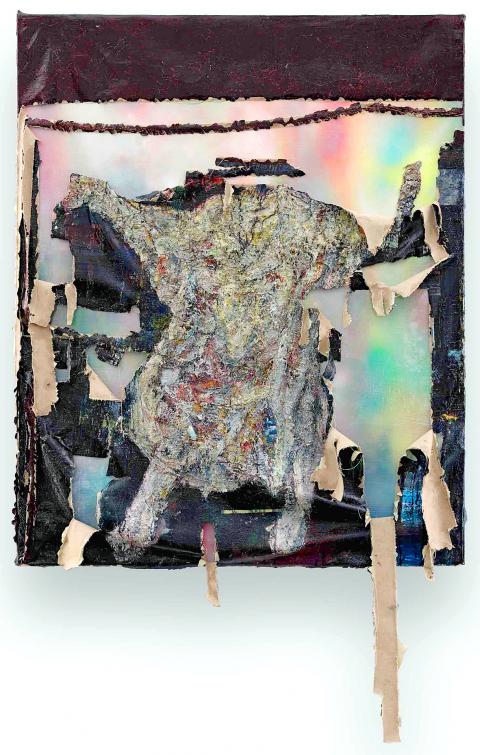
Photo courtesy of Galerie OVO
The Expressive Significance of Brush and Ink: Selections from the History of Chinese Calligraphy (筆墨見真章 — 歷代書法選萃) at the National Palace Museum is an informative exhibition chronicling the development of Chinese calligraphy since antiquity. Whether as a tool for communication or an aesthetic practice, calligraphy has played a major part in Chinese culture. Oracle bone script found on artifacts from the 13th century BC — carved on animal bones as messages of divination — is the earliest form of Chinese writing. By the Shang Dynasty, a new style called the bronze script had developed for inscriptions on ritual objects; while by the Song Dynasty, the art of writing had matured into a creative practice performed by the literati. The show offers a range of artifacts from the museum collection, including many examples of writing from the Qing Dynasty and Republican period. Highlights include Calligraphy Model Books of the Imperial Summer Palace (清避暑山莊法帖二), a compilation of rubbings based on the writings of Emperor Kangxi (康熙). Kangxi, posthumously known as Shengzu (聖祖), was known for his passion for calligraphy, even establishing a special palace department devoted to making engravings and rubbings from imperial writings.
■ National Palace Museum (國立故宮博物院), 221, Zhishan Rd Sec 2, Taipei City (台北市至善路二段221號), tel: (02) 2881-2021. Open daily from 8:30am to 6:30pm; closes at 9pm on Fridays and Saturdays
■ Until Sep. 25
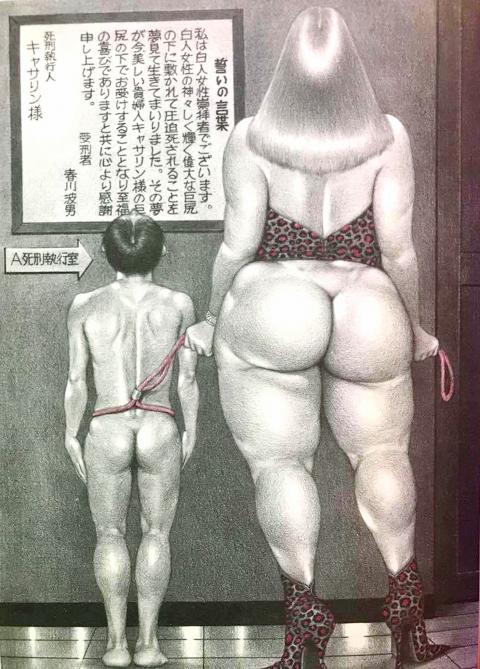
Photo courtesy of Mangasick
The Flesh Mass (肉禮拜) is a solo exhibition and visual feast of human flesh by the renowned Japanese illustrator Namio Harukawa — an Osaka-based artist who invented his pseudonym by combining the names of Japanese actress Masumi Harukawa and the female protagonist in a novel by Japanese writer Junichiro Tanizaki. His works depict erotic scenes of female supremacy that often feature men in bondage and in the service of voluptuous women. Harukawa published his first drawings at the age of 15 and continues his narrative of female empowerment today at the age of 72, having amassed a cult following over the years. The Incredible Femdom Art of Namio Harukawa is a new monograph with a generous compilation of works spanning his career. In one of the drawings, an almost-naked woman with leopard-print high heels stands beside a lean man half her height, as both read a manifesto about erotic adoration.
■ Mangasick, B1, 2, Alley 10, Ln 244, Roosevelt Rd Sec 3, Taipei City (台北市羅斯福路三段244巷10弄2號B1), tel: (02) 2369-9969. Open Thursdays to Mondays from 2pm to 10pm
■ Until Aug. 4
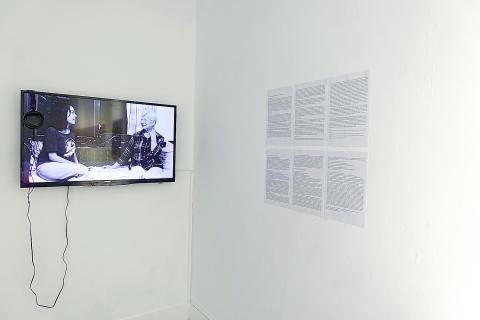
Photo courtesy of Waley Art
Born in 1990, Lin I-hsuan (林弈軒) is representative of a generation of artists who have learned about experimental and avant-garde art through the Internet. These references affect his creative process and the kind of audience to whom his works are directed. Lin’s solo show Non-transferable Dirty Stories (非重述穢物語), currently on view at Galerie OVO, features a selection of his recent videos, paintings and images. The gallery writes that the artist’s visual framework reflects a way of thinking and feeling in society today. The title of the show reads like a statement about Lin’s method of making creative decisions through acts of negation — his works tell stories through dissected animal bodies, rotten matter, beehives, cemeteries, nude figures and wild landscapes. Lin uses colors freely, combining muddy and vibrant hues to mix the ugly and the beautiful, writes fellow artist Su Yin-chen (蘇盈蓁) in a commentary. The artist himself says: “Through accepted means, I seek to make visible things that are considered unwelcome.”
■ Galerie OVO, 51, Dehui St, Taipei City (台北市德惠街51號), tel: (02) 2591-5296. Open Tuesdays to Saturdays from 1pm to 7pm
■ Until July 20
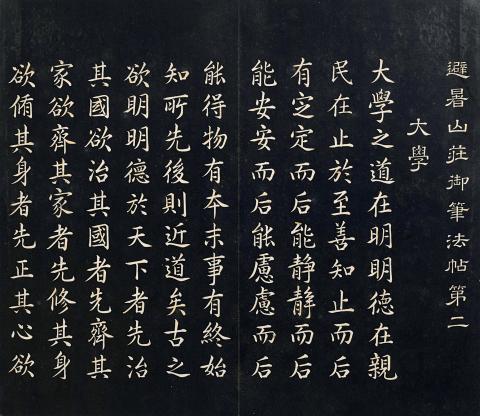
Photo courtesy of National Palace Museum
Peripheralized People: Solastalgia Between Taiwan and Nepal III (邊陲人: 台灣與尼泊爾鄉憂系列計畫iii) is a group exhibition showing at Waley Art. Two participating Nepalese artists spent time in Taiwan on an exchange program between the gallery and NexUs Culture Nepal, an art activism space in Kathmandu, exploring concepts of global immigration and gender identity. Mekha Bahadur Limbu Subba is a cross-disciplinary artist whose recent works touch upon issues surrounding migrant workers and how national policies affect the lives of the workers’ families. His video series How I Forgot My Mother Tongue was made here and includes an interview with elderly women who were educated during the Japanese colonial era. Keepa Maskey often works with textiles — a talent that may have been passed down from her grandmother, according to the gallery. Dripping Bodies is a wall-hung sculpture made of various types of soft cloth mediating her observations of Taiwanese society. The third participating artist, Art and Disaster, is a team of six South Korean artists who have spent time in disaster areas in Kathmandu in hopes of bringing relief to the community through the healing power of art.
■ Waley Art (水谷藝術), 6, Ln 322, Wanda Rd, Taipei City (台北市萬大路322巷6號), tel: (02) 2301-1821. Open daily from 12 noon to 7:30pm
■ Until July 28
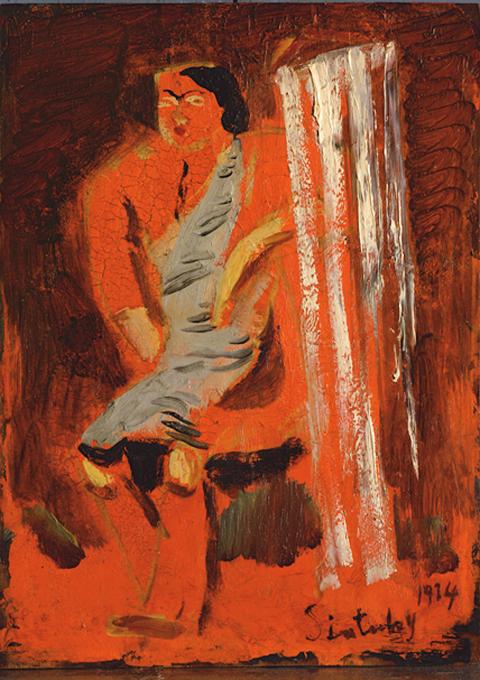
Photo courtesy of National Taiwan Museum of Fine Arts
Taiwan’s English education system is being pulled apart by three opposing forces. Bilingual Nation 2030 pulls students toward English and global communication. Artificial Intelligence (AI) readiness pulls them toward digital judgment, verification and AI-mediated work. But Taiwan’s old exam culture pulls them back toward memorization, grammar drills, timed reading and correct answers. If the education system keeps using old exams to define success, it risks producing graduates who are neither genuinely bilingual nor genuinely AI-ready, but trained for tasks machines can already perform. The first force is Bilingual Nation 2030. Launched in 2018, the policy aimed to “help Taiwan’s workforce connect
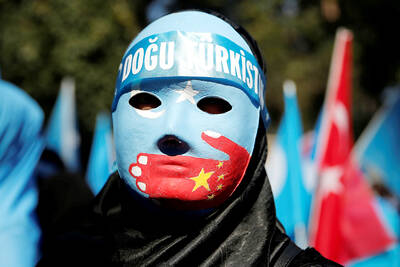
It seems every few days one bumps into one of those “real man” comments in which Taiwan is urged to “face reality” or similar, and “make a deal,” with the speaker implying that soon it will be too late. “Deal” advocates always present themselves as having a superior grip on reality, and the manly ability to make the “hard choice.” Their testosterone-laden language often echoes that of Taiwan sellout advocates. Note that such commentary always specifies a process (“make a deal, work with, make progress”), never the end state of what occupation by a violent authoritarian colonialist state will entail. In
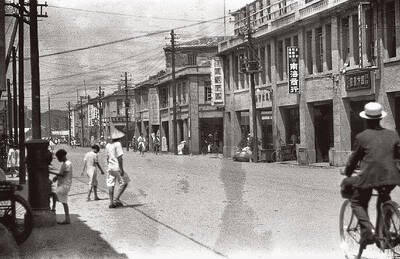
June 1 to June 7 "If all Taiwanese were as afraid of dying as you, then what would happen?” Physician Shih Chiang-nan (施江南) reportedly said this to his wife Chen Chiao-tung (陳焦桐) after she urged him to stop intervening on behalf of Taiwanese soldiers stranded overseas after serving in the Japanese Army during World War II. Shih had clashed with high-ranking officials over the issue, engaged in several heated arguments with Taiwan governor-general Chen Yi (陳儀) and allegedly shouted at general Ko Yuan-fen (柯遠芬), chief of staff of the Taiwan Garrison Command, over
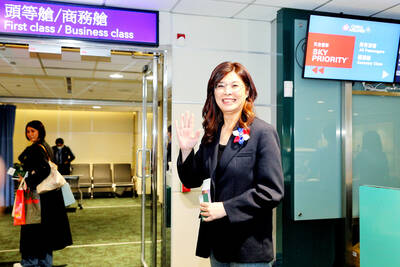
“Taiwan’s Opposition Leader Comes to US With a Message Straight Out of Beijing” read a May 31 headline in the Wall Street Journal. Top US administration officials and members of Congress almost certainly read the WSJ, and if there was a bullet point takeaway that people in Washington should absorb ahead of Chinese Nationalist Party (KMT) Chair Cheng Li-wun’s (鄭麗文) arrival in DC on June 9, that headline is it. The last few columns have discussed this very topic, and the timing is not coincidental. While those top officials likely do not read the Taipei Times, judging by the number


 RSS
RSS