


March 11 to March 17
Wu Chiang-shan (吳江山) meticulously prepared for the banquet a week in advance. Everything had to be perfect because the guest of honor was then-Japanese crown prince Hirohito, who would ascend the throne three years later. It was 1923, and Wu’s banquet hall, Kangsanlau (江山樓), and its rival, Donghuifang (東薈芳), were hired as co-caterers for the royal affair, which was held at the Governor-General’s Office, today’s Presidential Office Building in Taipei.
Hirohito loved Wu’s Taiwanese cuisine, especially the eight treasures rice pudding, and asked then-governor general Kenjiro Den to reward Kangsanlau. From that point on, Kangsanlau took over as sole caterer for members of the imperial family in Taiwan, while Donghuifang fell into decline due to mismanagement and disputes.
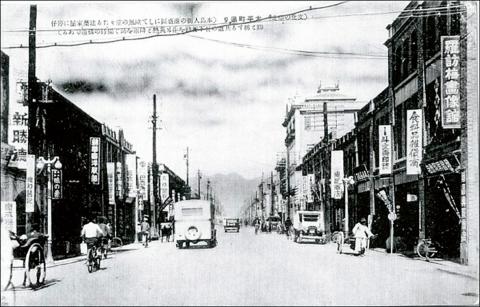
Photo courtesy of Wikimedia Commons
Kangsanlau and Donghuifang were two of the “big four” banquet halls, or jiulou (酒樓), that served Taiwanese cuisine during the Japanese colonial era. Featuring female entertainers and hostesses, the jiulou were established so that Taiwanese businessmen could socialize with each other as well as Japanese. To fit the tastes of the Japanese colonizers, they were cleaner, more refined and provided better service than other eateries.
Kangsanlau was considered the most luxurious and popular of the four, but it too didn’t survive past the 1950s as Dadaocheng declined as a business area and the government placed stringent restrictions on entertainment. The building was razed in 1976, bringing this chapter in Taiwanese history to a close.
THE BIG FOUR
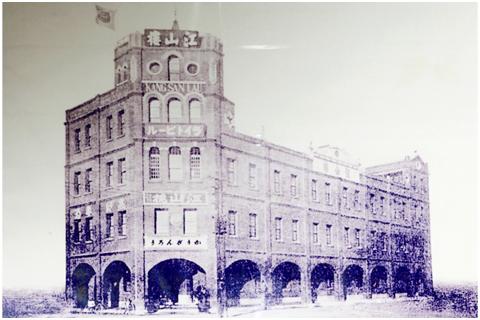
Photo courtesy of Wikimedia Commons
Kangsanlau’s owner, Wu Chiang-shan, originally co-owned Donghuifang, which was established in 1884 as one of the first jiulou in Taipei. It moved several times in its early years before settling near the City God Temple in Dadaocheng.
Of course, these establishments would not have been as popular if they hadn’t had female entertainers, similar to Japanese geishas, who played music, danced and drank with the customers. They were not employed by the jiulou, who would hire them for a fee.
Lai Ho’s (賴和) poem Bidding Farewell at Huancuilou (環翠樓送別), depicts the jiulou as one of the few places where Japanese and Taiwanese could forget their differences and animosity and enjoy each other’s company. For example, the lavish three-day opening banquet for Kangsanlau saw about 300 guests per day, who were evenly split between Japanese and Taiwanese. Government and business meetings as well as cultural activities, feasts and weddings were often hosted in a jiulou. It was also a hotbed for resistance against colonial rule — Kangsanlau played host to a welcome party for the 1923 delegation who went to Japan to petition for Taiwanese autonomy, and also was the launch site for the influential Taiwanese-run newspaper Taiwan Minpao (台灣民報).
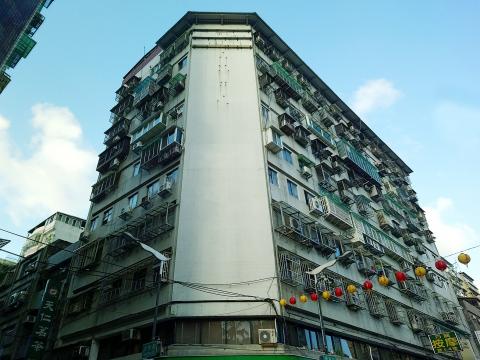
Photo courtesy of Wikimedia Commons
By the 1900s, Donghuifang had become a favorite haunt for Taiwanese intellectuals, who drank, enjoyed performances and wrote poems. In 1911, exiled Qing reformist Liang Qichao (梁啟超), who was visiting from Japan, wrote on the spot a well-known poem lamenting Taiwan’s situation under foreign rule. During his brief stay, Liang greatly influenced Taiwanese elites to embark on peaceful resistance against the colonizers. Liang was invited by Lin Hsien-tang (林獻堂), head of the prominent Wufeng Lin family (霧峰林家), who celebrated his 30th birthday that same year at Donghuifang.
Wu left Donghuifang after an ownership dispute in 1913, but didn’t establish Kangsanlau until November 1921. Meanwhile, the second of the “big four,” Chunfenglou (春風樓), opened its doors in 1914, becoming Donghuifang’s biggest competitor. Historian Chuang Yung-ming (莊永明) notes in an article on jiulou that Chunfenglou was chosen as caterer for visiting Japanese princes in 1916 and 1917, while Donghuifang had the opportunity in 1920. Due to stiff competition, the establishments were constantly upgrading their facilities.
Chunfenglou was purchased by anti-Japanese resistance leader Chiang Wei-shui (蔣渭水) in 1920, but the business folded in the summer of 1922. The youngest member of the “big four,”
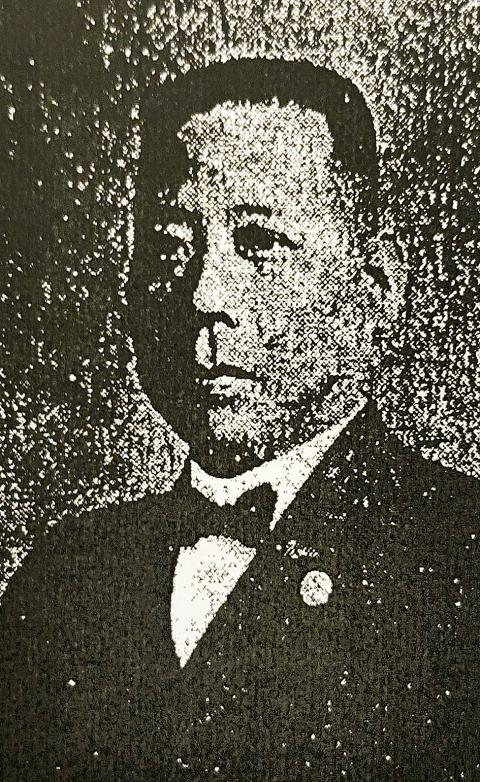
Photo courtesy of National Central Library
Penglaige (蓬萊閣) was essentially a continuation of Donghuifang, opening in 1927 on the same site two years after its predecessor shut its doors. Its manager was Lin Chu-kuang (林聚光), former owner of Chunfenglou.
TOP OF THE WORLD
Wu put a lot of thought into making his establishment attractive to the upper classes. He personally designed the four-story, 180-ping (about 600 meters square) building and oversaw its construction, using his own ship to import wood from China and concrete from Japan.
The finished product was massive for its day. It had 14 spacious banquet halls, Western-style baths, a VIP room, a barbershop and a rooftop garden with a marble table that could seat up to 70 people. The third and fourth floor had terraces and the stairs were adorned with stained glass. The height of its popularity was during the 1935 Taiwan Exhibition, a massive event that celebrated 40 years of Japanese rule, when it served about 120 tables per day, often operating through the night.
Its establishment filled a growing need that other jiulou were no longer able to provide. The Taiwan Daily News (台灣日日新報) reported prior to its opening that it is “a pity that Dadaocheng, being a business center in Taiwan, lacks for a big conference hall, a club and a large restaurant …”
Wu was a big proponent of Taiwanese cuisine, and in 1927 published 23 articles in local papers detailing his establishment’s signature dishes. Kangsanlau hosted Taiwanese cuisine workshops and sent chefs to girls’ high schools to teach students their craft. When governor-general Den headed back to Japan, he took Kangsanlau head chef and manager Wu Tien-yu (吳添佑) with him for two months and he cooked Taiwanese food once a week and held cooking classes for upper class women.
However, what the restaurant served was a modified version of what people normally ate. Chien Yu-chun’s (簡予君) study on Kangsanlau says “the chefs … merged Taiwanese cuisine with Chinese flavors, and made the dishes cater to the tastes of both Taiwanese and Japanese.” Traditionally, Taiwanese banquets emphasized the quantity of the food, and Chien writes that serving it in a refined, delicate form was a distinct Japanese trait.
In addition, Kangsanlau was sort of an art and literary gallery with paintings, calligraphy, poems and plaques inscribed by celebrities and intellectuals, Chien writes.
FALL OF THE ‘JIULOU’
As World War II raged on, food shortages led the government to discourage banquets. Some were even shut down and asked to serve as temporary relief shelters. Others transitioned into regular restaurants.
Of the four greats, only Penglaige and Kangsanlau survived into the Chinese Nationalist Party (KMT) era. Chen Yu-chien (陳玉箴) details in the study Transformations in Consumer Spaces Under Regime Change (政權轉移下的消費空間) the rapid fall of these drinking establishments under KMT rule.
The government discouraged establishments with female entertainers, and while they were eventually allowed to continue operating, it was no longer a place of prestige. The new “elite,” namely government officials who came from China, preferred Zhejiang or Beijing-style banquet halls that popped up during the 1950s.
“In the 1920s and 1930s, Kangsanlau was the high-end banquet hall for both Japanese and Taiwanese elite … But by the 1950s, Kangsanlau had become synonymous with a red light establishment. In 1956, the area surrounding the building was officially designated as Taipei’s red light district,” Chen writes.
One elderly interviewee featured in Chien’s study notes that during its final days, it was strictly known as a brothel. The lines between legitimate eateries and “special establishments” were often blurred as owners did what they could to survive.
Kangsanlau and Penglaige both closed in the 1950s, turning into a government dormitory and private clinic, respectively. Both buildings were eventually demolished.
Taiwan in Time, a column about Taiwan’s history that is published every Sunday, spotlights important or interesting events around the nation that have anniversaries this week.
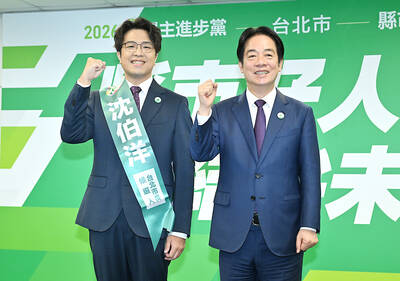
Yesterday, the Democratic Progressive Party (DPP) nominated legislator Puma Shen (沈伯洋) as their Taipei mayoral candidate, the Chinese Nationalist Party (KMT) put their stamp of approval on Wei Ping-cheng (魏平政) as their candidate for Changhua County commissioner and former legislator Tsai Pi-ru (蔡壁如) of the Taiwan People’s Party (TPP) has begun the process to also run in Changhua, though she has not yet been formally nominated. All three news items are bizarre. The DPP has struggled with settling on a Taipei nominee. The only candidate who declared interest was Enoch Wu (吳怡農), but the party seemed determined to nominate anyone
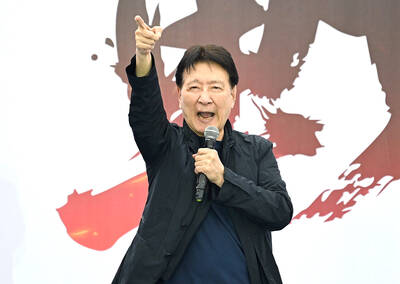
In a sudden move last week, opposition lawmakers of the Chinese Nationalist Party (KMT) and Taiwan People’s Party (TPP) passed a NT$780 billion special defense budget as a preemptive measure to stop either Chinese leader Xi Jinping (習近平) or US President Donald Trump from blocking US arms sales to Taiwan at their summit in Beijing, said KMT heavyweight Jaw Shaw-kong (趙少康), speaking to the Taipei Foreign Correspondents Club on Wednesday night in Taipei. The 76-year-old Jaw, a political talk show host who ran as the KMT’s vice presidential candidate in 2024, says that he personally brokered the deal to resolve
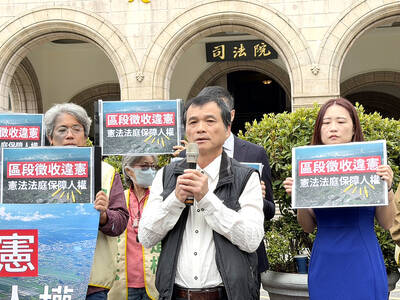
What government project has expropriated the most land in Taiwan? According to local media reports, it is the Taoyuan Aerotropolis, eating 2,500 hectares of land in its first phase, with more to come. Forty thousand people are expected to be displaced by the project. Naturally that enormous land grab is generating powerful pushback. Last week Chen Chien-ho (陳健和), a local resident of Jhuwei Borough (竹圍) in Taoyuan City’s Dayuan District (大園) filed a petition for constitutional review of the project after losing his case at the Taipei Administrative Court. The Administrative Court found in favor of nine other local landowners, but
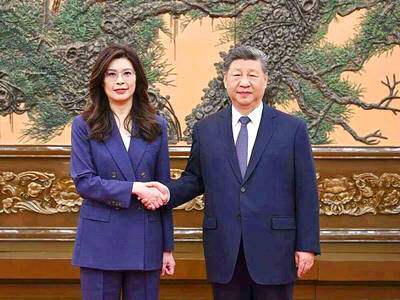
The Chinese Nationalist Party (KMT), alongside their smaller allies the Taiwan People’s Party (TPP), are often accused of acting on behalf of the Chinese Communist Party (CCP). Some go so far as to call them “traitors.” It is not hard to see why. They regularly pass legislation to stymie the normal functioning of the ruling Democratic Progressive Party’s (DPP) administration, and they have yet to pass this year’s annual budget. They slashed key elements of the government’s proposed NT$1.25 trillion (US$40 billion) special military budget, and in the smaller NT$780 billion package they did pass, it is riddled with provisions that


 RSS
RSS