


The Taiwanese seem to have a thing for bat caves. A surprising number of impressive cave-like rock formations dotted over the island (with or without a population of resident bats) share the name bat cave, possibly because traditionally bats are a considered a symbol of fortune and happiness.
The association isn’t immediately apparent to the average Englishman like myself, who generally associates the critters with creepy vampires, and a certain caped crusader, but the reason is really quite simple. The Chinese word for bat (蝠, fu) sounds the same as the word for fortune (福): yet another way in which our two cultures are so very, refreshingly, different.
I seem to have developed quite an interest in bat caves too, over the years, since I’ve already described several in this column over the last 11 months. Well here’s another, rather special one.
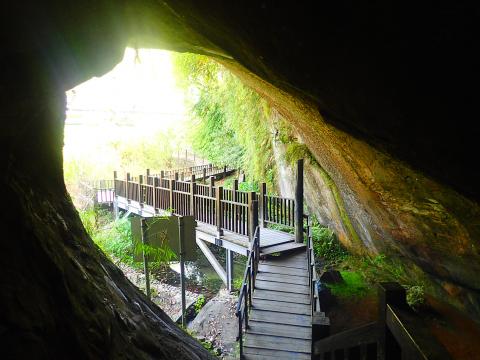
Photo: Richard Saunders
Most of Taiwan’s bat caves are natural formations. Since the nation’s geological makeup doesn’t in general lend itself to the formation of true caves (save for a few impressive examples bored into several small pockets of limestone), most “caves” are just deep (albeit often very impressive) overhanging rock formations eroded over the eons by the weather.
Other bat caves, such as the one at Ruibin (瑞濱) on the northeast coast, east of Keelung (and a protected reserve for a rare kind of bat), are man-made creations, usually old mine shafts.
The bat cave at Toubiankeng (頭汴坑蝙蝠洞), however, is a unique hybrid: part natural cave and part man-made tunnel. Apparently, it once ranked among the top sights of the Taichung area, although its position has slipped somewhat since then.
.jpg)
Photo: Richard Saunders
The bats appear to have long since gone elsewhere (no doubt fleeing the assault of noisy, flashlight-totting adventurers that once thronged here each weekend) and the visitors who come here these days are mostly local, but it’s still worth a visit, particularly if you don’t mind squeezing through pitch-black, claustrophobic tunnels and running the risk of getting your feet wet.
The man-made part of the bat cave was chiseled through the rock during the Japanese colonial period, and channels water from the nearby river to irrigate fields downstream.
The entrance is a small slot in the cliff face, into which flows an aqueduct, which is diverted from the river some distance upstream. Unless it’s been raining heavily, these days the water in the tunnel is only a couple of centimeters deep, and a series of flat “stepping stones” along the length of the tunnel allow visitors to keep their feet (mostly) dry.
.jpg)
Photo: Richard Saunders
The roof of the tunnel is just high enough for a person of average height to stand without bowing their head, but the width seems to have been designed for thin people, and more generously proportioned visitors will find it a narrow squeeze, particularly near the far end, where the passage narrows still further.
A few meters in, the tunnel curves right, the light from the entrance can penetrate no further, and to explore any deeper, bring a head torch (or use the torch on your cellphone, but keep a tight grip on it, lest it falls into the water).
After a minute or two a junction on the right pierces the wall of the cliff into which the tunnel is cut, allowing the daylight to flood in briefly, and at the same time partially draining the tunnel via a delicate waterfall that emerges from the cliff and falls into the little river below. Pitch blackness returns a few meters further down the tunnel, but after a couple more minutes’ paddling a second, a third, then a fourth window on the outside world opens to the right. None offers an early means of escape, however, as they all open into the sheer cliff face.
.jpg)
Photo: Richard Saunders
Eventually there’s a fork in the tunnel. The left branch winds round the back of the cliff, to re-emerge into daylight, although there’s no way down and back to the road from here. Instead, turn right at the fork, and after another minute or two the cramped tunnel opens out into the back of a far larger, natural cavern with a large mouth opening onto the Toubiankeng Stream (頭汴坑溪) below. Climb down into the cave with the aid of the footholds and fixed rope, and a raised wooden walkway emerges from the cavern and leads back, past the entrance to the aqueduct tunnel, and to the road.
Toubiankeng Bat Cave is just a short excursion from urban Taichung, and there are even buses from a bus stop diagonally opposite Taichung train station to the cave, a 30-minute ride away. Visitors with their own transport should follow local route 136 (the road to Taiping; 太平) eastwards out of Taichung city center and keep following it through the last suburbs of the city, heading east into the low, rolling hills.
Route 136 now follows the river to the bat cave at Toubiankeng, through some attractive rural countryside. Immediately before the bat cave is the grand, modern temple of Lianhua Shan (蓮花山) with its prominent golden Guanyin statue looming high above the road. Its fine buildings and immaculately kept grounds are worth a look.
Immediately after the temple is a sign decorated with cute golden bats and a suspension bridge leading to a 500-meter-long trail that climbs over the little wooded hill, down the other side, and ends at a viewing platform giving an okay view over the river below the bat cave. Ignore this (unless you want to do the attractive short walk), follow the road another hundred meters further upstream, and the twin, black mouths of Toubiankeng Bat Cave open into the low cliff face on the right.
Richard Saunders is a classical pianist and writer who has lived in Taiwan since 1993. He’s the founder of a local hiking group, Taipei Hikers, and is the author of six books about Taiwan, including Taiwan 101 and Taipei Escapes. Visit his Web site at www.taiwanoffthebeatentrack.com.
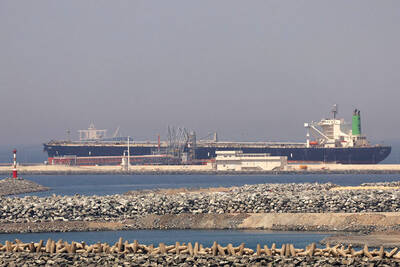
The breakwater stretches out to sea from the sprawling Kaohsiung port in southern Taiwan. Normally, it’s crowded with massive tankers ferrying liquefied natural gas from Qatar to be stored in the bulbous white tanks that dot the shoreline. These are not normal times, though, and not a single shipment from Qatar has docked at the Yongan terminal since early March after the Strait of Hormuz was shuttered. The suspension has provided a realistic preview of a potential Chinese blockade, a move that would throttle an economy anchored by the world’s most advanced and power-hungry semiconductor industry. It is a stark reminder of
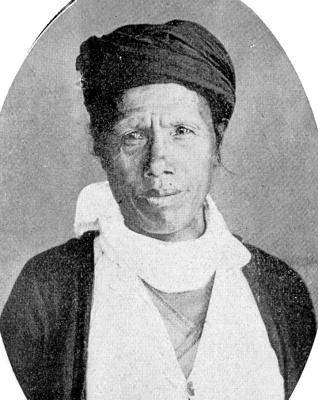
May 11 to May 17 Traversing the southern slopes of the Yushan Range in 1931, Japanese naturalist Tadao Kano knew he was approaching the last swath of Taiwan still beyond colonial control. The “vast, unknown territory,” protected by the “fierce” Bunun headman Dahu Ali, was “filled with an utterly endless jungle that choked the mountains and valleys,” Kano wrote. He noted how the group had “refused to submit to the measures of our authorities and entrenched themselves deep in these mountains … living a free existence spent chasing deer in the morning and seeking serow in the evening,” even describing them as
The last couple of weeks spectators in Taiwan and abroad have been treated to a remarkable display of infighting in the Chinese Nationalist Party (KMT) over the supplementary defense budget. The party has split into two camps, one supporting an NT$800 billion special defense budget and one supporting an NT$380 billion budget with additional funding contingent on receiving letters of acceptance (LOA) from the US. Recent media reports have said that the Taiwan People’s Party (TPP) is leaning toward the latter position. President William Lai (賴清德) has proposed NT$1.25 trillion for purchases of US arms and for development of domestic weapons
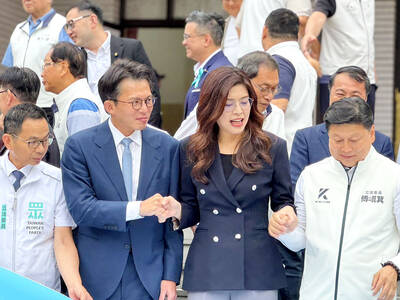
As a different column was being written, the big news dropped that Chinese Nationalist Party (KMT) caucus whip Fu Kun-chi (傅?萁) announced that negotiations within his caucus, with legislative speaker Han Kuo-yu (韓國瑜) of the KMT, party Chair Cheng Li-wun (鄭麗文), Taichung Mayor Lu Shiow-yen (盧秀燕) and Taiwan People’s Party (TPP) Chair Huang Kuo-chang (黃國昌) had produced a compromise special military budget proposal. On Thursday morning, prior to meeting with Cheng over a lunch of beef noodles, Lu reiterated her support for a budget of NT$800 or NT$900 billion — but refused to comment after the meeting. Right after Fu’s


 RSS
RSS