


“Things are not always what they seem,” says Tanya, the blonde.
If so, then how much self-deception enters the imaginings of our everyday lives?
Butterfly Effect’s production of Robert Hewett’s The Blonde, the Brunette and the Vengeful Redhead, presents this question and we, the audience, can only rely on the Roshomon Effect monologue stories of the seven characters, male and female, ranging from four to over 60.
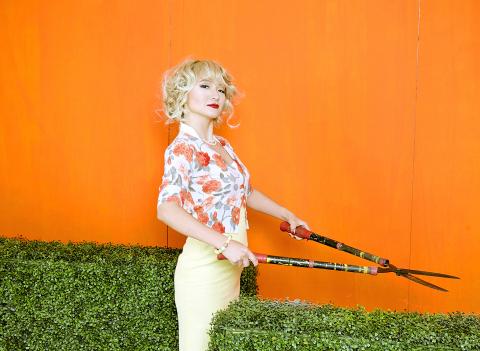
Photo courtesy of Michael Geier and LAB Space
There is a death but who, how and why? Kim Chen (程鈺婷) is the tour de force storyteller taking on all roles and if you weren’t a fan of hers before taking your seat, you will be by play’s end.
Kim deftly personalizes the gestures, language and intonation of each of the seven in a tale that begins after Rhonda’s husband Graham has cowardly ended their seventeen-year marriage over the phone.
However, what makes Hewett’s play a gem for the audience is that even while enjoying the performance, we are forced to examine the isolation of everyman’s limited perceptions.
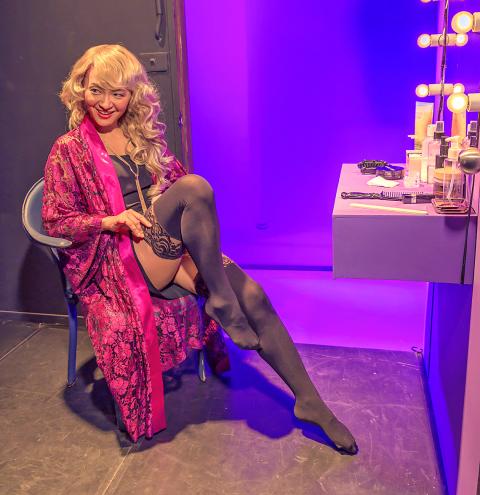
Photo courtesy of Michael Geier and LAB Space
Different pieces of the puzzle will come from each character, but it is only “years later” at play’s end that the never seen but previously mentioned Ellen brings resolution.
Time sequences and Chinese translations of dialogue are found on stage right. Yang Chih-yi’s (楊之儀) set, Jenna Robinette’s costumes and Anton Botes’ sound design skillfully keep pace with each changing monologue.
This summer classic is not to be missed.
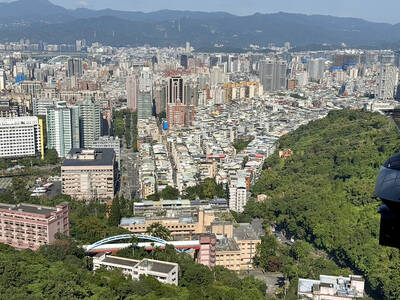
A recent report from the Environmental Management Administration of the Ministry of Environment highlights a perennial problem: illegal dumping of construction waste. In Taoyuan’s Yangmei District (楊梅) and Hsinchu’s Longtan District (龍潭) criminals leased 10,000 square meters of farmland, saying they were going to engage in horticulture. They then accepted between 40,000 and 50,000 cubic meters of construction waste from sites in northern Taiwan, charging less than the going rate for disposal, and dumped the waste concrete, tile, metal and glass onto the leased land. Taoyuan District prosecutors charged 33 individuals from seven companies with numerous violations of the law. This

As mega K-pop group BTS returns to the stage after a hiatus of more than three years, one major market is conspicuously missing from its 12-month world tour: China. The omission of one of the group’s biggest fan bases comes as no surprise. In fact, just the opposite would have been huge news. China has blocked most South Korean entertainment since 2016 under an unofficial ban that also restricts movies and the country’s popular TV dramas. For some Chinese, that means flying to Seoul to see their favorite groups perform — as many were expected to do for three shows opening
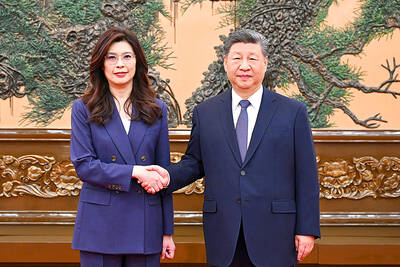
What is the importance within the Chinese Nationalist Party (KMT) of the meeting between Xi Jinping (習近平), the leader Chinese Communist Party (CCP), and Cheng Li-wun (鄭麗文), the leader of the KMT? Local media is an excellent guide to determine how important — or unimportant — a news event is to the public. Taiwan has a vast online media ecosystem, and if a news item is gaining traction among readers, editors shift resources in near real time to boost coverage to meet the demand and drive up traffic. Cheng’s China trip is among the top headlines, but by no means
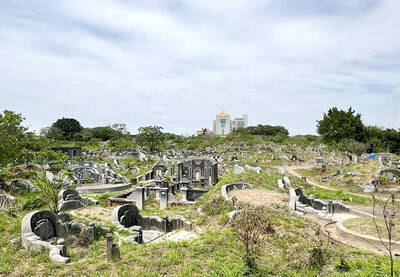
Apr. 13 to Apr. 19 From 17th-century royalty and Presbyterian missionaries to White Terror victims, cultural figures and industrialists, Nanshan Public Cemetery (南山公墓) sprawls across 95 hectares, guarding four centuries of Taiwan’s history. Current estimates show more than 60,000 graves, the earliest dating to 1642. Besides individual tombs, there are also hundreds of family plots, one of which is said to contain around 1,000 remains. As the cemetery occupies valuable land in the heart of Tainan, the government in 2018 began asking families to relocate the graves to make way for development. That


 RSS
RSS