


The Democratic Progressive Party (DPP) controlled Executive Yuan (often called the Cabinet) finally fired back at the opposition-controlled Legislative Yuan in their ongoing struggle for control. The opposition Chinese Nationalist Party (KMT) and Taiwan People’s Party (TPP) acted surprised and outraged, but they should have seen it coming.
Taiwan is now in a full-blown constitutional crisis.
There are still peaceful ways out of this conflict, but with the KMT and TPP leadership in the hands of hardliners and the DPP having lost all patience, there is an alarming chance things could spiral out of control, threatening Taiwan’s democracy.
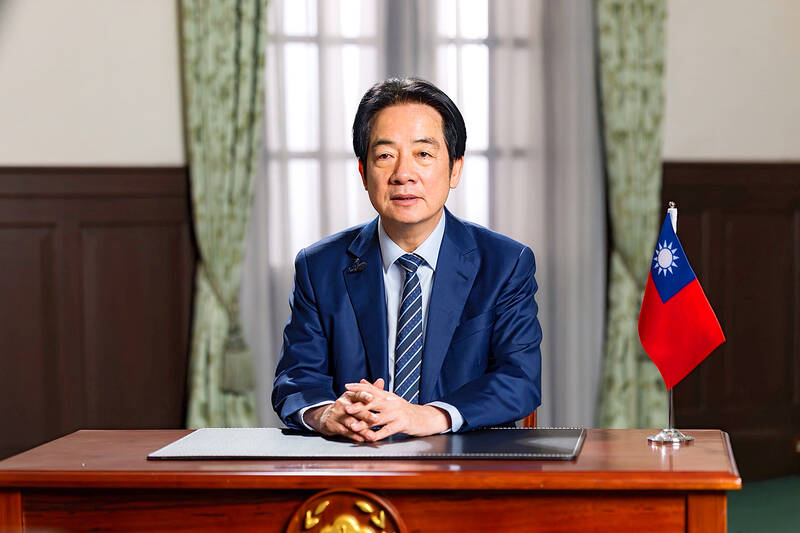
Photo courtesy of the Presidential Office
This is no small matter; the potential consequences are frightening.
The one force that could shut this all down is the public, but so far it seems fairly sanguine and in a wait-and-see mode.
HOBBLING THE GOVERNMENT
Following the election last year, the opposition regained control of the legislature. Frustrated after eight years in the wilderness, they quickly worked to establish dominance over the executive.
They began passing laws intended to expand their power, but were shut down by the Constitutional Court.
To rid themselves of this impediment, the KMT and TPP worked in tandem to pass a law requiring the court to have a quorum to pass judgments and then rejected the administration’s nominees to fill vacant seats, leaving the court unable to function.
They also passed laws intended to undermine and hobble the government — but not completely paralyze it as some have claimed. That would risk provoking a strong public reaction.
Some have theorized that they were acting at the behest of the Chinese Communist Party (CCP), but that is highly unlikely. However, some KMT lawmakers were in effect playing from the same playbook in an effort to weaken the hated “Taiwan independence agenda” of President William Lai (賴清德) they suspect him of harboring.
Others in the KMT and TPP likely thought weakening the government would cause the public to blame the DPP for failures brought on by it. In other words, a political power play of the sort seen in many democracies.
Some of these laws were constitutionally suspect, but with the court out of action, there was no way to rule on them. For example, defunding other branches of government, like the Control Yuan, to the point they struggle to function, and legislating new spending that is expressly forbidden constitutionally.
Despite the risks and consequences of these laws to their administration, the Cabinet followed legal procedures. If the executive finds a law “difficult to execute,” they can send it back to the legislature for “reconsideration.”
The legislature re-voted for the laws and sent them right back. The Cabinet normally could also ask for a Constitutional Court ruling, but with that route closed, the legislature effectively could pass what it wanted.
With the legislature sending back the laws to the executive unrevised and the court neutered, the administration has been following the constitution and dutifully promulgating these laws, including the one that effectively shut down the Constitutional Court — even as the opposition accused them of running an “authoritarian regime.”
Until now.
THE WAR IS ON
On Monday, President of the Executive Yuan (normally called the Premier) Cho Jung-tai (卓榮泰) announced that the Cabinet would not countersign the amendments to the Act Governing the Allocation of Government Revenues and Expenditures (財政收支劃分法).
This is the first time the Cabinet has ever refused to countersign legislation.
Cho insists this is constitutional, citing Article 37 of the constitution: “The President shall, in accordance with law, promulgate laws and issue mandates with the counter-signature of the President of the Executive Yuan or with the counter-signatures of both the President of the Executive Yuan and the Ministers or Chairmen of Commissions concerned.”
Without cosigning, the legislation does not go to the president to be promulgated, effectively killing it outright.
Cho argued that the legislature had become an “autocratic political branch” by expanding its authority to secure more funding, undermining the constitutional system. He also claimed that by promulgating the amendments, the government would be forced to spend beyond the legally allowed debt limit, forcing the Cabinet to choose between breaking one law or the other.
The opposition argues that Additional Article 3 (2) of the constitution is clear: “Should more than one-half of the total number of Legislative Yuan members uphold the original bill, the president of the Executive Yuan shall immediately accept the said bill.”
I am not a constitutional scholar, but Cho’s move does look questionable — as does much of the opposition-passed legislation Cho is reacting to. Normally, the Constitutional Court would sort this all out, but we are not in normal times.
He laid out three criteria for bills that would not be countersigned: “destroying the country’s constitutional system, weakening national defense and security and undermining national fiscal discipline.”
President Lai then came out in support of Cho’s move.
Cho pointed out that the legislature retains a constitutional check, as it can still initiate a no-confidence vote against the premier if it disagrees with the Cabinet’s actions. This has never happened before.
Cho almost dared opposition lawmakers to take this option, saying: “As premier, if I am brought down by a legislature and political parties that trample on the Constitution and throw governance into chaos, that would be a democratic badge of honor for me.”
LAI LIKELY CAUTIOUS
Why did they not fight back sooner?
Cho said that after taking office last year, when facing “malicious legislations” pushed through by the opposition, he had already planned to “not countersign” the bills. Cho said the Constitutional Court had been paralyzed by the KMT and the TPP for a long time, and the public had lost patience and confidence.
However, considering that he had been in office for less than a year, he did not want to escalate tensions between the ruling and opposition parties, he added.
Likely Cho did want to pull the trigger earlier, but more likely it was Lai who held him back. Lai is far more experienced in electoral politics than Cho, whose background is more administrative.
Lai likely wanted to exhaust all options before reaching this point. The DPP’s name is not a statement of progressive values in the overseas sense, but refers to progressing the cause of democracy.
Democracy is the core founding principle of the party, and runs deep in the party’s DNA. Trampling on that risks a public backlash and tearing apart the party, and Lai is aware of that.
Lai likely hoped the Bluebird Movement and the subsequent recalls would accomplish their goals for them, as it was these very issues with the legislature that led to their rise.
But they failed, and with the next national elections in 2028 and the legislature now in session passing key laws for next year, it appears the DPP felt they had no other options left.
It is a huge risk. They might be successful in forcing the KMT and TPP to the table to reach an agreement on an acceptable list of nominees to allow the Constitutional Court to achieve a quorum.
Or the opposition could dig in their heels and refuse to negotiate.
In the next column we will examine all the parties strategic options.
Donovan’s Deep Dives is a regular column by Courtney Donovan Smith (石東文) who writes in-depth analysis on everything about Taiwan’s political scene and geopolitics. Donovan is also the central Taiwan correspondent at ICRT FM100 Radio News, co-publisher of Compass Magazine, co-founder Taiwan Report (report.tw) and former chair of the Taichung American Chamber of Commerce. Follow him on X: @donovan_smith.
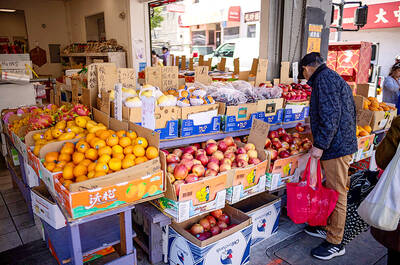
Ajay Verma, a consultant gastroenterologist at Kettering general hospital in Northamptonshire, says our gut is a “complex machine.” “It is constantly providing us with the nutrition we need, initially to grow and develop, and then for us to survive, thrive and repair from injury and illness.” How can we keep it functioning well? Put simply: “Make sure what you put into it is balanced, and that you clear out its waste products adequately,” Verma says. “In a general gastroenterology clinic, the most common conditions we see are irritable bowel syndrome (IBS), gastroesophageal reflux disease, inflammatory bowel disease and constipation,” says Nisha
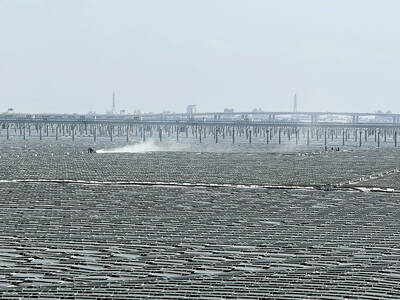
The arithmetic is straightforward and uncomfortable. By the end of 2025, Taiwan had committed itself to a 50-30-20 electricity mix — half natural gas, 30 per cent coal, 20 per cent renewables. The Ministry of Economic Affairs’s (MOEA) own monthly energy reports tell a different story. Natural gas reached 47.8 per cent of generation last year. Coal stood at 35.4 per cent, comfortably above its target ceiling. Renewables came in at 13.1 per cent, well short of the 20 per cent Taipei had pledged a decade earlier. Installed renewable capacity reached roughly half of the 12 gigawatts (GW) the government

Last week US President Donald Trump was asked by a reporter whether he would speak on the phone to the President of Taiwan. “l’ll speak to him. I speak to everybody. We have that situation very well in hand,” Trump said. This marked the second time in a couple of weeks he had said he would talk to the President of Taiwan. In 2016 he famously took a call from then-president Tsai Ing-wen (蔡英文), when he was president-elect. Despite warnings that the apocalypse was nigh because of a phone call, the world quickly forgot about the conversation between two democratically-elected presidents.
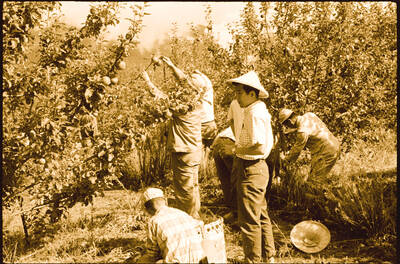
May 25 to May 31 Few believed that apples could be cultivated on a commercial scale in Taiwan’s high mountains. When horticulturalist Cheng Chao-hsiung (程兆熊) first proposed the idea in 1955, both American and Taiwanese colleagues dismissed it as implausible, arguing that temperate fruit could not be reliably grown on a subtropical island, especially on rugged terrain. However, it was this terrain in the Central Mountain Range where many Chinese Civil War veterans were resettled in the late 1950s. With limited job prospects and no family in Taiwan, they were placed on cooperative farms aimed toward self-sufficiency. Some say the conditions


 RSS
RSS