


As a lecturer at the Chinese Culture University in Taipei in the early ‘80s, Li Ang (李昂) received a rather disturbing package in the mail from a female reader.
“It was a pair of panties,” the 64-year-old author from Lukang (鹿港) tells the Taipei Times. “And it came with a note that said, ‘You must have slept with so many men in order to write such an immoral book like that — you should change your dirty underwear.’”
Known for her sexually-explicit novels and outspoken critique of Taiwanese patriarchy, Li Ang (real name Shih Shu-tuan, 施淑端) spoke at two panels during the 19th Singapore Writers Festival earlier this week: “Storytelling as Social Commentary” and “Love and Desire in Writing.”
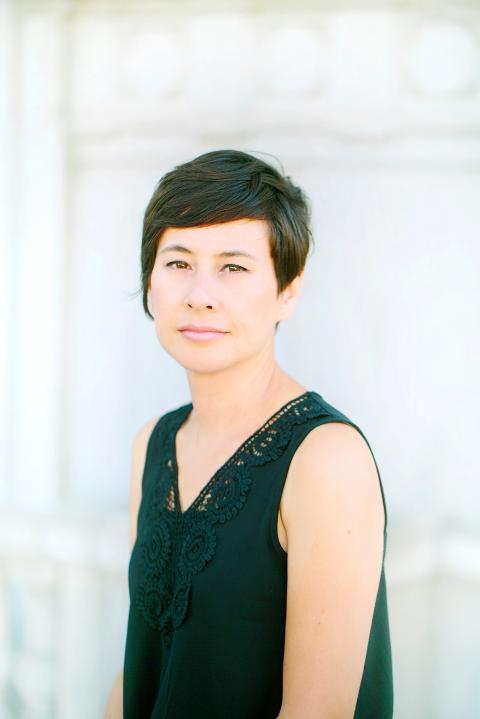
Photo courtesy of Singapore Writers Festival
“Sometimes it’s worse when the backlash comes from other women, rather than men,” Li Ang says. “I’ve been accused of not being virtuous and chaste by Taiwanese women.”
DOWN WITH THE PATRIARCHY
Feminism has been a major theme for many panels at this year’s festival, which also saw The Guardian’s theater critic Lyn Gardner speak of the need for more representation of women and minorities in British theater in “Theater Casting: Diversity or Die,” and Singaporean illustrators Anngee (Ann Gee), Teeteeheehee (Teresa Lim) and Pixin Weng discuss illustration as a mode of feminist discourse in the panel, “Illustrating the Female Body.”
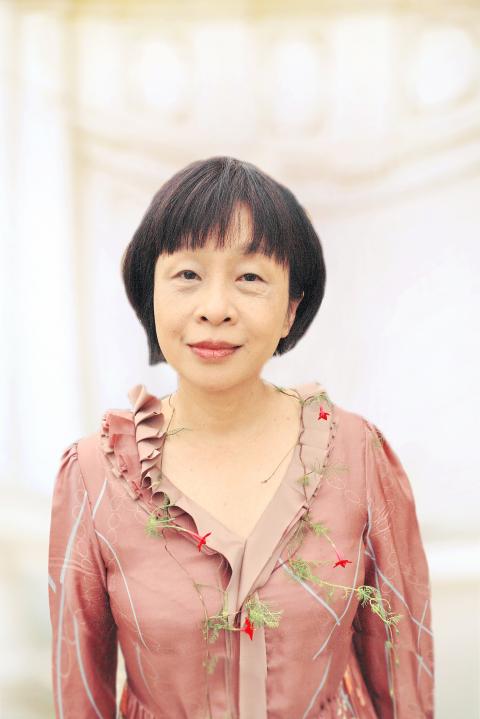
Photo courtesy of Singapore Writers Festival
This weekend, Taiwanese-American author Shawna Yang Ryan — whose novels Water Ghosts and Green Island deal with the intersection of gender and race — will be speaking at two panels and running a writing workshop about creating nonlinear narratives.
Learning how to deal with criticism and being stereotyped were both prominent topics during the panel discussions.
Li Ang has since learned to take backlash with a pinch of salt. The feminist writer, whose work received more popularity outside of Taiwan when she first started writing, acknowledges how lucky she is to have come from an open-minded, well-to-do family who supported her writing endeavors (she started at the age of 16).
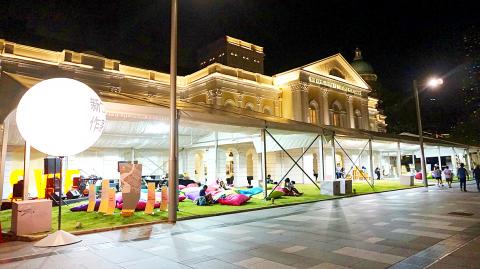
Photo: Dana Ter, Taipei Times
Although her father supported the family with his job, it was her mother who made all the decisions, from managing the family’s finances to taking care of the children.
After graduating from university, while her female classmates saw it as their fate to find a husband, Li Ang continued to write novels.
“Patriarchy was so bad at the time,” Li Ang says, “Their fathers still wielded so much influence over their futures, down to controlling who they should or should not marry.”
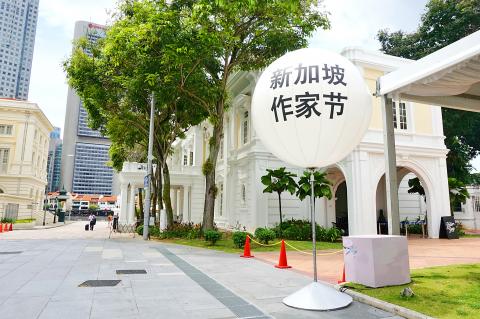
Photo: Dana Ter, Taipei Times
She adds that becoming a writer in Taiwan was easy, but it depended on the topic of choice.
“If you were a woman writer back then, you wrote about raising children, about gardens and about how beautiful life was.”
Her novels, by contrast, touch heavily upon history and politics, alluding to the 228 Incident — the anti-government uprising in 1947 — and Taiwan’s White Terror era while exploring how such events shape and influence her female protagonists. Rather than portraying women as beacons of morality, her characters are strong-willed, in control of their own decisions and ruled by their own desires.

Photo: Dana Ter, Taipei Times
Coming of age in the ‘70s, Li Ang says women at the time “fought for their rights.”
“It’s not like today where women take it all for granted,” she says. “These days, women in Taiwan take selfies, go shopping and want to marry a rich guy and have an easy life.”
But she adds that if you want to be strong, independent women — and write books about that — you can, too.
“At least now, there’s the opportunity for that.”
REDEFINING THE ASIAN AMERICAN LABEL
Writing nearly three decades later, Ryan — whose mother is from Taiwan — tells the Taipei Times she initially had a knee-jerk reaction to being categorized. But lately, she’s been doing much rethinking about her “strong reaction to being lumped into the monolithic ‘Asian-American female writer’ genre.”
The life of the protagonist in Ryan’s most recent novel, Green Island, is shaped largely by the decisions of men — her life path and growth depend largely on having a husband — although she later forges a career of her own. The book is a family saga, but it’s no Joy Luck Club.
“It’s a lazy and unimaginative categorization by readers and the industry,” Ryan says of the label she was assigned.
Although Ryan’s work is not like that of writers she’s normally compared to, she’s come to see how it’s also “not an insult to be spoken of in the same breath with them.”
Much like Li Ang’s work, Ryan’s Green Island shows a different side of the reverberations of the 228 Incident. Though it was mostly the men who were victims of the ensuing violent crackdown, the women were still affected by it. They were left behind to hold the family together and raise the next generation of Taiwanese.
Ryan had long-wanted to write the story of 228, but the more she researched Taiwan’s history, the more she came to realize that in order to understand the massacre, you must understand what came after it. Conversely, in order to understand contemporary Taiwan, you must cognizant of the past.
“I wanted to take the genre of the political thriller, which is traditionally male, and make it female,” Ryan says. “I wanted the sphere of the political to overlap with the sphere of the domestic — a sphere traditionally considered the domain of women — and show that they are not inextricable.”
Ryan’s text is one of the few English-language fiction books — perhaps the only substantial one — written about Taiwan, although she hopes that the younger generation of Taiwanese-Americans will start writing books set in Taiwan, too.
Ryan says every immigrant group in the US goes through a similar process where the first generation needs to become established before the next generation is more free to pursue arts and explore their heritage. It’s currently happening with the Vietnamese-American community, whose immigration wave started around the same time as the Taiwanese.
“I think the next generation will bring even more stories,” Ryan adds.
The Singapore Writers Festival runs until Sunday. Shawna Yang Ryan’s panels are “Piecing Histories Together” on Saturday from 2:30pm to 3:30pm and “Dislocation and Cultural Identity in Transition” on Saturday from 5:30pm to 6:30pm. Her Sunday workshop, “Beyond Space and Time,” is sold out. For more information, visit: www.singaporewritersfestival.com

Taiwan’s English education system is being pulled apart by three opposing forces. Bilingual Nation 2030 pulls students toward English and global communication. Artificial Intelligence (AI) readiness pulls them toward digital judgment, verification and AI-mediated work. But Taiwan’s old exam culture pulls them back toward memorization, grammar drills, timed reading and correct answers. If the education system keeps using old exams to define success, it risks producing graduates who are neither genuinely bilingual nor genuinely AI-ready, but trained for tasks machines can already perform. The first force is Bilingual Nation 2030. Launched in 2018, the policy aimed to “help Taiwan’s workforce connect
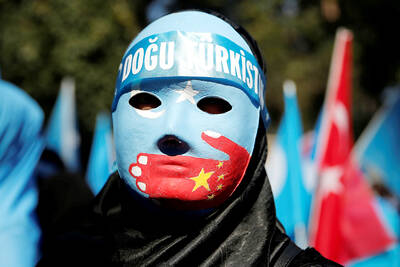
It seems every few days one bumps into one of those “real man” comments in which Taiwan is urged to “face reality” or similar, and “make a deal,” with the speaker implying that soon it will be too late. “Deal” advocates always present themselves as having a superior grip on reality, and the manly ability to make the “hard choice.” Their testosterone-laden language often echoes that of Taiwan sellout advocates. Note that such commentary always specifies a process (“make a deal, work with, make progress”), never the end state of what occupation by a violent authoritarian colonialist state will entail. In
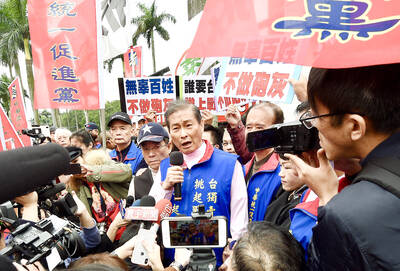
There are shadowy cabals plotting to sell out Taiwan to be annexed by China, by invasion if necessary. Fortunately, they are buffoons. In 2019, former Bamboo Union gangster and founder of the China Unification Promotion Party (CUPP), Chang An-le (張安樂, colorfully known as “White Wolf”), led a protest at the Legislative Yuan against comments made by then-premier Su Tseng-chang (蘇貞昌) that in the event of an attack by China, he would never surrender, but would protect the nation by fighting to the end, even if he only had a broom. Chang had party members bring a wooden casket that they
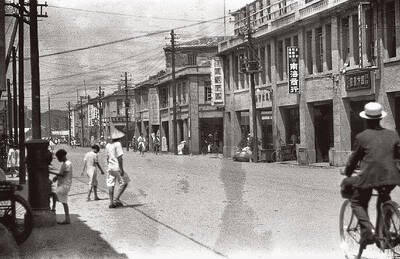
June 1 to June 7 "If all Taiwanese were as afraid of dying as you, then what would happen?” Physician Shih Chiang-nan (施江南) reportedly said this to his wife Chen Chiao-tung (陳焦桐) after she urged him to stop intervening on behalf of Taiwanese soldiers stranded overseas after serving in the Japanese Army during World War II. Shih had clashed with high-ranking officials over the issue, engaged in several heated arguments with Taiwan governor-general Chen Yi (陳儀) and allegedly shouted at general Ko Yuan-fen (柯遠芬), chief of staff of the Taiwan Garrison Command, over


 RSS
RSS