


Youvensky Despeignes used to spend hours a day at home drawing pencil-and-ink abstractions on cheap notebook paper, his aspirations as a painter frustrated by a lack of opportunities in Haiti where a rich artistic heritage has suffered decades of decline.
But the 22-year-old is now a scholarship student at the Centre d’Art in Port-au-Prince, learning to paint from one of Haiti’s most renowned visual artists. He is the beneficiary of efforts to resurrect the storied cultural center following the destruction of its gingerbread building of ornate latticework in a 2010 earthquake and the death of its longtime director a few months later at age 92.
While some thought the twin blows marked the end of the longtime cradle of Haitian artists, a young, energetic team is reviving the center and with it a remarkable heritage of vividly colored paintings, sculptures and other works that earned Haiti an international reputation for raw, imaginative art.
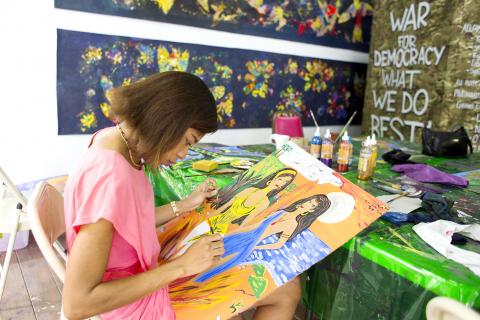
Photo: AP
“I feel like there’s a path opening for me to become a true artist,” Despeignes said in a gazebo-like workshop behind the center’s concrete walls. “This place is inspiring.”
While the reinvented Centre d’Art faces many challenges, its new classes and workshops are attracting dozens of students with a rotating cast of Haitian and foreign teachers. Small buildings for classes have been constructed. Ambitious work is underway to catalog archives and document its historically important collection of roughly 5,000 artworks.
“It feels like the right energies are gathering here,” said Tessa Mars, a 30-year-old Haitian painter who is one of the instructors.
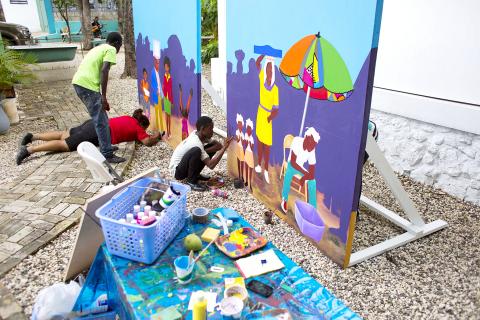
Photo: AP
NEW PERSPECTIVE ON HAITIAN ART
The work of resurrecting the center is being led by executive director Louise Perrichon, a Frenchwoman who fell in love with Haiti when she arrived in 2007, and Pascale Monnin, a Swiss-Haitian painter and sculptor who is the artistic leader. The Haitian nonprofit Knowledge & Freedom Foundation and a French family foundation are the main providers of institutional support.
Monnin, whose family owns a prominent Haitian art gallery, said a resurgence of the center is part of an effort to reclaim the country’s artistic legacy, which contrasts dramatically with its economic impoverishment and recurrent political disorder.
“We’re talking about reshaping the way people look at Haitian art, but I think it can also reshape the way that people look at Haiti,” Monnin said.
There is no shortage of untapped talent. Port-au-Prince’s packed metropolitan area fizzes with creative energy. Portraits are routinely painted on the walls of barber shops and fantastical designs decorate the sides of minibuses called “tap-taps.” Others work in the artisan industry, producing whimsical items for visitors like metal wall hangings and colorful carvings of animals.
Perrichon and Monnin want the reinvented Centre d’Art to nurture original creations, not tourist knockoffs or copies of copies.
TRYING TIMES
Encouraging serious Haitian artists has been the core of the center’s mission since its founding in 1944 by Dewitt Peters, a US watercolorist who came to Haiti to teach English. He sought out self-taught painters like Hector Hyppolite, known for incorporating the iconography of the Haitian religion Vodou, known also as Voodoo, into his work.
While there were always artists from Haiti’s elite and middle classes at the Centre d’Art, it was Hyppolite and other untrained artists from humble backgrounds whose work was championed by intellectuals and critics in Europe and the US.
Paintings made at the Centre d’Art by artists lumped in with a movement coined “naive” or “primitive” swiftly became a sensation. Wealthy collectors around the world sought out pieces. For decades, the popularity of Haitian art was aided by the once-flourishing tourist industry, including cruise ships that docked three times a week in Port-au-Prince’s harbor.
But once Haiti began sliding into political dysfunction following the 1986 overthrow of the 28-year Duvalier dictatorship, the local market for paintings and sculpture diminished. An early 1990s trade embargo put in place after a bloody coup toppled an elected government created a particularly trying time.
CREATING OPPORTUNITIES
Unlike in wealthier nations where national treasures are protected by the state, private organizations and individuals do nearly all the work of safeguarding them in Haiti. In the coming years, Perrichon hopes to attract more funding partners to create a documentation center and various other upgrades to the Centre d’Art.
But she says the core mission will always stay the same: Find, mentor and promote Haitian artists while safeguarding visual art gems.
To ensure a good mix of backgrounds, a third of all classroom spots are reserved for scholarship students who can’t afford the roughly US$100 fee for a four-month class. The center provides the brushes, canvas and other materials students need.
For Despeignes, receiving a scholarship was a welcome recognition of his talent.
“I need to create,” he said on a recent afternoon, taking a break from painting a depiction of the Garden of Eden under the instruction of Frantz Zephirin, a Haitian painter whose lush work has appeared on the cover of The New Yorker and Smithsonian magazines.
Gerald Alexis, a Haitian art historian and curator, said he hopes the center’s leadership team will continue providing an injection of vigor into an institution that was running the risk of fading before the quake.
“I strongly believe that with the energy and the determination of the people involved, the Centre, instilled with modern ideas, can once more become an institution able to play its role in fostering Haitian art and artists,” he said.
The arithmetic is straightforward and uncomfortable. By the end of 2025, Taiwan had committed itself to a 50-30-20 electricity mix — half natural gas, 30 per cent coal, 20 per cent renewables. The Ministry of Economic Affairs’s (MOEA) own monthly energy reports tell a different story. Natural gas reached 47.8 per cent of generation last year. Coal stood at 35.4 per cent, comfortably above its target ceiling. Renewables came in at 13.1 per cent, well short of the 20 per cent Taipei had pledged a decade earlier. Installed renewable capacity reached roughly half of the 12 gigawatts (GW) the government
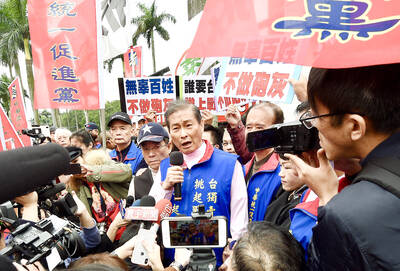
There are shadowy cabals plotting to sell out Taiwan to be annexed by China, by invasion if necessary. Fortunately, they are buffoons. In 2019, former Bamboo Union gangster and founder of the China Unification Promotion Party (CUPP), Chang An-le (張安樂, colorfully known as “White Wolf”), led a protest at the Legislative Yuan against comments made by then-premier Su Tseng-chang (蘇貞昌) that in the event of an attack by China, he would never surrender, but would protect the nation by fighting to the end, even if he only had a broom. Chang had party members bring a wooden casket that they

Taiwan’s drone exports are taking off, fuelled by the war in Ukraine, as Taiwanese companies seek a stake in the fast-growing global market for unmanned aerial vehicles (UAV). Low-cost drones used for reconnaissance and strikes are in high demand as governments around the world boost defense spending in the face of intensifying conflicts. A relative new player in the increasingly competitive industry, Taiwan’s pitch is to be an “Asian hub” for the production of UAVs and components free of Chinese materials, or “non-red.” That means its UAVs can be up to three times more expensive than their Chinese competitors, like the world’s biggest
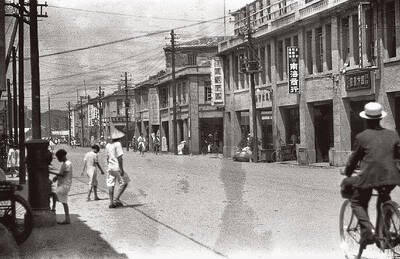
June 1 to June 7 "If all Taiwanese were as afraid of dying as you, then what would happen?” Physician Shih Chiang-nan (施江南) reportedly said this to his wife Chen Chiao-tung (陳焦桐) after she urged him to stop intervening on behalf of Taiwanese soldiers stranded overseas after serving in the Japanese Army during World War II. Shih had clashed with high-ranking officials over the issue, engaged in several heated arguments with Taiwan governor-general Chen Yi (陳儀) and allegedly shouted at general Ko Yuan-fen (柯遠芬), chief of staff of the Taiwan Garrison Command, over


 RSS
RSS