


At first glance, the Tainan Arts Festival (台南藝術節) looks like any other comprehensive festival. But a closer look reveals that organizers want to support local talent and connect the event with the city’s rich culture, history and environment.
While there are the usual international acts and well-known performance groups from across the nation, the festival is noted for its City Stage section, which features performances by Tainan-based artists at the city’s abundant historical sites, temples, galleries, outdoor plazas, alleys and other unconventional spaces.
Lin Long Dance Company (靈龍舞蹈團), for example, brings audiences to the historical waterfront in Anping (安平) with Relax Waterfront (悠遊水岸), which was inspired by the city’s once thriving fishing community.

Photo courtesy of Tainan Arts Festival
At Chin Jih Movie Theater (今日戲院) this weekend, Scarecrow Contemporary Dance Company (稻草人現代舞蹈團) presents Incident Today (今日‧事件), a performance that fuses moving images with theater to reveal what’s in the mind of an old man.
Apart from the City Stage lineup, prominent bossa nova artist Lisa Ono from Japan will hold a concert tomorrow. Theater group Po You Set (柏優座) puts forth Assassins — Jing Ke (刺客列傳 — 荊軻), a comedy that turns the legendary assassin during China’s Warring State period into a contemporary story about a college graduate who struggles with a miserly boss and a tyrannical client.
Changing values and norms of the Taiwanese family is under examination in Borrowed Family (拼裝家族) by M.O.V.E. Theatre (動見体劇團), starring reputed theater veteran Winnie Chang (張詩盈).
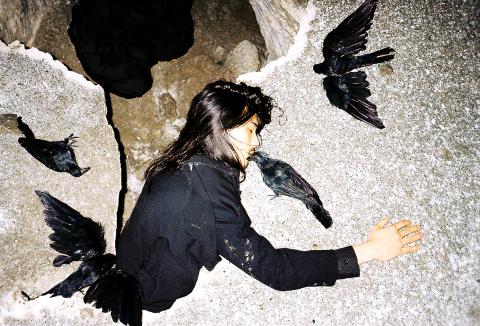
Photo courtesy of Tainan Arts Festival
Other highlights include One Hundred Years of Solitude (百年孤寂) by Shakespeare’s Wild Sisters Group (莎士比亞的妹妹們的劇團). Adapted from Gabriel Garcia Marquez’s classic of the same title, the production will be performed amid the unique landscape of Cigu Salt Mountains (七股鹽山), a popular tourism attraction.
From Dessau Opera, Germany, celebrated conductor Antony Hermus will lead seven renown European vocalists for an operatic extravaganza, slated to take place in the grand outdoor plaza of Chimei Museum (奇美博物館) on June 11 and June 12.
More information can be found at the festival’s Web site at tnaf.tnc.gov.tw.

The small platform at Duoliang Train Station in Taitung County’s Taimali Township (太麻里) served villagers from 1992 to 2006, but was eventually shut down due to lack of use. Just 10 years later, the abandoned train station had become widely known as the most beautiful station in Taiwan, and visitors were so frequent that the village had to start restricting traffic. Nowadays, Duoliang Village (多良) is known as a bit of a tourist trap, with a mandatory, albeit modest, admission fee of NT$10 giving access to a crowded lane of vendors with a mediocre view of the ocean and the trains
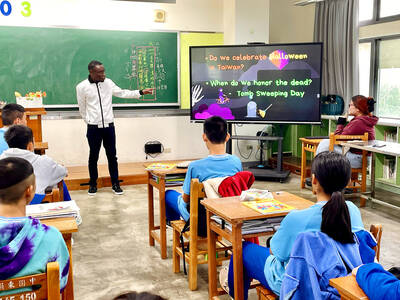
For many people, Bilingual Nation 2030 begins and ends in the classroom. Since the policy was launched in 2018, the debate has centered on students, teachers and the pressure placed on schools. Yet the policy was never solely about English education. The government’s official plan also calls for bilingualization in Taiwan’s government services, laws and regulations, and living environment. The goal is to make Taiwan more inclusive and accessible to international enterprises and talent and better prepared for global economic and trade conditions. After eight years, that grand vision is due for a pulse check. RULES THAT CAN BE READ For Harper Chen (陳虹宇), an adviser

Traditionally, indigenous people in Taiwan’s mountains practice swidden cultivation, or “slash and burn” agriculture, a practice common in human history. According to a 2016 research article in the International Journal of Environmental Sustainability, among the Atayal people, this began with a search for suitable forested slopeland. The trees are burnt for fertilizer and the land cleared of stones. The stones and wood are then piled up to make fences, while both dead and standing trees are retained on the plot. The fences are used to grow climbing crops like squash and beans. The plot itself supports farming for three years.
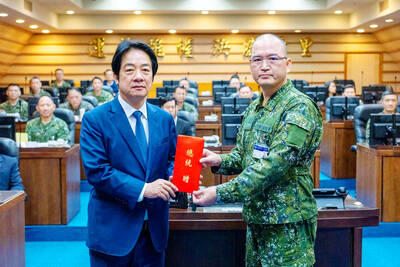
President William Lai (賴清德) on Nov. 25 last year announced in a Washington Post op-ed that “my government will introduce a historic US$40 billion supplementary defense budget, an investment that underscores our commitment to defending Taiwan’s democracy.” Lai promised “significant new arms acquisitions from the United States” and to “invest in cutting-edge technologies and expand Taiwan’s defense industrial base,” to “bolster deterrence by inserting greater costs and uncertainties into Beijing’s decision-making on the use of force.” Announcing it in the Washington Post was a strategic gamble, both geopolitically and domestically, with Taiwan’s international credibility at stake. But Lai’s message was exactly


 RSS
RSS