


After enjoying Lab Space’s string of engaging shows, The Santaland Diaries, Tuesdays with Morrie, Sylvia and A Perfect Ganesh, theater patrons will not want to miss the season ending finale, Wait Until Dark by Frederick Knott.
“It’s a classic thriller,” says director Brook Hall, “something Taiwan audiences have never seen the likes of.”
The set takes us back to a 1960s Greenwich Village, New York, apartment; a simpler, more direct age without mobile phones and the Internet.
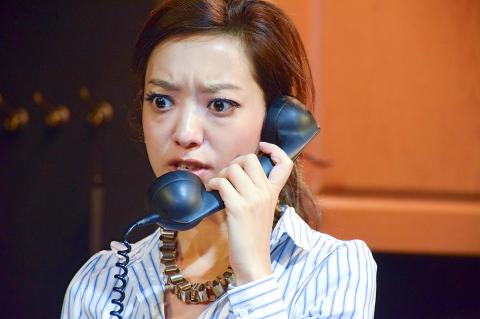
Photo courtesy of the Lab Space
Susy Hendrix, recently blind, is coping with navigating around an apartment and life without sight. Unbeknownst to her, Sam, her photographer husband, has inadvertently brought death and danger there by volunteering to hold a doll secretly stuffed with heroin. A thuggish trio, led by the ruthless Roat, have followed this valuable package. Luring Sam away with a bogus photography assignment, they break into the apartment to find the doll.
Unsuccessful, the trio returns, this time posing in a variety of roles to dupe Susy into surrendering the doll. However, Gloria, the precocious young girl who helps Susy, has taken it, thinking it is for her. What ensues is a cat-and-mouse game between Susy and the con men with increasingly high stakes.
Though blind, Susy must see through the con, deflect the ruse and save her life. Developing inner strength, she realizes she can level the playing field by darkening the apartment to make all blind; this leads to a harrowing finale. (Audrey Hepburn got an Oscar nomination for this role in the film version).
Hall has put together an experienced cast that includes Esther Veronin (Susy), Stewart Glen (Roat), Dan O’Shea (Mike), John Brownlie (Carlino).
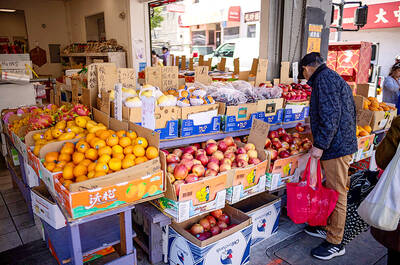
Ajay Verma, a consultant gastroenterologist at Kettering general hospital in Northamptonshire, says our gut is a “complex machine.” “It is constantly providing us with the nutrition we need, initially to grow and develop, and then for us to survive, thrive and repair from injury and illness.” How can we keep it functioning well? Put simply: “Make sure what you put into it is balanced, and that you clear out its waste products adequately,” Verma says. “In a general gastroenterology clinic, the most common conditions we see are irritable bowel syndrome (IBS), gastroesophageal reflux disease, inflammatory bowel disease and constipation,” says Nisha
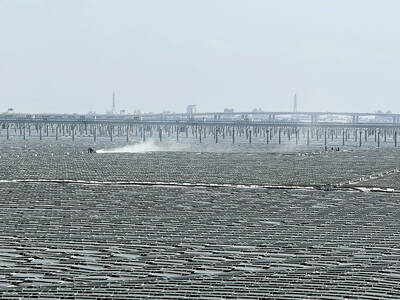
The arithmetic is straightforward and uncomfortable. By the end of 2025, Taiwan had committed itself to a 50-30-20 electricity mix — half natural gas, 30 per cent coal, 20 per cent renewables. The Ministry of Economic Affairs’s (MOEA) own monthly energy reports tell a different story. Natural gas reached 47.8 per cent of generation last year. Coal stood at 35.4 per cent, comfortably above its target ceiling. Renewables came in at 13.1 per cent, well short of the 20 per cent Taipei had pledged a decade earlier. Installed renewable capacity reached roughly half of the 12 gigawatts (GW) the government
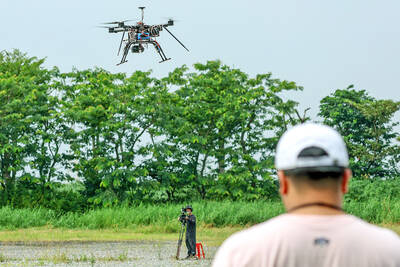
Taiwan’s drone exports are taking off, fuelled by the war in Ukraine, as Taiwanese companies seek a stake in the fast-growing global market for unmanned aerial vehicles (UAV). Low-cost drones used for reconnaissance and strikes are in high demand as governments around the world boost defense spending in the face of intensifying conflicts. A relative new player in the increasingly competitive industry, Taiwan’s pitch is to be an “Asian hub” for the production of UAVs and components free of Chinese materials, or “non-red.” That means its UAVs can be up to three times more expensive than their Chinese competitors, like the world’s biggest
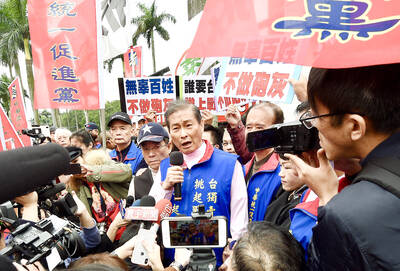
There are shadowy cabals plotting to sell out Taiwan to be annexed by China, by invasion if necessary. Fortunately, they are buffoons. In 2019, former Bamboo Union gangster and founder of the China Unification Promotion Party (CUPP), Chang An-le (張安樂, colorfully known as “White Wolf”), led a protest at the Legislative Yuan against comments made by then-premier Su Tseng-chang (蘇貞昌) that in the event of an attack by China, he would never surrender, but would protect the nation by fighting to the end, even if he only had a broom. Chang had party members bring a wooden casket that they


 RSS
RSS