


Taiwan in Time: Sept. 28 to Oct. 4
Besides being Teachers’ Day, where not even teachers get the day off, Sept. 28 is notable in history because in 1900, anti-imperialist leader and Chinese Nationalist Party (KMT) cofounder Sun Yat-sen (孫逸仙) made the first of several visits to Taiwan.
Sun was in exile during that time after his failed uprising in 1895 against the Qing Dynasty, spending much of his time in Japan. By 1900, the anti-Western Boxer Rebellion was in full swing in China, and in response, an alliance of eight countries invaded China. Sun thought that the turmoil would be a second opportunity to overthrow the Qing.
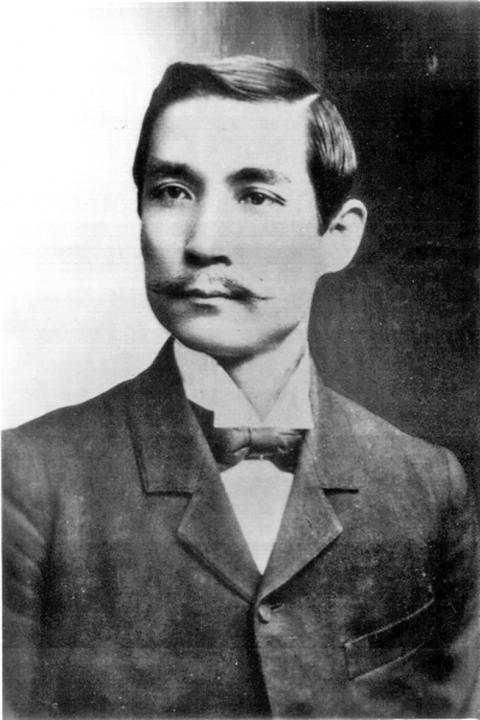
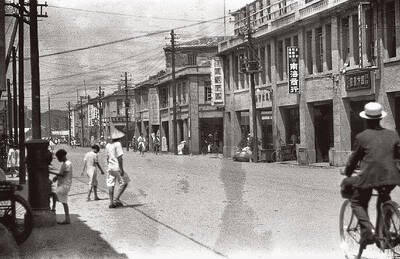
Photo courtesy of Wikimedia Commons
After failing to enter China from Hong Kong, he returned to Japan and headed towards Taiwan, which was then under Japanese rule, to plan what would be called the Huizhou Uprising (惠州起義).
Sources say the main purpose of visiting Taiwan was to obtain Japanese governmental support for his planned uprising. Then Taiwan governor-general Kodama Gentaro pledged to help Sun’s cause.
A command center was set up in Taipei’s Shinkicho (today’s Ximending) on Oct. 8. The revolutionaries started from Huizhou, capturing coastal towns while waiting for Sun to bring weapons and reinforcements from Taiwan, at which point they would turn towards Xiamen (廈門), in today’s Fujian Province, together.
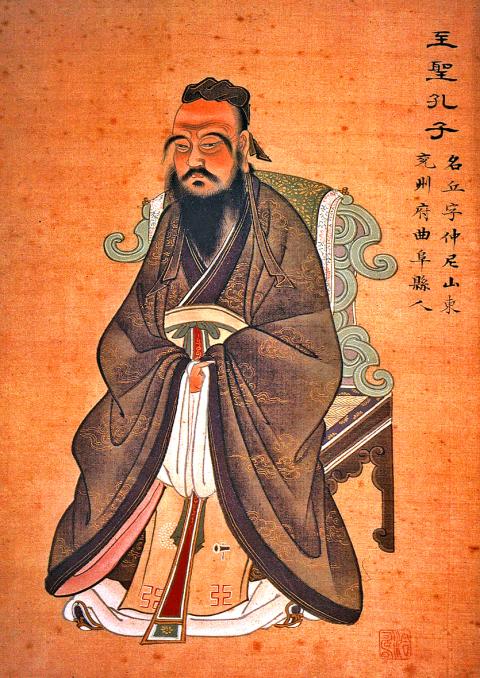
Photo courtesy of Wikimedia Commons
The problem was that on Oct. 19, after a power shift in the Japanese Cabinet, the country changed its Chinese policy and forbade the colonial Taiwan Governor-General’s Office from offering the revolutionaries any military help, including troops and weapons. The Governor-General was also forbidden any contact with the revolutionaries.
Sun’s plans were dashed because of this development, and the revolution was aborted. He returned to Japan in November. This would be his longest stay in Taiwan.
The Qing Dynasty was no more by the next time Sun visited Taiwan in 1913, but he was still fighting, this time trying to overthrow then-president Yuan Shikai (袁世凱), who wasn’t getting along with the KMT. Yuan eventually declared himself emperor.
Sun’s forces lost the battle and he went into exile again, fleeing China to Japan via Taiwan, this time staying only about a week.
Interestingly, Sept. 28 is also the anniversary of the official formation of the Democratic Progressive Party. Formed in 1986, it is today Taiwan’s second largest political party.
CELEBRATING CONFUCIUS
Why is tomorrow Teachers’ Day? Like its globally unique Father’s day, Taiwan is the only country in the world that observes it on Sept. 28. This is nothing odd, as the majority of countries in the world do their own thing to honor their teachers, often on the birthday of a great educator. Only a handful of countries observe World Teachers’ Day on Oct. 5.
In Taiwan’s case, it’s the birthday of Confucius, the 6th century BC philosopher, politician and teacher. His ideas have greatly influenced Chinese society as well as other parts of Asia, and is revered in temples. One of his most famous sayings promotes universal education: “Teach everyone regardless of their background and also teach them according to their abilities.” Confucius even has an asteroid named after him.
Like several other Taiwanese holidays, Teacher’s day traces back to the days when the KMT ruled China. The education ministry in the 1930s originally designated Aug. 27, which was then believed to be Confucius’ birthday, as a day to commemorate his educational ideals and celebrate teachers nationwide. Later, experts determined that Confucius’ actual birthday was Sept. 28 and the day was changed in 1952, after the KMT had already fled to Taiwan.
It was a national holiday until 1990, when it was eliminated in a restructuring of the country’s day-off schedule. While people still have to work, the day is still observed with ceremonies in Confucian Temples around the country. Local education institutes of all levels also take this time to hand out teaching awards for both longevity and excellence.
Taiwan in Time, a column about Taiwan’s history that is published every Sunday, spotlights important or interesting events around the nation that have anniversaries this week.

Taiwan’s English education system is being pulled apart by three opposing forces. Bilingual Nation 2030 pulls students toward English and global communication. Artificial Intelligence (AI) readiness pulls them toward digital judgment, verification and AI-mediated work. But Taiwan’s old exam culture pulls them back toward memorization, grammar drills, timed reading and correct answers. If the education system keeps using old exams to define success, it risks producing graduates who are neither genuinely bilingual nor genuinely AI-ready, but trained for tasks machines can already perform. The first force is Bilingual Nation 2030. Launched in 2018, the policy aimed to “help Taiwan’s workforce connect
It seems every few days one bumps into one of those “real man” comments in which Taiwan is urged to “face reality” or similar, and “make a deal,” with the speaker implying that soon it will be too late. “Deal” advocates always present themselves as having a superior grip on reality, and the manly ability to make the “hard choice.” Their testosterone-laden language often echoes that of Taiwan sellout advocates. Note that such commentary always specifies a process (“make a deal, work with, make progress”), never the end state of what occupation by a violent authoritarian colonialist state will entail. In
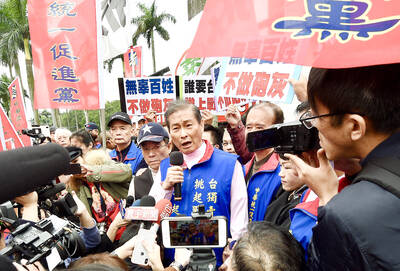
There are shadowy cabals plotting to sell out Taiwan to be annexed by China, by invasion if necessary. Fortunately, they are buffoons. In 2019, former Bamboo Union gangster and founder of the China Unification Promotion Party (CUPP), Chang An-le (張安樂, colorfully known as “White Wolf”), led a protest at the Legislative Yuan against comments made by then-premier Su Tseng-chang (蘇貞昌) that in the event of an attack by China, he would never surrender, but would protect the nation by fighting to the end, even if he only had a broom. Chang had party members bring a wooden casket that they
June 1 to June 7 "If all Taiwanese were as afraid of dying as you, then what would happen?” Physician Shih Chiang-nan (施江南) reportedly said this to his wife Chen Chiao-tung (陳焦桐) after she urged him to stop intervening on behalf of Taiwanese soldiers stranded overseas after serving in the Japanese Army during World War II. Shih had clashed with high-ranking officials over the issue, engaged in several heated arguments with Taiwan governor-general Chen Yi (陳儀) and allegedly shouted at general Ko Yuan-fen (柯遠芬), chief of staff of the Taiwan Garrison Command, over


 RSS
RSS