


For two decades now, Pedro Costa has lived and worked with migrants in Fontainhas, once Lisbon’s grimmest slum. He has a small crew of three or four, a low-end digital camera and little money to make films about the lives of the dispossessed. The impoverished African immigrants are as much Costa’s collaborators as they are his subjects since they help to shape the forms and content of the work.
Costa also practices a kind of “filmmaking democracy,” which means working without hierarchy, and that everybody, including the participating migrants, is paid more or less equally.
“What attracts me is not the people [in the slum]. The attraction is trying to do things with them… If my connection to these people, this place and the reality broke, I couldn’t make films,” says the director, who was recently in Taipei to attend the Taipei Film Festival (台北電影節).
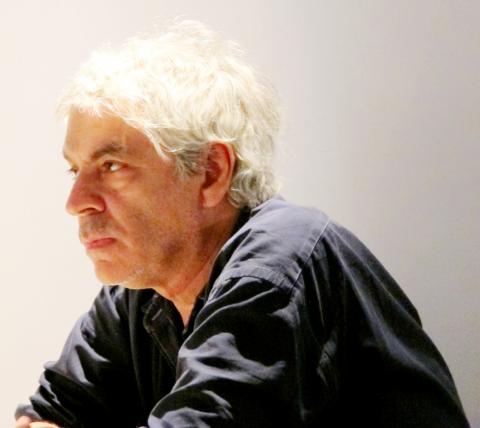
Photo courtesy of Taipei Film Festival
To those who don’t know who he is, Costa may sound like a struggling documentary filmmaker. The 56-year-old Portuguese artist has come to be recognized as one of the most important auteurs on the international film scene today.
Costa’s fascinating career arc has seen the director increasingly turning his lens onto the migrants from the former Portuguese colony of Cape Verde and burrowing ever deeper into the lives of the post-colonial underclass through the acclaimed trilogy set in Fontainhas, Bones (1997), In Vanda’s Room (2000) and Colossal Youth (2006), as well as his most recent work, Horse Money (2014).
Costa’s cinema reveals stories of the exploited and has developed in tandem with his non-professional cast, composed of residents in the slum playing fictionalized versions of themselves. It stays on “small streets, in kitchens, with small people and running chickens.”
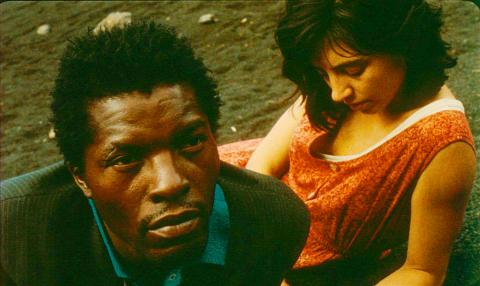
Photo courtesy of Taipei Film Festival
“Cinema for me is always something very close to justice. When you see a great film, Charlie Chaplin’s or Edward Yang’s (楊德昌), it’s about justice; it’s there. You see the problems better. You go home, thinking,” Costa says.
“I want to tell the stories about the forgotten part of humanity… I want to remember with them,” he adds.
Yet, Costa’s oeuvre is not tainted with the kind of pathos or sentimentality found in films about social injustice and human exploitation. His works are often described as intransigently austere and hard to digest.
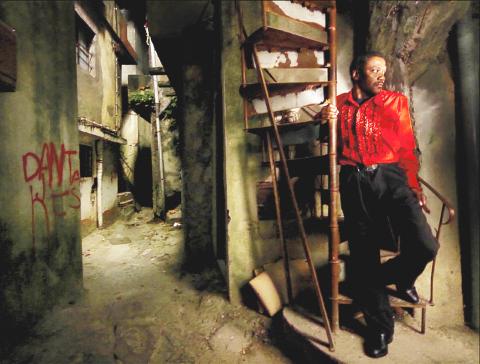
Photo courtesy of Taipei Film Festival
INTO THE GHETTO
Costa started filming the people of Fontainhas in the mid-1990s. With In Vanda’s Room, the director collaborated with resident and heroin addict Vanda Duarte to depict a mesmerizing portrait of the title character and of the people around her in a rundown neighborhood that was being demolished to make way for new development. The shots are long, static and interminable, showing the tenants in their dark, squalid rooms doing smack and having inconsequential conversations.
Costa says the intimate feel of a documentary is a false impression as the formally hybrid film is significantly built on rehearsing scenes and acting.
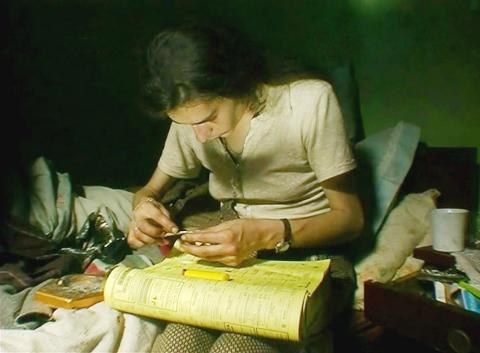
Photo courtesy of Taipei Film Festival
“Filmmakers have to practice a lot, repeat and rehearse. It’s always the same thing. Like a musician, you do the scale again and again just to get it right. With musical notes, there is no ‘okay, but.’ It has to be something very precise,” the director says.
Several years later, Colossal Youth introduces Ventura, a retired, handicapped laborer who moves from his home in the dilapidated slum to a new social housing complex. Aged and ailing, with an air of quiet solitude, Ventura drifts around town, visits friends and past neighbors who seem as deranged and lost as himself. While most of the narrative is set in the present, there is a lingering sense of being caught in some undefined past.
TOWARDS THE ABSTRACT
With Horse Money, Costa and Ventura venture deep into the country’s colonial and fascist past in light of Portugal’s recent economic crisis. The poor immigrant population now becomes the victim of savage austerity measures, still struggling to come to terms with the fallout of imperialism.
Costa says the idea behind the project starts with the stories told by Ventura. The two were in the same place when Portugal’s Carnation Revolution broke out on April 25, 1974, ending the country’s 48-year-long authoritarian regime and the African colonial war, which won Cape Verde its independence.
In the film, Ventura trudges through long, subterranean corridors that seem to stretch toward infinity, leading from one shadowy room to another, in a building that could be a mental asylum or a prison. His left hand trembles incessantly, caused by a “nervous disease” as the result of lifelong poverty and back-breaking manual work.
The sexagenarian encounters friends and relatives, who, like Ventura, are immigrant laborers from Cape Verde. Emerging from the darkness, these figures whisper their collective tales of woe and desperation as revolution breaks out in the streets.
Horse Money feels as if it is afloat in indeterminate time and space. History and the present conflate; memory, dream and desire blur. All boundaries collapse.
Costa says his turn to abstract storytelling fits how it feels like living in his country, especially to those hardest-hit by recession.
“The film moves from reality to dreams and nightmares. I think it is a reflection of living in my country, Europe or perhaps in the world,” he says.
OUTSIDE THE SYSTEM
The financial crisis has also made a grave impact on Portuguese cinema in recent years. To Portuguese filmmakers, 2012 has come to be known as Year Zero, when all government funding for films were cut. But it doesn’t affect Costa much, who has since separated himself from the filmmaking business, which the director deems “decadent and corrupt.”
Costa says he has seen too much vanity, power relation and money in the film business, but no democracy.
“What is behind the camera must be in tune with and equal to what is in front of it. There must be a balance. If it is not balanced, you will see lots of money on the screen,” he says.
One way of achieving such balance is to keep one’s independence and be free from producers and investors. Costa gets his small budgets mainly by renting out his works.
“I am over with getting funds. It wouldn’t be fair to the people I work with. They would never understand that. It has to be very transparent between us,” the director says.
Meanwhile, Costa’s tiny film crew allows the luxury of time and intimacy. They film together for months, sometimes over a year for each project. And the crew not only film, work with sound and take on the role of art director, but buy lunches, drive cars and go to the pharmacy if someone is sick. Costa says he used to be the family photographer for the whole closely-knit community of Fontainhas, taking pictures when there was a wedding or Christmas party.
It is because to the auteur, film is not the most important thing in life, or rather, it is part of life.
“You go there, staying, be gentle and staying. It shouldn’t be just a film. It must have something else.”
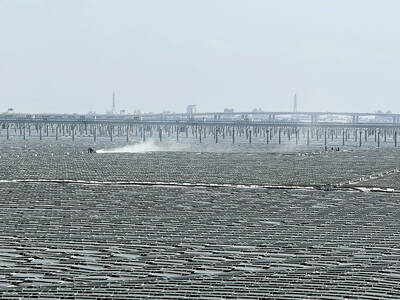
The arithmetic is straightforward and uncomfortable. By the end of 2025, Taiwan had committed itself to a 50-30-20 electricity mix — half natural gas, 30 per cent coal, 20 per cent renewables. The Ministry of Economic Affairs’s (MOEA) own monthly energy reports tell a different story. Natural gas reached 47.8 per cent of generation last year. Coal stood at 35.4 per cent, comfortably above its target ceiling. Renewables came in at 13.1 per cent, well short of the 20 per cent Taipei had pledged a decade earlier. Installed renewable capacity reached roughly half of the 12 gigawatts (GW) the government

There are shadowy cabals plotting to sell out Taiwan to be annexed by China, by invasion if necessary. Fortunately, they are buffoons. In 2019, former Bamboo Union gangster and founder of the China Unification Promotion Party (CUPP), Chang An-le (張安樂, colorfully known as “White Wolf”), led a protest at the Legislative Yuan against comments made by then-premier Su Tseng-chang (蘇貞昌) that in the event of an attack by China, he would never surrender, but would protect the nation by fighting to the end, even if he only had a broom. Chang had party members bring a wooden casket that they
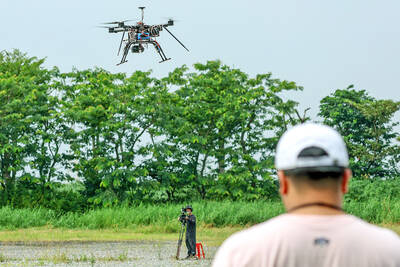
Taiwan’s drone exports are taking off, fuelled by the war in Ukraine, as Taiwanese companies seek a stake in the fast-growing global market for unmanned aerial vehicles (UAV). Low-cost drones used for reconnaissance and strikes are in high demand as governments around the world boost defense spending in the face of intensifying conflicts. A relative new player in the increasingly competitive industry, Taiwan’s pitch is to be an “Asian hub” for the production of UAVs and components free of Chinese materials, or “non-red.” That means its UAVs can be up to three times more expensive than their Chinese competitors, like the world’s biggest
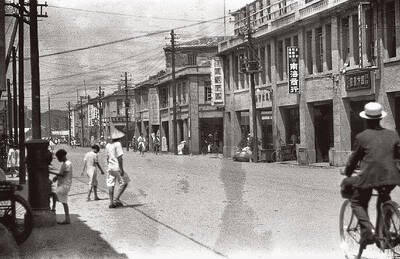
June 1 to June 7 "If all Taiwanese were as afraid of dying as you, then what would happen?” Physician Shih Chiang-nan (施江南) reportedly said this to his wife Chen Chiao-tung (陳焦桐) after she urged him to stop intervening on behalf of Taiwanese soldiers stranded overseas after serving in the Japanese Army during World War II. Shih had clashed with high-ranking officials over the issue, engaged in several heated arguments with Taiwan governor-general Chen Yi (陳儀) and allegedly shouted at general Ko Yuan-fen (柯遠芬), chief of staff of the Taiwan Garrison Command, over


 RSS
RSS