


Fantastic Four
The summer of sequels, sequels of sequels and sequels that are actually reboots is out of control. Premiering this week is the third Fantastic Four film (also stylized as Fant4stic), the superhero team’s first big screen appearance in eight years. Twentieth Century Fox curiously decided to embargo reviews until the day of its release, but later moved it back one day — which may or may not suggest that even the makers think this film is bad. When the reviews finally came in, they didn’t look so hot, with at least three critics writing that the movie feels like a protracted trailer for a nonexistent sequel. That’s the problem with superhero reboots — there’s often a revised origin story that has to stand against the original, which ends up taking over the movie, and just as you feel like you understand the character, the credits roll. If you do go watch it, keep in mind that this film is not a Marvel Cinematic Universe film, so there’s no need to stay until the credits end.
Inside Out
You just can’t hate this latest Pixar film, where 11-year-old Riley’s emotions (joy, sadness, anger, fear, disgust) come to life inside her brain as they jostle each other for control while navigating Riley through her life as she moves from Minnesota to San Francisco. From the premise to the trailer, the film seems fresh and poignant, which has been somewhat lacking in Hollywood this summer. Riley’s brain is a colorful Willy Wonka-type operations plant with a master control room and a “train of thought.” Things go wrong when joy and sadness end up in the far side of the brain and have to make their way back to the control room, where the remaining three emotions are all Riley has for the time being. It could be both a whimsical tale and a deep look into the human psyche, wildly entertaining and also emotionally charged. Pixar seems to have nailed it again with a film that’s fit for all ages.
Thanatos, Drunk (醉生夢死)
Chang Tso-chi’s (張作驥) latest film won big at last month’s Taipei Film Festival, netting the Grand Prix, best feature, best actor, supporting actor, supporting actress and press award. The film’s Chinese title refers to living life as if you were either dreaming or drunk, basically muddling through life in a haze. Chang returns to his familiar subject matter as the film revolves around an unmotivated young punk who works at a market stall, his gay brother who just returned from the US and their gigolo friend. Other characters include the brothers’ alcoholic mother and a mute prostitute. Just as its title suggests, many reviews criticize the film as being “purposeless” as well. After all, it seems to be a “slice of life” story where nothing really happens, but it does explore the emotions underneath these mundane events and the everyday despair of city life.
Open! Open!
Since its creation in 2005, 7-Eleven mascot Open-Chan has released an album and launched a shopping mall and theme park. Now he (or she?) is the star of Taiwan’s first live-action and animation film. Open-Chan is dog from another planet that likes to eat pineapples and onigiri (Japanese rice balls), can become friends with anyone and possesses a magic wand. Open-Chan arrives on Earth and is adopted by unconfident female protagonist named Flower (花花) who is secretly in love with the dashing Pineapple Head (鳳梨頭). Along with his alien dog pals, Open-Chan tries to help Flower, “opening” (no, no pun there) the way for a whole ‘nother adventure. With high-pitched cartoonish voices and exaggerated comedic effects, this film is Taiwanese-style cuteness to the extreme, so watch at your own discretion.
To the Fore (破風)
To the Fore appears to be another ultra-inspiring Taiwanese movie about the glory of youth not giving up on your dreams. Except the director is from Hong Kong and while 70 percent of the film is shot in Taiwan, the cast also includes Chinese and Korean stars. The story is pretty self-explanatory, featuring a cycling team trying to make it in the international racing world. Lines like “Are you not confident?” and “It’s bubbling out,” pretty much set the tone. More noticeable is the camera work, which consists of plenty of dramatic wide angles and expansive bird’s-eye shots that highlight the beautiful landscape of Taiwan as well as China, Italy and Korea. For that, the film has been dubbed the bicycle version of Beyond Beauty — Taiwan from above (看見台灣).

Taiwan’s English education system is being pulled apart by three opposing forces. Bilingual Nation 2030 pulls students toward English and global communication. Artificial Intelligence (AI) readiness pulls them toward digital judgment, verification and AI-mediated work. But Taiwan’s old exam culture pulls them back toward memorization, grammar drills, timed reading and correct answers. If the education system keeps using old exams to define success, it risks producing graduates who are neither genuinely bilingual nor genuinely AI-ready, but trained for tasks machines can already perform. The first force is Bilingual Nation 2030. Launched in 2018, the policy aimed to “help Taiwan’s workforce connect
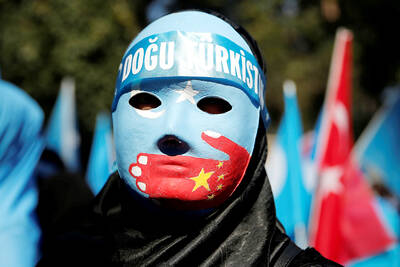
It seems every few days one bumps into one of those “real man” comments in which Taiwan is urged to “face reality” or similar, and “make a deal,” with the speaker implying that soon it will be too late. “Deal” advocates always present themselves as having a superior grip on reality, and the manly ability to make the “hard choice.” Their testosterone-laden language often echoes that of Taiwan sellout advocates. Note that such commentary always specifies a process (“make a deal, work with, make progress”), never the end state of what occupation by a violent authoritarian colonialist state will entail. In

There are shadowy cabals plotting to sell out Taiwan to be annexed by China, by invasion if necessary. Fortunately, they are buffoons. In 2019, former Bamboo Union gangster and founder of the China Unification Promotion Party (CUPP), Chang An-le (張安樂, colorfully known as “White Wolf”), led a protest at the Legislative Yuan against comments made by then-premier Su Tseng-chang (蘇貞昌) that in the event of an attack by China, he would never surrender, but would protect the nation by fighting to the end, even if he only had a broom. Chang had party members bring a wooden casket that they
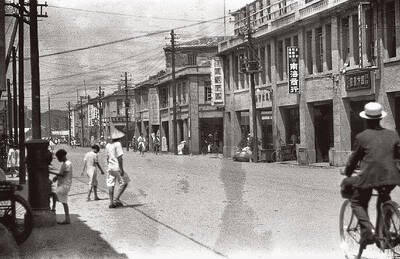
June 1 to June 7 "If all Taiwanese were as afraid of dying as you, then what would happen?” Physician Shih Chiang-nan (施江南) reportedly said this to his wife Chen Chiao-tung (陳焦桐) after she urged him to stop intervening on behalf of Taiwanese soldiers stranded overseas after serving in the Japanese Army during World War II. Shih had clashed with high-ranking officials over the issue, engaged in several heated arguments with Taiwan governor-general Chen Yi (陳儀) and allegedly shouted at general Ko Yuan-fen (柯遠芬), chief of staff of the Taiwan Garrison Command, over


 RSS
RSS