


Armed with a bachelor’s degree from the Fine Arts Department at National Taiwan Normal University and a masters from the University of Massachusetts, Amherst, Tong Yang-tze (董陽孜) explored the world of photography before turning her professional hand to Chinese calligraphy, which she first began studying when she was eight.
Over the past four decades, she has become famous for her massive cursive works, which are characterized by their expressiveness and movement. Her recognizable style has kept her in demand to create corporate logos, television credits and public installations, which fit with her mission to expand the boundaries of classic Chinese calligraphy, transcending the confines of the world of ink and paper and bring the beauty of the written work to new audiences and young people.
Tong has collaborated with a variety of artists from different disciplines — architect Ray Chen (陳瑞憲), pop-rock band Mayday (五月天) frontman Ashin (阿信) and singer-songwriter Cheer Chen (陳綺貞) — in recent years for installations, museum shows and performances, both in Taiwan and abroad, helping develop a new audience that appreciates the blend of classical techniques and contemporary art.
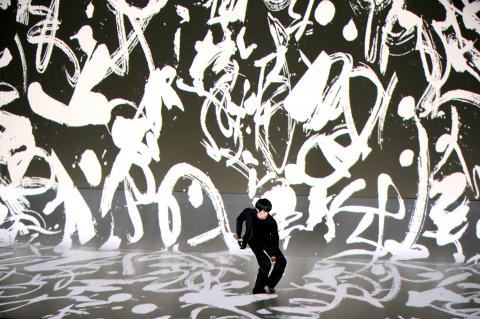
Photo courtesy of At Ease Studio
Last year’s SAO (騷), a collaboration with choreographers Bulareyaung Pagarlava and Scarecrow Contemporary Dance Company (稻草人現代舞蹈團) artistic director Luo Wen-jinn (羅文瑾), musicians Stacey Wei (魏廣皓), Kunter Chang (張坤德) and Yohei Yamada — who performed during the show — and multimedia artist Chen Yan-ren (陳彥任), for the Taiwan International Festival of Arts sold out weeks before the show was performed at the Experimental Theater.
The reaction to SAO was so positive, and the collaboration was apparently so congenial, that Tong decided to expand the project. SAO PLUS (騷+) will be performed this weekend at the Eslite Performance Hall in the basement of the Eslite Spectrum Shopping Mall, next door to the Songshan Culture and Creative Park in Taipei.
Musicians Wei, Chang, Yamada have been joined by Guras Vadu for the new show, which features choreography by Horse (驫舞劇場) cofounder and general manager Su Wei-chia (蘇威嘉). For dancers, Su chose two men that he has known from other Horse productions: Israeli Shai Tamir, who danced in Successor(繼承者) in 2011 and Huang Yung-Huai (黃詠淮) from 2013’s To Every Man His Dog (男人與狗).
It is a good thing that Su has such confidence in his dancers, since he will missed the first couple of shows of SAO PLUS. He is in Hong Kong performing with fellow Horse founder Chen Wu-kang (陳武康) in 2 Men at the Hong Kong Arts Festival Asia Pacific as part of the Dance Platform VII show, and will not return to Taipei until Sunday, just in time to catch the last two shows.
Multimedia artist Chen was once again tasked with creating the illuminating videos and projections for the show.
SAO PLUS sees Tong’s calligraphy shift from 2D to 3D as the dancers move to provisional jazz, creating new lines and contours and bringing the words to life.
Tong is not alone in seeing the connection between calligraphy and dance. Cloud Gate Dance Theatre (雲門舞集) artistic director Lin Hwai-min (林懷民) set the bar with his Cursive (行草) trilogy. Chinese dancer-choreographer Yang Yuntao (楊雲濤) created Spring Ritual · Eulogy (蘭亭‧祭姪) for the Hong Kong Dance Company (香港舞蹈團). However, each of these dance productions is as different as the calligraphers and the calligraphy that inspired them — each has its own character.
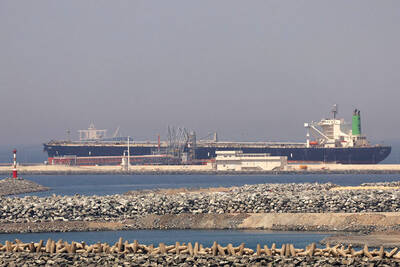
The breakwater stretches out to sea from the sprawling Kaohsiung port in southern Taiwan. Normally, it’s crowded with massive tankers ferrying liquefied natural gas from Qatar to be stored in the bulbous white tanks that dot the shoreline. These are not normal times, though, and not a single shipment from Qatar has docked at the Yongan terminal since early March after the Strait of Hormuz was shuttered. The suspension has provided a realistic preview of a potential Chinese blockade, a move that would throttle an economy anchored by the world’s most advanced and power-hungry semiconductor industry. It is a stark reminder of
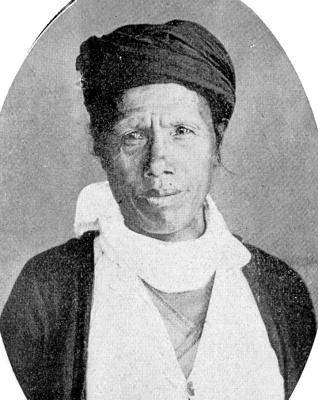
May 11 to May 17 Traversing the southern slopes of the Yushan Range in 1931, Japanese naturalist Tadao Kano knew he was approaching the last swath of Taiwan still beyond colonial control. The “vast, unknown territory,” protected by the “fierce” Bunun headman Dahu Ali, was “filled with an utterly endless jungle that choked the mountains and valleys,” Kano wrote. He noted how the group had “refused to submit to the measures of our authorities and entrenched themselves deep in these mountains … living a free existence spent chasing deer in the morning and seeking serow in the evening,” even describing them as
The last couple of weeks spectators in Taiwan and abroad have been treated to a remarkable display of infighting in the Chinese Nationalist Party (KMT) over the supplementary defense budget. The party has split into two camps, one supporting an NT$800 billion special defense budget and one supporting an NT$380 billion budget with additional funding contingent on receiving letters of acceptance (LOA) from the US. Recent media reports have said that the Taiwan People’s Party (TPP) is leaning toward the latter position. President William Lai (賴清德) has proposed NT$1.25 trillion for purchases of US arms and for development of domestic weapons
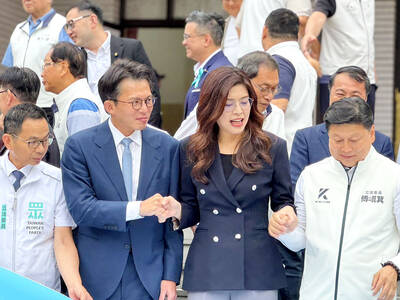
As a different column was being written, the big news dropped that Chinese Nationalist Party (KMT) caucus whip Fu Kun-chi (傅?萁) announced that negotiations within his caucus, with legislative speaker Han Kuo-yu (韓國瑜) of the KMT, party Chair Cheng Li-wun (鄭麗文), Taichung Mayor Lu Shiow-yen (盧秀燕) and Taiwan People’s Party (TPP) Chair Huang Kuo-chang (黃國昌) had produced a compromise special military budget proposal. On Thursday morning, prior to meeting with Cheng over a lunch of beef noodles, Lu reiterated her support for a budget of NT$800 or NT$900 billion — but refused to comment after the meeting. Right after Fu’s


 RSS
RSS