


Taipei Design & City Exhibition (臺北設計城市展) is an international showcase of socially-oriented design. From nine countries, participants bring projects aimed at improving human well-being, like A Behavior-Changing Syringe, which turns red to indicate it is no longer suitable for reuse; Float Beijing, an air-quality sensing kite; and Quick Space 72H, a portable temporary shelter for disaster victims. The program includes workshops and forums, mainly on intelligent design for cities. To register, visit www.mmag.com.tw/ad/exhibition/2014TDCE/
■ Songshan Cultural and Creative Park (松山文創園區), 133, Guangfu S Rd, Taipei City (台北市光復南路133號), tel: (02) 2765-1388, open daily from 10am to 6pm. Free admission
■ Until Oct. 26
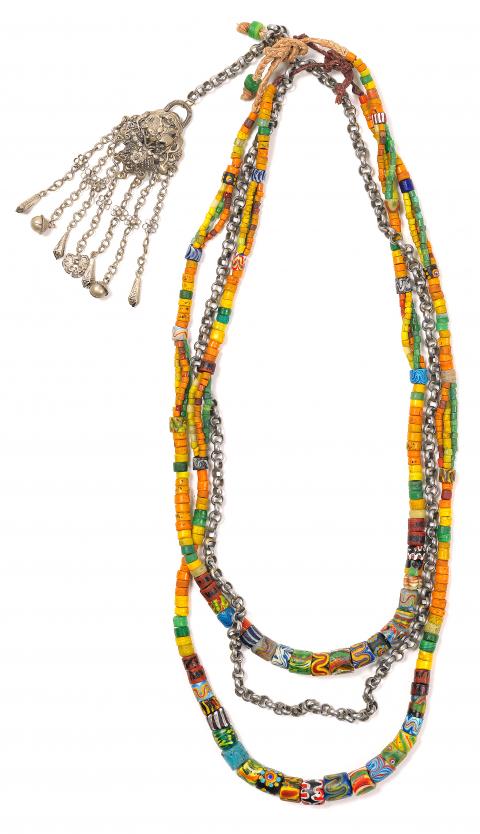
Photo courtesy of National Taiwan Museum
Jhong Jiang-ze’s (鍾江澤) Wall of Muse (謬思牆), a self-dubbed “studio on the scene,” contains colorful abstract portraiture of the artist’s adopted muses. Until Oct. 18, Jhong will paint in the studio after gallery hours and leave uncompleted works on-site, as a window into the process of artistic production.
■ Mind Set Art Center (安卓藝術), 16-1, Xinsheng S Rd Sec 3, Taipei City (台北市新生南路三段16-1號), tel: (02) 2365-6008. Open Tuesdays to Sunday from 2pm to 6pm
■ Until Oct. 18

Photo courtesy of ABC Syringe/David Swann
Kaohsiung Pictorial (高雄畫刊.話高雄) presents 300 covers from the magazine of the same name. Published since 1980, the Kaohsiung Pictorial (高雄畫刊) has seen 18 publishers, nine mayors and administrative reshaping that includes the Greater Kaohsiung merger of 2010. Covers illustrate the visual changes of southern Taiwan over the years, as well as its political transformation. Tours are available daily in Chinese or in English/Japanese with a reservation one week in advance.
■ Kaohsiung Museum of History (高雄市立歷史博物館), 272, Zhongzheng Rd Sec 4, Greater Kaohsiung (高雄市中正四路272號), tel: (07) 531-2560. Open Tuesdays to Sundays from 9am to 5pm
■ Until March 1
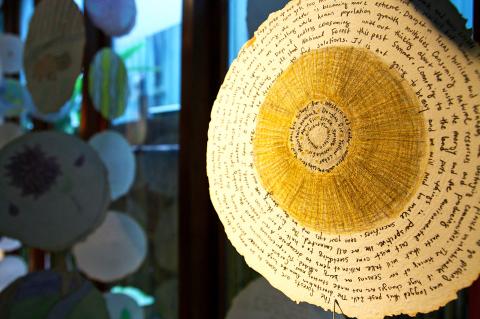
Photo courtesy of Suho Paper Memorial Museum
The National Taiwan Museum (臺灣博物館) presents craft traditions from two Aboriginal tribes in Rainbow and Dragonfly: Where the Atayal Clothing Meet the Paiwan Multi-colored Glass Beads (彩虹與蜻蜓-泰雅服飾與排灣琉璃珠的對話特展). There’s a presentation on textiles by the northern Atayal people, who mark stages of life with weavings like infant clothing (a grandmother’s ritual gift), newlyweds’ garments and shrouds for the dying. Also featured is the story of Paiwan glass beads — colorful glazed pieces with a striking roughness like pottery. Richly symbolic and once used to indicate aristocratic status, the beads have faded from Paiwan life but are seeing a revival in modern studios.
■ National Taiwan Museum, 2 Xiangyang Rd, Taipei City (臺北市襄陽路2號), tel: (02) 2382-2566, open Tuesdays through Sundays from 9:30am to 5 pm
■ Until March 1
Unbroken Arbor Vitae (不斷裂的生命之樹) is a site-specific installation created by artists from Portland, Oregon. Anne G. Greenwood, Diane Jacobs, Rachel Siegel and Wang Shu-ju (王淑如) fill a museum with species native to the Pacific Northwest Forest, realized as towering paper sculptures, scrolls, a soundscape piece and a paper-sketch installation that uses works by schoolchildren from Portland Roseway Heights. The project strives to return paper to the forest and to record the artists’ relationship with nature.
■ Suho Paper Memorial Museum (樹火紀念紙博物館), 68, Changan E Rd Sec 2, Taipei City (台北市長安東路二段68號), tel: (02) 2507-5535 ext. 19. Open Mondays to Saturdays from 9:30am to 4:30pm. Admission: NT$100
■ Until Jan. 13
Fu Fu (福福) is an exhibition of latest work by Japanese contemporary illustrator RYUCA. With good fortune as its theme, these are buoyant pieces with bright reds, a fortune cat and other auspicious symbols. The sale of one piece featuring Greater Kaohsiung will go to support disaster reconstruction due to the gas explosion. Today from 2pm to 3pm, RYUCA hosts a question-and-answer session at the gallery. Until Sunday, she’s offering 20 portraits a day, hand-drawn on A5 paper.
■ Little MOCA (微當代文創), 17, Ln 17, Chengde Rd Sec 1, Taipei City (臺北市承德路一段41巷17號), tel: (02) 2558-1787. Open Tuesdays to Fridays from 1pm to 6pm, Saturdays and Sundays from 11am to 6pm. Free admission, portraits at NT$500 each
■ Until Nov. 30
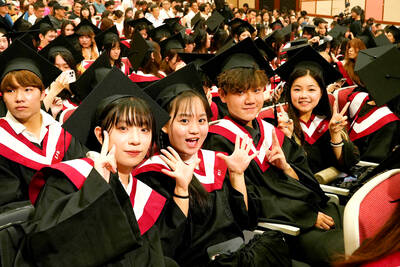
Taiwan’s English education system is being pulled apart by three opposing forces. Bilingual Nation 2030 pulls students toward English and global communication. Artificial Intelligence (AI) readiness pulls them toward digital judgment, verification and AI-mediated work. But Taiwan’s old exam culture pulls them back toward memorization, grammar drills, timed reading and correct answers. If the education system keeps using old exams to define success, it risks producing graduates who are neither genuinely bilingual nor genuinely AI-ready, but trained for tasks machines can already perform. The first force is Bilingual Nation 2030. Launched in 2018, the policy aimed to “help Taiwan’s workforce connect
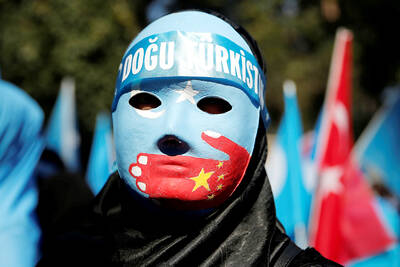
It seems every few days one bumps into one of those “real man” comments in which Taiwan is urged to “face reality” or similar, and “make a deal,” with the speaker implying that soon it will be too late. “Deal” advocates always present themselves as having a superior grip on reality, and the manly ability to make the “hard choice.” Their testosterone-laden language often echoes that of Taiwan sellout advocates. Note that such commentary always specifies a process (“make a deal, work with, make progress”), never the end state of what occupation by a violent authoritarian colonialist state will entail. In
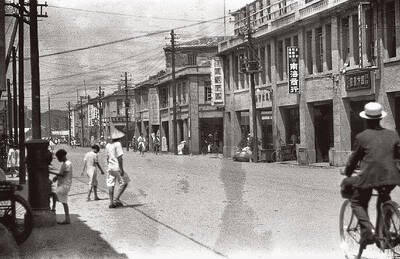
June 1 to June 7 "If all Taiwanese were as afraid of dying as you, then what would happen?” Physician Shih Chiang-nan (施江南) reportedly said this to his wife Chen Chiao-tung (陳焦桐) after she urged him to stop intervening on behalf of Taiwanese soldiers stranded overseas after serving in the Japanese Army during World War II. Shih had clashed with high-ranking officials over the issue, engaged in several heated arguments with Taiwan governor-general Chen Yi (陳儀) and allegedly shouted at general Ko Yuan-fen (柯遠芬), chief of staff of the Taiwan Garrison Command, over
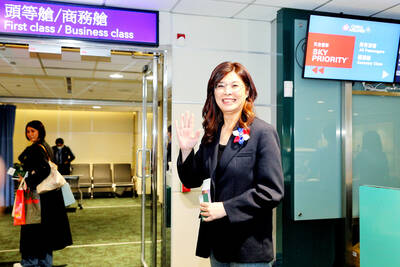
“Taiwan’s Opposition Leader Comes to US With a Message Straight Out of Beijing” read a May 31 headline in the Wall Street Journal. Top US administration officials and members of Congress almost certainly read the WSJ, and if there was a bullet point takeaway that people in Washington should absorb ahead of Chinese Nationalist Party (KMT) Chair Cheng Li-wun’s (鄭麗文) arrival in DC on June 9, that headline is it. The last few columns have discussed this very topic, and the timing is not coincidental. While those top officials likely do not read the Taipei Times, judging by the number


 RSS
RSS